A mysterious nineteenth-century train delay has led an international team of scientists to uncover a surprising historical error regarding the earliest documented instances of space weather interfering with human technology. For 178 years, researchers and historians believed that a peculiar disruption on an English railway in the early 1840s represented the dawn of our technological vulnerability to the Sun. However, a meticulous new investigation by a multi-institutional scientific collaboration has solved the long-standing mystery, rewriting a fascinating chapter of space weather history and demonstrating that society has been grappling with solar hazards for almost as long as electrical technologies have existed.
The strange incident dates back to the mid-nineteenth century, a transformative era when electric telegraph networks were first being deployed to revolutionize long-distance communication across continents. As these pioneering systems expanded and operators pushed the boundaries of electrical engineering, they occasionally encountered inexplicable electrical disturbances that scrambled equipment and disrupted operations. Modern science now understands that these baffling anomalies were caused by rapid, violent fluctuations in Earth’s magnetic field, which are directly triggered by explosive activity and coronal ejections from the Sun.
Seeking to better understand the infancy of this phenomenon, researchers led by Lancaster University revisited a historical account of a train delayed in Exeter, England, after solar activity reportedly interfered with the local railway’s telegraph system. The comprehensive investigation brought together a specialized team of scientists from RMIT University in Australia, the British Geological Survey, Natural Resources Canada, Baylor University in the United States, and the United Kingdom’s national space laboratory, RAL Space. By painstakingly piecing together a vast array of historical documents, archival newspapers, and early scientific observations, the research team uncovered a critical typo that fundamentally changes the timeline of the earliest known technological disruptions caused by solar storms.
How Solar Storms First Disrupted Human Technology
To contextualize the significance of the Exeter discovery, scientists often point to one of history’s most dramatic and ferocious examples of space weather affecting human civilization: the Carrington Event of 1859. This monumental solar storm involved a colossal solar flare coupled with a coronal mass ejection—an immense, high-speed eruption of charged particles and powerful magnetic fields hurled directly from the Sun toward Earth. The ensuing geomagnetic storm produced breathtaking auroras, widely known as the northern lights, which painted the night skies in vibrant hues and were visible as far south as Hawaii and Central America.
In some regions, the illumination was so intense and bright that bewildered citizens were able to read newspapers outdoors at night in the pitch dark. The strange, artificial-seeming glow even fooled early gold miners into believing that dawn had broken, prompting them to prepare and eat breakfast shortly after midnight. However, the spectacular light show came with a severe terrestrial cost. The storm wreaked unprecedented havoc on telegraph networks globally, causing widespread equipment failures, sending electrical sparks flying wildly from wires, delivering painful shocks to unsuspecting operators, and in several instances, sparking fires that damaged telegraph stations. So overwhelming were the electrical currents generated by the celestial disturbance that many telegraph systems continued to function entirely on their own, operating smoothly without the aid of batteries.
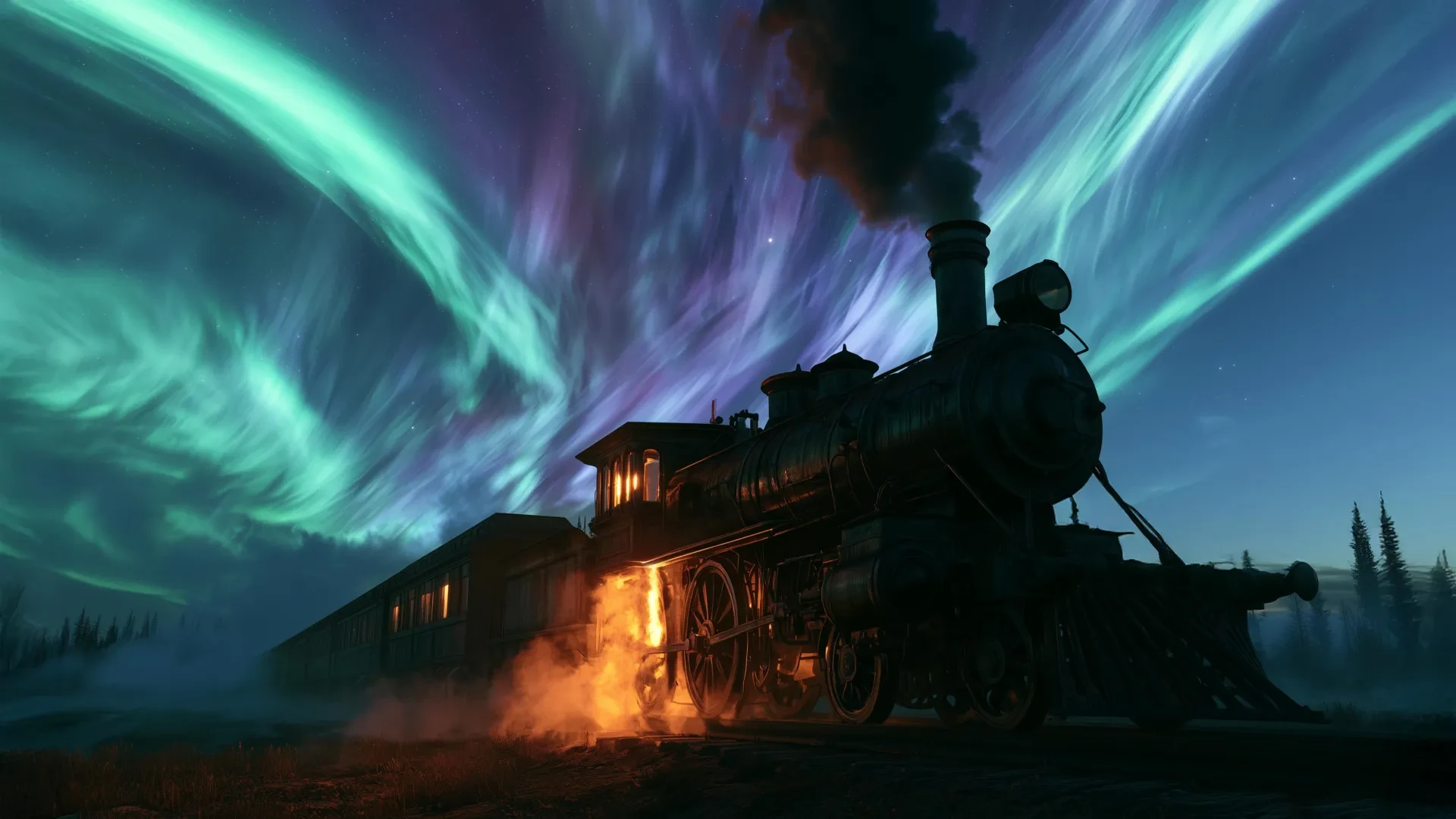
Although the Carrington Event remains the most famous and well-documented solar catastrophe from this foundational period of electrical engineering, physical and documentary evidence suggests that solar activity had begun meddling with human electrical systems even earlier. In 1871, an anonymous author published a brief account in the prestigious scientific journal Nature, describing a "very intense magnetic disturbance" that allegedly occurred on October 18, 1841. According to the decades-old report, the invisible magnetic storm severely interfered with railway signaling equipment in Exeter, forcing a frustrating delay that pushed back the scheduled 10:05 p.m. train departure by precisely 16 minutes. If the date printed in that nineteenth-century journal had been accurate, the event would have cemented itself in the history books as the earliest known instance of space weather directly disrupting human technology. Instead, a fresh investigation published in the American Geophysical Union journal Space Weather has proven that the original report harbored a significant historical flaw.
The Railway Mystery That Changed Solar Storm History
Associate Professor Brett Carter, a prominent space weather researcher at RMIT University who helped spearhead the historical investigation, noted that the team stumbled upon an insurmountable chronological contradiction that immediately called the original timeline into question. During their review of the archives, the researchers realized that the Exeter-to-Starcross railway line explicitly mentioned in the 1871 Nature report did not actually open until 1846, which was nearly five years after the event supposedly took place.
"In this study, we effectively investigated what had to be a typo in a Nature paper from 1871. We know it was a typo because the Exeter-to-Starcross train line mentioned in that paper didn’t exist until 1846, which is five years afterwards," Carter explained.
To determine when the mysterious train delay actually occurred, the research team embarked on a detective-style quest, sifting through a wide range of historical evidence. They carefully compared nineteenth-century railway timetables, local newspaper accounts, historical observations of solar activity, detailed descriptions of auroras, and newly digitized historical measurements of Earth’s magnetic field. Together, this convergence of independent records pointed definitively to a different date: October 18, 1848, exactly seven years later than the date published in the original scientific journal.
This revised timeline successfully resolves the glaring historical contradiction, placing the incident squarely during an important period in technological history when electrical communication and rail transport systems were becoming increasingly widespread. Carter explained that the 1840s marked a profound turning point in humanity’s relationship with space environment dynamics. While solar disturbances had always occurred naturally throughout Earth’s history, the rapid emergence of electrical technology meant that these invisible space weather events could now interfere directly and disruptively with everyday human activities and critical infrastructure.
"Understanding this historical event is important because the 1840s mark the intersection between the rise of our technological age and space weather, which has always been around," Carter noted. "Since this line was crossed, humans have not looked back."
The findings also alter the incident’s prestigious place in the historical record. While the Exeter disruption remains one of the earliest credible examples of space weather affecting human technology, it can no longer claim the crown of being the absolute first. That historic distinction now belongs to an earlier documented incident involving telegraph interference on Britain’s Midland Railway in March 1847.
Why the 178-Year-Old Discovery Matters
Professor Jim Wild of Lancaster University, who led the overarching study, emphasized that the findings demonstrate conclusively that the dangers and operational risks associated with space weather began impacting modern society long before the invention and proliferation of modern power grids, high-altitude satellites, and complex electronic communication networks.
"What this research highlights is that space weather is not a new threat but a long-standing natural hazard. Society has been experiencing the effects of space weather on technology for almost as long as electrical technologies have existed," Wild said.
The Exeter incident is particularly significant because it occurred at a time when electrical technology was still in its absolute infancy. Early railway operators and telegraph pioneers were just beginning to rely on fledgling electrical systems, inadvertently creating new opportunities for solar disturbances to interfere with essential public infrastructure.
"The Exeter train delay is a fascinating story because it sits right at the point where emerging technologies first began to encounter the realities of the space environment. By combining historical archives with scientific observations, we’ve been able to show that the event almost certainly happened in 1848 rather than 1841," Wild explained. "Although this means it is not the earliest recorded space weather impact, it remains one of the first clear examples of solar activity disrupting critical infrastructure. It also demonstrates the value of combining scientific records with contemporary newspaper reports and archival documents when reconstructing historic space weather events."
Dr. Mike Hapgood, a Visiting Scientist and space weather expert at RAL Space, described the rigorous research process as sharing many similarities with a classic detective investigation. He stressed the immense value of preserving older, fragile records, noting that they provide the vital empirical evidence base needed by modern scientists to accurately interpret past events and strengthen the predictive capabilities required for the future.
Modern Technology Still Faces the Threat of Solar Storms
Almost two centuries after the bewildered passengers faced their weather-induced train delay in Exeter, solar storms continue to pose very real, persistent risks to modern railways, aviation, power distribution, and other essential civil infrastructure. While the technologies involved have evolved in complexity and scale beyond anything nineteenth-century engineers could have imagined, they remain inherently susceptible to severe electromagnetic disturbances originating from our Sun.
Today, severe space weather events have the potential to interfere with high-voltage electrical power grids, sophisticated railway signaling and switching equipment, satellite navigation systems, and global communication networks. When powerful solar eruptions distort Earth’s magnetic field, they can generate unwanted geomagnetically induced electrical currents in ground-based infrastructure and disrupt critical signals upon which global commerce and safety depend.
Although modern scientists possess vastly superior scientific instruments, continuous space-based observatories, and sophisticated numerical forecasting models that were entirely unavailable to researchers in the 1800s, Hapgood emphasized that contemporary society’s ever-growing reliance on interconnected electrical, digital, and space technologies also creates unprecedented vulnerabilities. Understanding the historical behavior of past solar storms and how they interacted with early infrastructure is essential for helping researchers accurately assess the dangers posed by future space weather events and develop more effective strategies to protect critical systems.
"Deepening our understanding of these events is essential for preparing for, and mitigating, the impacts of space weather—especially as we look forward to a decade of exciting space developments that will face the challenge of a new solar cycle in the 2030s," Hapgood concluded.