Over the past year and a half, Beijing has systematically demonstrated the formidable power of its economic arsenal, executing a strategic campaign that has rattled global markets and exposed deep vulnerabilities within the Western alliance. Beginning with the United States in April 2025, China responded forcefully to American tariffs by imposing matching, across-the-board levies alongside strict export controls on rare-earth elements. This sharp counterpunch immediately sent shockwaves through bond markets and severely disrupted international automotive supply chains. The sudden pressure forced Washington into a trade truce that has persisted to this day, illustrating how quickly Beijing can alter the economic calculus of a superpower.
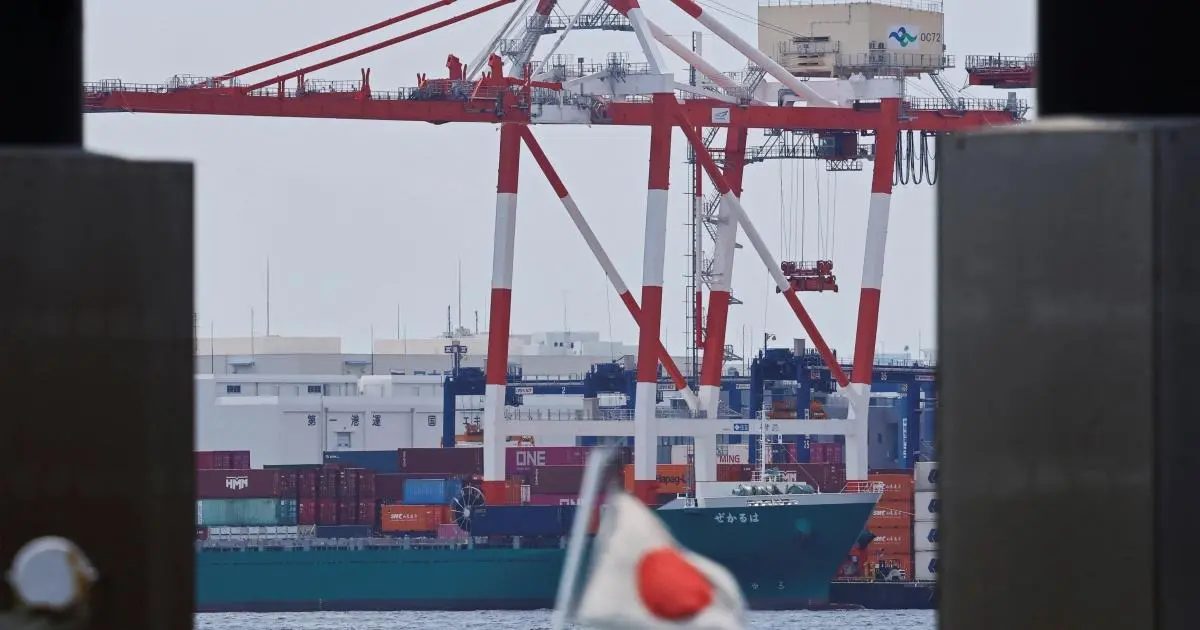
From there, Beijing turned its attention to Japan. In November 2025, following remarks by Japanese Prime Minister Sanae Takaichi describing a potential Chinese naval blockade of Taiwan as a “survival-threatening situation” that could justify deploying the nation’s Self-Defense Forces, China enacted suffocating bans on rare-earth exports to Tokyo. Reluctant to reinflame tensions with Beijing, Washington offered little more than token backing. Despite dwindling mineral stockpiles, Tokyo has held firm, refusing to walk back the Prime Minister’s statement as the restrictions remain firmly in place.
Europe soon came under similar fire. Frustrated by a bilateral trade deficit with China that had reached an unsustainable $1.1 billion per day, the European Union began exploring new defensive tariffs in May to counter mounting Chinese industrial overcapacity. As Beijing threatened resolute countermeasures, French President Emmanuel Macron urged U.S. President Donald Trump at the G-7 summit in June to join forces in addressing these global economic imbalances. Yet the United States once again opted to sit on the sidelines.
Left to face the threat alone, Europe blinked. The EU entered into tense negotiations with Beijing, setting an October deadline to secure concrete steps toward reducing China’s massive trade surplus. Brussels has since found itself locked in difficult talks over curbing exports of hybrid vehicles, chemicals, and machinery, bearing the full brunt of Chinese economic retaliation without transatlantic backup.
In essence, China has ruthlessly exploited the disunity between the United States and its traditional partners. Employing a classic divide-and-conquer strategy that mirrors the Trump administration’s own globe-spanning tariff campaigns, Beijing has fractured the Western alliance into more manageable pieces. This approach allows China to confront individual actors one-on-one. Backed by immense market heft and a near-monopoly on critical minerals, Beijing’s fear of Western retaliation has visibly diminished, prompting a wave of aggressive export restrictions and sanctions. While Beijing added only five Western companies to its Unreliable Entity List across 2023 and 2024—exposing them to severe financial and legal penalties—it added a staggering 76 companies in 2025 alone.
Despite these mounting pressures, a path forward remains for the United States and its allies, provided they can relearn how to act in concert. Experts argue that these nations must build a formal economic security alliance establishing collective defense against economic coercion. The foundational cornerstone of such an alliance would be a mutual defense pledge modeled explicitly on NATO’s Article 5. Under this framework, an economic attack on one member would be treated as an attack on all, triggering a joint, coordinated response. Over time, this partnership could expand to tackle broader shared economic challenges, mirroring NATO’s evolution from a security guarantee into an integrated, expansive alliance. Joint measures could eventually include coordinated tariffs against Chinese overcapacity and currency manipulation, harmonized investment restrictions, synchronized export controls on advanced technologies, and collaborative development in artificial intelligence and critical minerals.
Amid ongoing transatlantic squabbles and persistent European calls for strategic autonomy, a Western economic security alliance may currently seem out of reach. Yet history shows that enduring strategic interests can ultimately outweigh temporary political friction. With the right policy shifts and trust-building measures—starting with the removal of U.S. tariffs on allies and the passage of legislation to limit a president’s ability to reimpose them unilaterally—Washington could forge a lasting partnership capable of effectively checking Chinese coercion.
Strength in Numbers
The United States, Europe, and Japan confront a monumental shared challenge: Beijing is intent on making the rest of the world increasingly dependent on China while rendering China less dependent on the rest of the world. Through heavy state subsidies, domestic production is fueled far beyond local demand, while the national currency remains undervalued by 20 to 30 percent. Combined with coercive measures like targeted export controls and sanctions, Beijing systematically works to extract leverage over Western governments and corporations while neutralizing policies deemed contrary to its national interests.
This deliberate industrial overcapacity and the resulting surge in exports—typified by China’s record $1.2 trillion trade surplus last year—directly threaten the industrial competitiveness and workforce stability of the United States, Europe, and Japan. Furthermore, Beijing’s established record of weaponizing its economic strengths means that Chinese advancements in frontier technologies, such as artificial intelligence and connected vehicles that continuously share data externally, pose profound security risks to Washington and all of its global partners.
Individually, the United States and its allies often struggle to match Beijing’s economic leverage, particularly its formidable chokehold on rare-earth elements. Collectively, however, they command overwhelming strength. The United States, Europe, and Japan together produce roughly three times the economic output of China. They house the vast majority of the world’s most sophisticated corporations and control critical high-tech inputs upon which China heavily depends, including advanced lithography machines, specialized industrial machinery, sophisticated chemicals, and high-performance aircraft engines.
Despite Beijing’s ongoing efforts to reduce its reliance on the U.S. dollar, China remains heavily exposed to Western financial sanctions. Only about 30 percent of China’s trade is currently settled in renminbi, with the vast majority conducted in dollars. Prominent economic scholars Stephen Brooks and Ben Vagle have estimated that if the United States and its allies were to fully decouple from China, the short-term damage to China’s GDP would be five to eleven times larger than the corresponding impact on the U.S. economy.
Simultaneously, China’s domestic economy is considerably more vulnerable than official statistics suggest. While Beijing reported an official GDP growth rate of five percent last year, the independent economic research firm Rhodium Group estimated that actual growth hovered between 2.5 and 3.0 percent. China continues to navigate a prolonged real estate crisis, severe state-driven overinvestment, and deeply anemic domestic consumption. Because Beijing remains deeply reluctant to address weak internal consumption, exports now fuel more than half of the country’s total economic growth, according to Rhodium’s findings. This makes unhindered access to Western consumer markets China’s ultimate economic Achilles’ heel.
Historically, Western states have successfully coordinated their economic might during times of acute crisis. During the Cold War, they formed the Coordinating Committee for Multilateral Export Controls to restrict sensitive technology sales to the Soviet Union. Following the 1973 Arab oil embargo, Canada, Japan, the United States, and European nations established the International Energy Agency, creating a mutual defense pact for energy that required members to share emergency reserves. During the 2008 global financial crisis, the U.S. Federal Reserve and allied central banks coordinated aggressive rate cuts and established emergency currency swap lines to avert a complete economic depression.
In recent years, however, collective economic initiatives among Western allies have largely underwhelmed. The U.S.-EU Trade and Technology Council, created in 2021 to coordinate industrial policy and export controls regarding China, largely devolved into an ineffective talk shop. Although the EU established its Anti-Coercion Instrument in 2023 following a Chinese economic boycott against Lithuanian goods, Brussels has yet to deploy it. Similarly, a G-7 Coordination Platform on Economic Coercion launched that same year—designed to warn members and encourage cooperation against shared economic threats—contained no binding commitments and has been largely ignored.
These initiatives faltered due to a persistent lack of urgency and a deep reluctance among European nations to antagonize China, which remains one of their largest trading partners. Efforts were further constrained by ongoing disputes between European capitals and Washington over steel and aluminum tariffs, alongside large domestic subsidies embedded in the U.S. Inflation Reduction Act.
However, policies enacted during the second Trump administration have driven deeper wedges into the alliance. Broad U.S. tariffs and unexpected geopolitical statements have severely rattled trust among American partners. Washington’s bilateral trade truce with Beijing completely dispelled any illusions of a united transatlantic front, leaving European capitals deeply doubtful that the United States would come to their aid in a pinch. Consequently, calls for digital sovereignty and de-risking are increasingly directed toward protecting Europe from the United States, rather than China.
Restoring this fractured trust will prove exceptionally difficult, even under a future U.S. administration less focused on aggressive tariffs and more inclined toward alliance-building. During the Biden administration, European officials repeatedly declined to commit to large-scale economic coordination regarding China, Ukraine, or the Middle East, expressing persistent fears that a future U.S. president could single-handedly erase years of diplomatic progress.
Europe’s concerns are well-founded. As American politics has grown increasingly polarized, power has steadily amassed within the executive branch while Congress—which historically provided vital ballast in U.S. foreign policy—has largely stepped back. When sweeping duties were announced against U.S. allies under the International Emergency Economic Powers Act, Congress offered virtually no legislative resistance. When the Supreme Court later ruled those tariffs unconstitutional, the executive administration simply pivoted to alternative tariff authorities, and lawmakers once again stood by. Rebuilding genuine trust will therefore require an institutional remedy that extends far beyond diplomatic communiqués and rhetorical assurances.
Trust But Verify
Despite these deep-seated frustrations, strong economic ties endure across the Atlantic. The value of cross-border mergers, acquisitions, and transatlantic investments remained largely stable last year, and total trade in goods and services between the United States and the EU increased by nearly six percent over the course of 2025. There is little empirical evidence pointing to an imminent major economic rupture, as European businesses strongly prefer to maintain robust ties with the United States.
More importantly, Europe has finally awakened to the profound economic threat posed by China. A massive surge of Chinese automotive and industrial exports into Europe presents an existential challenge to the continent’s traditional economic model. Chinese auto exports to Europe surged by 29 percent in 2025 and by over 60 percent year-over-year in 2026, even as European auto exports to China flatlined. Germany’s formidable automotive sector alone shed 50,000 jobs in 2025.
Even corporate giants like Volkswagen—which actively lobbied against EU tariffs on Chinese electric vehicles in 2024—have drastically shifted their stance, with leadership urging Brussels to extend tariffs to Chinese plug-in hybrids. Amid heavy industrial job losses in non-auto sectors, Germany has quietly begun identifying strategic economic chokepoints it can leverage against Beijing. Although Brussels reached a provisional agreement with Beijing to curb hybrid vehicle exports in October, European policymakers appear poised to unveil robust new measures against Chinese chemicals and machinery as they grapple with industrial overcapacity.
These structural challenges will only intensify in the coming years, making Europe increasingly likely to seek Washington’s cooperation. Simultaneously, the concept of a united Western front against Beijing retains strong bipartisan resonance in Washington. As policy experts have noted, shared strategic interests will keep European partners open to allied cooperation when political landscapes shift.
When that opportunity arises, the single most important step will be terminating every tariff and pending investigation against allied nations issued under U.S. trade statutes during the second Trump administration. Such a move would serve as both a unilateral demonstration of good faith and an opening gambit for negotiations on a comprehensive economic security alliance. It would break decisively from past tariff models that merely converted duties into quotas or temporary suspensions. Removing these duties would lower consumer prices, accelerate economic growth, and enjoy broad domestic popularity given the public’s dismal view of tariffs. Because these tariffs were enacted via executive action, they can be terminated through the same mechanism.
Concurrently, the White House should pledge immediate economic assistance or access to strategic stockpiles—such as the rare earths amassed in the U.S. Strategic Critical Minerals Reserve—to any ally facing direct Chinese coercion. Fulfilling these pledges would demonstrate concrete benefits to potential members and solidify confidence in the alliance’s viability.
These unilateral measures would set the table for a formal economic security treaty anchored by a mutual defense commitment akin to NATO’s Article 5. For defense, members would commit to providing targeted allies with economic assistance, preferential market access, and emergency access to critical stockpiles. Offensively, members would respond to coercion against any partner by applying coordinated sanctions, joint tariffs, or synchronized export controls. While the United States, the EU, and Japan should form the core of this bloc due to their massive economic heft, other like-minded democracies such as Australia, Canada, and the United Kingdom should be welcomed.
Ensuring the alliance’s longevity requires moving beyond goodwill gestures carried out solely through executive actions. The most durable approach involves a congressional-executive agreement backed by robust legislation, embedding the pact firmly in U.S. law and shielding allies from the erratic policy shifts of future administrations. Legislation should codify the removal of excessive executive tariffs and restrict the imposition of new duties on alliance members without explicit congressional approval. Incorporating an automatic sunset provision—such as requiring Congress to affirmatively retain new duties within 60 days—would provide foreign partners with the commercial predictability required to build lasting economic links.
Enacting ambitious legislation is undeniably difficult, but U.S. lawmakers face strong incentives to support such a framework. Chinese economic coercion has become a major bipartisan concern, and public sentiment heavily favors limiting tariffs. Recent polling indicates that a vast majority of Americans view tariffs negatively, associating them directly with rising grocery prices and living costs. By reclaiming constitutional authority over trade policy, lawmakers can directly address voter concerns regarding economic affordability.
Leadership from the United States will be essential, but thorough negotiations among potential members regarding operational rules will be equally critical. The agreement must explicitly outline how commercial intelligence is shared, who determines when coercion has occurred, and what specific offensive and defensive assistance members can expect. While an independent secretariat could eventually help manage the alliance’s growth, the primary objective must remain making core commitments credible without creating an unwieldy international bureaucracy.
Ultimately, history demonstrates that moments of acute geopolitical rupture provide fertile ground for vital institution building. NATO emerged amid profound uncertainty following World War II; the Suez Crisis catalyzed closer U.S.-British nuclear cooperation; and the economic turmoil of the early 1970s pushed industrial democracies toward the regular coordination that birthed the G-7. In each instance, crisis bred opportunity.
Today, the hardest adjustment for Washington will be accepting institutional constraints on its freedom to act unilaterally. Yet if American power is anchored by predictable, binding rules, allies will feel far more comfortable depending on it rather than hedging against it. By voluntarily tying itself to the mast through predictable economic commitments, the United States can successfully mobilize the collective weight of the free world to turn the tide against economic coercion.