Countries from around the globe will gather in Armenia this month to carry out the first comprehensive global review of progress toward meeting a critical suite of nature targets by 2030. These vital goals, alongside the overarching ambition to halt and reverse global biodiversity loss, were formally agreed upon in the landmark Kunming-Montreal Global Biodiversity Framework during the historic UN biodiversity conference held in Montreal in 2022.
However, these crucial ambitions will not be achieved in time for the fast-approaching 2030 deadline unless international action accelerates rapidly, a stark new United Nations report has found. According to the findings, nations are currently falling short on 22 out of the 23 specific nature targets established in the framework. These targets focus heavily on a broad range of environmental necessities, including restoring degraded ecosystems, significantly increasing nature finance, and reducing harmful economic subsidies that drive environmental degradation.
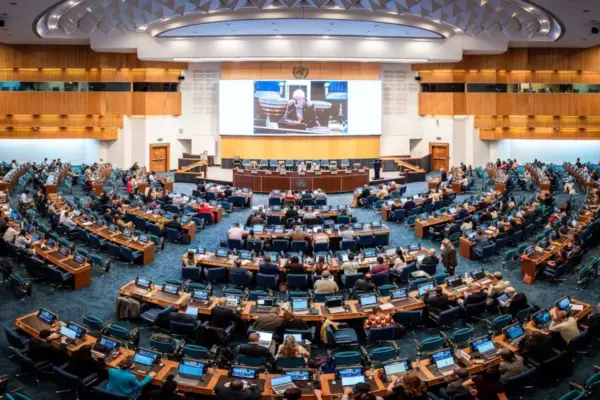
The comprehensive report, alongside a wide array of other scientific and policy findings, will directly inform the global progress review taking place at the upcoming COP17 biodiversity summit. The high-stakes international meeting is scheduled to be held in Armenia from October 19 to 30, where delegates will grapple with the sobering assessment of the world’s environmental trajectory and attempt to recalibrate implementation strategies.
The UN assessment evaluates where concrete progress has and has not been made across each of the 23 individual targets, ranking the extent to which countries have addressed specific elements of the goals on a national basis. While a small number of areas have shown signs of advancement, the overall picture reveals widespread implementation gaps.
Evaluating Progress Across the 23 Global Targets
Target 1 focuses on ensuring that all areas are under participatory, integrated, and biodiversity-inclusive spatial planning or effective management processes. The overarching goal is to bring the loss of areas of high biodiversity importance close to zero by 2030, all while strictly respecting the rights of Indigenous peoples and local communities. So far, the global evaluation scores this target at a low 0.25 out of 1, reflecting severe implementation challenges and a general lack of coordinated spatial planning worldwide.
Target 2 addresses ecosystem restoration, aiming to ensure that by 2030 at least 30 percent of areas of degraded terrestrial, inland water, marine, and coastal ecosystems are under effective restoration. This target has received an overall score of 0.5. While some regional initiatives have gained traction, widespread large-scale restoration efforts remain limited by logistical hurdles and insufficient funding.
Target 3 centers on effective conservation, requiring that by 2030 at least 30 percent of terrestrial, inland water, marine, and coastal areas are effectively conserved, managed, and integrated into wider landscapes and seascapes. It also emphasizes that any sustainable use must be fully consistent with conservation outcomes while recognizing and respecting the traditional territories and rights of Indigenous peoples and local communities. This target currently holds an overall score of 0.38, indicating that significant expansion and better management of protected areas are still urgently needed.
Target 4 demands urgent management actions to halt the human-induced extinction of known threatened species, promote the recovery and conservation of vulnerable populations to significantly reduce extinction risk, and effectively manage human-wildlife interactions to minimize conflict. With an overall score of 0.25, the report highlights a profound lack of progress in protecting endangered species from tipping over the brink.
Target 5 deals with the sustainable, safe, and legal use, harvesting, and trade of wild species, while respecting and protecting customary sustainable use by Indigenous peoples and local communities. This target is a relative bright spot with an overall score of 0.67, demonstrating that regulatory frameworks governing wildlife trade are seeing better compliance than many other areas of the framework.
Target 6 focuses on eliminating, minimizing, reducing, or mitigating the impacts of invasive alien species on biodiversity and ecosystem services. This involves identifying and managing introduction pathways, preventing the establishment of priority invasive species, reducing introduction rates of other known or potential alien species by at least 50 percent by 2030, and eradicating or controlling existing populations, especially on vulnerable islands. The overall score stands at 0.33, pointing to persistent difficulties in controlling biological invasions in an interconnected global economy.
Target 7 targets pollution risks, aiming to reduce the negative impacts of pollution from all sources by 2030 to levels not harmful to biodiversity and ecosystem functions. Specific markers include reducing excess nutrients lost to the environment by at least half, reducing the overall risk from pesticides and highly hazardous chemicals by at least half, and working toward eliminating plastic pollution. This target holds an overall score of 0.38, reflecting slow movement in reining in chemical and agricultural runoff.
Target 8 addresses climate change and ocean acidification, seeking to minimize their impacts on biodiversity and increase ecosystem resilience through mitigation, adaptation, and disaster risk reduction actions, while fostering positive biodiversity impacts from climate action. Scoring a relatively high 0.75, this area benefits from overlapping momentum between climate policies and biodiversity protection, though localized implementation gaps remain.
Target 9 returns to the sustainable management and use of wild species to provide social, economic, and environmental benefits for people, including through sustainable biodiversity-based activities and products. It scores 0.42, indicating moderate progress in balancing human utilization with ecological preservation.
Target 10 focuses on ensuring that areas under agriculture, aquaculture, fisheries, and forestry are managed sustainably through the substantial application of biodiversity-friendly practices, contributing to food security, system resilience, and ecosystem restoration. This target scores 0.5, reflecting a gradual but uneven transition toward sustainable production systems across global food and forestry sectors.
Target 11 centers on restoring, maintaining, and enhancing nature’s contributions to people, such as the regulation of air, water, and climate, soil health, pollination, disease risk reduction, and protection from natural hazards. This target also scores 0.5, as ecosystem services remain under pressure despite growing recognition of their economic and social value.
Target 12 addresses urban environments, aiming to significantly increase the area, quality, connectivity, and accessibility of green and blue spaces in densely populated areas through biodiversity-inclusive urban planning. Scoring just 0.25, urban centers continue to struggle with integrating nature into rapid expansion and development projects.
Target 13 requires effective legal, policy, administrative, and capacity-building measures to ensure the fair and equitable sharing of benefits arising from the utilization of genetic resources and digital sequence information, alongside associated traditional knowledge. This target holds an overall score of 0.38, reflecting ongoing international negotiations and legal complexities surrounding genetic data.
Target 14 calls for the full integration of biodiversity and its multiple values into policies, regulations, planning, development processes, poverty eradication strategies, and national accounting across all levels of government and sectors. It scores a low 0.25, highlighting that mainstreaming nature into core macroeconomic planning remains a distant goal for most national governments.
Target 15 focuses on the private sector, urging legal and policy measures to encourage and enable businesses—particularly large transnational corporations and financial institutions—to regularly monitor, assess, and transparently disclose their risks, dependencies, and impacts on biodiversity. This target also scores 0.25, as mandatory corporate reporting frameworks are still in their infancy in many jurisdictions.
Target 16 looks at consumer choices and footprints, aiming to encourage and enable people to make sustainable consumption choices and equitably reduce the global footprint of consumption by 2030. It scores 0.38, pointing to limited shifts in consumer habits and supply chain transparency.
Target 17 centers on biosafety measures and the handling and distribution of benefits derived from biotechnology, scoring 0.25 due to regulatory lags in developing and emerging economies.
Target 18 addresses harmful incentives and subsidies, calling for countries to identify by 2025, and eliminate, phase out, or reform incentives and tax structures that harm biodiversity, while reducing them by at least $500 billion per year by 2030 and scaling up positive incentives. Scoring a dismal 0.17, this represents one of the most neglected areas of the global framework, as governments continue to pour vast sums into environmentally destructive practices like fossil fuel and agricultural subsidies.
Target 19 focuses on financial resources, demanding a substantial and progressive increase in funding from all sources to implement national biodiversity strategies, mobilizing at least $200 billion per year by 2030. This includes increasing total biodiversity-related international financial resources from developed countries to developing nations to at least $20 billion per year by 2025, and at least $30 billion per year by 2030. Scoring a critically low 0.13, the finance gap remains a major friction point between the Global North and Global South ahead of COP17.
Target 20 emphasizes strengthening capacity-building, technology transfer, and technical and scientific cooperation to meet implementation needs, earning a score of 0.38.
Target 21 ensures that the best available data, information, and knowledge are accessible to decision-makers and the public to guide effective governance and participatory management, while respecting the traditional knowledge of Indigenous peoples and local communities. This target scores a relatively strong 0.63, benefiting from improvements in environmental monitoring and data sharing platforms.
Target 22 calls for full, equitable, and gender-responsive representation and participation in decision-making by Indigenous peoples, local communities, women, youth, and persons with disabilities, alongside the protection of environmental human rights defenders. It scores 0.25, reflecting persistent vulnerabilities and exclusion in environmental governance.
Target 23 focuses squarely on ensuring gender equality in the implementation of the entire framework, providing equal opportunities and capacities for women and girls to contribute to the convention’s objectives. Like the finance target, Target 23 scores 0.13, underscoring systemic shortcomings in integrating gender-responsive approaches into national environmental strategies.
To date, 174 countries have submitted at least one national target to apply the goals of the Global Biodiversity Framework at the domestic level. However, as the data gathered for the upcoming Armenia summit demonstrates, turning international pledges into concrete national action remains the central challenge facing the global community as the 2030 horizon draws closer.