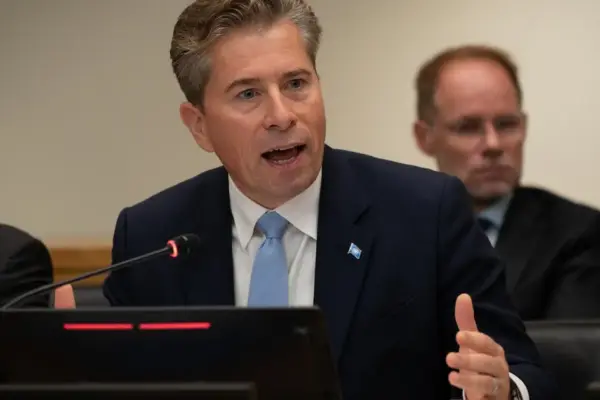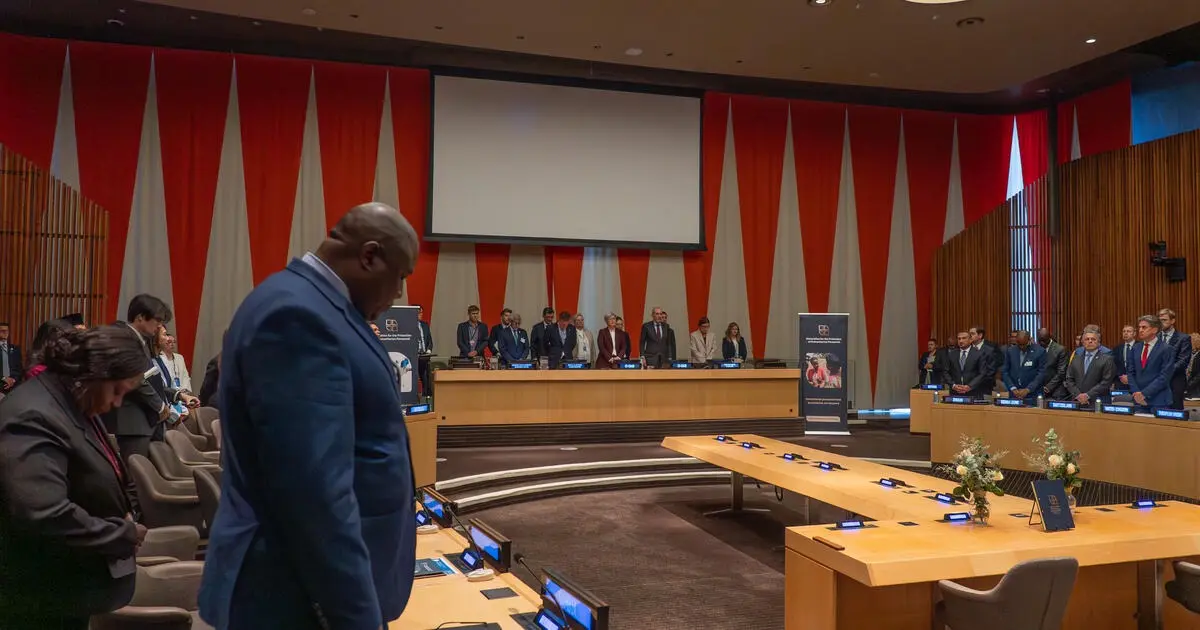
NEW YORK — Marking a sobering milestone in the global effort to safeguard aid workers, United Nations Under-Secretary-General for Humanitarian Affairs and Emergency Relief Coordinator Tom Fletcher delivered a passionate and uncompromising address at the High-Level Meeting on the Declaration for the Protection of Humanitarian Personnel in New York.
Addressing an assembly of international diplomats, foreign ministers, and humanitarian leaders on September 23, 2026, Fletcher acknowledged a significant diplomatic achievement while issuing a stern warning about the widening gap between written commitments and grim realities on the ground. He commended the leadership of the Ministerial Group, specifically highlighting the collaborative efforts of figures such as Australian Minister for Foreign Affairs Penny Wong and Jordanian Minister for Foreign Affairs Ayman Safadi in convening the high-level coalition.
The gathering served as a vital stocktaking moment, exactly one year after international stakeholders first gathered on the lawn outside UN headquarters to pledge unified support for the protection of humanitarian personnel and international humanitarian law. According to Fletcher, the Declaration has now garnered signatures from 130 Member States—a development he characterized as both a powerful testament to a shared global purpose and an urgent, direct challenge to nations that have thus far declined to sign.
Yet, the central thesis of the Emergency Relief Coordinator’s address was that the true measure of the Declaration will not be found in diplomatic signatures or conference room rhetoric, but in the day-to-day survival of aid workers operating in active conflict zones. To anchor this reality, Fletcher brought the focus of the assembly directly to the human cost of modern warfare, singling out several prominent frontline humanitarian leaders in attendance.
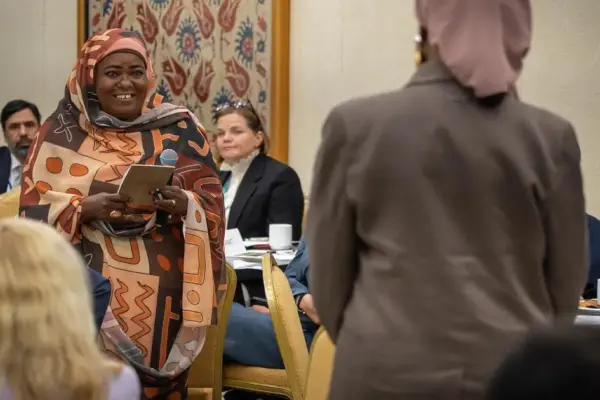
Among those recognized in the room were Moussa Abba Diallo, founder of the Malian NGO AMSODE; Christian Tanyi Eselekwe, founder and CEO of LUKMEF-Cameroon; Mama Noor, also known as Hussein Al Sewaty Mohammed, a prominent humanitarian leader, activist, and founder of the Shamaa "Candle" Organization in Sudan; and Sami Khader, Director General and co-founder of the MA’AN Development Center in the Occupied Palestinian Territory. Fletcher noted that these individuals stood in New York to represent thousands of colleagues who could not be present—those who continue to take extraordinary risks every single day to save lives in the world’s most dangerous environments.
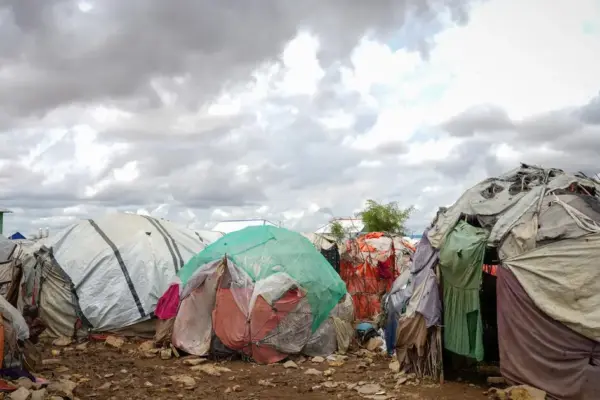
The presence of these frontline figures, Fletcher emphasized, underscored why the Declaration is desperately needed. It matters acutely during the distribution of basic life-sustaining provisions like food and clean water, during the care of vulnerable women and children, at tense military and security checkpoints, inside harrowing detention facilities, and amid active crossfire.
The test facing the international community, Fletcher stated, is brutally simple: Will humanitarian workers be genuinely safer tomorrow because of the renewed commitments made by leaders in the room? Can these dedicated professionals continue to reach populations in desperate need without facing targeted attacks, arbitrary detentions, and deliberate bureaucratic obstructions? And critically, when aid workers are inevitably attacked, will anyone actually be held accountable and pay the price?
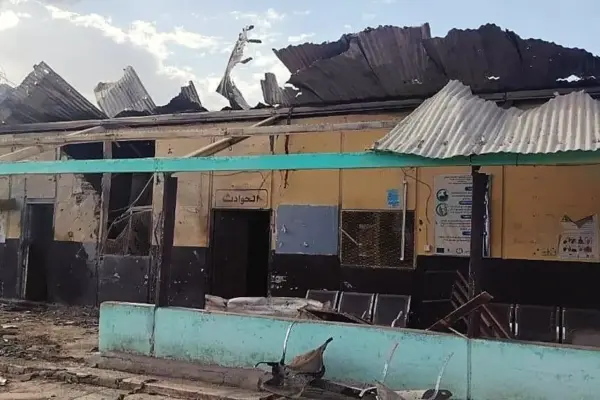
Fletcher did not shy away from answering his own question, conceding that for far too many victims and their families, the historical answer has been a resounding no. Over the span of just three years, more than 1,000 humanitarian workers have been killed globally, while countless others have sustained severe injuries, been kidnapped, or endured unlawful detention. While officials routinely grieve and honor the fallen, Fletcher argued that commemoration must be paired with concrete, unyielding systemic action.
In a sharp critique directed squarely at the international community, Fletcher pointed out that Member States themselves are frequently responsible for these violations. He cautioned that a signature on a piece of paper does not automatically translate into a protective shield, that a diplomatic declaration is not a physical safeguard, and that expressions of concern alone hold no real consequence for perpetrators.
The UN relief chief called upon nations to leverage their considerable diplomatic, political, and economic power to fundamentally alter the behavior of warring parties. He urged governments to exert relentless pressure on combatants to respect civilians and adhere strictly to international humanitarian law. Crucially, Fletcher warned against selective enforcement, pointing out that humanitarian principles must not be applied only when it is politically convenient, nor should accountability be championed solely when the perpetrator happens to be a geopolitical adversary.
Addressing structural inequalities within the aid sector, Fletcher forcefully demanded an end to what he termed the "hierarchy of outrage." He insisted that an attack on local humanitarian personnel is every bit as grave as an assault on international staff members, demanding absolute equity in how threats, violence, and losses are addressed by the global community.
To break the cycle of impunity, Fletcher called for rigorous, credible investigations and transparent prosecutions to secure genuine justice for victims and their grieving families. In a sweeping indictment of the global arms trade and complicit political structures, he stressed that justice must extend far beyond the individual pulling a trigger. True accountability, he argued, must also reach those who supply the weapons, those who sell them, and those who design the armaments used against aid workers—many of which originate within the borders of countries represented at the high-level meeting.
Reflecting on the grim statistic of over 1,000 humanitarian deaths across three years, Fletcher challenged the assembly with a series of pointed questions: How many independent investigations can the international community genuinely recall? How many individual perpetrators responsible for these deaths could be named and pointed to as having faced justice? How many sovereign States have actually felt tangible political pain or economic pressure for the atrocities they have committed?
Calling directly upon the excellencies and senior officials present, Fletcher urged them to treat the Declaration not merely as an archived diplomatic text, but as a living, breathing document that actively guides foreign policy and military assistance. He emphasized that the principles of the Declaration must be reflected in real-world decisions regarding arms transfers, in direct dialogues with parties to conflict and their foreign backers, and in political choices that demand genuine courage from domestic leaders.
Fletcher defined the ultimate metric for success in stark, unambiguous terms: fewer dead humanitarians, thorough and transparent investigations into every attack, and, consequently, a greater number of vulnerable people reached with essential, life-saving support. Concluding his address with a foundational truth for the global relief architecture, the Emergency Relief Coordinator reminded the assembly that there is simply no path to delivering aid without fiercely defending those who risk everything to deliver it.