Aviation is on track to be responsible for a staggering 80% of the United Kingdom’s entire carbon dioxide emissions by the middle of the century, according to a stark new warning from the Climate Change Committee (CCC).
While the climate impact of virtually every other sector across the British economy has fallen significantly in recent decades, emissions generated by flying have more than doubled since 1990. This steep upward trajectory has been driven primarily by rising passenger numbers. Despite these worsening environmental metrics, the UK government has signalled its active support for expanding Heathrow Airport, the nation’s largest aviation hub, while relying heavily on unproven technological fixes—such as sustainable aviation fuels—to theoretically curb future pollution.
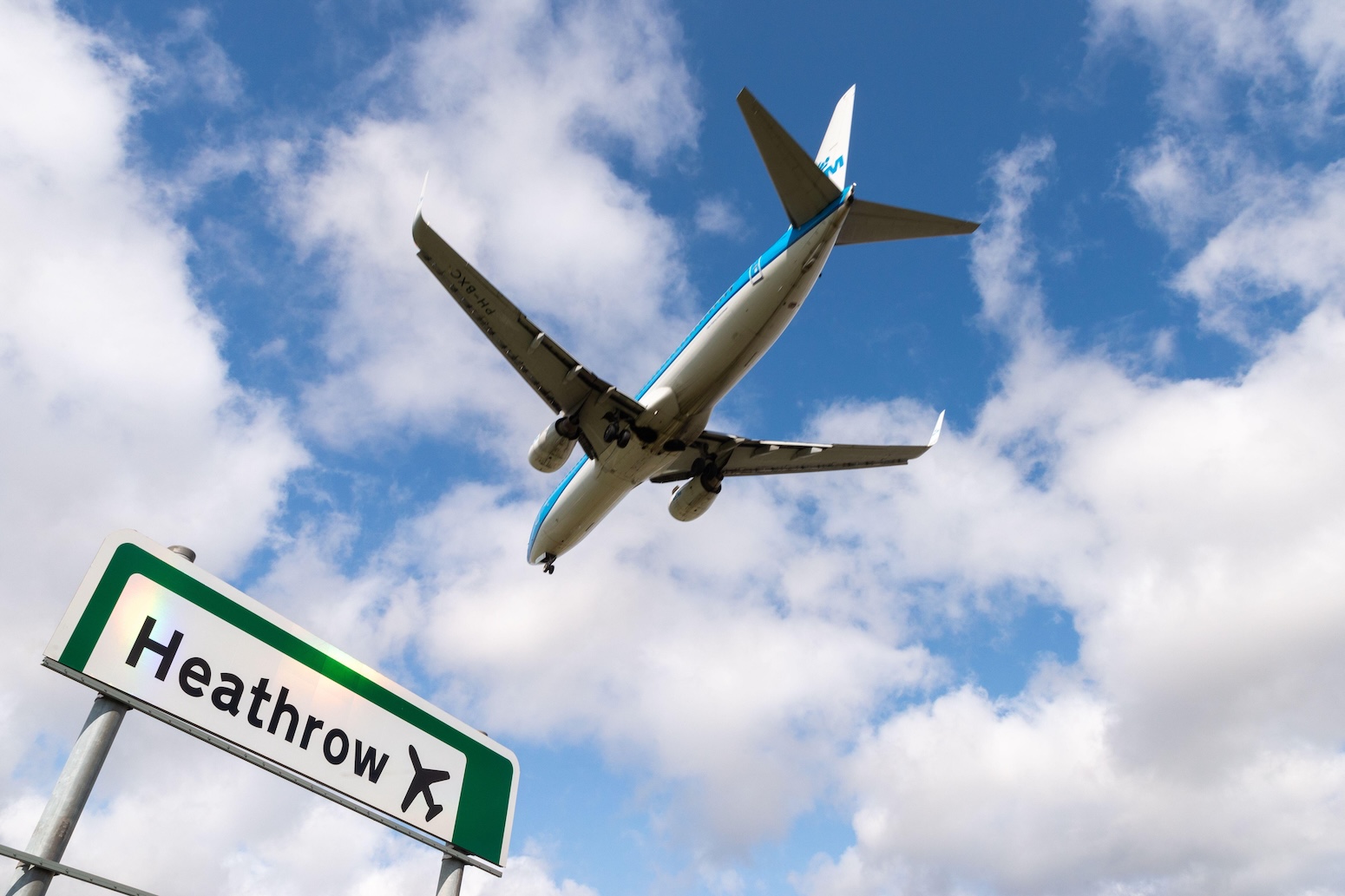
In its newly released advisory report to the government on future aviation policy, the CCC warns that the UK currently lacks "credible" policies capable of reversing this trend of mounting emissions. With a final, critical decision regarding the proposed Heathrow expansion widely expected by 2029, ministers had formally asked the independent advisory body to assess whether the airport enlargement project remains compatible with the nation’s legally binding climate commitments.
The committee’s conclusion is unequivocal: the UK simply does not have a sufficient policy framework in place to reduce aviation emissions, and expanding Heathrow would severely compound the problem. During a media briefing discussing the findings, CCC chair Nigel Topping underscored the gravity of the situation for journalists and policymakers alike.
"The UK does not currently have a credible plan to reduce [aviation emissions] in line with net-zero, so that creates a serious challenge for meeting our climate commitments," Topping said.
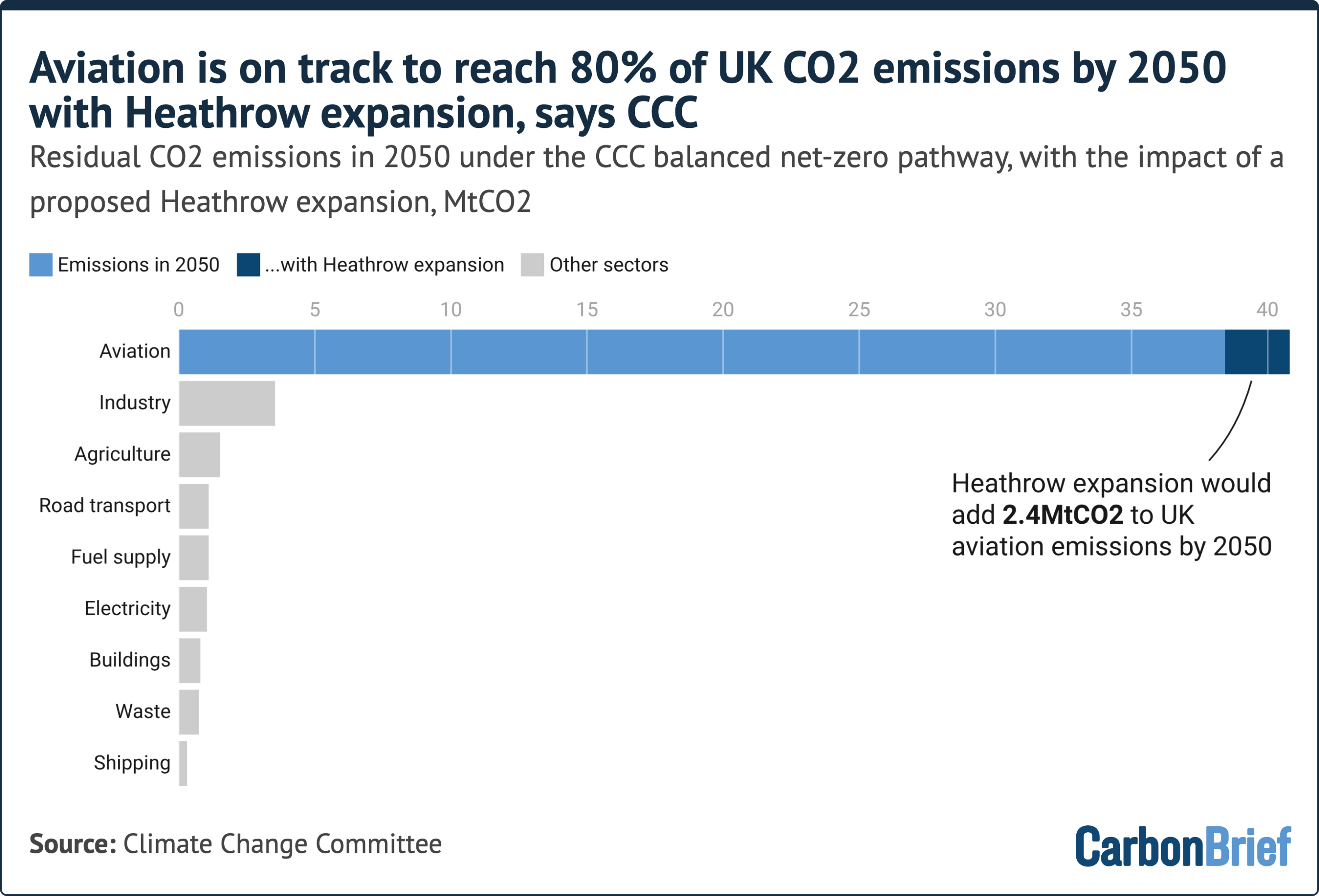
The scale of the challenge laid out by the CCC is immense. Even if the Heathrow expansion plans are ultimately shelved, baseline aviation emissions are still projected to rise significantly over the coming decades, reaching 38 million tonnes of CO2 (MtCO2) annually by 2050.
Under the UK’s legal framework, the nation must achieve net-zero greenhouse gas emissions by 2050. This requires that any residual greenhouse gases still being pumped into the atmosphere by that date must be actively balanced out by removing an equivalent amount of carbon dioxide. Consequently, aviation’s projected footprint of 38 MtCO2 would consume the vast majority of the entire UK economy’s remaining carbon budget for that year.
The mathematics become even more challenging when factoring in the proposed growth of the country’s primary travel hub. According to the committee’s analysis, expanding Heathrow would inject an additional 2.4 MtCO2 into the atmosphere by 2050, accounting for roughly 5% of all UK emissions at that time. That figure would climb further to 4.5 MtCO2 once the massive expansion project is fully completed and operational by 2054.
The debate over how to reconcile aviation growth with environmental limits exposes deep fault lines in government climate planning. The previous Conservative administration launched the "jet-zero strategy" in 2022, which laid out an ambitious roadmap intended to shrink the sector’s carbon footprint. However, the current Labour government has since acknowledged that the core assumptions underpinning that strategy—including overly optimistic expectations regarding the rapid deployment of sustainable aviation fuels (SAFs), the advent of commercial electric passenger aircraft, and aggressive fuel-efficiency improvements—were unrealistic.
The CCC emphasizes that any path forward requires a fundamentally revised strategy, which the government currently plans to unveil in 2027. The committee asserts that only a truly "credible and robust net-zero policy framework for aviation" could theoretically allow for airport expansion without violating national climate laws, and such a framework must be fully established before any concrete approvals are finalized.
Central to the CCC’s recommendations is the principle that the aviation sector must finally take direct financial and operational responsibility for the pollution it generates. The committee argues that future policies must be anchored strictly in the "polluter pays" principle. Rather than shifting the financial burden onto taxpayers or the wider public, airlines and aviation companies should be legally and financially required to fund their own sustainable aviation fuels and necessary carbon dioxide removal initiatives.
Specifically, the advisory body highlights that substantial funding will be urgently required to support "engineered removal" technologies, such as direct air carbon capture and storage (DACCS). These industrial facilities draw carbon dioxide directly out of the ambient air and lock it away safely underground.
At present, however, direct air capture and storage technologies are nowhere near available at the massive scale that will be required to neutralize the volume of emissions generated by global and domestic flight networks. While "natural solutions" like large-scale tree planting represent the other primary vehicle for drawing carbon down from the atmosphere, the CCC envisions those natural carbon sinks being strictly earmarked to offset stubborn residual methane emissions originating from UK livestock agriculture. As a result, energy-intensive engineered removals would be left to handle the immense burden of scrubbing aviation-related CO2 from the sky.
A shift toward forcing airlines to internalize the true environmental costs of flying would inevitably transform the economics of commercial travel. The CCC acknowledges that requiring the industry to pay for its own decarbonization and carbon removal credits will almost certainly lead to significantly higher ticket prices for consumers.
Based on current economic models, the committee estimates that by 2050, these policies could inflate the cost of a standard return trip to Alicante, Spain, by around £150 in 2024 prices, while a return journey to New York could see an increase of roughly £400 per passenger.
Despite the inevitable political pushback against soaring ticket prices, the advisory committee maintains that this market-driven approach is far superior to any public spending alternative. Relying on state-backed funding would effectively mean that roughly 50% of the UK population—citizens who do not fly or rarely travel by air—would end up subsidizing the flight-related carbon dioxide removals of frequent flyers.
Furthermore, the committee notes that introducing higher, realistic costs into the ticket-purchasing process would serve a dual purpose. Beyond generating the necessary capital for carbon removal infrastructure, increased prices would naturally help to manage and temper the surging demand for commercial flights, which otherwise threatens to overwhelm the UK’s carbon reduction efforts in the decades leading up to 2050.