As private wealth continues to grow to levels never before seen in modern history, a powerful and increasingly urgent idea is taking hold across the Western world: the accumulation of great fortunes poses an existential threat to democratic governance. This concept is far from novel. Over a decade ago, political scientists Jacob Hacker and Paul Pierson asserted that the rise of modern plutocracy has been a defining trend of American politics since the late 1970s. Similarly, economist Paul Krugman argued back in 2011 that the extreme concentration of income observed in modern economies is fundamentally incompatible with the functioning of real democracy.
Lately, however, this critique has broken out of academic circles and begun to gain serious traction in the highest halls of power across Western democracies. In his farewell address to the nation, former U.S. President Joe Biden warned that an oligarchy of extreme wealth, power, and influence was actively threatening the entire democratic system, along with basic rights and freedoms. Spanish Prime Minister Pedro Sánchez echoed this exact sentiment at a high-level G-20 summit, cautioning international leaders that concentrated wealth fundamentally corrodes democratic institutions from within.
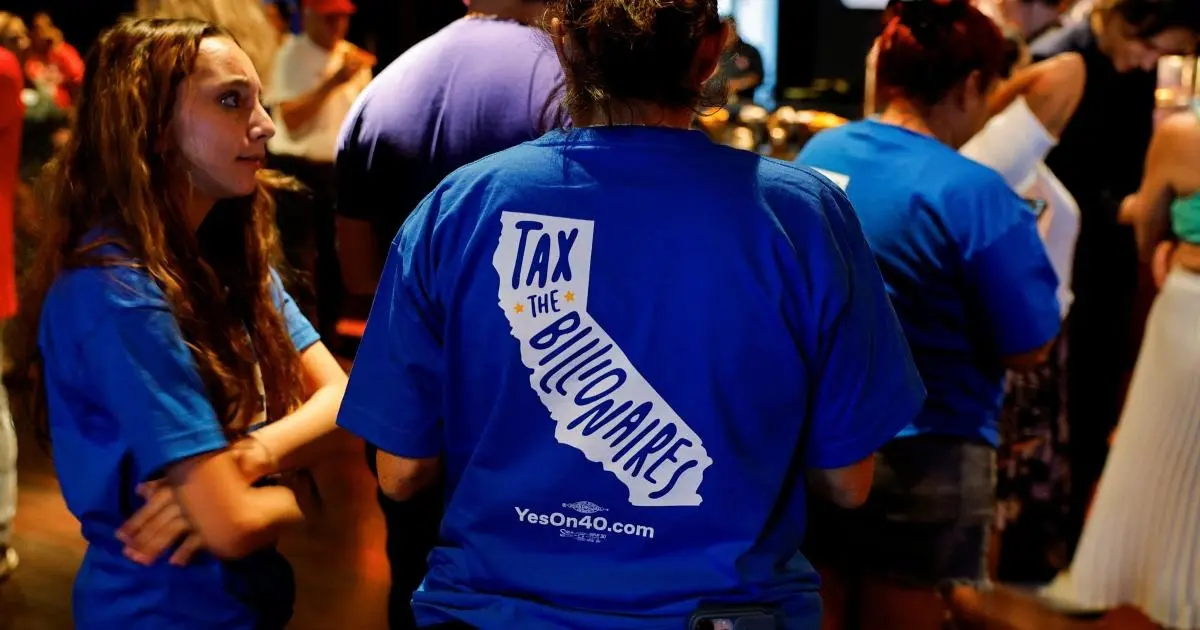
Faced with this perceived threat, a growing faction of policymakers and economists now see outright confiscation and punitive taxation as the only viable answer. This tension recently culminated in a bitter political battle in California, where supporters and opponents of a statewide "billionaires’ tax" ballot measure poured a cumulative total of more than $300 million into campaigns before voters ultimately rejected it during midterm elections.
Despite the measure’s defeat at the ballot box, it commanded formidable intellectual backing. The proposal counted among its proponents six Nobel laureates in economics—including Daron Acemoglu, Peter Diamond, and Joseph Stiglitz—who publicly endorsed the tax in an open letter framing the vote as a critical turning point in the ongoing battle between democracy and oligarchy. Prominent French economist Gabriel Zucman immediately called the measure’s defeat merely the beginning of a larger campaign, vowing that while Silicon Valley billionaires had won this specific battle, they would ultimately lose the war. Meanwhile, several prominent European political leaders, including former German Green Party leader Annalena Baerbock and Danish Prime Minister Mette Frederiksen, have floated wealth tax proposals of their own in recent years.
The underlying risk that these leaders and economists have identified is entirely genuine. Modern democratic societies are undeniably failing to do enough to prevent the superrich from exercising undue influence over the political process. However, their primary diagnosis—not to mention their preferred fiscal solution—is fundamentally incorrect. The mere participation of billionaires in politics does not, in and of itself, indicate that a democracy has been entirely captured by moneyed interests. Instead, the strength and resilience of the political and civil institutions meant to protect the public from the exercise of those private interests serve as far more reliable indicators of a healthy democratic state.
Rather than imposing economically damaging wealth taxes, nations that are genuinely serious about safeguarding their political systems should take their institutional cues from democracies that have successfully insulated their politics from the corrupting influence of large fortunes. They should adopt transparent election laws, establish strict restraints on private campaign contributions, and actively encourage a strong, independent media ecosystem. Such structural measures will help make societies genuinely more democratic, whereas taxing wealth will simply make them poorer and less economically dynamic.
The Eight Percent of the One Percent
Arguments favoring the taxation of wealth in the name of preserving democracy typically hinge on the assumption that billionaires operate as a monolithic bloc, entirely committed to a political agenda that runs counter to the public interest. These claims do contain a kernel of truth regarding the broader health of political systems. According to benchmark metrics from the V-Dem and Freedom House indices, the United States has indeed been experiencing a clear state of democratic decline since the early 2010s. However, it does not logically follow that billionaires as a demographic group are solely responsible for this institutional decay—or that such a unified, cohesive billionaire class even exists in reality.
To empirically determine whether such a class exists, an analysis of the richest Americans featured in the 2026 Forbes 400 listing was conducted based on their traceable political donations. This research examined both their average annual giving and their cumulative political contributions over the past three decades. While this methodological approach is undoubtedly imperfect—as political donations can frequently be informal, obscured, or funneled through dark money networks, and donations are certainly not the only avenue for achieving political influence—the resulting pattern casts severe doubt on the narrative of a single billionaire class marching in lockstep on Washington.
The empirical evidence demonstrates that roughly 30 individuals, representing just eight percent of U.S. billionaires on the Forbes 400 list, function as high-level donors who contribute more than $1 million each year for overt political purposes. Conversely, roughly half of American billionaires give an average of less than $30,000 a year, 35 percent contribute less than $10,000 annually, and 15 percent—comprising 60 of the listed billionaires—maintain no visible political footprint whatsoever. Furthermore, a mere 16 donors, accounting for just four percent of the list, have given more than $50 million over the last 30 years.
While this small minority may plow enough financial resources into elections to offset the majority of billionaires who show no apparent interest in politics—though Elon Musk’s substantial midterm financial outlay demonstrates that even vast sums of money are no guarantee of desired political outcomes—the sheer existence of these contrasting groups suggests otherwise. The presence of the ultrawealthy alone is not inherently responsible for American democratic decay. Rather, the systemic weakness of the public institutions meant to check their influence is the true culprit.
Buying Power
For the subset of American billionaires who actively choose to engage in politics, existing federal rules and institutional structures make it remarkably easy to achieve disproportionate influence through large-scale private spending. Super PACs are legally permitted to receive unlimited financial contributions from individuals, corporations, labor unions, and other political committees without traditional caps. The hollowing out of independent public-service journalism and the severe consolidation of private media ownership make matters significantly worse, allowing a small cohort of wealthy media barons to shape the dominant public narrative largely unchecked.
Much of the contemporary global momentum behind wealth tax proposals originates within the United States. However, the United States is hardly the only developed nation with a high proportion of superwealthy residents. Sweden and Switzerland boast some of the highest concentrations of billionaires per capita anywhere in the world, with approximately 4.7 and 5.0 billionaires per million inhabitants, respectively. These figures are significantly higher than the U.S. rate of 2.9 per million and completely dwarf the average of 1.3 seen across countries in the Organization for Economic Cooperation and Development (OECD). If proponents of wealth taxes were correct in their assessment of a direct causal relationship between extreme private wealth and deteriorating democratic health, one would logically expect both Sweden and Switzerland to possess democracies in dire, dysfunctional shape.
Yet, in neither country has the presence of large private fortunes significantly damaged the fabric of democracy. Both nations consistently rank near the very top among liberal democracies when independent observers assess the fairness of elections, the absolute rule of law, effective checks on executive power, public trust in government, and freedom of the press. Sweden currently ranks fifth in the 2026 World Press Freedom Index, while Switzerland holds the eighth position. As of 2025, both countries were tied for sixth place in Transparency International’s Corruption Perceptions Index, whereas the United States languished further behind at 29th.
Public confidence surveys tell a similar story. According to the OECD’s 2025 trust survey, 62 percent of Swiss respondents expressed confidence in their national government, representing the highest level of trust among all countries polled. Sweden followed closely with 42 percent, ranking 15th among surveyed nations, comfortably higher than the OECD average of 40 percent and drastically outperforming the United States’ low mark of 27 percent, as measured by the Partnership for Public Service.
It might be tempting for observers to point to overarching tax policy as the primary explanation for this institutional resilience. Indeed, social democratic Sweden maintains a tax-to-GDP ratio of 41 percent as of 2024, giving it one of the highest tax burdens in the world. Switzerland, however, maintains a modest tax-to-GDP ratio of roughly 27 percent, which sits well below the OECD average of 34 percent and roughly even with the U.S. level of 25 percent. The reality that these nations can support large entrepreneurial fortunes without sacrificing their democratic integrity is not the result of draconian restrictions on how those fortunes can be spent in politics. Instead, two shared institutional features offer far more compelling explanations.
In Sweden, political parties are financed primarily through transparent public structures. Private contributions are legally permitted, but individual donors represent a relatively small share of total party funding, and strict disclosure rules make all large private donations completely visible to the public. Furthermore, Sweden’s constitution grants everyday citizens and journalists the legal right to access almost any official government document. Government ministers hold very little direct influence over administrative agencies, allowing those agencies to operate with strict independence from executive political authority. While these rules do not completely eliminate lobbying, they largely prevent private money from discreetly entering and influencing the inner workings of the political process.
Switzerland maintains barriers between private wealth and the levers of government that are similarly sturdy, though they operate by dispersing money and power through slightly different mechanisms. The Swiss federal system diffuses governing authority across 26 regional cantons and over 2,000 distinct municipalities, while frequent regional and federal referendums grant citizens direct veto power over legislation. Switzerland does not rely on direct federal funding for political parties and imposes no general spending ceilings, but national disclosure rules introduced in 2022 require major political campaigns and large donors to publicly identify their financing sources.
While Switzerland does feature a historical wealth tax dating back to the nineteenth century, it is administered entirely at the canton level, and its highest marginal tax rates are nowhere near as punitive as the rejected California proposal. Ultimately, dispersing authority and enshrining accountability over government decisions through robust direct democracy mechanisms are far more responsible for the success of Swiss democracy than any tax code provisions.
Both nations also maintain long, proud traditions of private journalism operating alongside well-funded, independent public-service media. This balanced mix of private news outlets and public-service broadcasting has consistently been shown to foster greater public trust in the news media and build resilience against online disinformation. It effectively prevents any single media proprietor or corporate provider from monopolizing the airwaves or suppressing vital public information.
While these institutions are far from perfect and private donations still play a minor role in Swedish and Swiss political life, the fact that countries with nearly twice the concentration of billionaires per capita as the United States maintain thriving, resilient democracies completely undermines the notion that the superwealthy, simply by existing, inevitably deform democratic governance.
Capital Punishment
The wealth tax proposals currently in vogue are frequently presented by their advocates as a novel solution to the uniquely modern problem of concentrated wealth. However, Western societies have attempted to tax net wealth on numerous occasions in the past. Throughout the twentieth century, many European nations imposed similarly designed taxes on household net wealth explicitly for redistributive purposes, and practical problems quickly emerged.
Taxing individuals who rarely generated immediate cash income and whose fortunes were consequently difficult to accurately estimate outraged entrepreneurs, severely lowered domestic investment, and hampered overall economic growth. During the 1970s and 1980s, governments across both the political left and right took note of these economic failures. They attempted to discount certain business assets and exempt closely held firms from taxation in order to mitigate these market distortions.
However, tinkering around the edges of the tax code only generated new problems of administrative unfairness. Government revenues from these wealth taxes—which at the time constituted less than half a percent of GDP across Europe, compared to total tax burdens that frequently stood at 40 percent of GDP—steadily slumped. Ultimately, most European nations chose to scrap the wealth tax entirely.
Many of today’s political proponents are more inclined to cite the existential threat of unprecedented fortunes to democracy rather than the traditional need for economic redistribution as the primary impetus for a new wealth tax. Yet, they offer no innovative solutions to the historical problems that plagued earlier wealth taxes. Nor would a wealth tax realistically stop billionaires from financing politics, given that the wealthiest individuals hardly need to throw the full financial weight of their entire fortunes around to wield significant political influence.
Supporters might counter that the pro-democracy case for a wealth tax is much broader in scope, noting that the superrich exert influence on politics through avenues far beyond direct campaign donations. A wealth tax might not stop a billionaire from bankrolling a state election, but proponents argue it might prevent them from acquiring media institutions such as Paramount or The Washington Post. Even as an imperfect solution, a billionaires’ tax referendum is viewed by some as a more politically achievable goal than attempting a difficult constitutional amendment to wrest structural power away from the executive branch.
However, a wealth tax has never proven to be an efficient fiscal policy tool or an adequate substitute for substantive democratic institutional renewal. Whatever small democratic gains it might feasibly deliver would be vastly outweighed by the severe threat it poses to new business ventures, capital formation, and long-term economic development. Viewed as anything more than a purely symbolic measure, a tax levied on uncertain, frequently illiquid asset values is fundamentally a tax on entrepreneurial risk-taking.
This economic case against wealth taxation should not be mistaken for a broadside against all forms of capital taxation. Governments should rightfully continue to seek substantial public revenue through taxes levied on the realized returns of capital, setting rates and brackets as democratic legislatures see fit. They must not, however, lose sight of the crucial economic distinction between taxing already realized income and taxing underlying assets that may or may not generate future returns.
A far more effective policy agenda to safeguard democracy against the undue influence of money should prioritize reforming the public institutions whose underlying weaknesses make such political influence possible in the first place. Enacting strict limits on campaign and party finance, alongside mandating more transparent public disclosure of lobbying activities and potential conflicts of interest, would at the very least make elections significantly more difficult to buy.
Simultaneously, increasing sustained funding for public media outlets and enforcing stricter antitrust regulations to block monopolistic media mergers would create a more diverse and resilient landscape of both private and independent public-service media. These targeted structural measures would directly address the behavior of the small fraction of American billionaires who choose to plow significant portions of their fortunes into politics, while allowing the vast majority of the country’s wealthiest individuals to continue doing what they do best: creating economic value and driving technological and industrial growth.
Democracies should, of course, always maintain a healthy vigilance against the specter of oligarchy, actively working to curtail the corrupting influence of large sums of money on public policy. They must not, however, confuse baseline economic success with political capture. Modern societies fundamentally need entrepreneurs who are willing to take bold financial risks and build new wealth. Democracy will survive the current era of extraordinary private fortunes not by antagonizing successful innovators, but by making political power steadily harder to buy.