Article I of the Constitution grants Congress sweeping, foundational powers to raise, maintain, and equip the armed forces of the United States. Yet, the current legislative branch has largely sat on the sidelines, doing little to actively exercise these vital constitutional authorities. The intense, frenetic activity seen across the national security landscape over the past two years has systematically undone long-established norms of military professionalism, fundamentally altering the trajectory of American civil-military relations for a generation to come.
Remarkably, this sweeping transformation has been engineered almost entirely by the executive branch, operating with virtually little meaningful involvement, legislative pushback, or substantive oversight from Capitol Hill. As the nation looks toward the convening of the next Congress, lawmakers will face immense pressure to reverse course. In doing so, they possess a critical opportunity to shore up the historical norms that have governed U.S. civil-military relations since the founding of the republic.
The primary concern among political analysts and constitutional scholars today is not a rogue military defying civilian authority—the traditional bogeyman that has haunted American political leaders for centuries. Rather, the deeper fear is that the thousands of sweeping changes, both large and small, that the executive branch has so rapidly imposed on the armed forces may ultimately erode the professional ethic upon which the entire U.S. model of civilian control depends.
The incoming Congress can steer U.S. civil-military relations back toward a healthier, more stable direction by exercising active, rigorous oversight of the executive branch—a stark departure from the passive posture of its predecessor. Lawmakers can help restore public trust and institutional confidence within both the military ranks and the broader American populace by prioritizing transparency, reclaiming an assertive role in shaping defense policy, reinforcing the military’s strictly nonpartisan professional ethic, and establishing a new bipartisan commission dedicated to reinvigorating the military profession. Congress retains the constitutional authority and institutional power to mend civil-military relations, and the upcoming legislative session in January offers a narrow window to utilize those tools before the institutional damage becomes irreversible.
Unchecked and Unbalanced
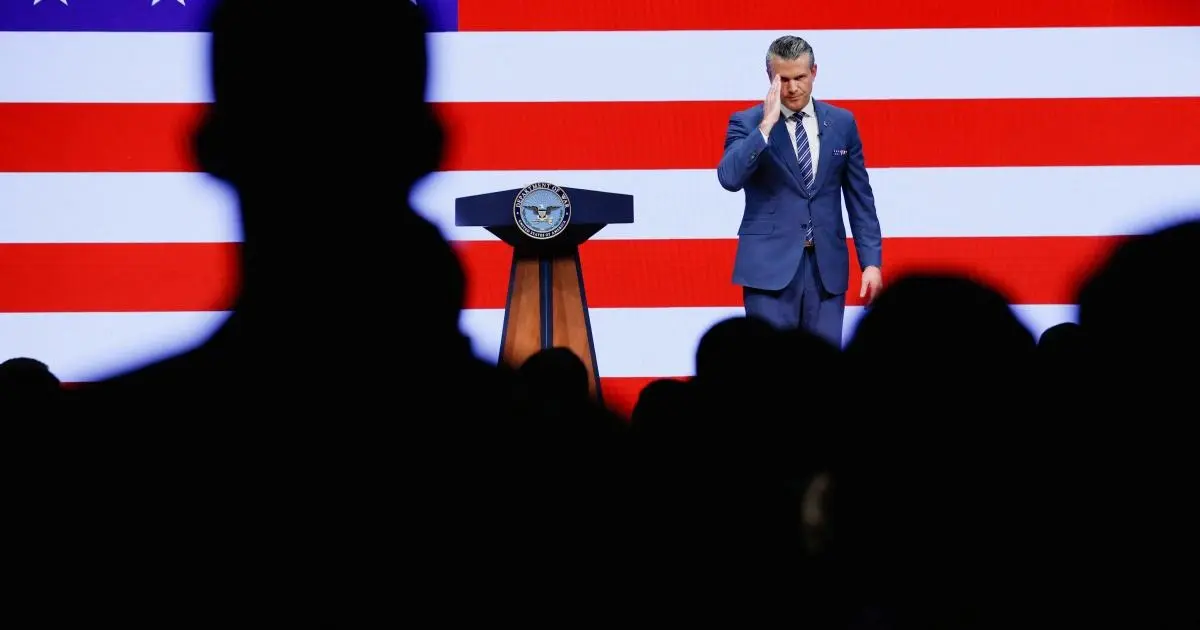
When Pete Hegseth was sworn in as defense secretary in 2025, he brought with him deeply held convictions regarding the structural changes he intended to force upon the Pentagon. He alleged that the armed forces had drifted away from their core warfighting focus due to misguided institutional priorities and what he termed "wokeism." Since taking office, Hegseth has pursued these systemic changes with a zeal rarely witnessed in the corridors of power since Robert McNamara held the defense secretary post from 1961 to 1968.
Hegseth’s most visible disruptions have occurred within the senior officer corps. He has fired or removed nearly two dozen senior general and flag officers, systematically clearing out more than one-quarter of all four-star generals, including the chairman of the Joint Chiefs of Staff and the respective service chiefs of the U.S. Air Force, Army, and Navy. In total, he has dismissed, removed, or pulled from promotion lists approximately 80 general and flag officers, a disproportionate number of whom are women or racial minorities.
The defense secretary has justified these sweeping removals using vague, generalized terminology. This approach has left the vast majority of defense observers convinced that the underlying motivation amounts to little more than retaliation against officers who faithfully carried out the lawful orders of the previous administration. No prior defense secretary has ever removed such vast swaths of the career officer corps—individuals who honored their solemn oaths to the Constitution and faithfully implemented defense policies formulated by their civilian superiors.
Hegseth has executed these moves rapidly, largely bypassing traditional bureaucratic safeguards and standard operating procedures. This includes dispensing with rigorous staff reviews and sidestepping the close involvement of congressional stakeholders who traditionally help shape the trajectory of Pentagon policymaking and military operations.
These unilateral shifts have coincided with mounting questions regarding the legality of military operations, such as the boat strikes ordered by the administration against suspected drug traffickers in the Caribbean and eastern Pacific last fall, alongside civilian casualties resulting from America’s conflict with Iran. Observers note that these controversial actions unfolded after Hegseth had already fired the senior, most experienced military legal advisers—sending a chilling warning shot across the bow of younger judge advocates—and initiated a sweeping overhaul of the Judge Advocate General Corps.
Ever since the tragic My Lai massacre during the Vietnam War, when U.S. soldiers committed war crimes by killing hundreds of unarmed Vietnamese civilians, the JAG Corps has served as an essential institutional safeguard, empowered to help military personnel strictly abide by the laws of armed conflict. By demoting senior legal advisers and installing less experienced or qualified personnel in their stead, the military’s independent legal voice has been marginalized to a degree not seen since the Vietnam era. Furthermore, the administration has aggressively centralized decision-making, routing routine operational actions through highly classified channels that severely restrict opportunities for institutional input, debate, and deliberation.
Hegseth has implemented this sweeping agenda with virtually no pushback from either the uniformed military or the entrenched Pentagon bureaucracy. On one hand, this unwavering compliance demonstrates just how deeply ingrained the principle of civilian control is within the officer corps—a posture reinforced by Hegseth’s demonstrated willingness to severely punish even unsupported allegations of military insubordination.
On the other hand, these punitive measures have exerted a severe chilling effect across the entire force. They have created an operational environment where military leaders are increasingly reluctant to offer candid, objective professional advice or uphold foundational professional standards and institutional values when those principles happen to clash with the political priorities of the administration.
In response to this climate, former government officials have taken the highly unusual step of publicly calling on military leaders to do more to stand up to the administration, even at the potential cost of challenging civilian control. Yet, as experts have repeatedly cautioned, the military cannot and should not be expected to save American democracy; only Congress and the courts possess the constitutional authority and obligation to check executive power.
Taking Back Control
While Hegseth has enjoyed the steadfast, unwavering support of President Donald Trump, the true catalyst behind his ability to impose his sweeping agenda on the Pentagon has been the profound reluctance of the current Congress to exercise its Article I responsibilities or vigorously defend its traditional institutional prerogatives. The incoming Congress has a unique opportunity to chart a fundamentally different course by utilizing its constitutional powers to rebuild transparency, accountability, and institutional trust.
Most pressingly, Congress must resume its core duty of scrutinizing defense policymaking, much of which has been shrouded in an unprecedented blanket of secrecy under the current administration. The outgoing Congress has held remarkably few oversight hearings, and those that did materialize frequently devolved into partisan exchanges of insults rather than substantive gathering of information. While genuine national security concerns occasionally necessitate classified briefings and closed-door sessions, open and transparent hearings are constitutionally required when Congress is entitled to public answers regarding vital matters such as military personnel policy.
Regarding the controversial boat strikes in the Caribbean and eastern Pacific, lawmakers require detailed insight into what specific legal and strategic advice senior military commanders and their JAG officers provided. Congress must fully understand how the recent firings of senior legal personnel have altered the deliberative processes by which commanders evaluate the lawfulness of combat operations.
Thus far, the Department of Defense has offered only superficial, defensive justifications for its actions, amounting essentially to the assertion that operations were conducted because the administration deemed them necessary. Such cursory explanations fall far short of the rigorous accountability envisioned by the framers of the Constitution, which relies on open public debate to subject executive policies to intense scrutiny. Increased transparency would not only bolster public confidence in national defense strategy but also relieve the unfair pressure on the military to act as an extralegal savior of the constitutional order.
Additionally, Congress must faithfully execute its "advice and consent" functions under Article II, which empowers the Senate to thoroughly review and confirm presidential nominations and military promotions. Hegseth’s unprecedented intervention in the meritocratic promotion process has fundamentally distorted the upper echelons of the armed forces. Unfortunately, Congress has inadvertently normalized this executive interference by routinely approving altered promotion lists through rapid voice votes and minimal inquiry.
While the president and the defense secretary must retain the ultimate authority to remove officers in whom they have lost professional confidence, Congress possesses the explicit right to understand the precise rationale behind such personnel shifts. Lawmakers must ensure that promotions and removals adhere strictly to established laws and objective procedures rather than ideological or partisan litmus tests. Because Congress originally established the framework for merit-based military promotions, it retains the leverage to force the executive branch to respect that framework.
To achieve this, Congress should mandate that the defense secretary provide a formal, written explanation—backed by documented evidence of professional misconduct or verified derogatory information—for any off-cycle removals of senior officers. Lawmakers should also work to restore the promotions of qualified senior officers who were bypassed, thereby curbing unjustified dismissals and safeguarding the integrity of the merit-based selection system. Improving transparency in personnel policy will yield an additional, vital benefit: restoring confidence among qualified military personnel who are currently weighing whether to abandon a career that appears increasingly vulnerable to politicized and capricious promotion decisions.
Furthermore, Congress holds a solemn responsibility to police the long-standing principle and practice that the uniformed military must remain entirely divorced from partisan politics. While the military has largely sought to uphold this nonpartisan tradition, civilian political leaders have repeatedly attempted to drag service members into partisan crossfires.
For instance, each time Hegseth launches political attacks against the preceding administration before military audiences—many of whom served during that era—he unwittingly erodes the nonpartisan ethic upon which service members’ oaths of office depend. This dynamic sends a dangerous message to the ranks that embracing partisan rhetoric is a prerequisite for career advancement, while signaling to the American public that the armed forces are no longer a politically neutral institution.
Congress can actively police this executive politicization through focused congressional inquiries, formal hearings, and legislative measures that explicitly prohibit the use of appropriated federal funds for events that treat military audiences like partisan campaign rallies. Individual members of Congress can also publicly call out and censure uniformed personnel who engage in blatantly partisan behavior, regardless of which political party those actions happen to benefit.
Most ambitiously, Congress must reclaim its primary role as a co-equal branch in formulating defense policy, rather than reducing itself to a passive oversight body. While legislative deference to the executive branch during times of perceived conflict is not unique to the current administration, Congress must close existing legal loopholes that allow presidents to expand military power unchecked.
If Congress wishes to provide explicit legal authorization for the use of military force in Iran or against suspected drug traffickers in the Caribbean and eastern Pacific, it must debate and pass such authorizations through the legislative process. Conversely, if lawmakers deem these military actions unlawful, they are constitutionally bound to use their legislative powers to constrain them. Similarly, Congress should amend the Insurrection Act to clarify and tightly restrict the domestic deployment of military forces. While the executive branch must retain the operational flexibility to respond to genuine national emergencies, Congress must narrow the legal criteria for deploying troops on American soil to prevent potential abuse.
Even as it adopts a more assertive posture, Congress must meticulously avoid dragging the military further into partisan warfare. Lawmakers should resist the temptation to pressure military witnesses into criticizing the president or the defense secretary during made-for-social-media hearings that have become commonplace in Washington.
It is entirely proper and necessary for Congress to solicit the professional and personal opinions of military leaders on key strategic dilemmas. However, politicians too frequently attempt to convert uniformed officers into combatants in their own partisan battles—either hiding behind the moral authority of the armed forces to shield partisan agendas or attacking military leaders who have done nothing more than carry out the lawful orders of a commander-in-chief from another political party. Above all, Congress must never ask the military to act as a direct political check on civilian power; that heavy burden rests solely on the shoulders of civilian institutions.
Because the day-to-day legislative process cannot always resolve deeply entrenched, long-term institutional challenges, Congress possesses alternative mechanisms to holistically evaluate the state of civil-military relations and craft essential reforms. A time-honored strategy for tackling complex national challenges is the establishment of a nonpartisan blue-ribbon commission tasked with analyzing structural problems, raising public awareness, and formulating actionable legislative solutions.
A national commission focusing on the health of the professional military ethic—co-chaired by three respected figures, including one with experience in a Republican administration, one from a Democratic administration, and a retired senior military leader—would possess the independence necessary to investigate how recent developments have impacted the force. At a minimum, such a commission should examine the downstream effects on military recruiting and retention, professional military education, fellowships at civilian academic institutions, the career development of general and flag officers, the ability of the JAG Corps to deliver candid and independent legal counsel, and the operational readiness of the National Guard.
The outgoing Congress demonstrated a troubling reluctance to fully exercise its constitutional powers. Yet, the incoming legislative session presents a clear opportunity to make a clean break from past passivity and restore Congress’s capacity to fulfill the functions vital to healthy civil-military relations. By committing to rigorous oversight in the raising, maintaining, and equipping of the armed forces, and by utilizing national commissions to forge comprehensive reform agendas on thorny issues, the new Congress can reverse years of institutional strain. In doing so, it can actively restore the American public’s faith in a strictly nonpartisan, highly professional military that remains an indispensable pillar of American democracy.