For years, travelers arriving at major airports worldwide have been greeted by static signs, pre-recorded audio announcements, or standard video loops featuring the smiling face of the local mayor offering a brief word of welcome. While these traditional displays serve a functional purpose in orienting newcomers, they have historically remained strictly one-way broadcasts, offering no means of interaction, real-time inquiry, or personalized assistance.
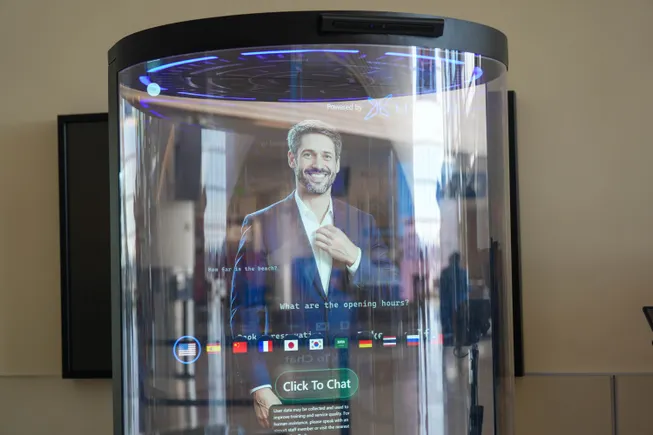
That paradigm is shifting rapidly in the heart of Silicon Valley. At the San José Mineta International Airport, visitors walking past a newly deployed, AI-powered kiosk are encountering something entirely unprecedented: a life-sized, interactive hologram of San Jose Mayor Matt Mahan. Built to answer incoming traveler questions with conversational fluency, the holographic display represents a major leap forward in how municipal leaders and public agencies interact with the communities they serve.
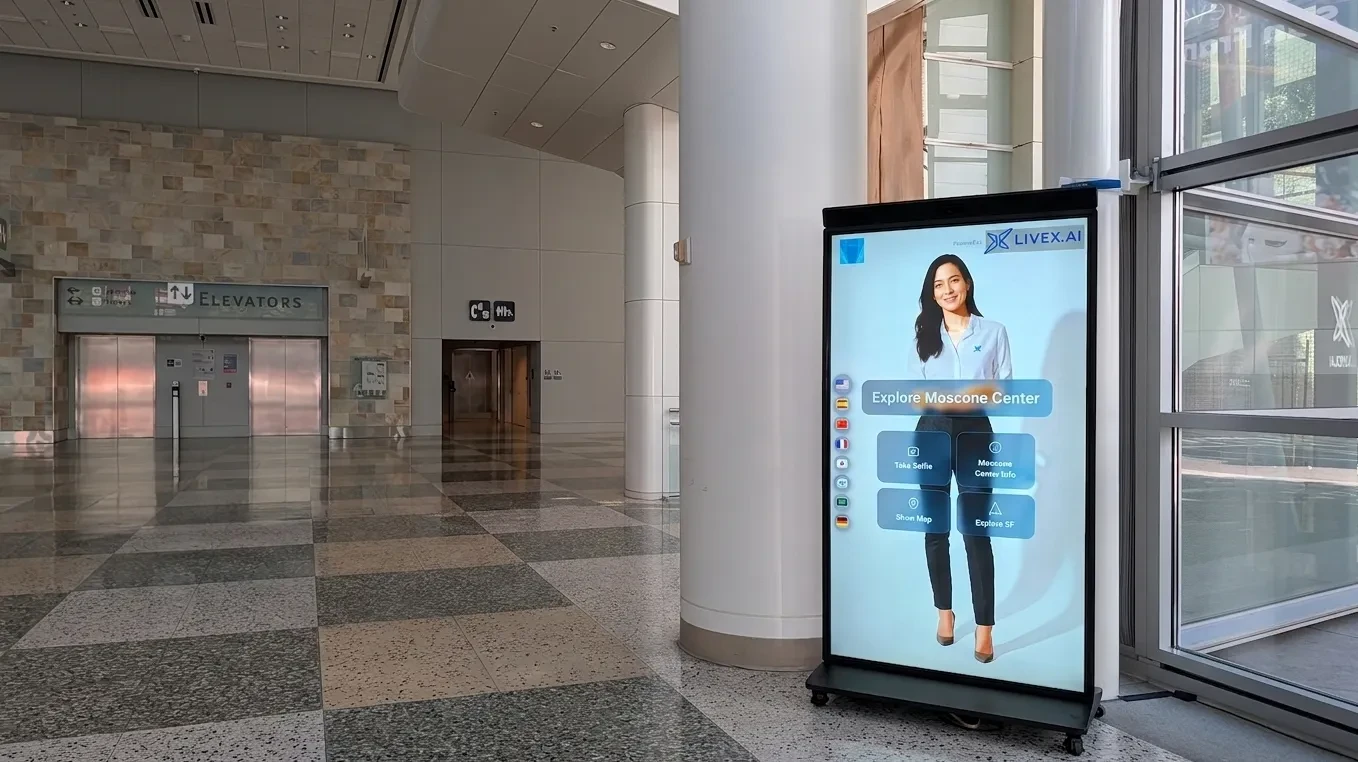
The technology behind the installation is supplied by LiveX, an artificial intelligence firm that collaborated closely with tech giant NVIDIA to develop its advanced interactive systems. Following the initial deployment of the mayor’s hologram in early 2026—timed strategically before Super Bowl LX brought massive crowds to the region—LiveX announced a significant expansion of capabilities for its flagship AI City product suite.
The newly unveiled features include advanced 3D mapping integrations, comprehensive multilingual translation options, and an enhanced "Physical AI Host" experience. According to the company, this iteration introduces a life-sized, human-like hologram capable of engaging in fluid, multi-language conversations with individuals seeking guidance, directions, or local information within physical public spaces.
"LiveX’s interactive AI Hosts provide a unique way to engage with the public through accessible, context-aware intelligence that delivers natural conversation, personalized guidance and real-time assistance in physical spaces," the company noted in a public statement detailing the platform’s commercial rollout.

Along with the high-profile installation at San José Mineta International Airport—which Mayor Mahan has described as the first-ever hologram of a sitting mayor—the LiveX AI City product has expanded across more than 100 distinct customer sites. These deployments include prominent regional venues such as the SAP Center, El Camino Hospital, and the San Jose Sharks stadium, all situated within Santa Clara County, California. Beyond healthcare and sports arenas, the technology has found a foothold in local hotels and commercial retail spaces, expanding the footprint of public-facing artificial intelligence into everyday consumer environments.
The applications of LiveX’s technology have also extended well beyond permanent municipal and commercial installations. The system was actively deployed across the San Francisco Bay Area during the international soccer matches held over the summer, serving global crowds during tournament events, and was utilized to assist attendees at the NBA Summer League in Las Vegas. These high-density deployment scenarios have allowed developers to test the system’s capacity to handle heavy volume, noisy environments, and diverse linguistic needs in real time.
Jai Li, co-founder, president, and chief AI officer at LiveX, emphasized the broad utility and vision behind the physical AI platform during the company’s product announcement.

"AI should be greeting travelers at the airport, guiding a grandmother through the hospital, helping every shopper like the best employee in the building or answering sixty thousand fans at once," Li stated.
The deployment aligns closely with the technological identity of San Jose itself. Located in the center of Silicon Valley, the city is home to a dense ecosystem of emerging and established artificial intelligence companies. ThoughtLab recently recognized San Jose among the leading municipal jurisdictions in the United States for proactive artificial intelligence adoption and integration. Furthermore, Mayor Mahan has consistently positioned his administration as a champion for the responsible and innovative use of AI in municipal operations, previously spearheading specialized upskilling programs designed to train city staff to utilize modern computational tools safely and effectively.
As local governments around the country transition their technological strategies from isolated pilot testing phases to full-scale execution, public-facing artificial intelligence agents are becoming an increasingly common sight in civic infrastructure. The trend is not limited to California. In Texas, El Paso County unveiled an AI-powered tour kiosk from a competing technology vendor at a local zoo during the summer months. Meanwhile, municipal leaders in Raleigh, North Carolina, have outlined strategic plans to introduce specialized AI service agents, including potential customer-facing kiosks at city hall designed to streamline public inquiries and offload routine administrative burdens from municipal staff.
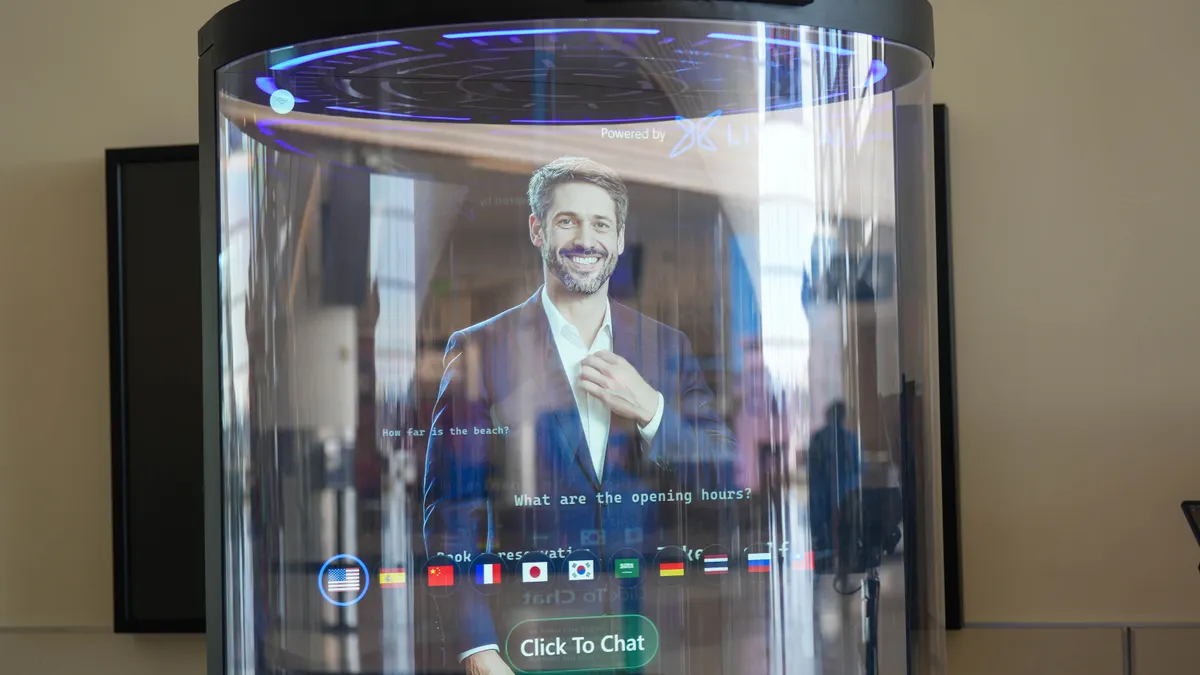
As these interactive digital hosts become more sophisticated and widely accepted, cities are finding new ways to bridge the gap between digital governance and the physical public square, fundamentally changing how everyday citizens and travelers experience municipal services.