For millions of people around the globe, rising sea levels are no longer a theoretical projection of a distant future; they are an urgent, daily reality reshaping economies, displacing cultures, and threatening livelihoods. Driven overwhelmingly by human influence, the world’s oceans are currently rising at a faster rate than at any time in at least the past three millennia, establishing a new and perilous chapter in global climate history.
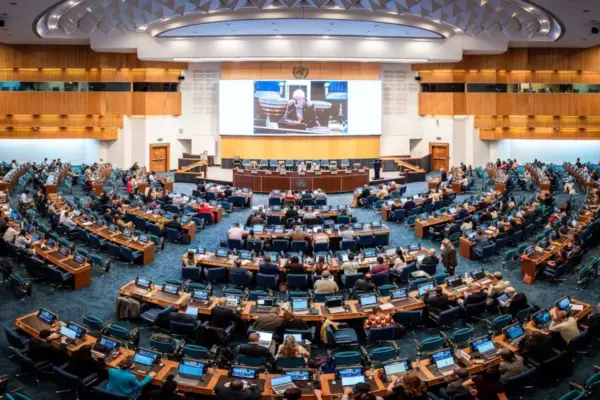
Against this backdrop, world leaders gathered at the United Nations General Assembly in New York are set to adopt a high-level declaration addressing the existential threats posed by rapid sea level rise. The declaration starkly highlights that the crisis is a lived experience for vulnerable populations worldwide. The political consensus underscores a growing recognition that global coastal zones are facing unprecedented vulnerabilities that require immediate and coordinated international attention.
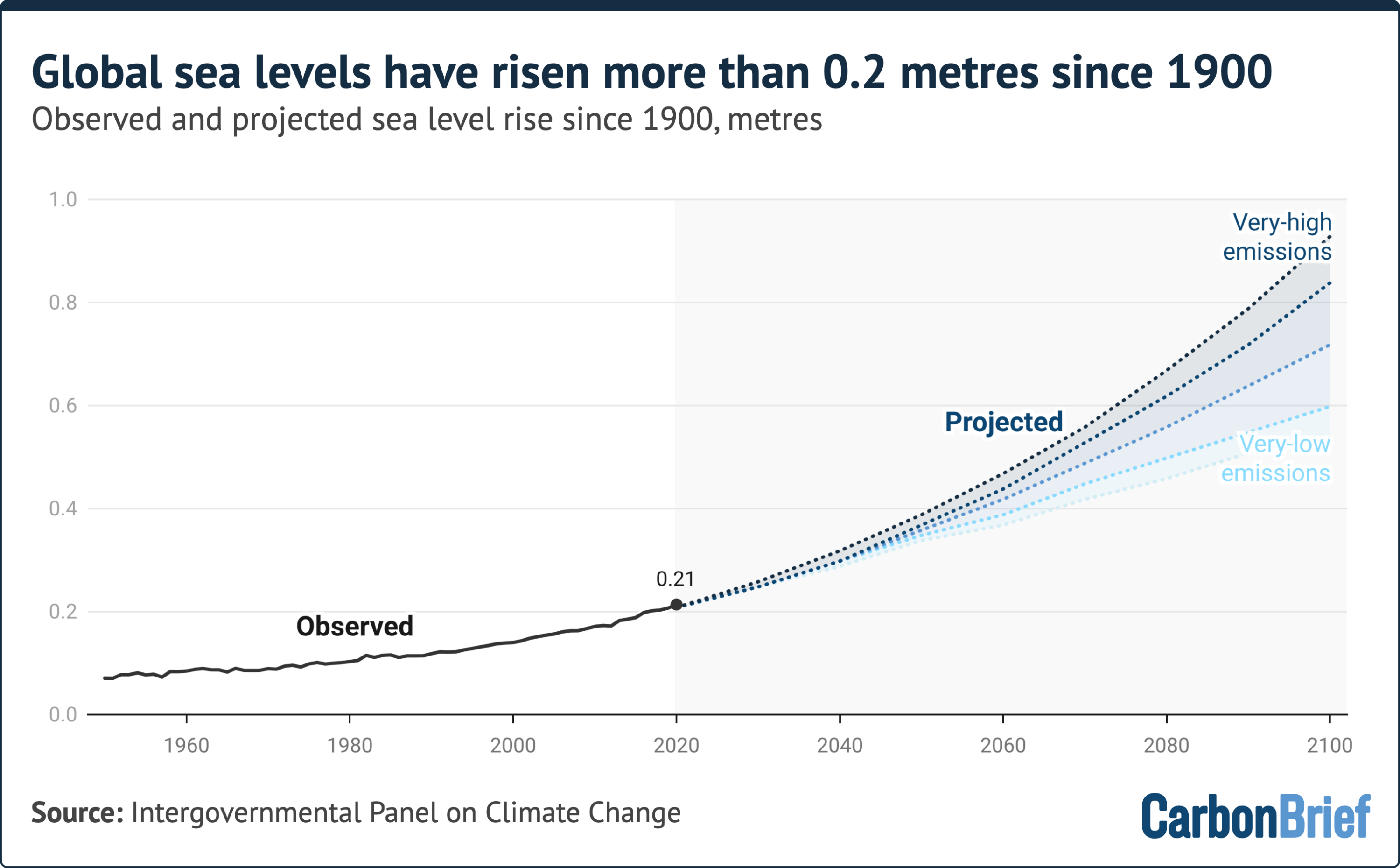
Scientific assessments trace the baseline of the problem clearly. On average, global sea levels rose by 20 centimeters between 1901 and 2018. This historical rise is attributed to a combination of melting glaciers and ice sheets, the thermal expansion of seawater as it absorbs planetary heat, and shifting dynamics in land-water storage. However, the pace of this phenomenon has accelerated dramatically in recent decades. Ocean levels have climbed by an additional 10.6 centimeters since 1993 alone, demonstrating a sharp upward trajectory.
While global averages provide a macro view of the crisis, the local impacts vary widely. Factors such as seismic and volcanic activity, groundwater extraction, and shifts in the Earth’s surface caused by receding ice sheets mean that relative sea level rise can deviate significantly from the global average. Looking ahead, scientists predict that under a moderate-emissions scenario, global average sea levels will rise by an additional 56 centimeters by the year 2100 relative to a 1995–2014 baseline.
Cities and Coastal Communities
The human footprint along the world’s coastlines puts hundreds of millions of individuals directly in harm’s way. According to a report released by the UN secretary-general, approximately 770 million people—representing roughly 10% of the global population—live in locations defined as being at acute risk of negative impacts from sea level rise, sitting less than five meters above the high-tide line.
This vulnerable population includes residents of some of the world’s largest and most economically vital urban centers, such as Mumbai and Kolkata in India, and Shenzhen and Guangzhou in China. It also encompasses the entirety of several low-lying island nations.
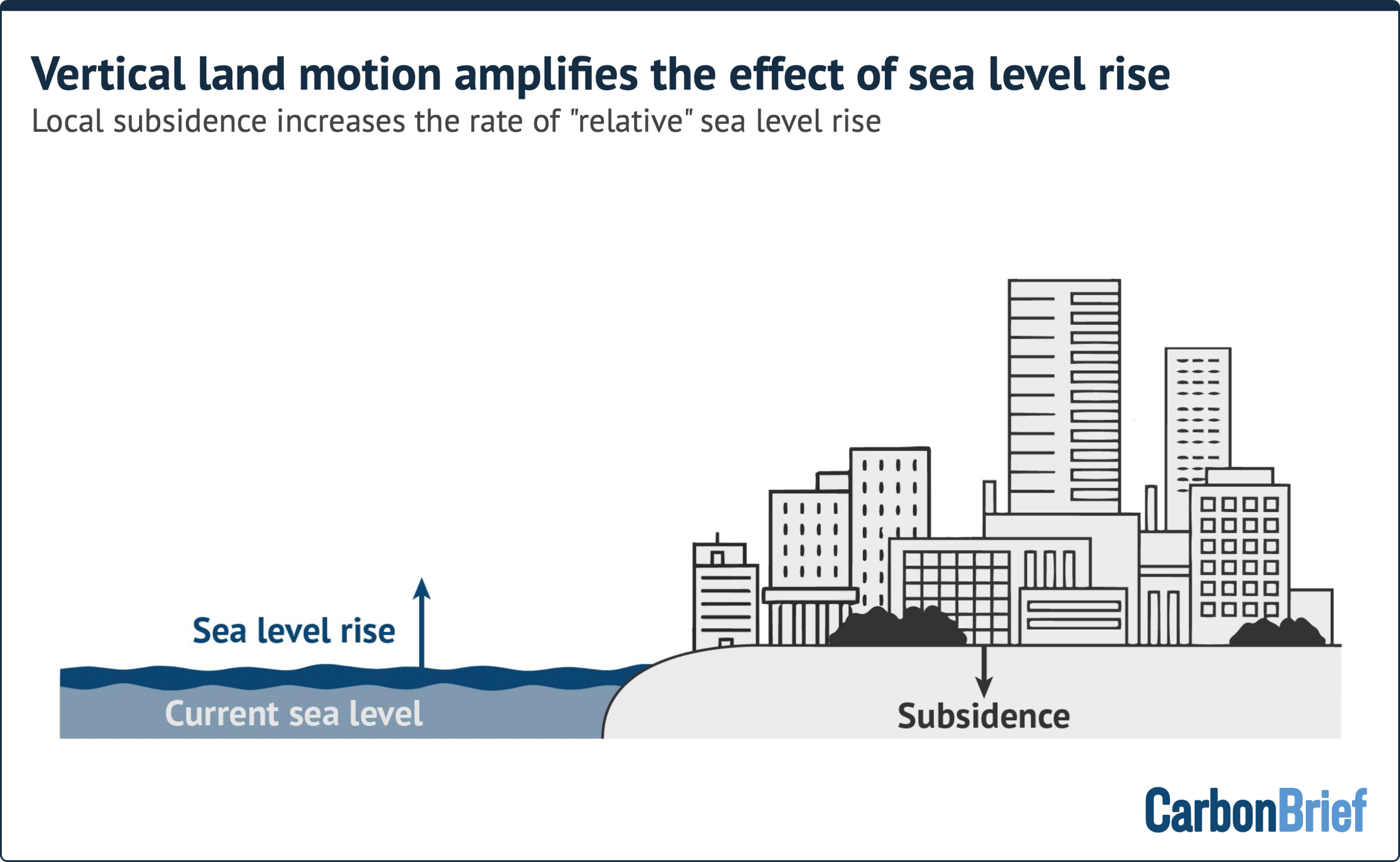
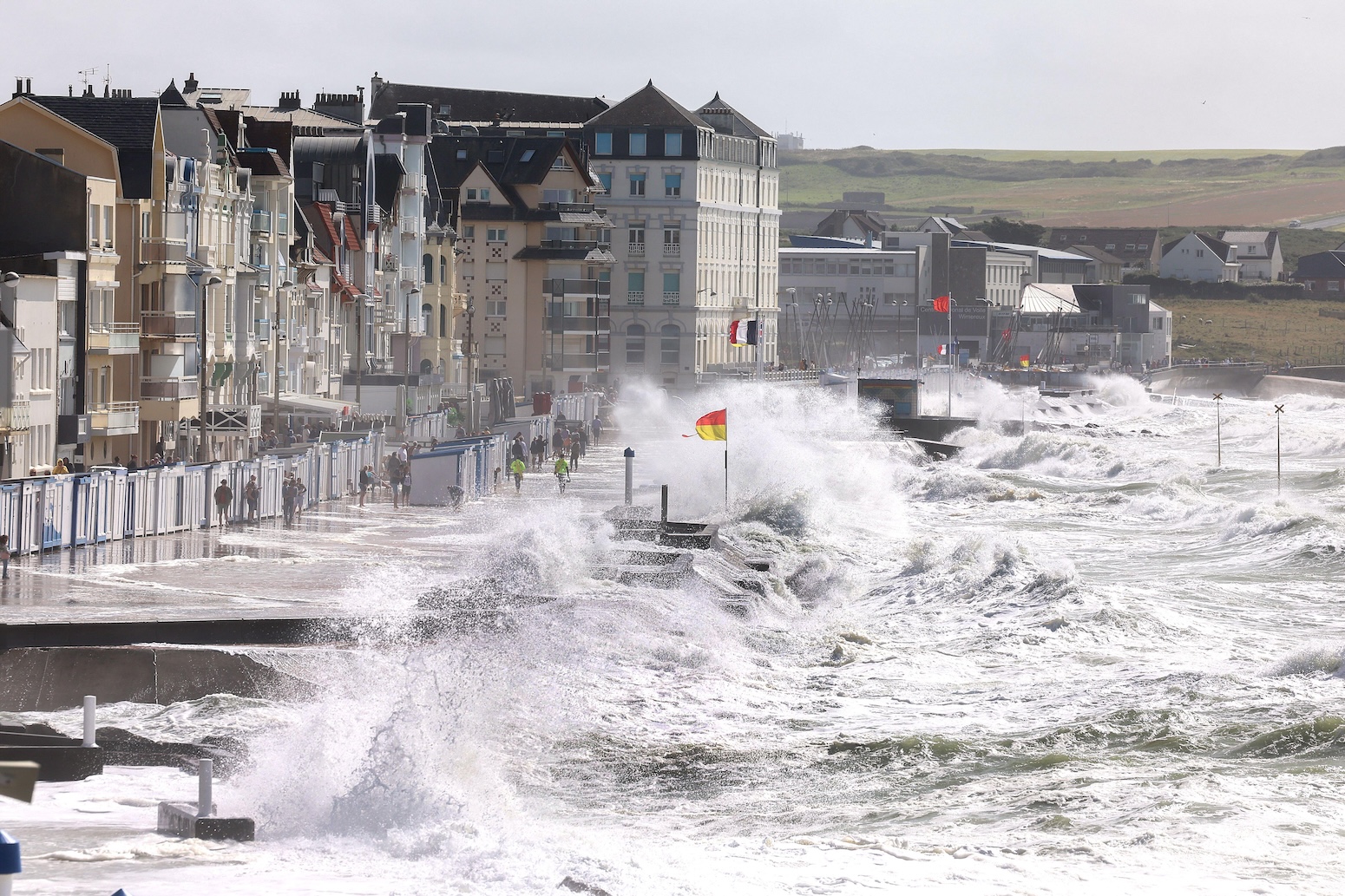
To understand these dangers, experts distinguish between global-average sea level rise, which measures the upward movement of the ocean surface relative to a baseline, and relative sea level rise. The latter accounts for local variables like land motion, ocean circulation, and gravitational changes resulting from melting ice sheets. Higher seas introduce a cascade of hazards to these regions, including persistent flooding, intensified storm surges that batter coastlines, and accelerated erosion of beaches and coastal cliffs. Furthermore, rising sea levels elevate the coastal water table, amplifying flood risks from beneath the surface.
The frequency of extreme sea level events—where high tides, severe storms, and relative sea level rise combine to produce catastrophic water levels—has increased 12-fold since 1900. Under moderate emissions, these once-in-a-century events are projected to occur at least annually, and potentially much more frequently, in many coastal areas by the end of the century.
Critical infrastructure, including water treatment systems and wastewater management projects, faces severe vulnerabilities. Routine flooding cuts communities off from essential services like healthcare and markets, disproportionately impacting low-income and marginalized groups. Inland saltwater intrusion also threatens agricultural viability in low-lying food-producing regions.
Vertical land motion frequently exacerbates these dangers. In places like Jakarta, Indonesia, rapid groundwater overextraction has caused land subsidence of up to 15 centimeters per year over the past decade, causing local relative sea level rise to far outpace global climate-driven averages. Despite mounting risks, population growth in coastal zones continues to outpace inland areas. Between 2000 and 2018, the global population grew by just over 23%, while the population living within five kilometers of a coast surged by 28%. Consequently, even without accounting for future sea level rise, global flood losses in the world’s 136 largest coastal cities could reach up to $52 billion per year by 2050, up from $6 billion in 2005.
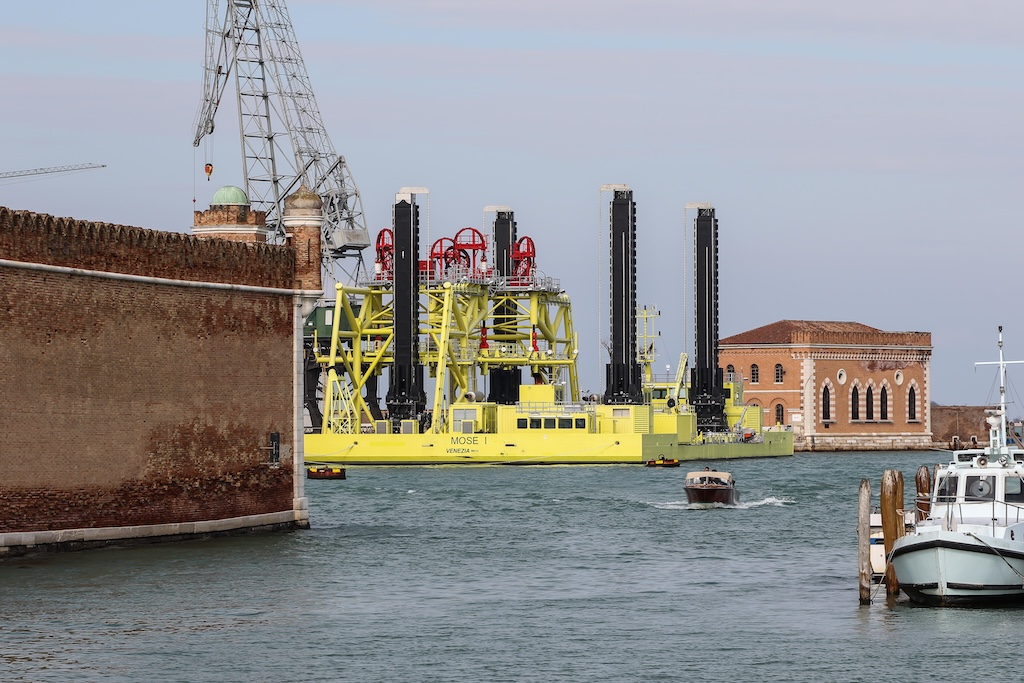
Communities have deployed various defensive measures in response. In Italy, Venice constructed the MOSE flood barrier system, comprising movable gates designed to protect the lagoon from the Adriatic Sea, which was first deployed in late 2020. Other regions have relied on seawalls, the restoration of natural protective barriers like mangroves and marshes, and the managed retreat or relocation of vulnerable infrastructure. However, under lower-emissions scenarios, existing defenses may still be breached with alarming frequency in the coming decades.
Biodiversity and Coastal Ecosystems
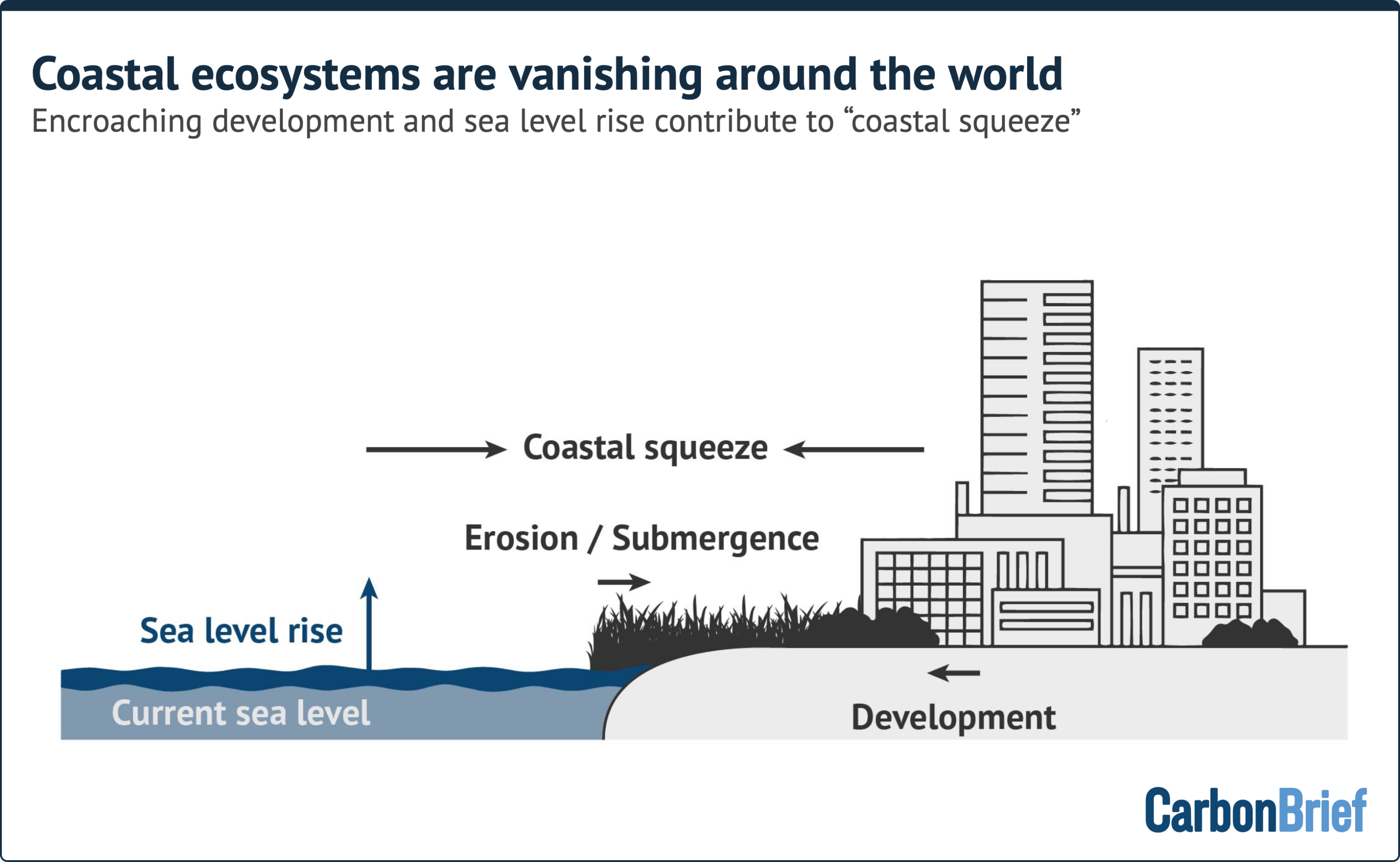
Coastal ecosystems worldwide face dual pressures from human development and rising waters, a phenomenon known as "coastal squeeze." When ecosystems attempt to migrate inland in response to rising seas, their paths are routinely blocked by human infrastructure, leading to severe habitat loss.
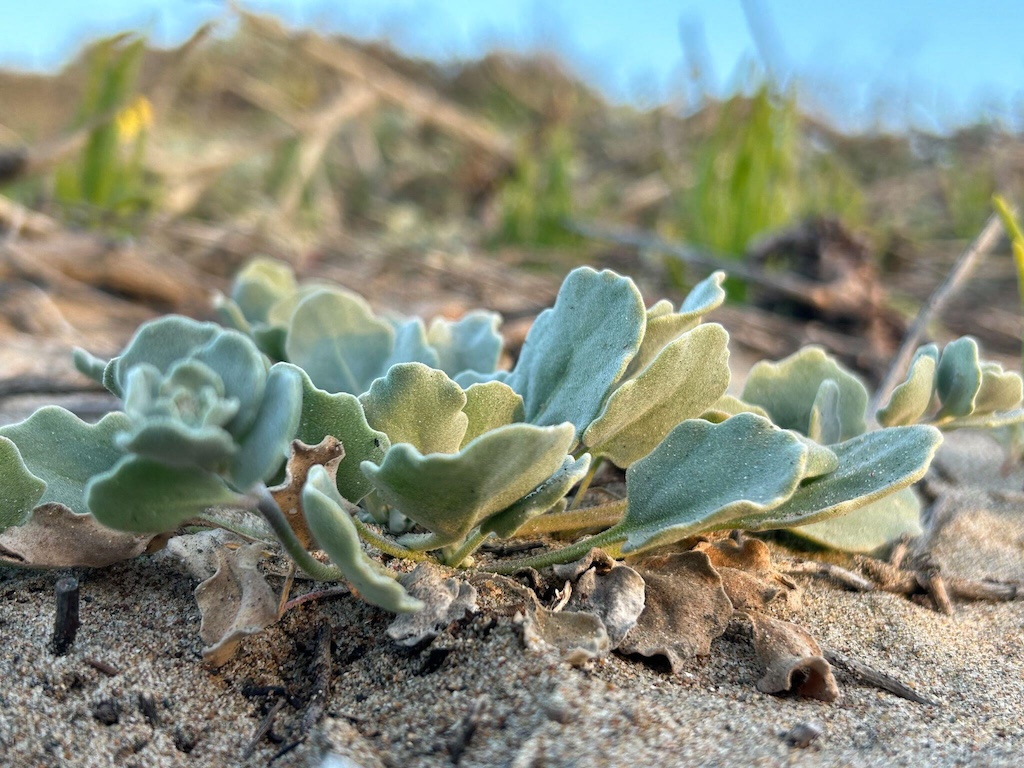
Global wetlands—including estuaries, tidal flats, mangroves, and seagrass meadows—have suffered massive declines. According to the global wetland outlook report, nearly 28 million hectares of coastal wetlands have vanished since 1970, an area roughly equivalent to the size of Ecuador. While agricultural conversion remains a primary driver, climate change and sea level rise increasingly exacerbate these losses by altering the intensity of extreme weather, fires, and floods.
In the continental United States, research shows that only 16% of coastal wetlands are migrating inland fast enough to outpace local sea level rise. The vast majority of sites are failing to keep pace, while 11% are actively submerging.
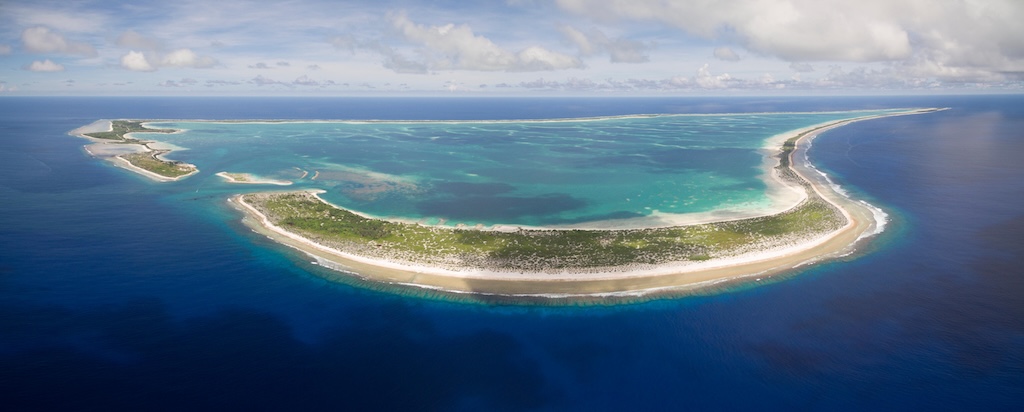
Low-lying islands face severe threats given their high ratio of coastline to land area. Many of these islands serve as irreplaceable biodiversity hotspots; over 20% of the Earth’s known plant species exist exclusively on islands. Modeling indicates that with one meter of sea level rise, roughly 6% of island habitat areas would be entirely submerged, while more than 11% of hotspot islands would see their land areas reduced by at least half, threatening numerous endemic species with extinction.
In 2024, researchers documented the first known local extinction of a plant species in the US driven by sea level rise. Amplified hurricanes and storm surges decimated the sole US population of the Key Largo cactus during the 2010s, leading to severe soil erosion and saltwater intrusion until the final specimens were removed for greenhouse cultivation in 2021. As native species decline, surviving ecosystems become increasingly vulnerable to invasive alien species, compounding the biodiversity crisis.
Small Island Developing States
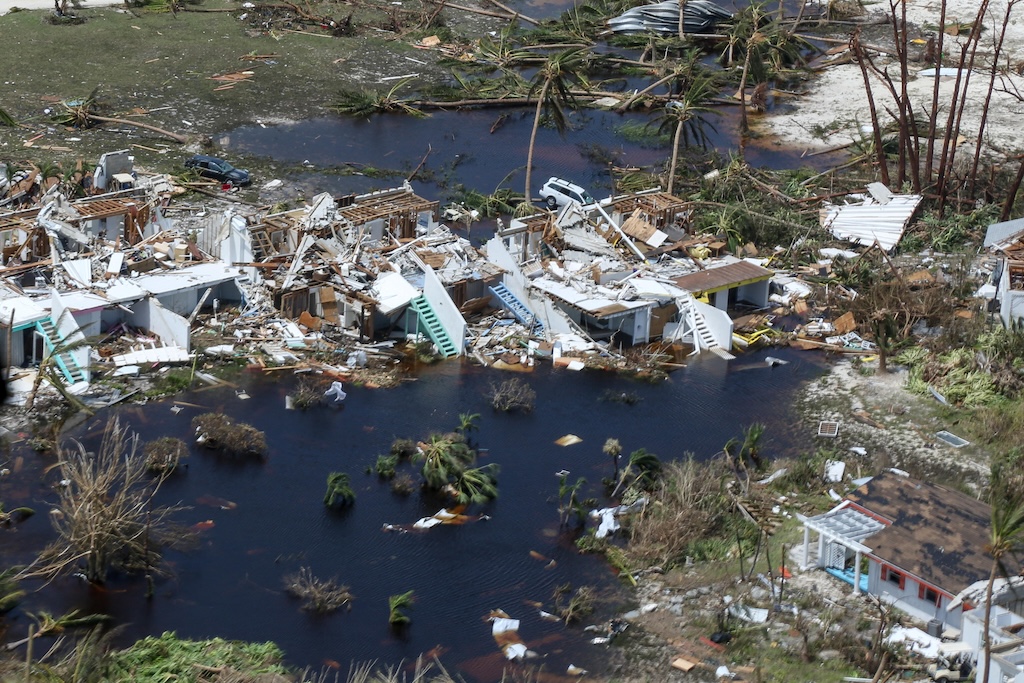
Small island developing states face an acute and disproportionate threat from rising seas. Many of these nations consist of coral or sandy atolls with average elevations of only one to two meters above sea level.
Geographic realities leave these nations uniquely exposed. Pacific island nations are located in a region where relative sea level rise driven by the melting Antarctic ice sheet is projected to be 11% to 33% higher than the global average by 2100, regardless of emissions pathways. The consequences are already visible: nations like Kiribati and the Solomon Islands have seen uninhabited islets completely submerged or severely eroded over the past two decades, forcing community relocations.
Despite bearing minimal responsibility for global emissions, these nations lack the domestic financial resources required for comprehensive adaptation. The UN estimates that small island developing states will require up to $6 billion annually by 2035 for climate adaptation, yet they received only $1.2 billion in public adaptation finance during 2023. Annual climate damages from coastal flooding in these regions currently stand at $1.64 billion, but are projected to surge to $24 billion even if global warming is limited to 1.5 degrees Celsius.
International legal frameworks are also grappling with the implications of rising seas. Questions have emerged over the status of maritime boundaries, such as exclusive economic zones, which are traditionally tied to physical land borders. However, a report by the UN International Law Commission concluded that international law permits countries to maintain their existing maritime borders despite physical coastline changes resulting from climate change, while emphasizing the urgent need to protect displaced populations.
Coral Reefs
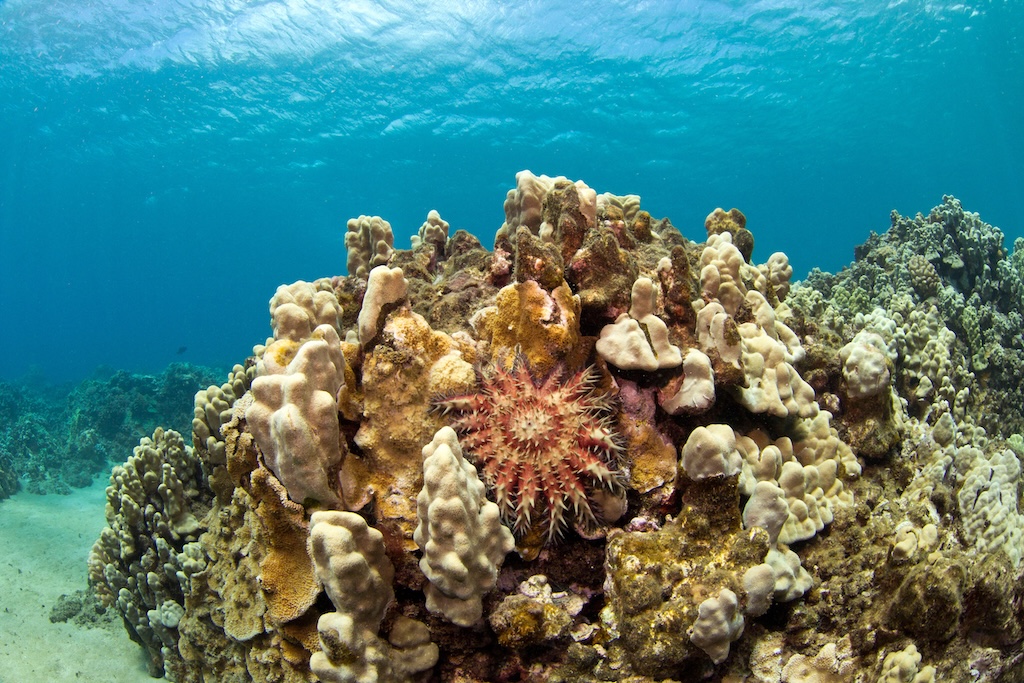
Coral reefs represent some of the ecosystems most vulnerable to a warming planet. While warming ocean temperatures drive widespread coral bleaching, sea level rise introduces its own complex set of physical challenges.
As oceans rise, the water deepening above shallow reefs has a dual effect. On one hand, deeper water can slightly reduce peak temperatures, offering a minor buffer against marine heatwaves. On the other hand, increased water depth reduces the amount of sunlight reaching coral communities, hindering their survival and photosynthetic processes. Furthermore, sea level rise-driven erosion washes increased sediment into nearshore waters. These particles settle on corals, obstructing their ability to feed, reproduce, and grow.
While some reefs in the western Pacific have historically kept pace with rising seas through accelerated vertical growth, modeling indicates that few possess the capacity to maintain their proximity to the surface under moderate-emissions scenarios. As reefs degrade, the seafloor beneath them erodes, worsening apparent local sea level rise in regions like the Caribbean, Florida, and Hawaii. Overall, the world has lost nearly 10% of its coral cover since 1980 due to ocean warming, prompting warnings from international bodies that every fraction of a degree of warming escalates risks to marine ecosystems.
Heritage Sites
Humanity’s historical preference for settling along rivers and coastlines has left a vast collection of cultural and natural heritage sites exposed to rising seas. The UN sea level rise report highlights that physical sites, traditional lands, sacred locations, and coastal landscapes are increasingly vulnerable to flooding and erosion.
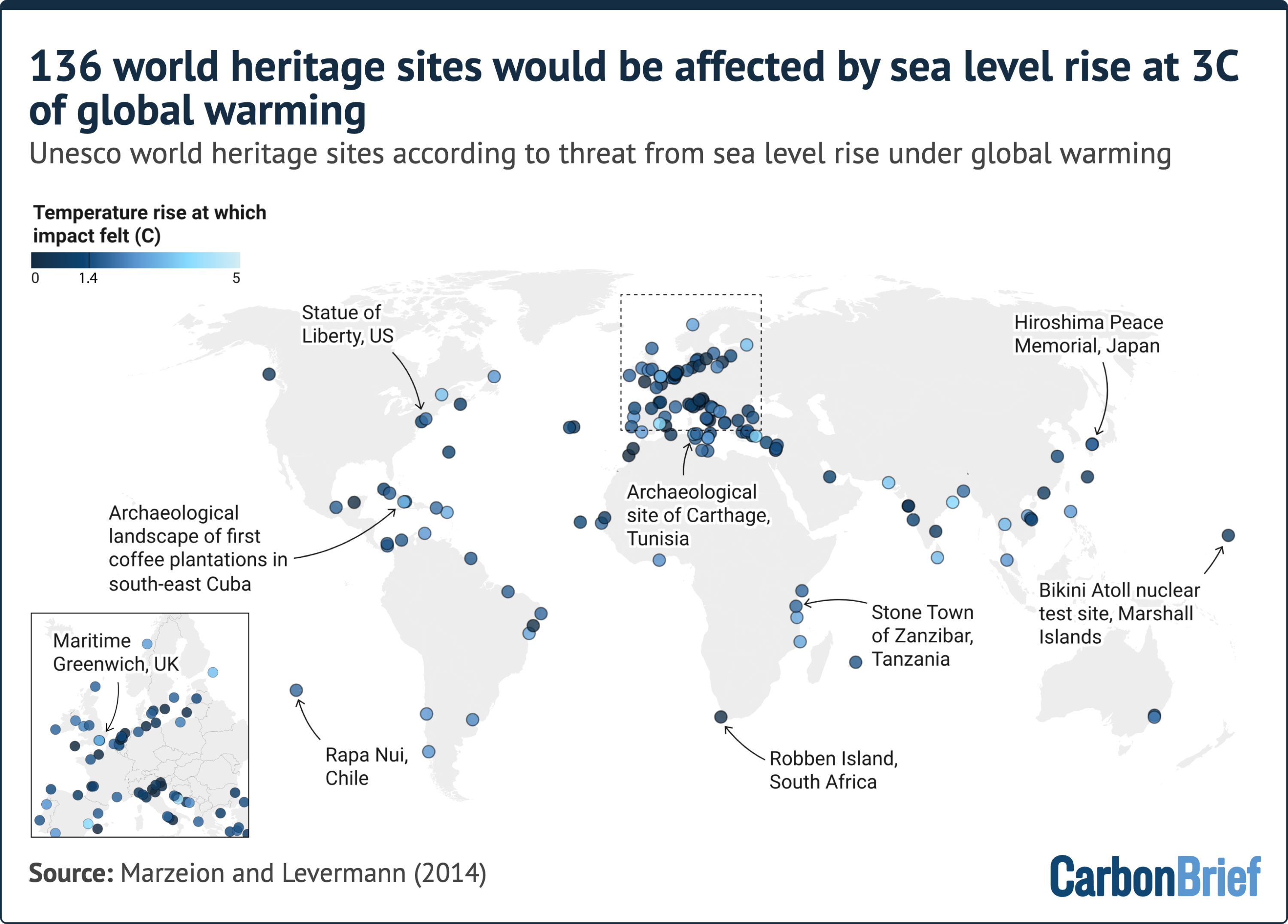
In the Mediterranean, 49 UNESCO world heritage sites sit at low elevations along the coast. Nearly all face direct threats, with 42 experiencing active erosion and 37 at risk from century-level flood events. Threatened locations include the ancient archaeological ruins of Carthage in Tunisia, Ephesus in Turkey, Pompeii and Herculaneum in Italy, and the medieval Cathedral of St. James in Croatia.
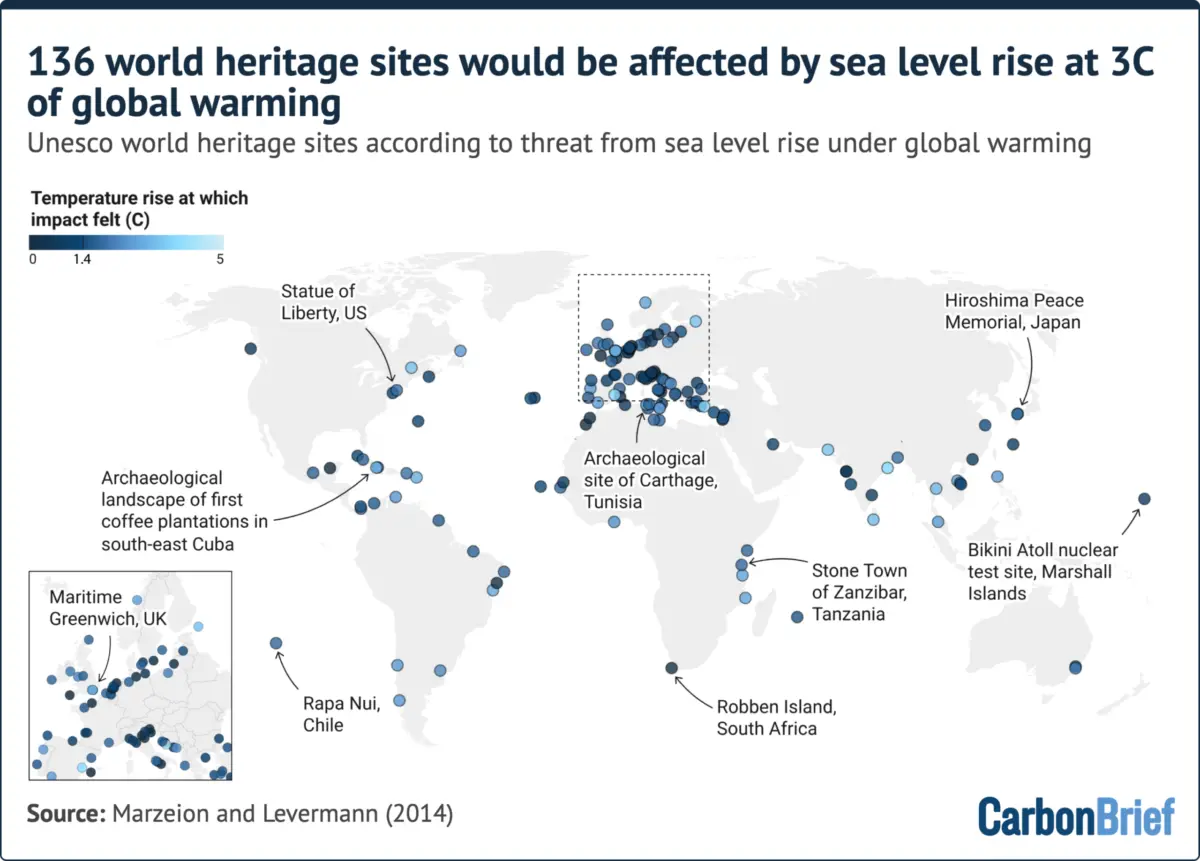
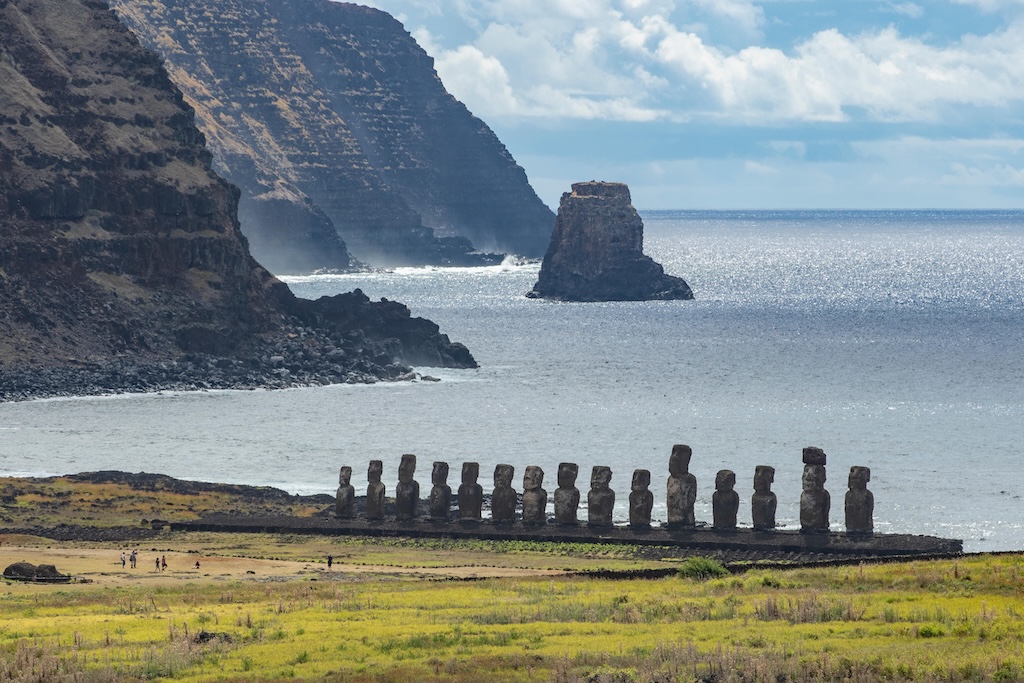
Projections indicate that warming of three degrees Celsius above pre-industrial levels would impact nearly one-fifth of all UNESCO cultural world heritage sites, including Japan’s Hiroshima Peace Memorial, South Africa’s Robben Island, Chile’s Rapa Nui, and the Sydney Opera House. In Africa, 56 out of 284 heritage sites currently face risks from flooding or erosion, a figure expected to nearly triple to 191 threatened sites by 2050 under moderate emissions. Global assessments indicate that 386 coastal UNESCO heritage sites sit within 20 meters of current sea levels, placing an irreplaceable repository of human history directly in the path of a changing climate.