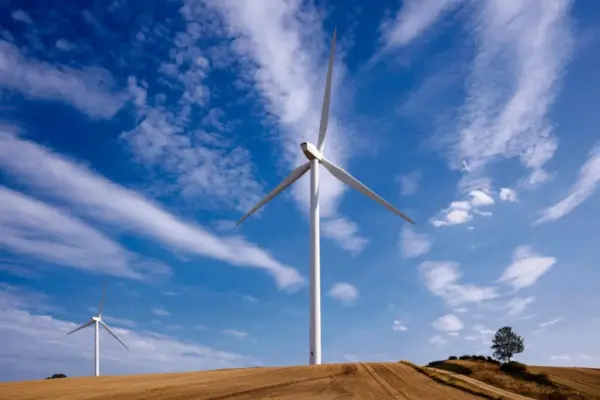
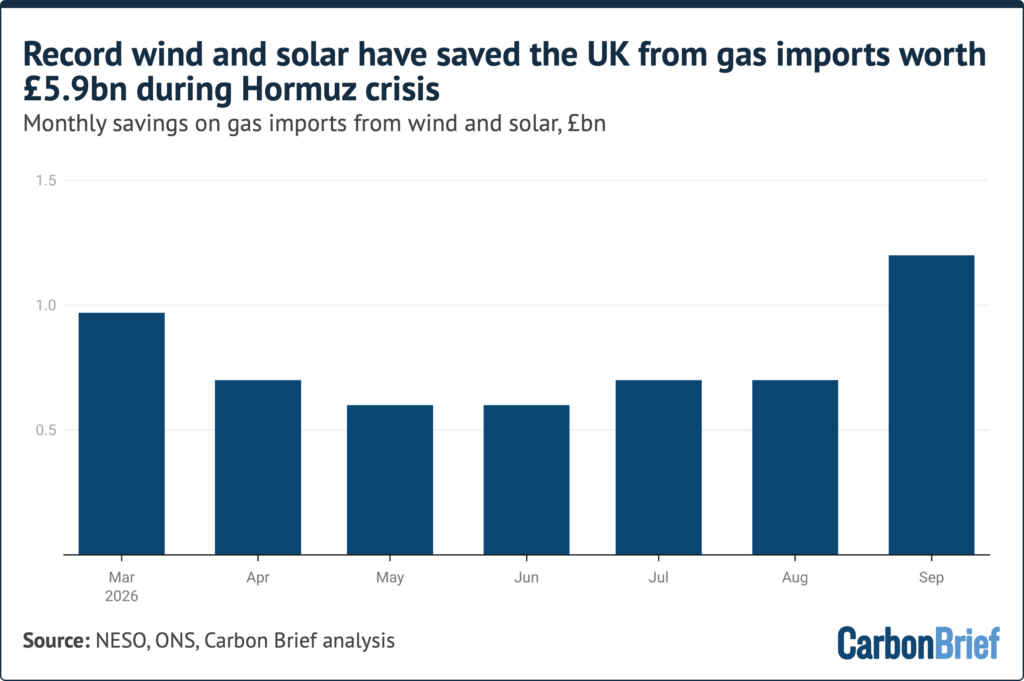
The United Kingdom has successfully avoided the need for natural gas imports worth an estimated £5.9bn since the onset of the Hormuz crisis, shielded by a historic surge in domestic wind and solar power generation. New findings from Carbon Brief highlight how an unprecedented expansion in renewable energy has served as a critical buffer against soaring international fossil fuel costs, protecting the grid from deeper disruptions.
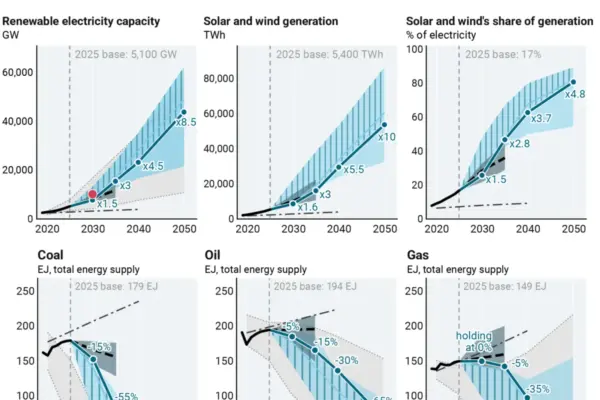
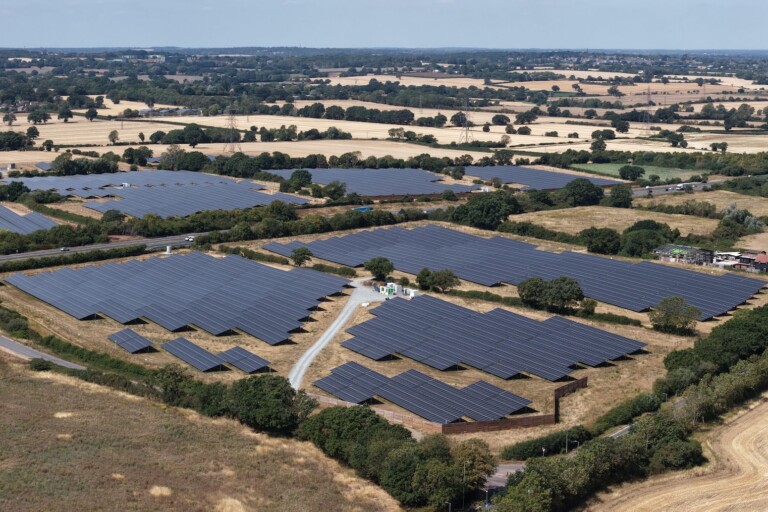
While global wholesale gas prices have escalated to levels unseen since the severe energy crisis of 2022, the UK’s clean energy infrastructure has delivered record-breaking performance. Wind and solar output across the country has climbed by 14% year-on-year, directly displacing the demand for gas-fired electricity, which has fallen by nearly 10% over the same period in 2026.
The scale of this renewable transition is historic. In the year to date, wind and solar have accounted for a record 41% share of the UK’s total electricity generation, overshadowing gas-fired power, which has supplied just 25%. This shift has fundamentally rewritten the nation’s energy dynamics during a period of acute geopolitical vulnerability.
The Cost of the Hormuz Crisis and Avoided LNG Deliveries
The £5.9bn in avoided gas imports stems directly from the outbreak of conflict involving the US and Iran in February 2026, which severely restricted maritime corridors and sent shockwaves through global energy markets. Had the UK not benefited from its soaring renewable generation, keeping the lights on and homes heated would have required securing the equivalent of more than 100 additional tanker deliveries of liquefied natural gas (LNG).
For the month of September 2026 alone, import savings are projected to hit £1.3bn. This figure is the combined result of record-breaking wind and solar output—reaching nearly 10 terawatt hours (TWh)—and sharply rising commodity prices. These latest figures build upon earlier analyses published by Carbon Brief in the spring, which tracked the immediate stabilizing effects of renewables as the Middle East conflict first disrupted global supplies.
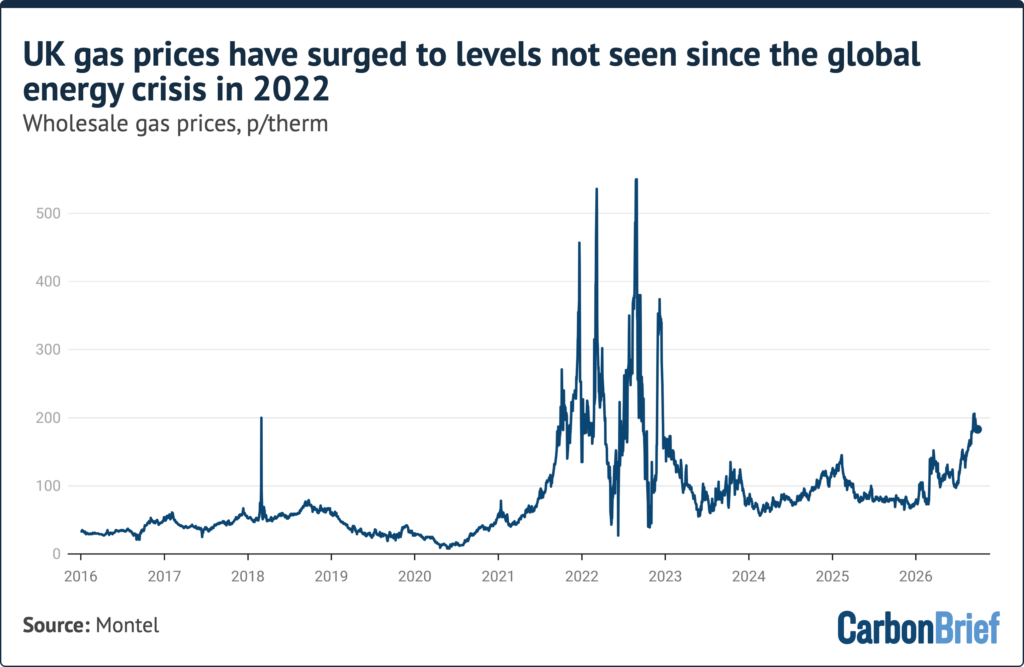
The UK’s exposure to volatile fossil fuel markets has deep roots. Wholesale gas prices remained persistently elevated after Russia cut off pipeline supplies to Europe following its invasion of Ukraine in 2022. Between 2023 and the start of 2026, gas prices averaged 90p per therm—roughly three times higher than the baseline seen in 2019 before the combined shocks of the Covid-19 pandemic and the Ukraine war.
Since the outbreak of hostilities in the Middle East in March, prices have climbed even higher, averaging 134p per therm, nearly four times pre-crisis levels. By September 2026, prices surged to an average of 189p per therm, marking the highest sustained peak since the 2022 energy crisis.
Rising Winter Pressures and Diverging Household Bills
Market analysts warn that UK gas prices are spiking once again due to the seasonal approach of winter, which naturally drives up heating demand, combined with an ongoing deadlock in the Hormuz crisis. Compounding the issue, European natural gas storage levels remain historically low as the colder months approach. This deficit sets the stage for intensified international competition between Europe and Asia to secure the scarce LNG cargoes necessary to maintain adequate heating reserves.
Within the UK, these wholesale spikes are passing through directly to household heating bills under the regulatory price cap set by Ofgem. According to analysis from the thinktank Nesta, typical household gas bills are set to rise by 33%—amounting to roughly £200 more per year—compared to levels seen in April.
In stark contrast, household electricity bills have experienced a negligible increase of just 4%. This widening gap underscores how the aggressive expansion of home-grown renewable generation is altering traditional consumer cost structures.
Andrew Sissons, director for sustainable future at Nesta, noted on social media that the long-standing structural link between electricity and gas prices has begun to fracture, offering consumers a degree of protection that was absent during previous supply crunches.
Broader Economic Fallout Across Fossil Fuel Markets
The fallout from the crisis extends far beyond natural gas, placing immense pressure on importers of oil, diesel, and other refined fuels. Reports indicate that the European Union has had to absorb an additional €100bn in fossil fuel import costs since the crisis began, with low- and middle-income countries bearing an especially heavy economic burden.

In the UK, diesel prices have climbed to record highs of approximately £2.00 per litre. Conversely, recent analyses underscore the financial insulation provided by electrification, demonstrating that driving electric vehicles remains significantly cheaper than operating petrol or diesel alternatives.
Addressing delegates at the Labour Party conference, Energy Secretary Miatta Fahnbulleh emphasized that the root cause of elevated energy bills lies in the nation’s historical exposure to volatile global fossil fuel markets.
Prime Minister Andy Burnham echoed these sentiments in his own conference address, pointing to the acceleration of clean energy as the primary vehicle for mitigating the impact of international gas price shocks on domestic consumers.
Burnham confirmed that the government is actively pursuing measures to decouple domestic power costs from international gas markets. He noted that the administration is fast-tracking a massive expansion of home-grown renewables and nuclear power to cement long-term energy independence and bring relief to household budgets.