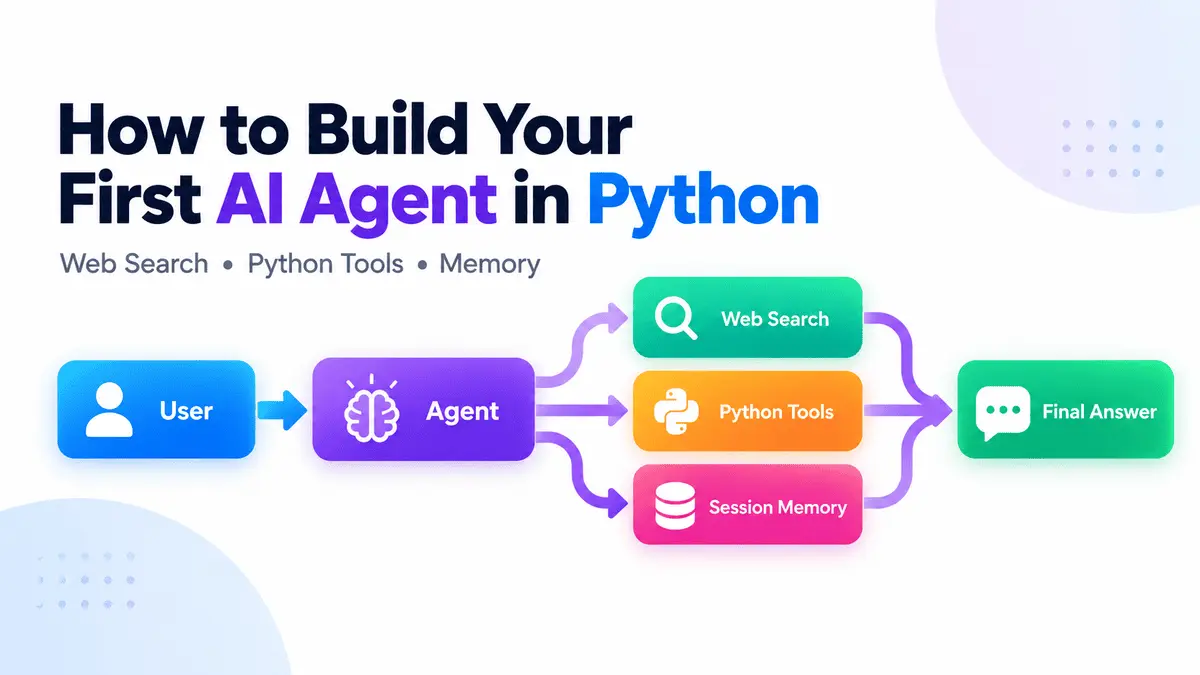
Building autonomous AI applications in Python has become significantly more streamlined following the introduction of advanced orchestration tools that remove the burden of manual engineering. Developers looking to build intelligent systems can now leverage the OpenAI Agents SDK to easily create agents, integrate external tools, preserve conversation state across sessions, and execute multi-step workflows without needing to construct custom tool-calling loops from the ground up.
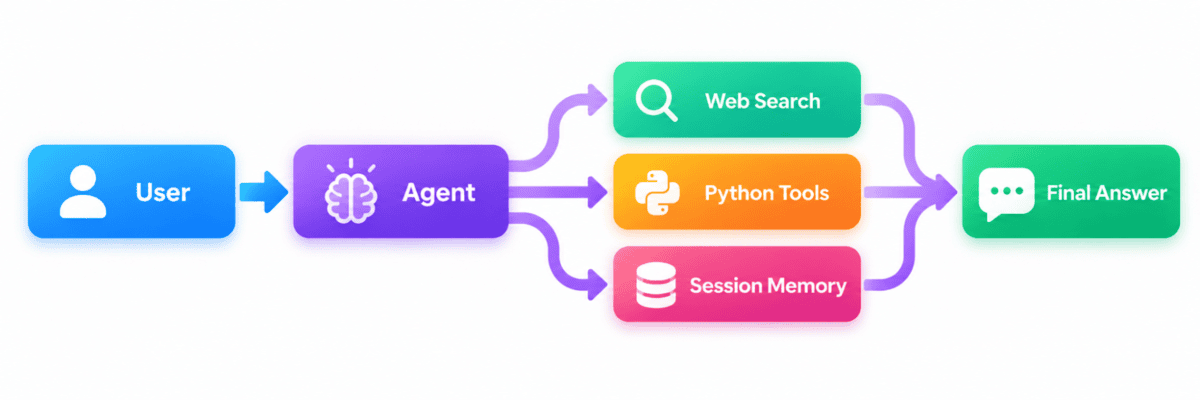
Traditional large language model applications typically rely on a rigid, single-turn interaction pattern where a prompt is sent to a model, an answer is generated, and the process terminates. Modern AI agents, by contrast, introduce dynamic execution loops equipped with tools and reasoning capabilities. Instead of merely outputting static text, an agent can autonomously determine whether it needs to take preliminary actions—such as querying the live internet, executing custom Python functions, or retrieving contextual information from database memory—before formulating a final response to a user.
The underlying architecture of the OpenAI Agents SDK manages this operational process automatically through its core runner mechanism. When a user submits a query, the system dispatches the request to the language model, executes any tools requested by the agent, feeds the resulting data back into the workflow, and continues the cycle until a definitive answer is produced. This capacity to reason, deploy tools, and sustain operations across multiple sequential steps is what fundamentally distinguishes a sophisticated AI agent from a basic language model wrapper.
Project Setup and Environment Configuration
Setting up a modern development environment for building these agents has also been simplified through modern package management utilities. Developers can initialize a clean project workspace utilizing tools like uv or standard Python package installers. Once the necessary libraries are installed and API credentials are securely configured within the operating system environment variables, developers can transform a handful of lines of Python code into a functional agent capable of fetching real-time information from the web.
By incorporating specialized components such as hosted web search capabilities, models are no longer constrained by their static training data cutoff points. Instead, the agent autonomously decides when current information is strictly required to answer a prompt accurately. For instance, when queried about recent updates to the Python programming language, the system can dynamically retrieve current release cycles, version numbers, and feature updates directly from the live web without requiring manual API integration by the developer.
Integrating Custom Python Tools
While live web search provides access to external information, agents derive significantly more utility when they are granted the ability to interact directly with custom application logic and proprietary codebases. Developers can easily extend an agent’s operational boundaries by decorating standard Python functions with specialized tool markers.
The software development kit automatically parses function names, input arguments, type hints, and documentation strings to construct precise schemas that the language model can readily interpret. This means developers are entirely absolved from the tedious task of manually defining complex JSON schemas or writing the underlying boilerplate code required to parse tool execution loops. Writing clear and descriptive function documentation remains essential, as these descriptions guide the model in understanding the exact purpose of a tool and determining the optimal moments to invoke it.
Implementing Persistent Conversation Memory
For an agent to function effectively in real-world scenarios, it must maintain context over the course of an extended dialogue rather than treating every incoming message as an isolated event. To achieve this conversational continuity, developers can integrate session backends that record interaction histories.
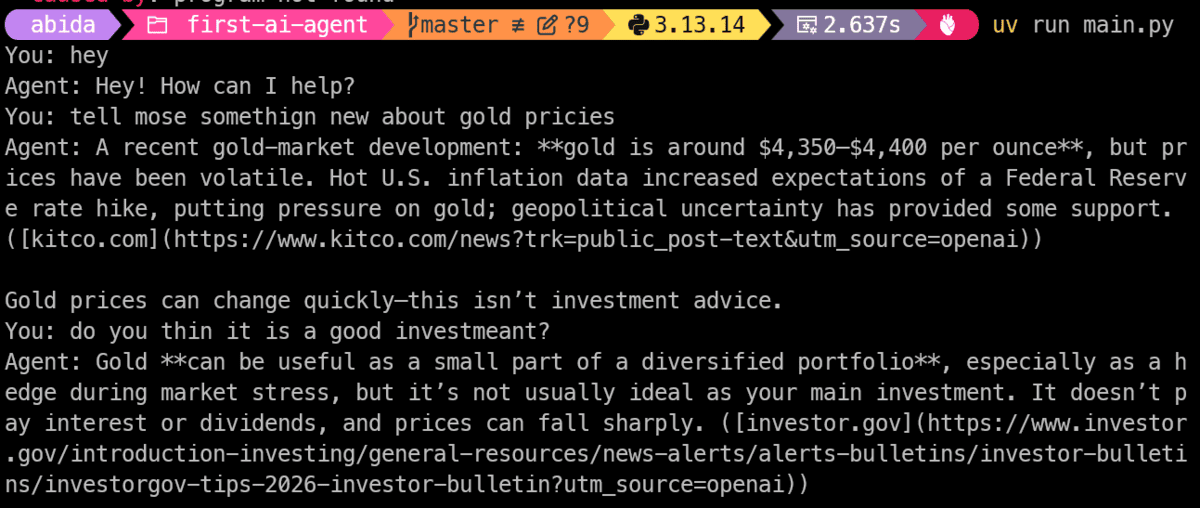
By utilizing file-backed database options such as SQLite, conversation logs persist safely even if the underlying program is restarted. For larger enterprise applications, the SDK accommodates alternative session management backends, including scalable systems like Redis, SQLAlchemy, and MongoDB. This persistent memory layer ensures that subsequent user inputs—such as follow-up questions referencing previously discussed topics—are naturally understood by the agent within the correct historical context.
Complete Architecture and Operational Tracing
When these various components are combined, the agent operates through a cohesive triad: the agent itself determines the necessary course of action, the runner executes the iterative workflow and handles tool calls, and the active session preserves the conversational history between requests. This unified approach delivers a fully realized conversational interface complete with live data retrieval, custom computational functions, persistent memory storage, and robust error handling.
Furthermore, advanced development workflows benefit greatly from built-in tracing capabilities enabled by default within the SDK. Tracing allows developers to thoroughly inspect underlying model interactions, tool selections, and step-by-step reasoning paths taken during any given agent run. By reviewing these execution traces directly within administrative dashboards, development teams can effectively debug unexpected tool-calling behavior, refine system instructions, and optimize overall application performance as their underlying workflows grow in complexity.
Ultimately, constructing an effective artificial intelligence agent relies less on orchestrating an overwhelmingly complex autonomous system and more on equipping a capable language model with the appropriate tools and operational boundaries. By letting the underlying development framework handle the mechanical execution loops, developers can focus on designing useful workflows, integrating specialized tools, and scaling their applications reliably as demands evolve.
Abid Ali Awan is a certified data scientist professional specializing in machine learning model development, technical writing, and content creation. Holding a Master’s degree in technology management and a bachelor’s degree in telecommunication engineering, his professional focus centers on advancing data science technologies and developing innovative artificial intelligence applications utilizing graph neural networks.