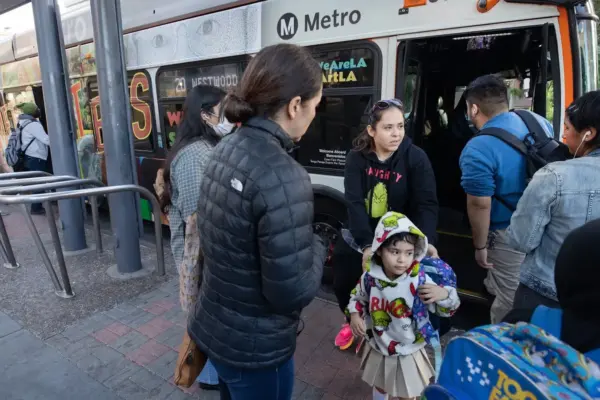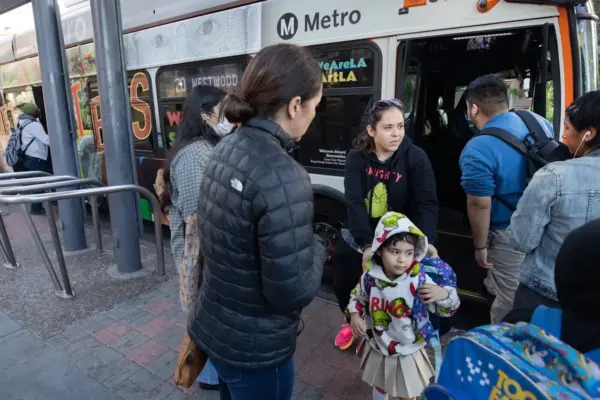
LOS ANGELES — The public transit landscape in Los Angeles has taken a major step forward with the official groundbreaking of the Vermont Avenue Bus Rapid Transit (BRT) project. Designed to revolutionize north-south transit connectivity across the city, the heavily anticipated initiative has officially crossed its final financial hurdle and is moving into the construction phase.
The Federal Transit Administration (FTA) catalyzed the project’s final push by awarding the development nearly $150 million through its Capital Investment Grant Small Starts Program. With the federal funding secured on Sept. 1, the initiative is now fully financed. The remainder of the project budget is supported by a robust combination of state transportation funds and local voter-approved sales tax revenue, ensuring the construction timeline can proceed without financial interruption.
Dive Brief:
The completion of the funding package marks the transition from planning to physical implementation for a corridor that transit officials have prioritized for decades. The Vermont BRT route will span a heavily traveled corridor stretching from East Hollywood at its northern terminus down to the West Athens neighborhood at its southern end.
Dive Insight:
During the official groundbreaking ceremony, transit leaders and elected officials gathered to celebrate the milestone and emphasize the transformative impact the project will have on the region’s daily commuters.
"By improving the Vermont corridor, we fortify the north-south backbone of our bus system," LA Metro CEO Stephanie Wiggins said at the groundbreaking ceremony.
When construction concludes and the line opens to the public, the Vermont BRT is expected to carry more than 66,000 riders every single day, providing a massive injection of passenger capacity and operational efficiency into the city’s surface transit network. The high-capacity corridor is designed to dramatically cut travel times, overcome chronic traffic congestion, and offer a dependable alternative to driving along one of Los Angeles County’s busiest thoroughfares.
"We’re delivering fast, reliable, seamless transit LA County residents and South Los Angeles residents deserve," Los Angeles County Supervisor Holly Mitchell said during the event.
Beyond its immediate end-to-end route, the Vermont BRT is engineered to function as a vital connective tissue within the broader regional transit grid. The corridor intersects with four major Metro Rail lines, providing fluid transfers to rail networks that span across the wider Los Angeles metropolitan area. Additionally, the BRT line will connect with more than 13 east-west bus routes, creating an intricate web of transit options that makes cross-town travel significantly easier for residents who rely exclusively on public transportation.
The strategic alignment of the Vermont corridor also places it at the center of upcoming international attention. The route passes directly by several prominent venues designated for the 2028 Olympic Games, including the historic Los Angeles Memorial Coliseum and Exposition Park Stadium. By anchoring several major Olympic venues, the transit upgrade will play a critical logistical role in moving massive crowds efficiently during the global sporting event.
Furthermore, the corridor serves as a critical access artery for major educational, cultural, and community anchors. The route provides direct transit access to the University of Southern California, the newly established Lucas Museum of Narrative Art, Los Angeles City College, and nearly 90 schools situated along or adjacent to the corridor. By linking tens of thousands of students, faculty members, museumgoers, and local residents to educational institutions and cultural hubs, the project promises to stimulate local mobility and economic activity.
To achieve the modern standards expected of a true Bus Rapid Transit system, the project will implement sweeping infrastructure upgrades across 26 bus stations along the corridor. According to an official Metro press release, these stations will be modernized with enhanced architectural lighting, real-time arrival displays that eliminate guesswork for waiting passengers, emergency call buttons to bolster passenger safety, and accessible curb ramps to ensure full compliance with the Americans with Disabilities Act.
In addition to station-specific improvements, the initiative introduces extensive streetscape transformations designed to improve safety and accessibility for all road users. Metro is set to install wider sidewalks to accommodate heavy pedestrian volumes, protected bike lanes to encourage active transportation and safeguard cyclists, and bus bulb-outs. These bulb-outs extend the sidewalk space outward at bus stops, allowing buses to pick up and drop off passengers without weaving out of traffic lanes while simultaneously shortening street-crossing distances for pedestrians traversing Vermont Avenue.