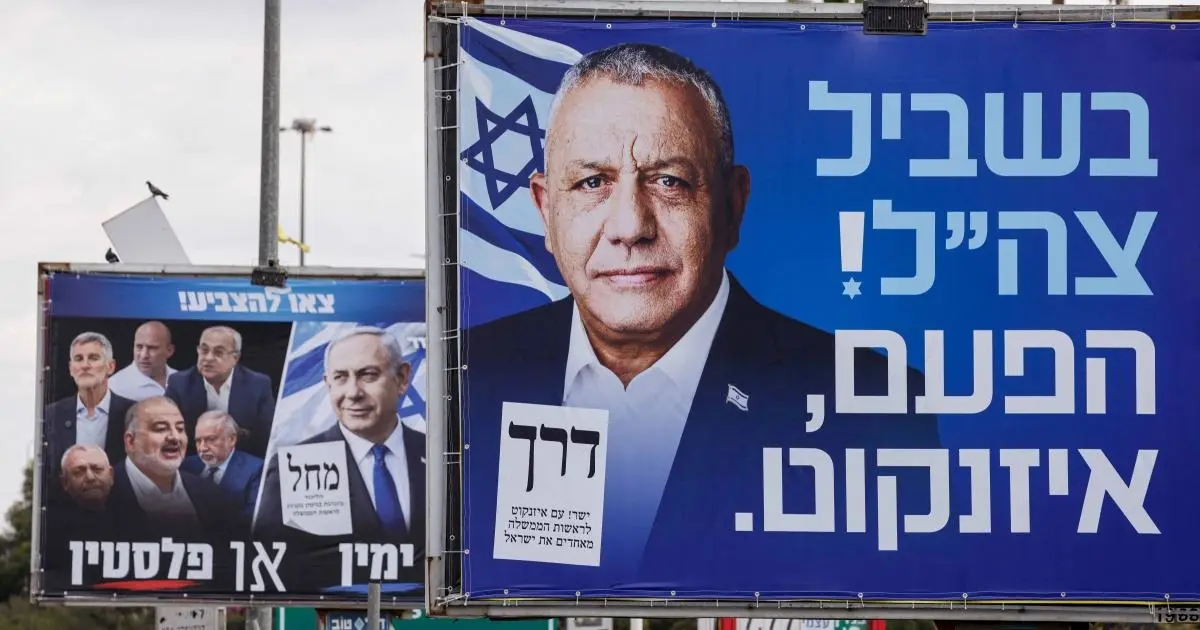
When Israelis go to the ballot box on October 27, the eyes of the international community will be fixed on the outcome, with much of the world openly rooting for the defeat of the country’s longtime prime minister, Benjamin Netanyahu. Under his nearly two decades of accumulated rule, Israel has charted an increasingly aggressive course both domestically and abroad. Over the years, the administration has abandoned any meaningful pretense of supporting a two-state solution to the Israeli-Palestinian conflict, pushed forward with the rapid construction of hundreds of new Jewish settlements across the West Bank, and drastically expanded military engagements following Hamas’s devastating cross-border attack on October 7, 2023.
In the wake of that historic security breach, Israel laid waste to large swaths of the Gaza Strip, occupied strategic parts of neighboring Lebanon and Syria, and launched direct military operations against its regional archnemesis, Iran. Concurrently, the nation’s foundational democratic institutions have faced relentless pressure from Netanyahu and his nationalist allies. The government has repeatedly proposed and advanced legislation aimed at curtailing the independence and power of Israel’s courts, sparking massive domestic protests. Should Netanyahu manage to secure an unprecedented seventh term in office, a growing chorus of critics fears the country will permanently transition into a rogue theocratic actor, alienating its traditional democratic allies.
For many Israeli voters, this upcoming election represents an absolute watershed moment for domestic policy and governance. The prime minister’s primary political challenger, former Israel Defense Forces (IDF) Chief Gadi Eisenkot, champions a markedly more liberal worldview than his incumbent competitor. Eisenkot has consistently voiced support for preserving an independent judiciary, maintaining a free press, and safeguarding a professional civil service. Should he pull off a victory, he is widely expected to attempt to reverse Netanyahu’s systematic efforts to weaken these democratic checks and balances.
However, political analysts note that an Eisenkot victory is unlikely to trigger a radical departure in Israel’s overarching foreign policy or its fundamental approach to the Palestinians. Nearly the entire spectrum of Israel’s Jewish political parties—Eisenkot’s platform included—remains firmly opposed to Palestinian statehood, a sentiment shared far beyond Netanyahu’s ruling Likud party. Mainstream political leaders across the board believe that Israel’s intense military campaign in Gaza was morally justified and practically indispensable for national survival. Furthermore, a broad consensus maintains that Israel was entirely correct to strike Iran and to establish what the government and military formally designate as "security zones"—effectively occupied territories—in southern Lebanon and southwestern Syria.
In reality, the substantive disagreements between Eisenkot and Netanyahu on core security matters largely boil down to tactical execution rather than strategic goals. For instance, Eisenkot has criticized Netanyahu for tactical missteps during recent conflicts, such as rejecting a proposed cease-fire deal in Gaza that could have secured the earlier release of Israeli hostages. Yet these tactical disputes do not signal a soft approach to regional adversaries.
When it comes to the escalating wave of violent West Bank settler attacks against Palestinians—actions explicitly aimed at driving rural communities off their ancestral land—Eisenkot and Netanyahu diverge in notable ways. While the incumbent prime minister, heavily reliant on his far-right coalition partners, largely shrugs off the violence, Eisenkot has publicly condemned the behavior, branding it as "Jewish terror." Even so, Eisenkot’s motivation stems less from humanitarian concern for Palestinian victims and more from a pragmatic realization that the West Bank is teetering on the edge of a catastrophic explosion. He understands that unchecked settler violence risks exposing Israel to even greater international opprobrium and isolation.
Overall, political experts warn that regardless of the election’s outcome, Israel is poised to continue its systemic repression of the Palestinians and maintain an aggressive posture against its regional enemies. Consequently, the nation will likely face mounting diplomatic and economic costs as frustrated international partners begin withholding financial aid and potentially enacting targeted sanctions.
Style Over Substance
A myriad of complex issues hang in the balance during this electoral cycle, ranging from contentious debates over draft exemptions for ultra-Orthodox citizens and Netanyahu’s ongoing corruption trials to discussions on how the state should handle rising Jewish extremism. Yet, the campaign has fundamentally devolved into a bitter referendum on who bears responsibility for failing to prevent the catastrophic Hamas assault on October 7, 2023. That single-day attack resulted in the deaths of 1,200 people inside Israel and the abduction of 251 hostages, marking the darkest security failure in the nation’s modern history.
The political opposition has repeatedly laid the blame directly at Netanyahu’s feet. Critics point out that for years, the prime minister actively maintained and facilitated the flow of Qatari funds to Hamas, ignored intelligence red flags warning of impending attacks, and subsequently blocked calls for an independent, transparent state commission of inquiry into the disaster. Eisenkot—who personally suffered profound personal tragedy in the conflict, losing a son and two nephews to the fighting in Gaza—has been particularly relentless in his criticism, repeatedly lambasting Netanyahu for his absolute refusal to accept accountability.
Netanyahu and his loyalists have vehemently brushed off these accusations, attempting instead to deflect blame onto the military and the nation’s intelligence services. Furthermore, some of the prime minister’s supporters have promoted unsubstantiated conspiracy theories alleging "treason from within," suggesting that internal actors aided Hamas during its brief invasion.
Despite this fierce political blame game, both sides of the political divide share foundational assumptions about the conflict: that Israel is permanently surrounded by merciless, existential enemies and that the Palestinians can never be trusted. This hardline consensus reflects a raw spike in anti-Arab sentiment across Jewish Israeli society in the post-October 7 era. It also serves a clear electoral purpose. Current polling indicates that if Eisenkot manages to form a governing coalition, he will likely require the tacit support of Israel’s Arab political parties. Sensing this vulnerability, Netanyahu has relentlessly hammered his opponent, attempting to sway fence-sitting voters by exploiting deep-seated resistance to the notion of a government propped up by Arab lawmakers.
This polarizing strategy struggles to resonate with liberal Israelis, who view the election as their absolute last chance to pull the homeland back from a slide toward authoritarianism. Many expatriate Israelis, including former citizens who emigrated to escape Netanyahu’s governance, are planning to return temporarily just to cast their ballots for change. These returning voters and allied liberals are desperately mobilizing to protect a pluralistic way of life in a country that is rapidly turning more religious and nationalistic.
Even among many anti-Netanyahu voters, deep reservations remain regarding any potential governing partnership with Arab parties. Moreover, few mainstream politicians give serious thought to reviving the two-state solution, widely dismissed as an artifact of the overly optimistic peace processes of the 1990s. Eisenkot has explicitly declared his personal opposition to Palestinian statehood, a stance mirrored by nearly all centrist and conservative opposition figures. Only Yair Golan, leader of Israel’s lone remaining left-wing Jewish party, advocates for what he terms "separation from Palestinians" and a return to diplomacy—though even he lacks a concrete roadmap for implementation.
In truth, Israel’s widespread rejection of the two-state solution is hardly a sudden development. The last substantive, detailed negotiations over Palestinian statehood collapsed in early 2001, and the overwhelming majority of Jewish Israelis turned permanently against the concept following the violence of the Second Intifada and Hamas’s bloody takeover of the Gaza Strip in 2007. Netanyahu has railed against Palestinian sovereignty throughout his entire political career, with his brief, conditional endorsement in 2009 widely viewed as a diplomatic maneuver rather than a sincere policy shift. In the wake of October 7, this resistance has only solidified. While political parties once paid lip service to peace initiatives, they now dismiss the possibility entirely.
Israeli statecraft has likewise grown markedly more assertive. While the country turned its back on Palestinian independence years ago, it maintained a relatively stable, low-cost status quo for much of the preceding two decades, avoiding full-scale regional wars. That strategic restraint—even when interrupted by periodic escalations with Hamas—allowed mainstream Israelis to compartmentalize the conflict.
That complacency shattered when Hamas breached the border. Israel subsequently adopted a doctrine of total destruction and occupation, a strategy that Netanyahu’s campaign proudly champions. Recognizing that military operations in Gaza, Lebanon, Syria, and direct strikes against Iran enjoy immense popularity among the public, the prime minister’s opponents have largely endorsed these tactics, criticizing him only for failing to deliver on his ambitious promises of "total victory."
Netanyahu has countered by painting Eisenkot as weak on national security, pointing to his tenure inside the wartime unity cabinet. Eisenkot, meanwhile, has countered that he actually advocated for an even more aggressive ground invasion than the one Netanyahu ultimately authorized. On the campaign trail, Eisenkot has pledged to dismantle Hamas rule in Gaza within an 18-month timeframe if elected. While stern, this timeline suggests a willingness to incorporate diplomatic and phased frameworks to remove the militant group from power, contrasting with Netanyahu’s more open-ended military commitments.
Eisenkot has similarly distanced himself from Netanyahu’s grander geopolitical rhetoric, such as campaign promises aimed at overthrowing the Iranian regime. Instead, he favors targeted measures to confiscate enriched uranium from Iran and place its nuclear infrastructure under rigorous international verification. "You can’t overthrow a government from the air; it’s a delusion," Eisenkot remarked. Nonetheless, he supported initial military strikes to degrade Iran’s military and nuclear capabilities, differing only on the ultimate strategic endgame.
Anger Management
Unsurprisingly, the rest of the international community views these developments through a radically different lens. In the wake of the devastating military campaign in Gaza, international approval ratings for Israel have plummeted to historic lows. Lawmakers and human rights organizations across the globe accuse Israel of severe violations of international law, with numerous critics alleging acts of genocide. Even Israel’s closest traditional allies have issued sharp warnings that the military campaign has crossed acceptable boundaries.
Concerns extend far beyond the borders of Gaza. International condemnation has also focused heavily on the rapid acceleration of settlement expansion in the West Bank, activities that cannot be framed as a direct response to the events of October 7. Consequently, the threat of concrete economic and diplomatic sanctions has materialized. British Foreign Secretary Ed Miliband declared that Israel’s ongoing occupation of the West Bank is unlawful, announcing a formal sanctions regime targeting settlement infrastructure and the financial institutions backing them. Given London’s status as a premier global financial center, major Israeli banks financing these settlement projects now face severe operational headwinds.
Across the Atlantic, Israel retains steadfast backing from U.S. President Donald Trump, who has publicly endorsed Netanyahu’s reelection campaign. However, a growing faction within the U.S. Democratic Party—and an increasing number of Republicans—have called for restricting or conditioning U.S. military aid and technology transfers to the IDF, citing the utilization of American-supplied munitions in the destruction of urban centers in Gaza. Should Democrats capture control of either chamber of Congress in upcoming legislative midterms, the era of unconditional financial and military support from Washington could face unprecedented legislative friction.
Within Israel, the public largely attributes this rising tide of international hostility to deep-seated antisemitism rather than sincere concerns regarding Palestinian human rights or Middle East stability. Yet, Israelis are acutely aware of their growing diplomatic isolation, harboring fears of what former Prime Minister Ehud Barak famously termed a looming "diplomatic tsunami."
This assessment is widely echoed across Israeli media. Netanyahu frequently positions himself as the only political figure possessing the English-language acumen and diplomatic guile necessary to stave off international censure, pointing to his past success in deflecting pressure from the Biden administration during the war in Gaza. The Israeli right wing has long argued that the nation can sustain its occupation and denial of Palestinian civil rights indefinitely by leveraging sophisticated public diplomacy, known locally as hasbara. In contrast, Eisenkot has indicated he would pursue a more candid approach with foreign partners, practicing greater transparency regarding national red lines and engaging in honest negotiations—tactics rarely employed by the incumbent administration.
Eisenkot’s diplomatic style would likely earn Israel a temporary grace period with international partners, much like previous administrations led by former military chiefs Yitzhak Rabin and Ehud Barak when they unseated Likud governments. Simply by virtue of offering a break from Netanyahu’s contentious rhetoric, Eisenkot could secure immediate goodwill. He might also enact targeted concessions to please foreign allies, such as slowing down contentious settlement projects. For instance, Eisenkot has explicitly opposed the controversial E1 settlement plan—a project designed to bisect the West Bank and severely compromise the territorial contiguity of any future Palestinian entity—and has promised a crackdown on Jewish extremist violence.
Yet, foreign supporters hoping for a fundamental reversal of Israel’s core foreign and Palestinian policies would likely face eventual disappointment. Even if Eisenkot harbored personal inclinations toward compromise, his political maneuverability would be tightly constrained by the realities of coalition governance. Eisenkot’s prospective governing bloc relies heavily on right-wing parties whose leadership vehemently opposes Palestinian statehood and harbors deep mistrust of Palestinian leadership. Figures such as Avigdor Lieberman have floated proposals to dismantle the Palestinian Authority entirely and transfer administrative control of West Bank Palestinians to Jordan—an idea Amman flatly rejected decades ago. Any overt move by Eisenkot toward reviving peace talks or supporting statehood would instantly trigger the collapse of his coalition.
The More Things Change
Polling data indicates that the October 27 election will be exceptionally close, with surveys suggesting neither Eisenkot nor Netanyahu will secure an outright parliamentary majority. The country is bracing for a tense period of intense political horse-trading as both leaders scramble to peel away each other’s potential coalition partners. Netanyahu might even attempt to lure Eisenkot into a unity government arrangement, dangling offers to temporarily freeze his controversial judicial overhaul initiatives in exchange for cooperation. While Eisenkot has repeatedly rejected the prospect of serving under Netanyahu, sudden political reversals remain a staple of Israeli coalition dynamics. Alternatively, if coalition negotiations collapse completely, the country could find itself swiftly dragged back to the polls, echoing the turbulent period between 2019 and 2022 when Israel held five inconclusive general elections in rapid succession.
Regardless of the final electoral makeup—whether it results in a Netanyahu caretaker administration, a right-wing majority, an uneasy unity government, or a fragile Eisenkot cabinet reliant on Arab party backing—Israel’s next leader is bound to maintain the military occupation of neighboring territories and the suppression of the Palestinian population. Consequently, the nation will inevitably have to grapple with its deepening international isolation. To offset potential arms embargoes or restrictions, the government may be forced to dramatically increase domestic defense spending and manufacturing to replace U.S.-funded military systems, adopting measures reminiscent of sanctioned states like Iran and Russia, or mirroring Israel’s own clandestine efforts during its formative decades. Furthermore, Israel faces the ultimate strategic anxiety: the potential loss of the protective U.S. veto at the United Nations Security Council, a diplomatic shield that has safeguarded its occupation since 1967.
While this trajectory may not align with the deepest desires of all Israeli citizens, the nation appears set on this course absent a fundamental shift in political perspective. Should Netanyahu and his nationalist partners retain power, those fears are expected to materialize rapidly, prompting many liberal Israelis to seek a quieter life abroad rather than wait for the full weight of international penalties to strike their homeland.