By Jim Magil | Features Editor
Faced with increasingly volatile atmospheric conditions and a heightened threat of devastating wildfires across the island chain, Hawaiian Electric has enlisted advanced aerial technology to safeguard its electrical grid. The state’s largest electric utility recently contracted UK-based infrastructure inspection specialist Cyberhawk to conduct comprehensive aerial surveys of transmission and distribution lines across identified high-risk zones on Hawaii Island, Maui County, and Oahu.
The initiative, launched to identify damaged or degrading electrical equipment before it can spark a blaze, represents a critical proactive measure in modern utility management. By capturing ultra-high-resolution imagery of aging infrastructure, the partnership aims to catch minor mechanical failures—such as worn-out insulators or fatigued collar keys—long before they escalate into catastrophic grid failures.
The urgency behind the drone deployment stems from a compounding mix of environmental pressures. Dry atmospheric conditions have routinely settled over the islands, prompting heightened emergency preparedness measures from local authorities and utility operators alike. Demonstrating the gravity of the situation, Hawaiian Electric issued Public Safety Power Shutoff (PSPS) notices extending to the leeward side of Oahu, following prior watches established for Hawaii Island and Maui County.
A PSPS protocol serves as a critical, albeit disruptive, safeguard. It indicates a period of intensified environmental monitoring in areas most vulnerable to fast-moving brush fires, signaling that the utility may proactively interrupt power distribution if wind and dryness thresholds create an intolerable ignition risk. By deploying drones to pinpoint vulnerable components ahead of these high-wind, low-humidity weather events, Hawaiian Electric hopes to minimize both the frequency and duration of necessary power shutoffs while hardening its infrastructure against natural disaster threats.
Cutting-Edge Aerial Technology in Action
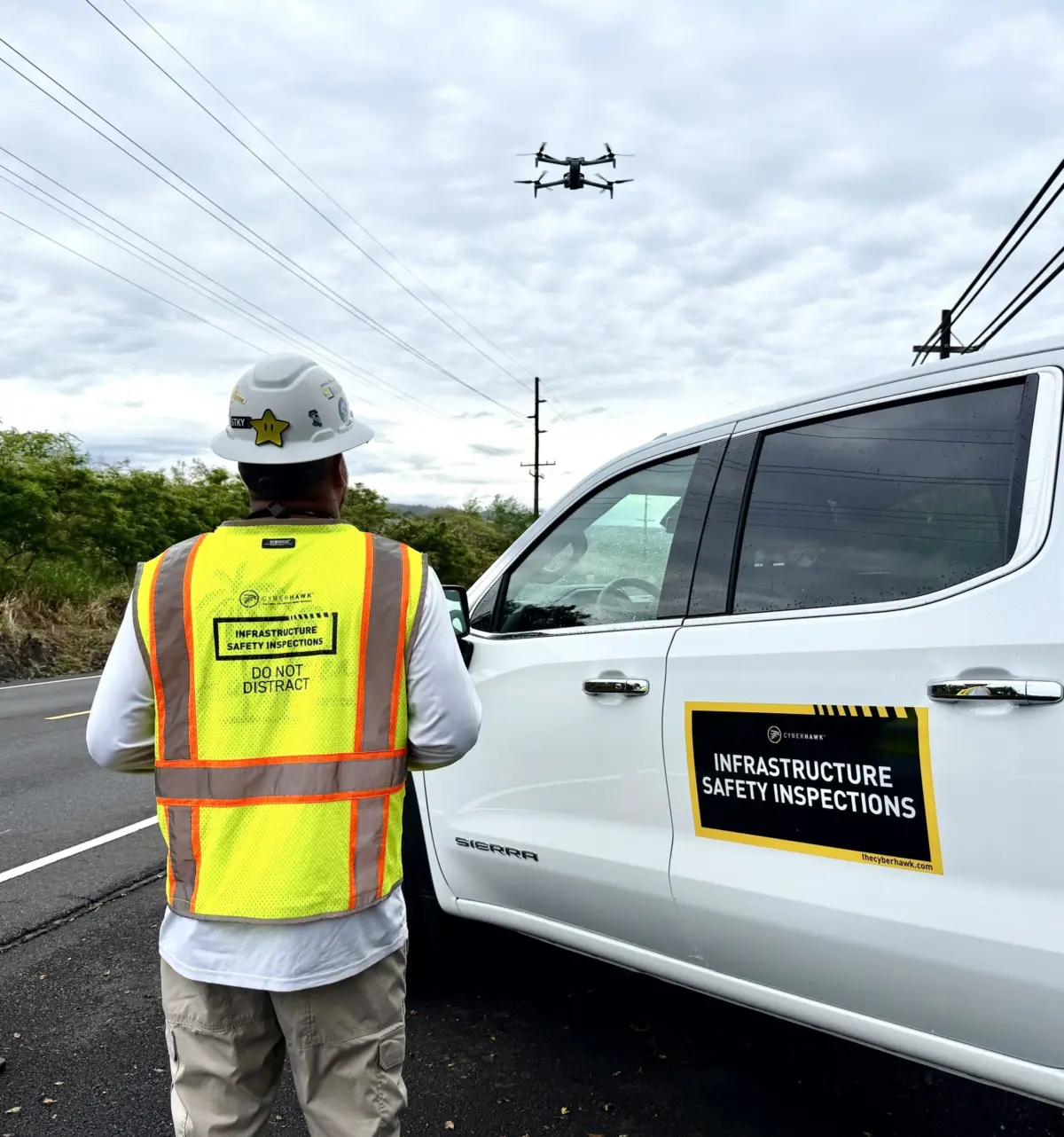
At the core of Cyberhawk’s operations in Hawaii is the deployment of advanced unmanned aerial vehicles (UAVs) equipped with specialized sensor payloads. Specifically, the company is utilizing the Skydio X10 drone platform integrated with a VT300Z sensor package engineered explicitly for long-range, high-detail industrial inspections.

According to Anna Dillé, Cyberhawk’s vice president of North American operations, the technological capabilities of these drones provide an unprecedented level of visibility into the condition of remote grid assets.
"We are using drones to capture high-resolution imagery of all of their electrical assets across the islands, making sure that there aren’t any critical failures or defects that could potentially cause a wildfire," Dillé explained in an interview. "That provides us a 48-megapixel resolution, so inspectors can really see anything going wrong on the structures. That specific sensor allows for a lossless zoom of up to 16 times, so we can get in quite close, quite detailed, and get the best data and imagery that we can."
These technical specifications allow inspection crews to assess hard-to-reach components—such as the top of utility poles, cross-arms, and complex hardware assemblies—without requiring line workers to physically scale hazardous structures or navigate difficult terrain. Once captured, the aerial data is systematically processed to map out structural vulnerabilities, forming the backbone of the utility’s maintenance workflow.
Dillé outlined the structured methodology behind the day-to-day operations. Each morning, flight crews receive a targeted work pack detailing the specific assets assigned for inspection along pre-planned routes. Using specialized flight applications, pilots execute the missions and report back on successful data capture. This streamlined pipeline ensures that inspection data is rapidly analyzed, allowing maintenance teams to prioritize repairs efficiently and address high-risk defects before further deterioration occurs.
Building a Proactive Maintenance Culture
For Cyberhawk, the Hawaiian Electric agreement represents a prominent milestone in its nearly fifteen-year corporate history. Founded in the United Kingdom, the company established its U.S. operations in 2021 as part of a broader expansion strategy. Now operating as a subsidiary of Ondas, Cyberhawk has scaled its footprint rapidly across the North American energy sector, performing upwards of 400,000 industrial asset inspections annually across transmission lines, distribution networks, and electrical substations.
While the U.S. market represents a relatively recent theater of operations for the firm, Dillé notes that the reception has been overwhelmingly positive as domestic utilities grapple with aging electrical grids built decades ago.

"The infrastructure is aging, so we are finding defects. For those customers that we’ve been working for over the course of years, we’re starting to see a decrease in their defects because we’re able to spot those quickly and they’re able to maintain those assets quite quickly," Dillé said. She added that mainland utilities face similar trials, particularly regarding frayed conductors spanning long distances between towers, driving an active industry-wide pursuit of high-fidelity aerial data.
International Market Reach and Diversified Operations
Cyberhawk’s entry into Hawaiian skies underscores its evolution into one of the largest drone-centric infrastructure service providers globally. The company was co-founded in 2008 by CEO Chris Fleming, who initially drew on his professional background as a rope-access trained inspector working on hazardous North Sea oil platforms. The foundational mission of the company was to leverage unmanned flight to remove human workers from dangerous environments, replacing high-risk manual inspections with safe, digital alternatives.
Today, Cyberhawk maintains an active presence in more than 40 countries, with ongoing strategic initiatives aimed at expanding its market share across Europe and beyond. While utility grid hardening remains a major growth vertical, the company maintains a robust portfolio in traditional industrial sectors, including oil, gas, and midstream energy infrastructure.
"We do a lot of flare inspections offshore and a lot of 3D modeling work for oil rigs," Dillé noted. "It’s very beneficial for those companies to have a digital twin of their assets so that they can see what’s going on the rig at any point in time."
In addition to offshore platforms, the company routinely deploys its drone fleets to monitor pipeline rights-of-way, scanning for unauthorized excavation, land movement, or other physical anomalies that could threaten the integrity of buried or surface-level energy transit corridors.
On-the-Ground Coordination in Hawaii
The execution of the Hawaiian Electric contract requires meticulous coordination on the ground, particularly given the public sensitivity surrounding utility operations and property access across the islands. On Hawaii Island—frequently referred to as the Big Island—Cyberhawk flight teams are conducting operations in close coordination with the utility’s internal staff.

To ensure transparency and security for residents, stringent identification protocols have been established. All personnel involved in the aerial survey project are required to drive vehicles clearly marked with Hawaiian Electric or designated contractor insignia. Furthermore, when conducting on-foot operations near infrastructure, drone operators must wear company-branded Cyberhawk hard hats and safety vests.
The intensive inspection schedule began in mid-October and is slated to run through December across several designated zones, including neighborhoods and rural corridors within Downtown Hilo, North Hilo, Lower Puna, North Kona, North Kohala, and along Saddle Road.
Utility officials emphasize that while the drone technology allows for exceptional remote visibility, the inspection focus remains strictly fixed on exterior electrical assets such as poles and overhead lines. Crews do not require entry into residential or commercial buildings, though rare instances may occur where an operator must access private property rights-of-way to reach a utility pole safely. Through this rigorous, technology-driven approach, Hawaiian Electric and Cyberhawk are working to build a more resilient energy network capable of withstanding the escalating environmental challenges facing the region.