PORT-AU-PRINCE — At the Centre de Santé de Jalousie, nestled within the bustling commune of Pétion-Ville on the outskirts of the Haitian capital, 22-day-old Nayra rests peacefully in the arms of her mother, Michaelle Belizaire. They are waiting for a routine check-up, a moment of quiet in an otherwise volatile environment. When their turn finally arrives, a dedicated health worker gently places a sensor on the infant to measure her oxygen levels. The diagnostic procedure takes less than a minute, but the mere act of accessing everyday health care has become an extraordinary challenge for families across the entire metropolitan area of Port-au-Prince.
Across the wider capital region, relentless armed violence has displaced countless families, severely disrupted essential public services, and drastically restricted movement between neighborhoods. Jalousie, Kenscoff, and Fermathe—all mountainous areas situated within the administrative district of Port-au-Prince—have felt the acute pressures of this ongoing crisis. These challenges were thrown into sharp relief during field visits and documentation gathered in June 2026, capturing a fragile medical network struggling to keep its doors open against mounting odds.
Since that time, the security situation in Kenscoff, a lofty commune perched in the hills south-east of Port-au-Prince, has deteriorated considerably. Repeated and violent attacks by armed groups have plagued the region, culminating in a major assault on the night of August 23 to 24. That devastating incident reportedly left more than 47 people dead, 22 injured, 50 abducted, and over 4,200 newly displaced from their homes. Yet, even in the wake of such profound tragedy, life-saving assistance continues to reach those in desperate need. With vital financial support from the OCHA-managed Haiti Humanitarian Fund, humanitarian organizations—most notably the Association of Volunteers in International Service (AVSI) and its dedicated local and international partners—remain on the front lines, responding to soaring humanitarian demands.
The physical realities facing medical staff in these mountainous districts highlight decades of systemic strain. In Kenscoff, an armored police vehicle maintains a vigilant watch parked outside the local health center. Inside the facility, the visible scars of years of underinvestment are immediately apparent. Paint peels extensively from damp, moisture-damaged walls, vital medical equipment is aging past its prime, and several rooms have fallen into disrepair, no longer serving their original clinical purposes.
A similar picture emerges a short distance away in Fermathe, where the radiology department remains entirely closed to patients. Administrative records are kept meticulously by hand in precarious stacks of paper files, while persistent moisture continues to compromise the structural integrity of the walls and overall infrastructure.
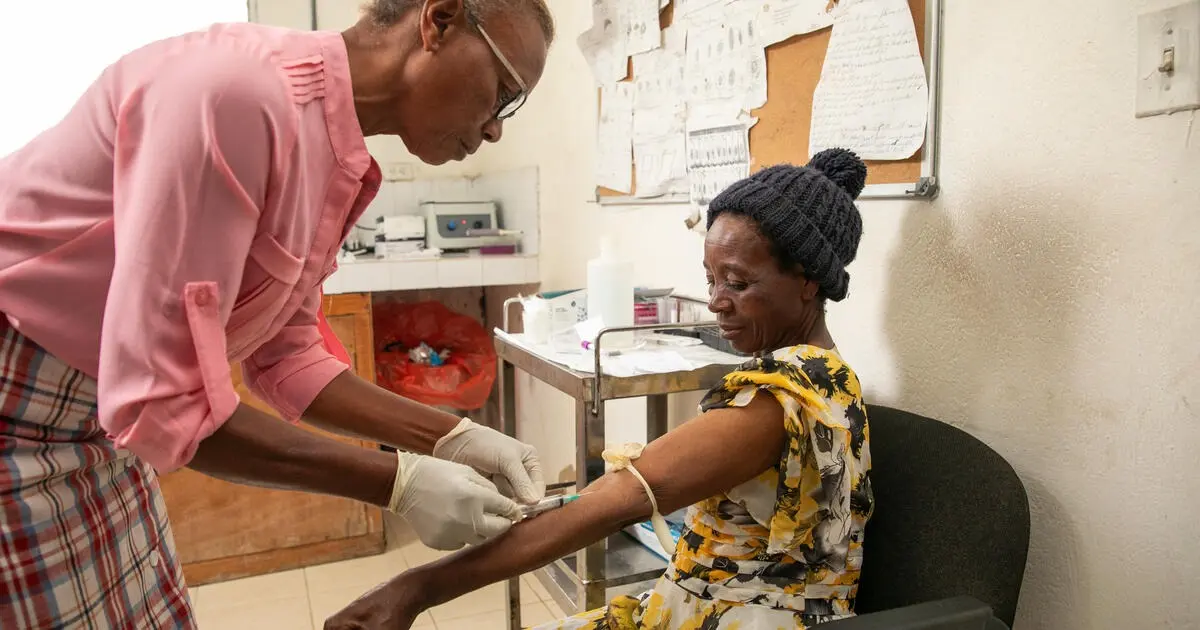
Despite these formidable hurdles, the patients keep coming, and the medical personnel refuse to abandon their posts. In Kenscoff, a focused nurse expertly prepares a blood draw, ensuring diagnostic capabilities are maintained wherever possible. In Jalousie, another health worker moves steadily and compassionately through a long line of anxious mothers waiting patiently with young children. Despite mounting security risks, logistical nightmares, and physical deterioration, these resilient health workers continue providing indispensable care day in and day out.
This vital continuity of care is anchored by a broader emergency intervention. Since April 2026, AVSI has actively supported four crucial health facilities across the West Department: the centers in Jalousie, Kenscoff, and Fermathe, alongside the larger Centre Hospitalier Sainte-Catherine Labouré. This comprehensive work forms an essential component of a multisectoral emergency response funded generously by the Haiti Humanitarian Fund. The overarching initiative is implemented collaboratively by a consortium of experienced humanitarian organizations, led by ACTED in close coordination with Concern Worldwide and Solidarités International.
The primary objective of this coordinated support is twofold: to keep critical health services continuously available to vulnerable populations, and to substantially improve the physical and operational conditions in which patients receive medical treatment.
At the Jalousie facility, planned infrastructure improvements include much-needed enhancements to the main entrance and waiting area, the reconstruction of the access ramp to ensure better accessibility, and the creation of additional physical space to allow for greater privacy during sensitive medical consultations.
Meanwhile, in Kenscoff, the capacity of the health center is set to expand significantly through the installation of two prefabricated structures designed to house a dedicated pediatric unit and new consultation rooms. Comprehensive rehabilitation efforts at the site will also include essential building repairs to counter the ravages of dampness and age.
In Fermathe, planned renovations will target the entrance area, the maternity ward, and the long-dormant radiology department. New medical equipment and protective infrastructure are currently being prepared to allow vital diagnostic services to safely resume for the local community.
Keeping these facilities functional requires a steady stream of medicines, medical supplies, and specialized equipment. However, maintaining those supply chains has grown increasingly perilous as persistent insecurity repeatedly disrupts regional access and traditional transport routes. Demonstrating the critical nature of these operations, AVSI successfully delivered a vital shipment of medicines and medical consumables to the Hôpital de Fermathe on August 27, directly helping to sustain uninterrupted services for communities reeling from recent waves of violence.
The scope of support also extends far beyond the walls of fixed medical facilities. Mobile health clinics are actively deployed to reach populations that face insurmountable difficulties traveling to permanent centers, including remote communities and groups directly affected by displacement and insecurity. AVSI oversees the specialized treatment of children suffering from both acute and moderate forms of malnutrition, while simultaneously delivering crucial preventive health services tailored to pregnant and breastfeeding women.
Following the sharp escalation of armed violence in Kenscoff, the humanitarian program rapidly expanded its operational footprint to assist newly affected households. The initiative is currently providing temporary economic support to 3,750 of the most at-risk families over a dedicated three-month period, helping them navigate sudden destitution. Concurrently, local health workers are receiving specialized additional training, ensuring that nutrition, child protection, and food-security activities continue seamlessly alongside traditional clinical health services.
The tangible improvements to physical infrastructure have already begun to elevate the overall quality of health care across these communities, and in several instances, they are successfully restoring services that had been lost for years. Women attending antenatal consultations no longer have to endure waiting beneath leaking roofs during heavy rains. There is now adequate space for thorough medical examinations, fully functioning diagnostic services are coming back to life, and essential medicines are consistently available when patients need them most.
In Kenscoff, these targeted upgrades translate directly into a dedicated, safe space for children receiving specialized care. In Fermathe, they mean the long-awaited reopening of a radiology service that has stood dark and silent for years.
For Michaelle and her newborn daughter Nayra, these changes offer a glimpse of a more stable future. When Nayra grows older, she may return to a local health facility that is significantly easier and safer to access. For the dedicated health workers who report for duty each morning, the improvements mean returning to work in dignified conditions that allow them to serve their communities with pride.
Above all, for the steady stream of people who arrive at the clinic doors every morning, these ongoing humanitarian efforts represent something simple yet profoundly essential: the knowledge that the doors remain open, that medicines are stocked on the shelves, and that someone trained and compassionate is there to receive them, thanks to the generous support of donors to the Haiti Humanitarian Fund.