A temporary breach of the 1.5C global-warming limit is now "inevitable" following decades of insufficient climate action, according to a sobering annual assessment released by the UN Environment Programme (UNEP).
In its latest emissions gap report, titled "The point of return," UNEP warns that exceeding the Paris Agreement’s ambitious 1.5C threshold is imminent and unavoidable. The primary task facing the international community is now to minimize the size and scale of a temporary temperature overshoot and establish a credible return path to 1.5C by the end of the century.
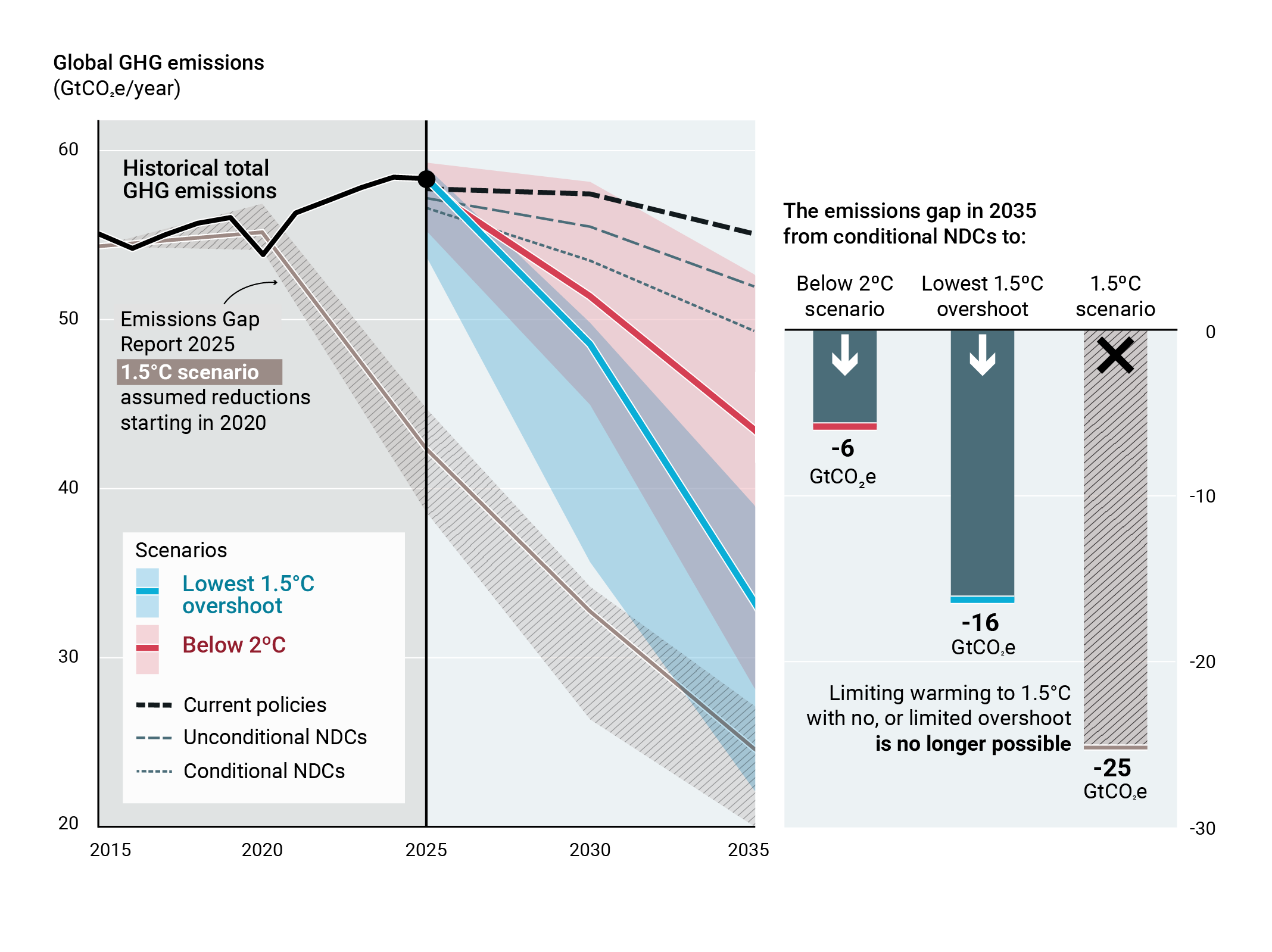
Even under the lowest possible overshoot scenario, global warming would first peak at around 1.7C to 1.8C in the middle of the century before beginning to decline. This scenario remains aligned with the long-term temperature goal of the Paris Agreement, but achieving it requires unprecedented global emissions cuts of 18% by 2030 and 45% by 2035, alongside a massive ramp-up of carbon dioxide removals from the atmosphere.
In stark contrast, current climate pledges submitted by countries around the world—even if fully implemented—would only reduce emissions by 5% to 8% by 2030 and 11% to 15% by 2035, relative to 2025 levels. Despite this troubling gap, the report identifies ample opportunity to accelerate action, concluding that nations can still limit peak warming, shorten the duration of overshoot, and keep the core goals of the Paris Agreement within reach.
Emissions Comparable Between 2024 and 2025
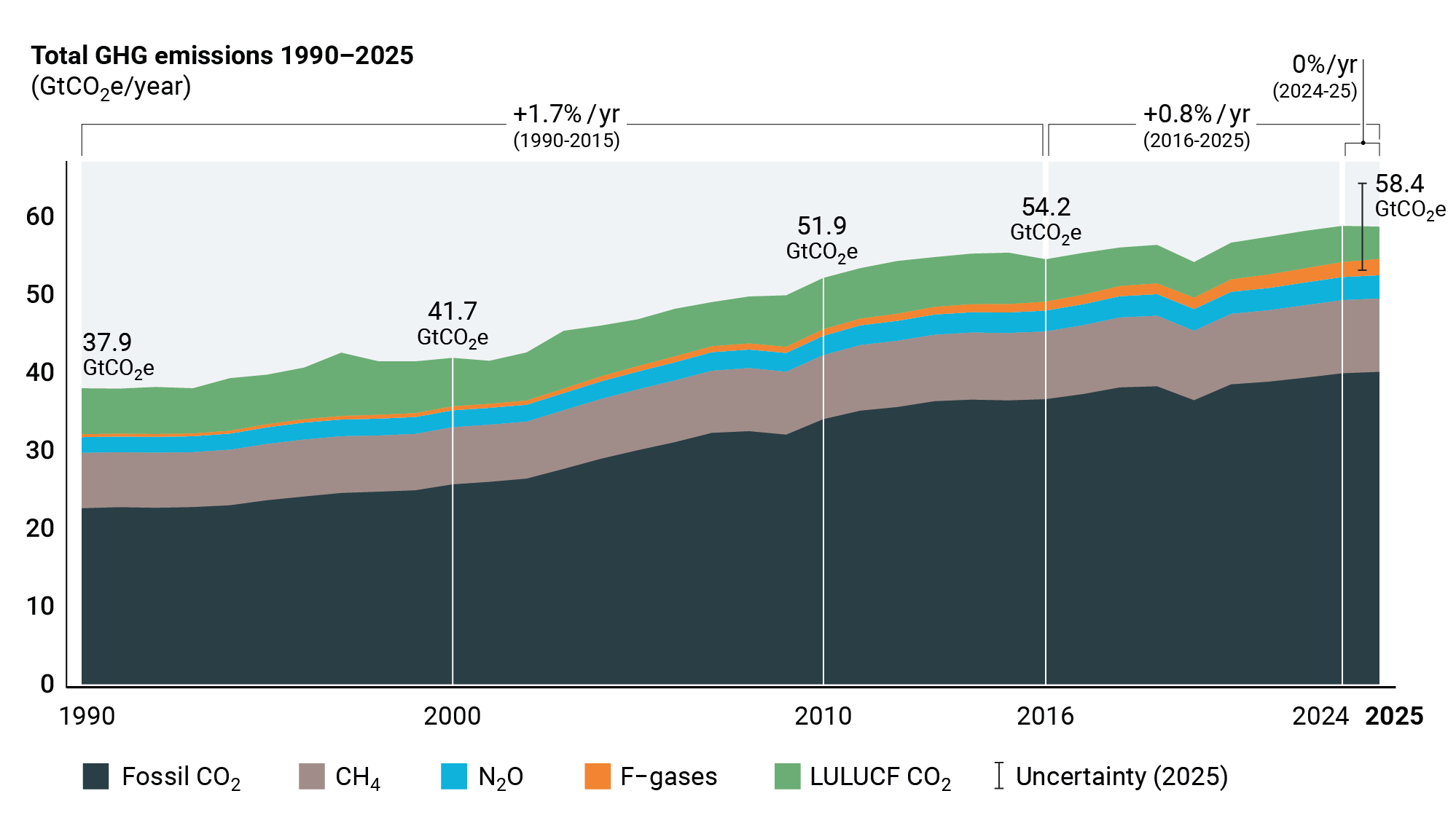
Global greenhouse gas emissions in 2025 were broadly comparable to those recorded in 2024. Total human-driven emissions reached 58.4bn tonnes of CO2 equivalent (GtCO2e) in 2025, representing a slight drop of around 0.16GtCO2e compared to the previous year, though figures carry a high level of uncertainty. Because the data remains provisional, the report emphasizes that it is not yet possible to conclude on the overall definitive direction of emissions for 2025.
However, the longer-term trend shows a clear deceleration in emissions growth. Over the period from 1990 to 2015, emissions grew at an average rate of 1.7% per year, whereas growth has slowed to an average of 0.8% per year since 2016.
When broken down by gas, emissions from fossil fuels increased slightly by 0.4% to 1.1% in 2025. Nitrous oxide and fluorinated gases also saw higher growth rates, though their smaller share of total greenhouse gases means their impact on the overall trend is relatively minor. Methane emissions remained steady over the same timeframe.
These increases were offset by a reduction in CO2 emissions from land use, land-use change, and forestry (LULUCF), which slightly overcompensated for rising fossil-fuel emissions. This decline in LULUCF emissions was partially driven by a drop in global wildfire activity, particularly across Africa, South America, and parts of southeast Asia. Analysts note these reductions were likely connected to the ceasing of El Niño conditions, though the ongoing super El Niño is expected to drive land-use emissions back up.
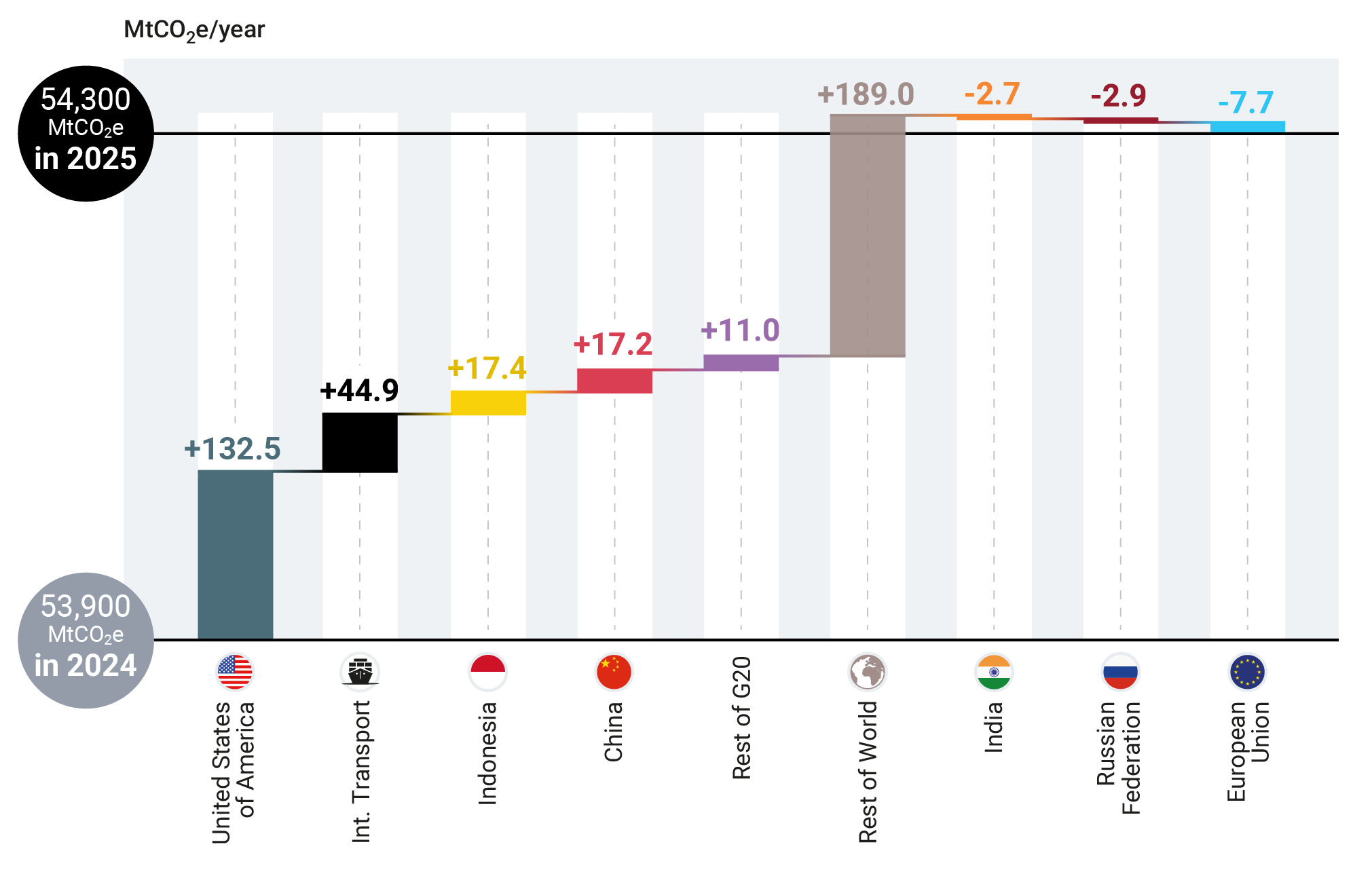
Among the world’s top six emitters, only the United States saw a notable increase in emissions during 2025, while emissions in China, the European Union, India, Russia, and Indonesia remained relatively flat. US emissions grew by 133m tonnes of CO2e due to increased electricity demand, a colder winter driving up heating needs, higher gas prices, and a temporary rebound in coal power generation.
Across most economic sectors, progress toward decarbonisation has been modest. The most notable decreases occurred in the power and transport sectors, driven by the rapid expansion of solar power and electric vehicles. However, overall transport emissions continue to grow due to surging demand for international aviation and shipping. Meanwhile, while electricity demand from data centres is projected to double by 2030, data centres currently account for less than 1% of total global emissions.
New NDCs Fall Far Short of Global Requirements
Under the Paris Agreement, all countries were required to submit new national climate pledges for 2035—known as the third nationally determined contributions (NDCs)—by February 2025. Approximately 95% of nations missed that initial deadline, but many subsequently came forward during a UN climate summit in New York and the COP30 climate talks in Brazil late last year.
By the conclusion of COP30, 63% of countries had submitted their third NDCs, a figure that climbed to 124 countries covering 75% of global emissions by September 2026. This broader pool of submissions provides a more robust basis for assessing collective progress toward 2035 targets.
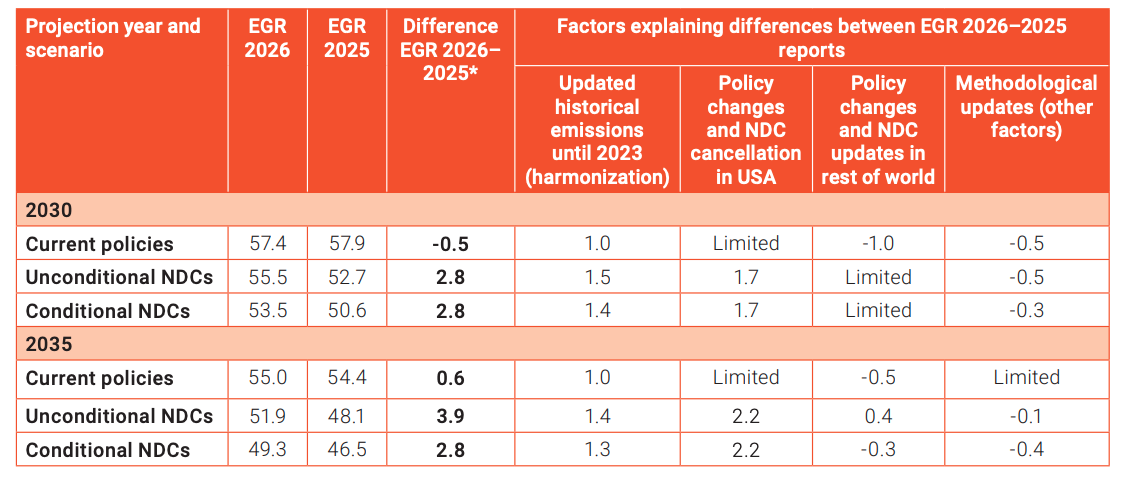
Despite this increased participation, the pledges fall far short of what is required. If implemented in full, the third NDCs would lower global emissions in 2035 by 3.5GtCO2e compared to 2030 targets—a reduction that the report describes as inadequate for meeting the long-term temperature goals of the Paris Agreement. Furthermore, projected global emissions for 2035 are about 3GtCO2e higher than estimated in previous reports, largely due to the formal withdrawal of the United States from the Paris Agreement and the harmonization of projections with newer historical emissions data.
The global implementation gap for 2030—the difference between projected emissions under current policies and those expected if NDCs are fully met—has narrowed compared to last year. However, analysts note this narrowing is driven primarily by the US withdrawal rather than genuine policy progress. Furthermore, the implementation gaps for 2030 and 2035 are of a similar size, suggesting that the enhanced collective ambition of the new NDCs remains weak.
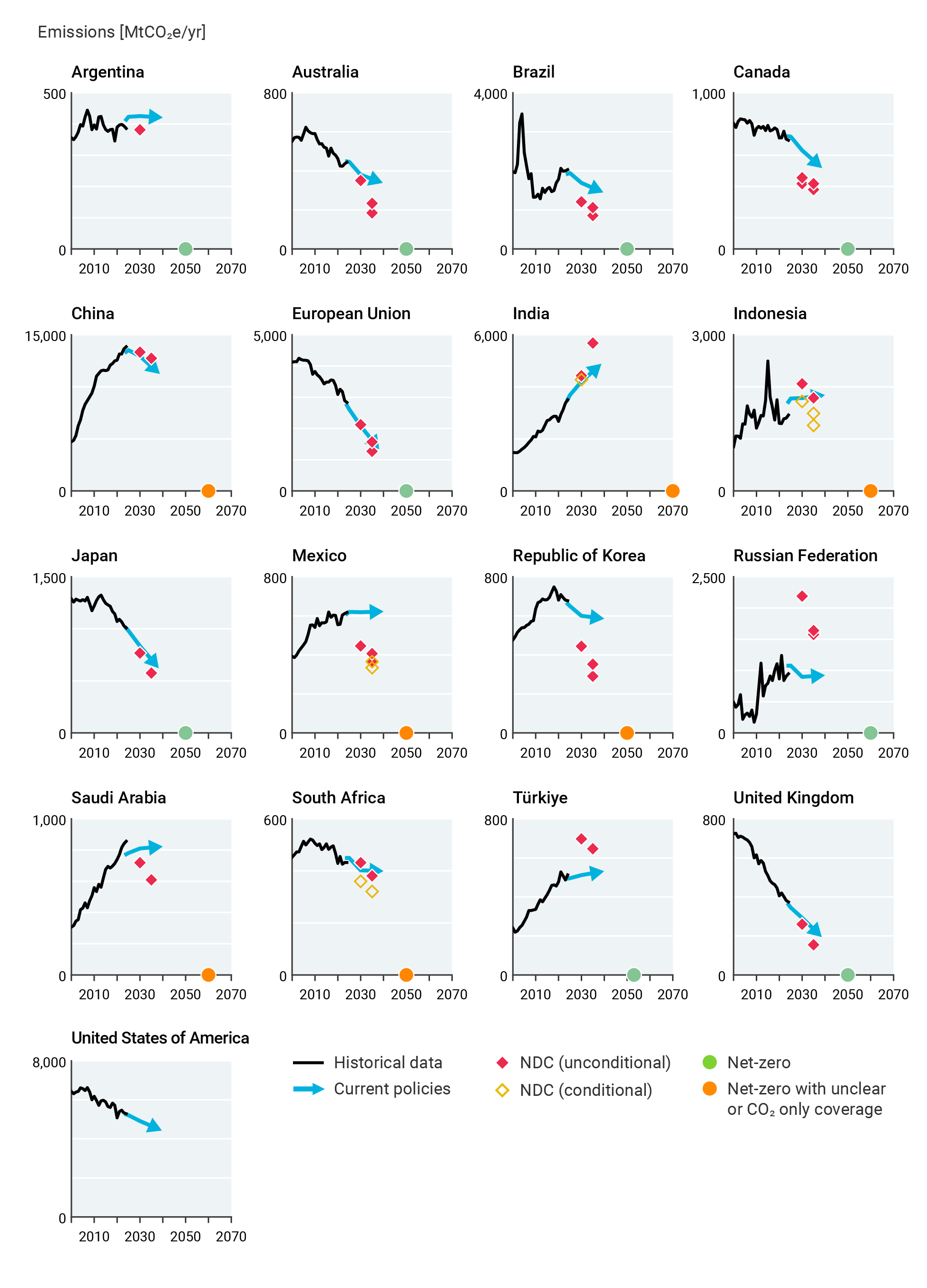
While 14 of the 17 G20 members have submitted new NDCs with 2035 targets, the emissions trajectories of the majority remain misaligned with their stated net-zero goals. With the exception of Japan, the European Union, and the United Kingdom, all G20 members would need to significantly accelerate their emissions reduction rates based on current policies to achieve their long-term net-zero objectives.
The Unbridgeable Emissions Gap and Temperature Projections
The report evaluates various future emissions pathways to estimate the remaining emissions gap between full NDC implementation and the requirements of the Paris Agreement. Because decades of insufficient reductions have rendered previous IPCC scenarios outdated—with actual emissions currently sitting around 80% above the level needed for a no-overshoot 1.5C pathway—the 2026 report introduces a new generation of pathways starting ambitious mitigation from 2025.
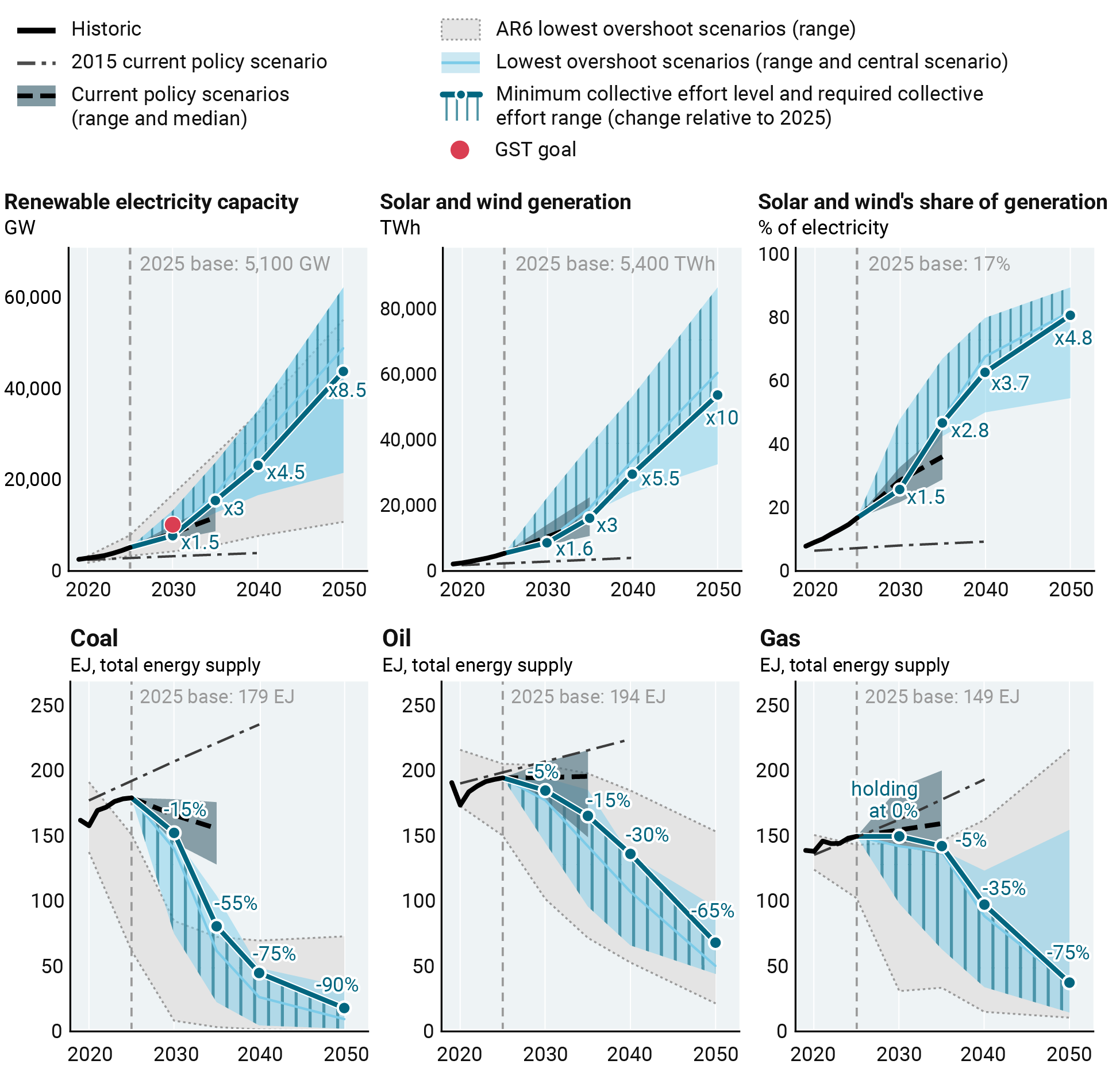
The updated lowest 1.5C overshoot scenario aims to minimize both the magnitude and duration of temperature overshoot while respecting strict sustainability and feasibility guardrails, such as balancing bioenergy and carbon removal needs with food security and biodiversity. To achieve this, global greenhouse gas emissions must fall by 18% by 2030, 45% by 2035, and 69% by 2040, relative to 2025 levels, with net-zero CO2 emissions reached around 2050. This requires an average annual emissions drop of 5.7% over the coming decade.
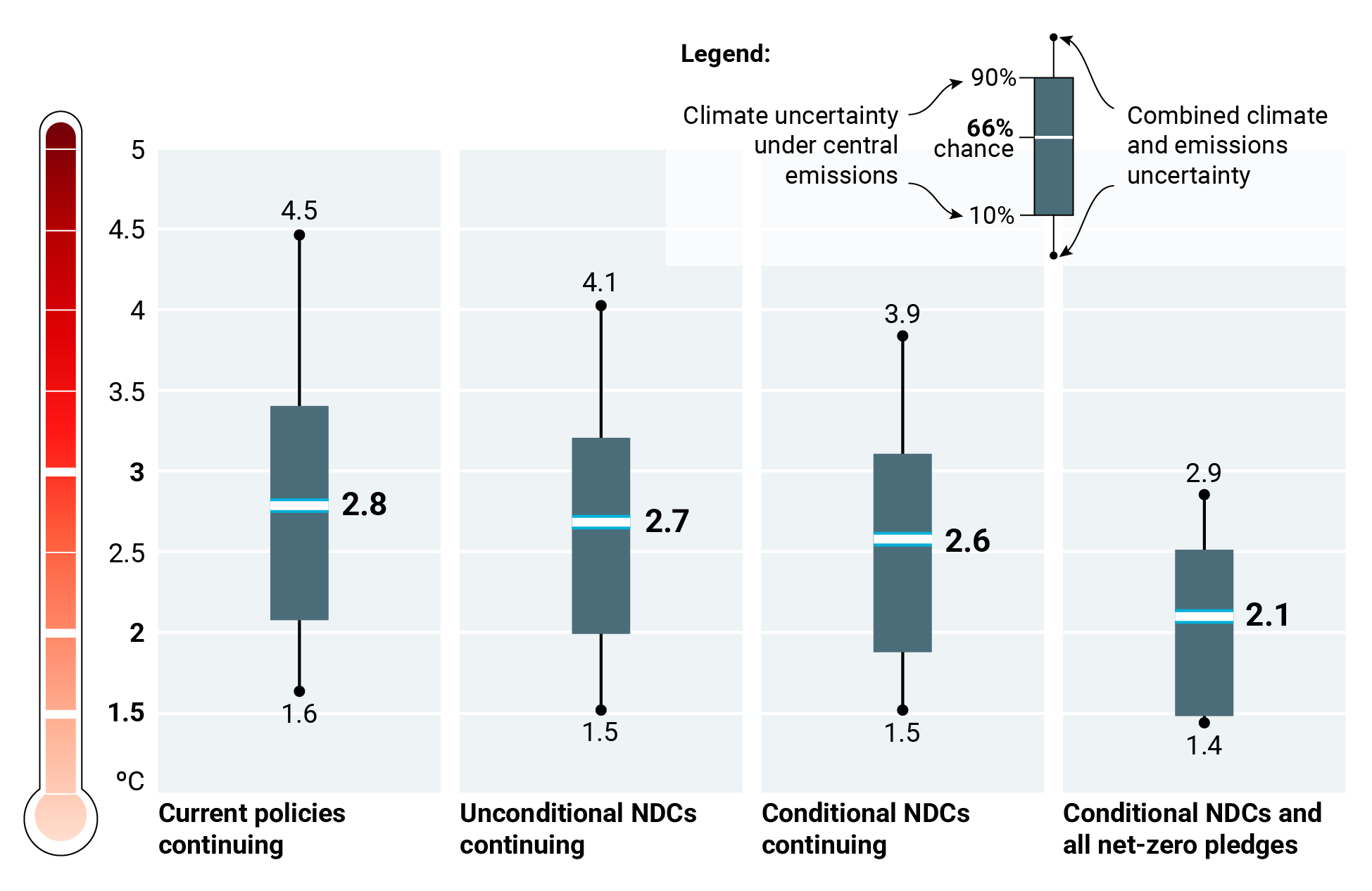
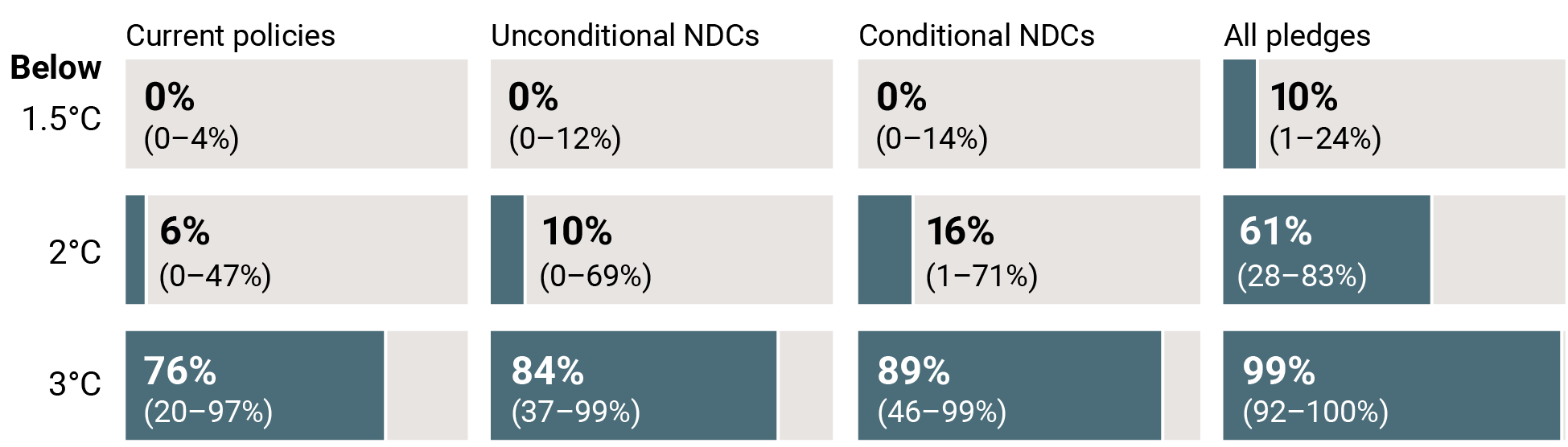
Using the FaIR climate model to simulate future temperatures, the report estimates that current national policies would lead to 2.8C of global warming over the century under a central probability estimate, with a 10% chance that warming could exceed 3.4C. Fully implementing unconditional NDCs could limit warming to 2.7C, while implementing all NDCs could bring it down to 2.6C by 2100. In the most optimistic scenario, where countries meet both their NDCs and net-zero targets, warming could be restricted to 2.1C.
Central warming estimates for 2100 are roughly 0.2C to 0.3C higher than last year’s projections, driven by increased projected emissions from the 2035 NDCs and the US withdrawal. While full implementation of all pledges could reduce warming by 0.6C, it would still fall 0.25C short of the lowest 1.5C overshoot pathway.
The report issues a stark warning regarding the cost of inaction: for every five years of delay in starting deep emissions cuts, roughly another 0.1C of warming is locked in. Continued insufficient reductions risk making 2C of warming inevitable, threatening the collapse of the Paris Agreement framework.
Uneven Progress Toward Global Stocktake Goals
Assessing progress across the nine mitigation action areas established under the first global stocktake agreed at COP28, the report finds that overall efforts remain uneven and insufficient.
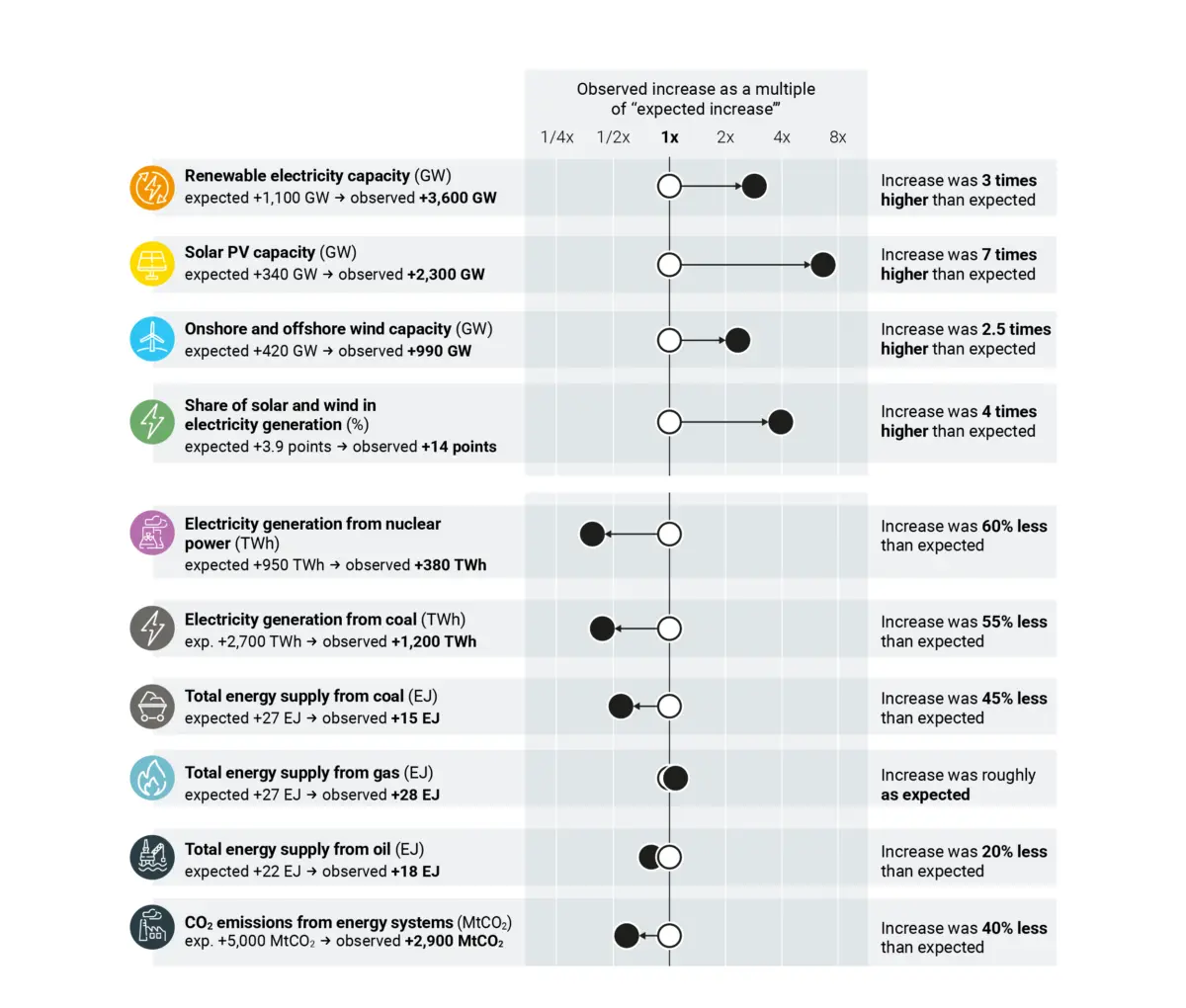
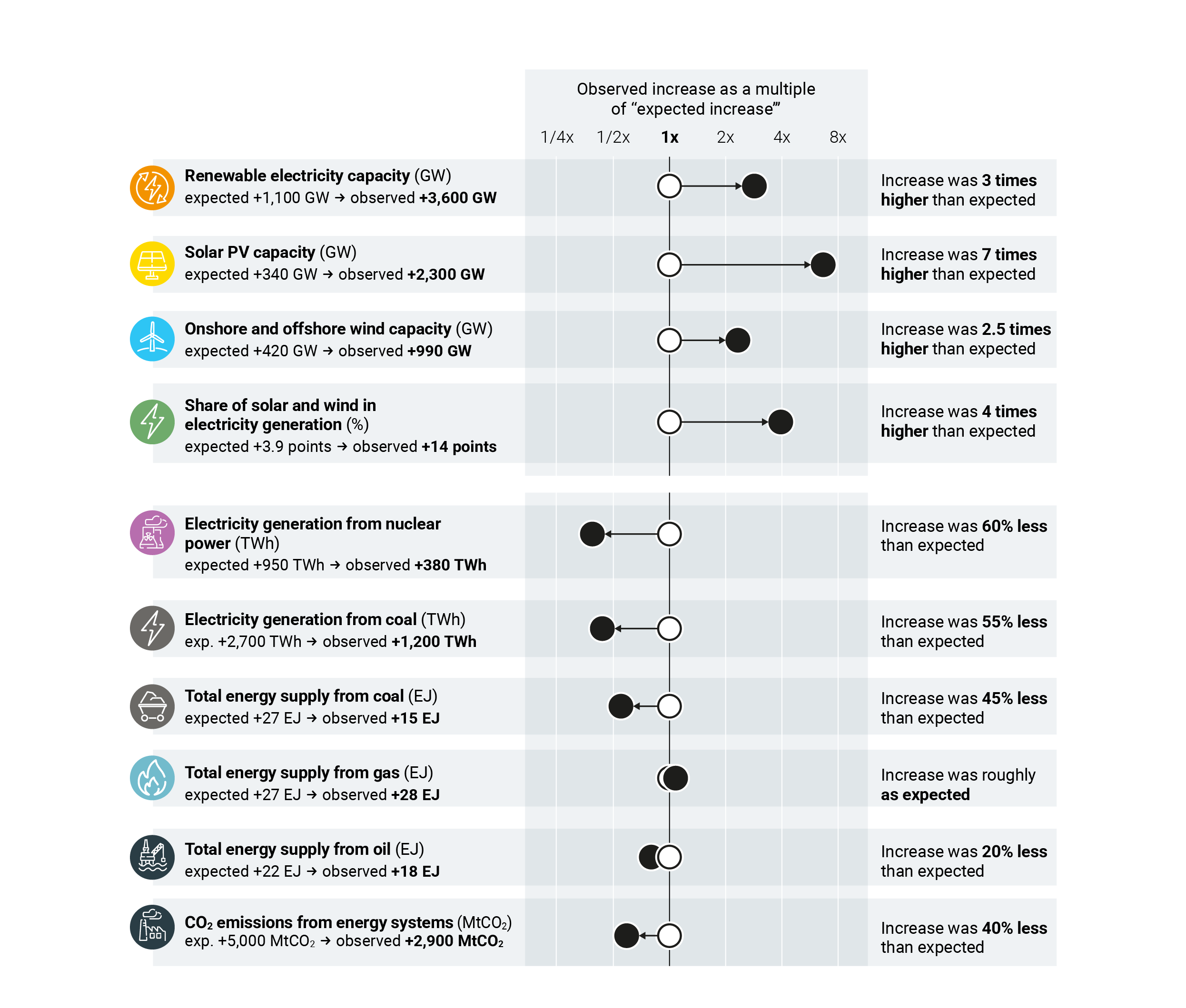
The most notable success story is renewable energy deployment, which has outpaced expectations by a factor of three compared to projections made in 2015. As a result, energy-related CO2 emissions grew 40% less than anticipated, making renewables the only area firmly on track for 2030.
Conversely, the world is lagging far behind in transitioning away from fossil fuels and halting deforestation. Although fossil fuel use is growing at a slower rate than projected a decade ago, global coal usage is not expected to peak until 2030, while oil and gas consumption continues to climb. Similarly, global efforts to halt deforestation by the end of the decade remain significantly off track, requiring a tenfold acceleration in the current rate of forest loss reduction.
To successfully navigate the lowest overshoot scenario, the report outlines necessary sectoral milestones. Coal energy must be reduced by 15% by 2030, 55% by 2035, 75% by 2040, and 90% by 2050 compared to 2025 levels. Oil and gas require more modest initial reductions of 5% and 0% by 2030, respectively, followed by steep declines reaching 65% and 75% reductions by 2050.