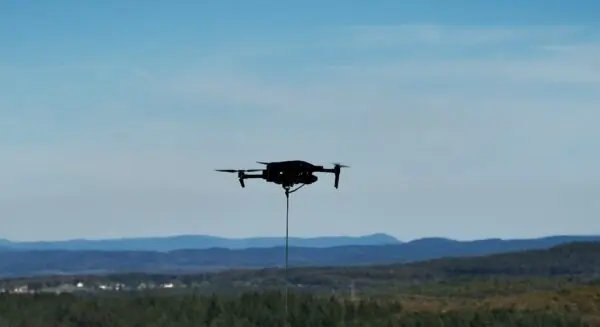
Researchers recorded the sounds drones make with chipped or cracked propellers and failing motors. Their aim is to let a ground station flag a drone as unairworthy before takeoff.
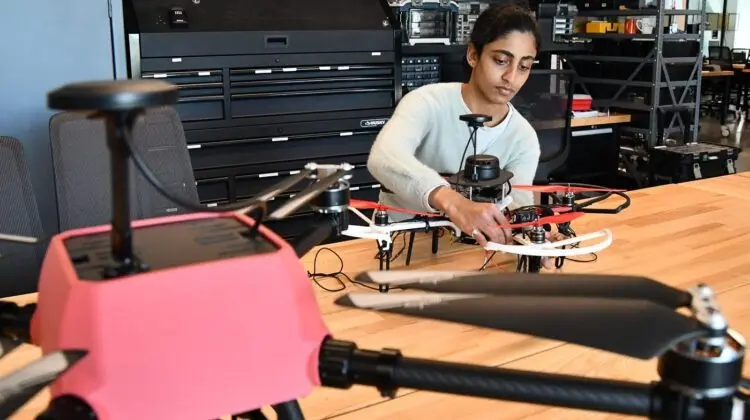
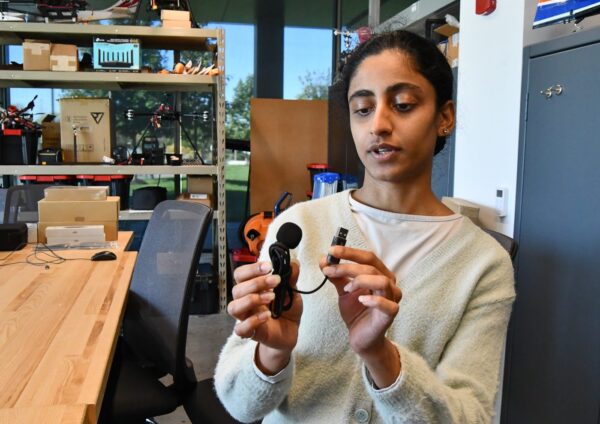
Engineers at the University of Cincinnati are harnessing the power of acoustics to help NASA detect damaged drone motors and propellers before a catastrophic in-flight failure occurs. Prissha Chawla, a doctoral student in the UC College of Engineering and Applied Science, alongside her dedicated research partners, has been meticulously recording the distinct auditory signatures that drones produce when their propellers become chipped or cracked, or when a motor suffers internal damage or begins the gradual process of failure.
By translating these acoustic recordings into actionable data, the research team is developing a system that ground station computers can utilize to automatically alert operators when a drone is not airworthy long before it ever leaves the ground. The student researchers are scheduled to present the details and progress of this innovative project at the Modelling, Estimation and Control Conference on October 25 in Phoenix, bringing their academic findings to a broader audience of aerospace and control systems professionals.
The project itself represents a growing intersection between automated aviation safety and practical field operations. Initiated in 2024, the research was sparked by direct interest from NASA in finding reliable, rapid ways to detect mechanical anomalies and motor degradation before a drone initiates its flight sequence. As unmanned aerial systems become increasingly integrated into everyday infrastructure and public safety operations, ensuring their structural and mechanical integrity is of paramount importance.
"The project started in 2024 with interest by NASA in detecting problems with motors before a drone took off," Chawla said, highlighting the agency’s proactive approach to aviation safety. "More and more, drones are being used for public safety. You don’t want them to crash."
How Acoustic Drone Damage Detection Works
While modern aviation relies heavily on complex sensor suites, computer vision, and telemetry, the University of Cincinnati team is looking at a fundamentally different sensory modality: hearing. The current phase of the work focuses heavily on ground-based diagnostics, integrating seamlessly into operational environments where pre-flight checks are already a standard part of the protocol.
"We’re focusing on pre-flight tests that NASA already runs," Chawla explained, emphasizing that the acoustic monitoring system is designed to complement existing operational workflows rather than require an entirely new infrastructure from the ground up.
Beyond visible structural flaws such as chips and cracks in spinning propeller blades, drones operating in the real world face numerous environmental hazards. Chawla pointed out that microscopic grit, dust, and other airborne debris can easily infiltrate motor bearings over time. This particulate accumulation can lead to increased friction, mechanical binding, and, in severe cases, complete motor seizure mid-flight.
Traditional pre-flight inspections often rely on manual visual checks, which can easily miss microscopic cracks in carbon-fiber blades or internal bearing wear hidden inside sealed motor housings. Acoustic drone damage detection aims to bridge this safety gap by catching these elusive mechanical faults through subtle, quantifiable changes in the unique acoustic profile that a drone produces when powering up its rotors. By analyzing the frequency spectra and harmonic vibrations emitted by the propulsion system, the software can identify irregularities that human eyes and standard checklists might overlook.
Looking ahead, the student research team envisions a future where this technology evolves beyond pre-flight ground stations. They are laying the groundwork for an autonomous drone capable of utilizing sound in real-time during flight. Such an advanced system could continuously monitor the acoustic health of its own propellers and internal mechanical systems while airborne. If the onboard algorithms detect an abnormal acoustic signature indicating developing damage, the drone could autonomously initiate a return-to-base sequence, landing safely before a minor mechanical issue escalates into a catastrophic structural failure.
Preflight Checks for Drone-in-a-Box Systems
The practical applications of this acoustic detection technology extend far beyond traditional pilot-operated flights, pointing directly toward the future of fully automated commercial and industrial drone operations. UC student Luke Busse, collaborating on the research initiative, noted that the damage-detection system is uniquely suited to become an integral feature of modern drone-in-a-box systems.
In these sophisticated autonomous setups, unmanned aircraft are housed within weatherproof docking stations strategically deployed in the field. These specialized stations are engineered to handle every phase of a mission cycle independently, including launch, precision landing, battery charging, telemetry data upload, and automated mission scheduling, all without requiring an on-site human operator to supervise the day-to-day operations.
As these automated networks expand across utilities, security monitoring, and industrial inspection sectors, ensuring that every launched aircraft is mechanically sound becomes a significant operational challenge. Without human technicians on site to listen to the motors or inspect the blades prior to launch, automated diagnostic tools are essential.
"In that scenario, it would be great. You could have sensors in the box that provide preflight checks," Busse said, describing how acoustic monitoring could be embedded directly into the housing unit to evaluate motor and propeller health during the initial startup phase inside the box, aborting the mission automatically if an anomaly is detected.
Further information regarding the ongoing research and academic programs can be found by visiting the University of Cincinnati College of Engineering and Applied Science.