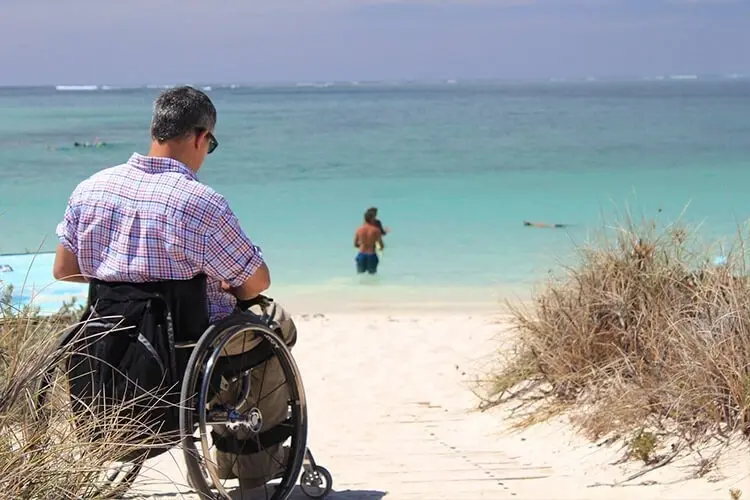
For wheelchair users, navigating everyday life can present constant obstacles, even in one’s hometown. When the desire to travel and experience international cultures enters the equation, those logistical hurdles multiply significantly. Living with a disability is already demanding, and planning a vacation has historically added layers of stress, frustration, and exclusion.
However, a progressive shift is underway across the global tourism landscape. Over time, many national governments and municipal authorities have introduced comprehensive accessible and barrier-free policies designed to ensure that visitors of all physical abilities can easily explore and enjoy foreign countries. Hotels and restaurants are increasingly encouraged—and in many cases mandated—to provide fully wheelchair-accessible services. Concurrently, public transport networks and civic spaces such as parks, cultural centers, and museums are undergoing extensive remodeling to accommodate disabled individuals. As a result of these concerted modernization efforts, international travel is considerably more navigable today than it was a decade ago.
For travelers utilizing wheelchairs who are ready to begin planning their next holiday, a growing number of world-class destinations have distinguished themselves through exceptional barrier-free infrastructure.
Venice, Italy
While the iconic canal city might initially appear intimidating to the mobility-impaired due to its intricate network of bridges, Venice is remarkably accommodating. Aside from its celebrated architectural archways, a vast array of historic sites throughout the city feature wheelchair-accessible design. The Doge’s Palace stands as a prime example of this commitment to inclusion. Almost all the rooms within the palace are either completely step-free or equipped with appropriate ramps. To facilitate movement to the upper floors where many of these historic chambers are located, the palace features a dedicated elevator.
The primary logistical challenge within the complex involves the ticket office, which lacks wheelchair accessibility. Visitors requiring mobility assistance typically need a companion to secure tickets on their behalf or accompany them to the desk. Once admission is obtained, however, the interior spaces are fully primed for independent exploration.
Singapore
While numerous nations around the world are still in the process of formulating and implementing barrier-free accessibility policies, Singapore established its foundational framework two decades ago. Because of this proactive approach, the city-state is widely recognized as the preeminent wheelchair-accessible destination in Asia.
Singapore’s Mass Rapid Transit (MRT) system stands out as one of the most accessible public transport networks globally. Every MRT station is fully outfitted with essential barrier-free amenities, including elevators, wheelchair-accessible restrooms, and strategic ramps. Train arrival and departure schedules are prominently displayed on digital screens and broadcast through audio speakers to accommodate visually impaired passengers as well. More than 100 stations currently feature these comprehensive accommodations, with additional infrastructure projects underway.
Prominent cultural and recreational landmarks, including Gardens by the Bay, the ArtScience Museum, and the National Museum of Singapore, offer complete barrier-free accessibility for wheelchair users. These facilities feature smooth, accessible pathways and dedicated restrooms. Furthermore, many of these popular attractions provide complimentary wheelchairs at their main entrances on a first-come, first-served basis, reinforcing Singapore’s reputation for world-class accessible infrastructure.
Berlin, Germany
For travelers whose primary objective is urban exploration rather than traditional sightseeing, Berlin presents an ideal option. Driven by progressive municipal disability policies, the German capital has heavily adapted its urban landscape to cultivate an inclusive environment for both international tourists and local residents.
Berlin’s modern public transit network, which includes nearly 100 subway stations equipped with functional elevator access, ranks among the most wheelchair-friendly systems in Europe. Furthermore, the city’s expansive pathways and sidewalks are designed for seamless navigation by wheelchair users, ensuring that visitors can fully experience one of Europe’s most historically rich and culturally diverse urban centers.
Museums and theaters across the city are overwhelmingly wheelchair-accessible. A distinct advantage of choosing Berlin as a vacation destination is the close geographic proximity of its major cultural attractions, which minimizes transit times and conserves the physical energy of travelers.
Loutraki, Greece
As home to one of the world’s oldest civilizations, Greece remains an enduringly popular holiday destination. Benefiting from a warm climate throughout the year, the coastal town of Loutraki proves to be an inviting retreat in any season. The Sirens Resort in Loutraki is specifically engineered to cater to individuals with limited mobility. The property provides specialized amenities such as roll-in showers, accessible kitchens, comprehensive laundry services, and on-site mobility equipment rentals.
Crucially, the resort features a fully accessible ramp system that extends directly to the beachfront, allowing wheelchair users to experience the sand and the Aegean Sea without physical barriers. The ramp leads right down to the shoreline, enabling effortless transit between hotel accommodations and the water.
In addition to these resort-level amenities, the Sirens Resort operates guided tours and dedicated wheelchair-accessible taxis, ensuring that guests can easily visit regional historical landmarks.
Vancouver, Canada
Renowned for its multicultural population and welcoming atmosphere, Vancouver exemplifies civic hospitality toward mobility-impaired visitors. The city adheres to stringent barrier-free regulations, positioning itself as one of the most accessible urban environments in North America.
The vast majority of Vancouver’s primary tourist attractions are fully accessible to wheelchair users. Notable locations include Stanley Park, the Vancouver Art Gallery, Downtown Vancouver, the Vancouver Aquarium, and the historic Chinatown district, among others.
During the winter season, the Whistler Adaptive Sports Program offers physically disabled individuals the opportunity to participate in adaptive snowboarding and skiing utilizing specialized athletic equipment.
Paris, France
While immensely popular, Paris historically presented challenges regarding universal accessibility, yet it remains a premier European destination for travelers utilizing wheelchairs. The Eiffel Tower accommodates mobility-impaired visitors up to its first two levels, and numerous historic institutions throughout the capital have adapted their spaces for public access.
The Palace of Versailles, located just outside the city center, serves as a prime example of these preservation and accessibility efforts. Recognized as one of the grandest palaces in Europe, its three primary buildings are fully wheelchair-friendly. Elevators transport visitors to the upper levels, while ground-floor areas are connected by a series of functional ramps. Additionally, discounted golf cart rentals are available on-site for disabled guests to navigate the sprawling grounds.
For city sightseeing, the "Another Paris Tourist Train" provides a comprehensive, 100 percent wheelchair-friendly guided tour of the capital. Visitors can also take in panoramic views of the Eiffel Tower and the surrounding cityscape from the Montparnasse Tower, view Leonardo da Vinci’s Mona Lisa at the Louvre Museum, and stroll through the city’s numerous accessible parks.
Sydney, Australia
Australia maintains a strong commitment to wheelchair accessibility, a standard reflected in its most populous city, Sydney. Several of the city’s most famous tourist landmarks combine stunning vistas with comprehensive accessibility features.
The Sydney Tower Eye provides visitors with a panoramic bird’s-eye view of the harbor city while maintaining full accessibility standards. Meanwhile, the Sydney Sea Life Aquarium and the Wild Life Sydney Zoo offer immersive encounters with the unique fauna and marine life native to the Australian continent.
Additional major cultural and natural sites, including the Royal Botanical Gardens and the iconic Sydney Opera House, are also fully equipped to welcome wheelchair users.
Washington, D.C., USA
As the capital of the United States, Washington, D.C., features numerous high-profile federal monuments and cultural institutions that prioritize accessible tourism. The Washington Monument, the Lincoln Memorial, the White House, and the National Air and Space Museum are among the many sites equipped for mobility-impaired visitors.
The city offers a wide selection of wheelchair-friendly accommodations and dining establishments, supported by municipal sidewalks and public transit systems designed with accessibility in mind. Inside the White House, visitors of all physical abilities experience the same standard tour routes, supported by available ramps, elevators, and complimentary loaner wheelchairs.
Similarly, the Lincoln Memorial provides accessible entry for all visitors. Contrary to appearances in conventional photography, entry to the memorial’s interior requires navigating no stairs; visitors can utilize elevators located in the ground-floor lobbies and ramps leading to the lower level.
Los Angeles, California, USA
Widely known as the entertainment capital of the world, Los Angeles combines a warm climate with extensive infrastructure upgrades tailored to tourists. A primary regional attraction, Universal Studios Hollywood, features numerous wheelchair-accessible rides alongside auxiliary guest services such as language interpreters.
The Aquarium of the Pacific offers another entirely accessible environment, allowing visitors to tour the facility without navigating physical barriers. Cultural and retail hubs such as The Getty Center and The Grove provide similar levels of seamless mobility access.
Furthermore, numerous public beaches throughout the Los Angeles area offer complimentary beach wheelchair rentals, ensuring that mobility-impaired visitors can access the sand and coastline.
Philadelphia, Pennsylvania, USA
As one of the most historically significant urban centers in the United States, Philadelphia maintains a strong focus on accessibility for travelers using wheelchairs.
Key historical and cultural sites—including the Liberty Bell Center, Independence Hall, the National Constitution Center, the Betsy Ross House, and The Franklin Institute—are fully equipped to accommodate visitors with mobility impairments.
In addition to these historic landmarks, the Reading Terminal Market serves as a popular destination for tourists. Housed within a single-level enclosed facility, the market allows visitors to navigate the various food and retail vendors easily from a wheelchair.