By DRONELIFE Features Editor Jim Magill
An incident commander arriving at the chaotic scene of a major fire faces an immediate, high-stakes operational challenge: rapidly collecting, evaluating, and coordinating multiple fragmented streams of intelligence. To effectively direct firefighting assets—ranging from traditional manned apparatus and ground crews to modern aerial drones—decision-makers must process vast amounts of data under immense pressure.
A major technological leap forward is set to simplify this complex process. A strategic partnership between Tablet Command, a leading mobile incident command and tactical software provider, and Skydio, a prominent autonomous drone systems manufacturer, has introduced a fully integrated solution. This new capability allows fire departments to monitor drone locations, telemetry data, and high-definition video feeds directly within their existing incident command software on a single screen.
The collaboration bridges a critical gap in emergency response technology. Previously, while fire agencies increasingly adopted aerial drones for tactical reconnaissance, the video feeds and telemetry data generated by these aircraft remained siloed in separate applications. Incident commanders often had to juggle multiple screens, request verbal updates from remote drone pilots, or navigate external platforms just to view thermal and visual perspectives of a burning structure or wildfire.
In an interview detailing the rollout, Tablet Command co-founder and CEO William Pigeon explained that the collaboration empowers firefighting agencies by integrating necessary video and data streams into real-time operational workflows.
"It allows Skydio drones to be seen by our customers, by our users, with a location of the drone on the map, just like they would see a fire engine location. And they can tap on that drone and get a truly real-time video feed with no delay," Pigeon said.
The companies successfully unveiled a proof-of-concept for the integrated technology at the recent Skydio Ascend users conference held in Summerlin, Nevada. According to Pigeon, the engineering teams are actively refining the platform into a production-based infrastructure designed to be fault-tolerant, highly resilient, and fully optimized for use in demanding, mission-critical environments.
Tablet Command currently provides its operational software to between 1,500 and 2,000 fire-fighting agencies across the United States and Canada. The company is initially rolling out the integrated technology to its premier "pioneer" customer, the Louisville Fire Department in Kentucky. Following this initial deployment, the partners intend to introduce the product to the extensive network of fire departments that utilize both Tablet Command and Skydio systems.
For these dual customers, the practical value of the integrated technology is immediate and profound, eliminating administrative hurdles during active emergencies.
"There’s no other application, there’s no exchanging usernames or passwords, there’s no looking at some other video screen to see the drone video. We’re bringing it to them in a single pane of glass, the real-time video, so that they can make decisions while they’re responding," Pigeon emphasized.
Tablet Command’s Origin Story
The drive to innovate emergency response software stems from a profound and tragic historical event within the firefighting community. Pigeon and co-founder Andy Bozzo were inspired to establish Tablet Command following a devastating incident that occurred while both were serving as firefighters at the Contra Costa County fire academy in California.
"On July 21, 2007, the Contra Costa County fire department suffered two line-of-duty deaths. Matt Burton and Scott Desmond, a captain and an engineer, perished in a fire trying to rescue an elderly couple in a 1,000-square-foot house," Pigeon recalled.
The profound loss deeply impacted the two young firefighters, instilling a lifelong commitment to applying their technical and professional skills toward developing tools that enhance firefighter safety and operational awareness.
At the time, both future entrepreneurs were working on a departmental project in 2009—coinciding with the commercial release of the first Apple iPad. Bozzo suggested that they combine their expertise to design an incident command application specifically for the tablet platform, giving commanders an unprecedented level of situational intelligence regarding active emergency scenes.
Recognizing the potential of the concept, Pigeon, who possessed a background in technology, helped secure financial backing from friends and family before contracting an external development firm. The partners officially launched the Tablet Command application in 2013, making it available for purchase on the Apple App Store.
However, commercial realities quickly set in. Within the first year of operation, the founders realized that distributing a specialized emergency management application for $39.99 on a consumer app store was not a viable long-term business model. At roughly the same time, direct feedback from veteran fire chiefs pointed the company toward a more impactful direction: integrating the app directly with 911 computer-aided dispatch systems.
This pivot allowed commanders to manage emergency resources through a simple digital interface, enabling quick drag-and-drop assignments for engines, trucks, and personnel. The company launched this critical upgrade in 2014, establishing the foundation for its current software-as-a-service model.
Tablet Command evolved to focus on seamless data integration, connecting directly to 911 data centers to extract information in real time and deliver it straight to tactical users. The company continued to expand its product ecosystem, most notably launching TC Mobile in 2016. This companion smartphone application delivers identical real-time data and advanced notifications regarding structure fires directly to individual firefighters in the field.
Skydio Develops Its Own Firefighting Tech
While Tablet Command focused on unifying personnel tracking, asset management, and dispatch communications into a single software stack, Skydio pursued parallel advancements in autonomous aerial firefighting technology.
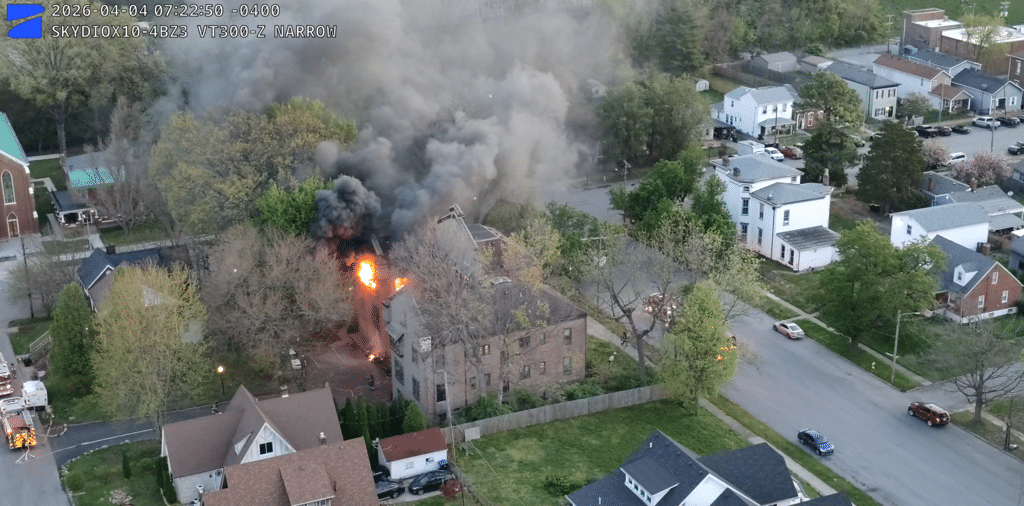
Skydio’s industry efforts heavily centered around the drones-as-first-responder paradigm. This approach involves positioning automated drone docking stations strategically around firehouses to enable rapid response to incoming 911 calls, or deploying transportable drones tactically in the field during wildfires, large-scale structure fires, building collapses, and hazardous materials incidents.
Despite the proven operational value of these aerial assets, the visual and thermal intelligence gathered by Skydio platforms remained isolated from the specialized incident command software relied upon by municipal fire departments.
A Skydio official noted that both organizations recognized a distinct operational gap from different perspectives. Through the urging of mutual customers who utilized both platforms, the companies initiated direct collaborative talks, ultimately engineering a custom integration between their respective software systems.
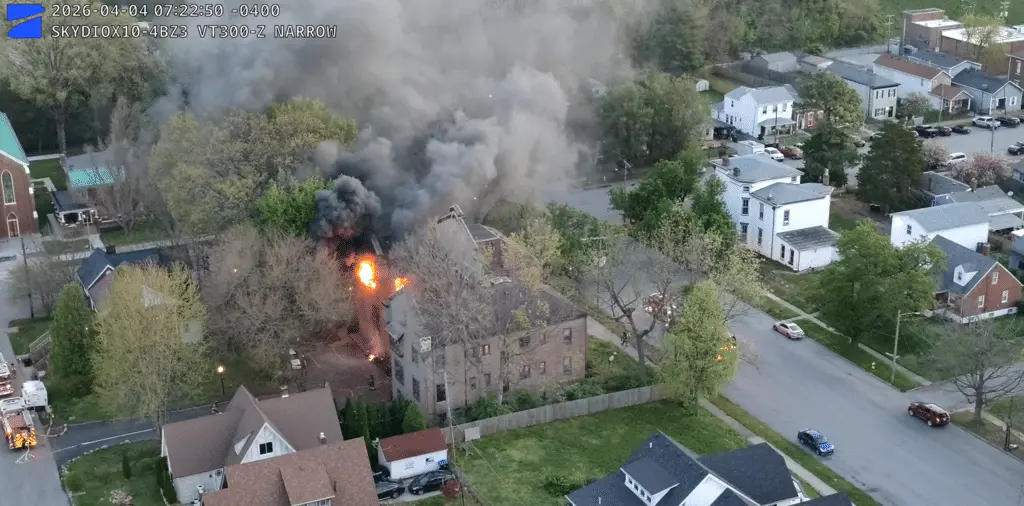
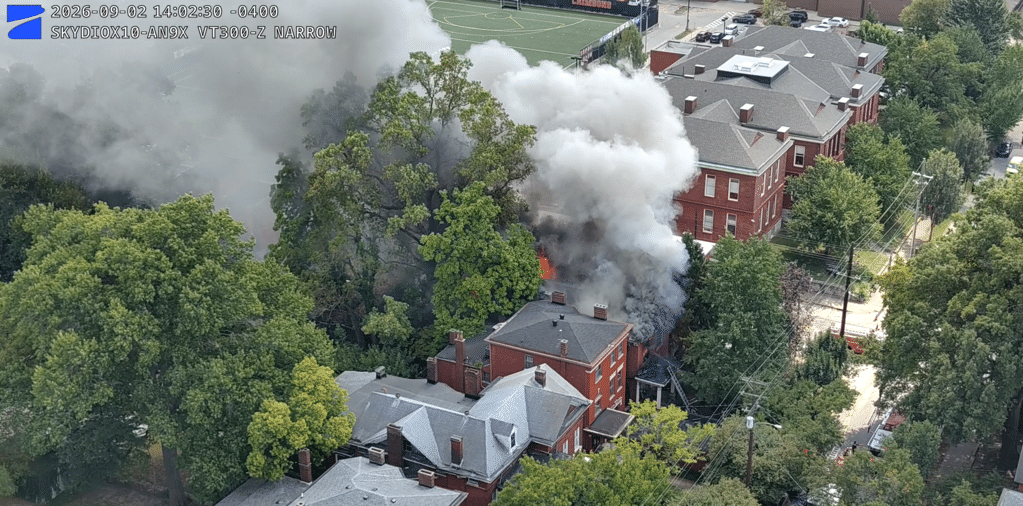
Through this combined software ecosystem, incident commanders gain access to comprehensive incident visuals, viewing live, high-definition video feeds—including both standard color and thermal imaging—directly within the Tablet Command interface.
"Where they’re flying their Skydio drones, that live telemetry and video feed pipes directly into Tablet Command, where an incident commander can see their incident, their assignments, and then they have a map view of where all their apparatuses are so they can track their assets," the Skydio official explained.
In practice, incident commanders can view all active Skydio drones operating in the area represented as clear, interactive icons on a digital map. This spatial awareness allows commanders to determine the precise physical location of each aircraft instantly. By tapping on a drone’s icon, the live video feed from that specific unit automatically populates on the screen.
Furthermore, commanders maintain the flexibility to toggle between full-color daylight views and thermal infrared video feeds in real time. During massive wildfires or complex urban disasters, multiple incident commanders operating within the Tablet Command network can independently select whichever camera perspective, drone, or feed best suits their immediate tactical needs, eliminating the need to communicate directly with individual drone operators to request specific camera angles.
Pigeon believes this seamless technological integration represents a genuine turning point for modern emergency management and firefighting tactics.
"If the drone operator is doing a point-of-view over a structure fire, the incident commander can place the drones in the screen that they’re running the incident on, and be able to visualize anything that they want, in whatever way that they want," Pigeon concluded.