Farmers across Europe are reckoning with the severe fallout of a punishing summer defined by extreme heat, relentless drought, and destructive wildfires. Amplified rapidly by human-caused climate change, this year’s severe weather patterns have introduced unprecedented volatility for food producers throughout the continent, pushing agricultural systems to their limits and intensifying concerns over long-term food security.
The compounding environmental pressures of the season have left a clear mark on landscapes and farm economies alike. In the Netherlands, farmers have harvested shrunken potatoes struggling against the lack of moisture. In France, carrot harvests have seen dramatic reductions, while Italy’s vital rice fields have dried up significantly due to record-low water supplies. Parts of the Mediterranean have watched helplessly as ancient olive groves were scorched by the blistering sun and accompanying fires.
These localized agricultural distress signals are rippling outward, contributing to broader economic pressures. Global food prices have climbed to their highest levels since early 2023, driven primarily by intense heatwaves and shifting energy price dynamics, according to the United Nations Food and Agriculture Organization (FAO). Additional geopolitical and logistical hurdles—such as blocked fertilizer supplies in the Strait of Hormuz and persistently high fuel costs—have further compounded the strain on agricultural outputs this year.
Data and projections compiled from various agricultural authorities provide a stark snapshot of how this summer’s extremes have eroded crop production and yields across Europe, illustrating a continent-wide vulnerability to accelerating climate shifts.
Most EU Countries Expect Declines in Cereal Production
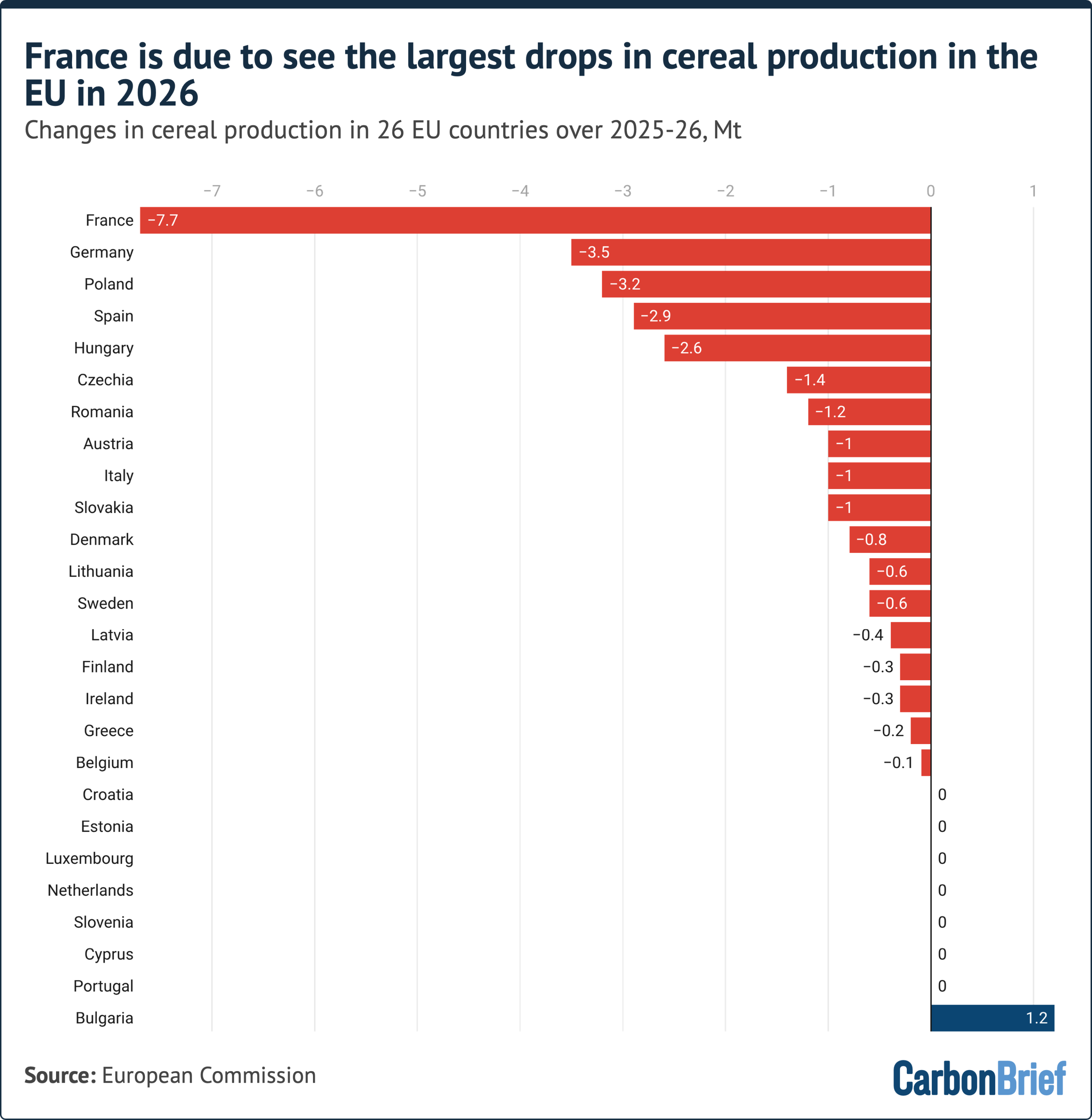
France is poised to experience some of the heaviest losses in cereal production—including wheat, barley, and oats—anywhere in the European Union this year. According to European Commission data, French cereal production is expected to plummet by nearly 8 megatonnes in 2026 compared to the previous year.
Aside from Bulgaria, nearly every European country is recording production losses. Germany is tracking the second-largest drop, anticipating a decline of almost 4 megatonnes compared to 2025.
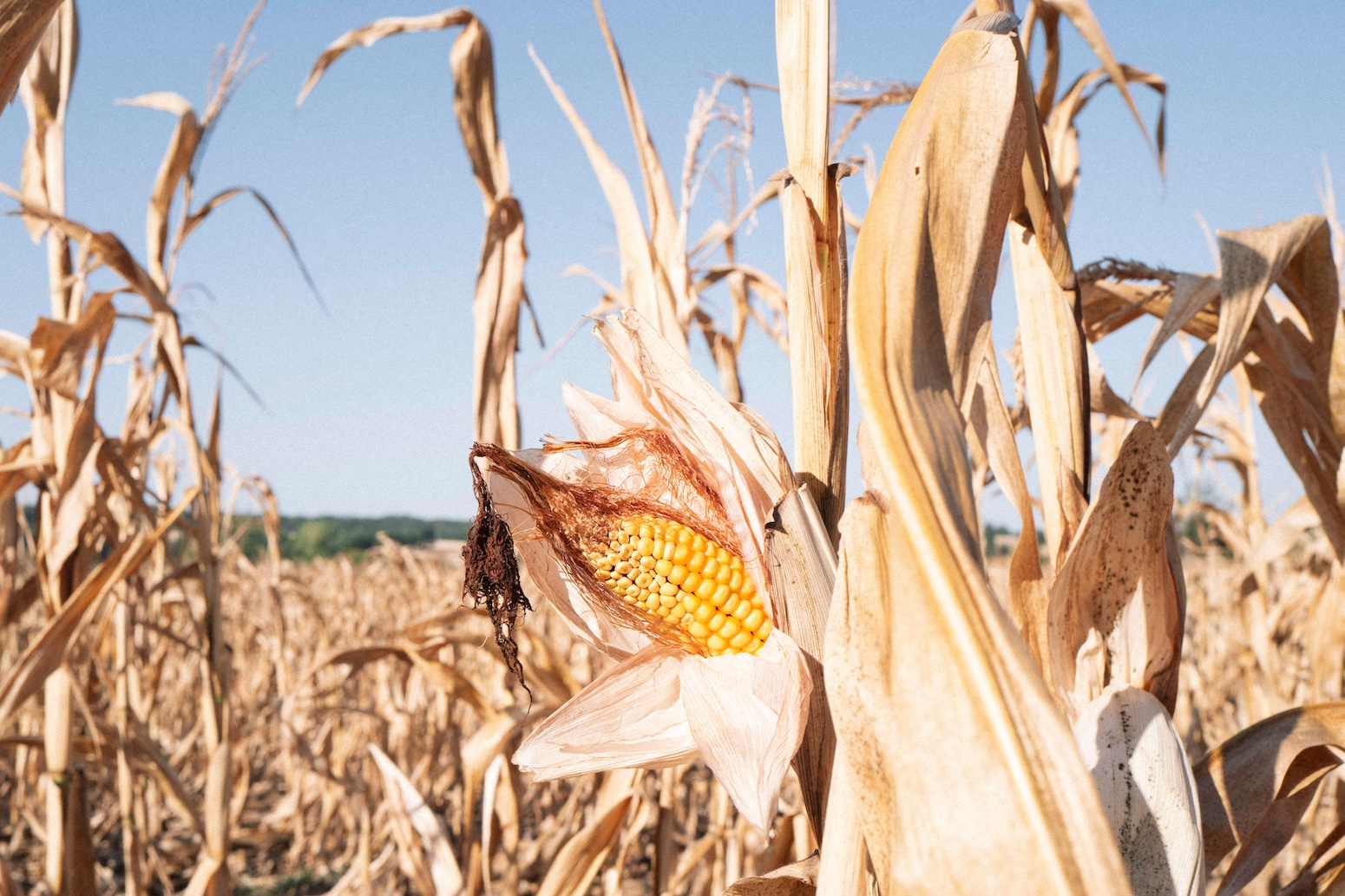
Prof. Til Feike, a cropping systems expert at the Julius Kühn-Institut, notes that vast agricultural regions in Germany, Austria, and across the wider continent have been hit hard by long-lasting dry periods combined with record-shattering heatwaves. This dual assault has turned grassland into parched earth and drastically lowered yields of maize, which serves as a vital fodder crop for livestock.
Reflecting on the systemic challenges facing modern agriculture, Feike emphasizes that farming must adapt more effectively to increasingly extreme weather conditions over the long term. Because regions face divergent threats—ranging from intense heat and drought to prolonged wet periods—there is no single, universal solution for climate change adaptation.
Most Countries Recording Reduced Crop Yields
The combination of blistering heat and a profound lack of water has substantially worsened harvest expectations throughout western and central Europe, a trend highlighted in a recent bulletin from the EU Joint Research Centre. Yields are anticipated to fall significantly, with local crop failures looking increasingly likely in regions spanning France, southern Germany, northern and central Italy, and Hungary.
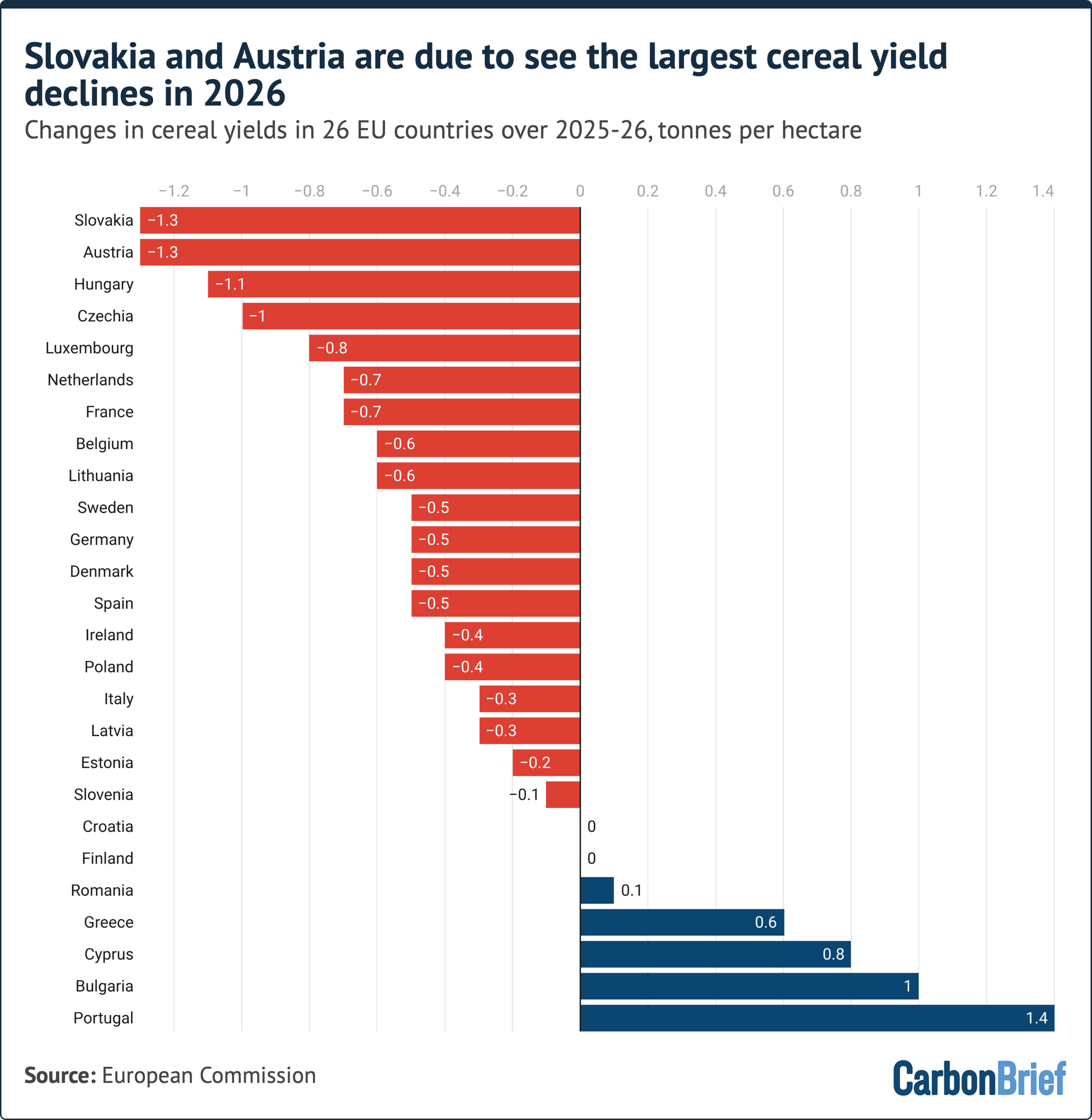
Cereal grain yields—measured in the tonnes of grain grown per hectare of land—are projected to decline across the vast majority of EU member states. Slovakia, Austria, and Hungary are bearing the brunt of this drop, expecting cereal yields to fall by more than one tonne per hectare this year compared to 2025.
Conversely, regions relying on robust irrigation infrastructure fared notably better. Portugal, for instance, recorded the largest yield increases in areas where crops were artificially watered, whereas rain-fed crops quickly exhibited severe signs of heat stress.
Significant Revenue Losses Following June Heatwaves
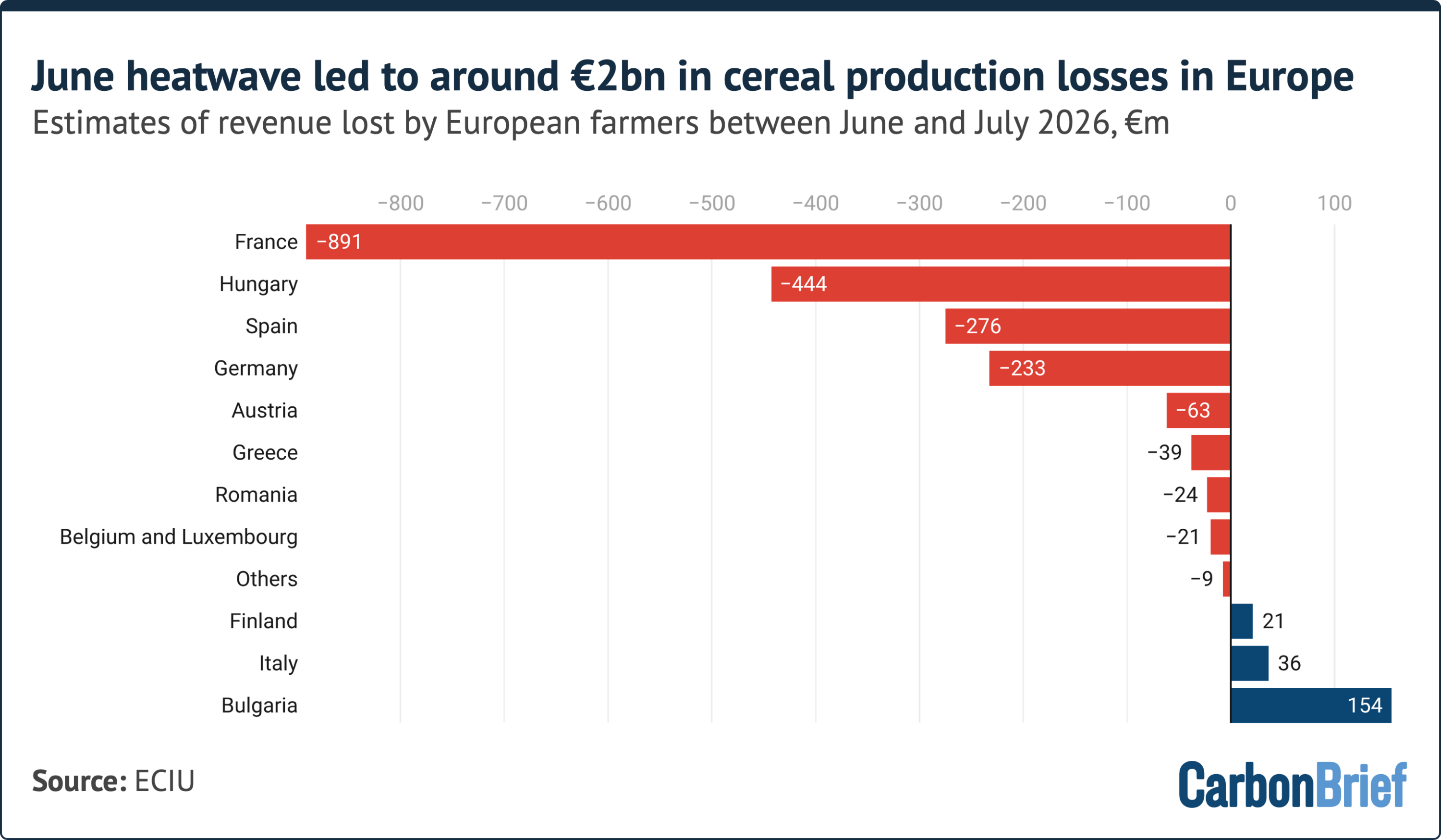
A record-breaking heatwave that swept across many parts of Europe in June contributed heavily to cumulative grain production losses valued between two and 2.3 billion euros. Scientific rapid attribution studies have shown that the intense June heat in western Europe would have been virtually impossible just 50 years ago, making it the region’s hottest June on record.
The Energy & Climate Intelligence Unit (ECIU) think tank analyzed grain forecasts published by Coceral, a European grain traders association, comparing data from June and July. By multiplying the reduction in grain tonnage between those two months by anticipated harvest delivery prices across 28 European countries, the ECIU estimated the direct financial toll. Major grain producers—including France, Germany, Hungary, and Spain—accounted for 86 percent of this lost revenue.
The economic shockwaves extend well beyond the farm gate. Analysis from Triodos Bank indicates that this summer’s extreme weather could reduce the European Union’s gross domestic product by approximately 1 percent this year, translating to roughly 180 billion euros in broader economic contraction.
UK Harvest on Track for Historic Lows
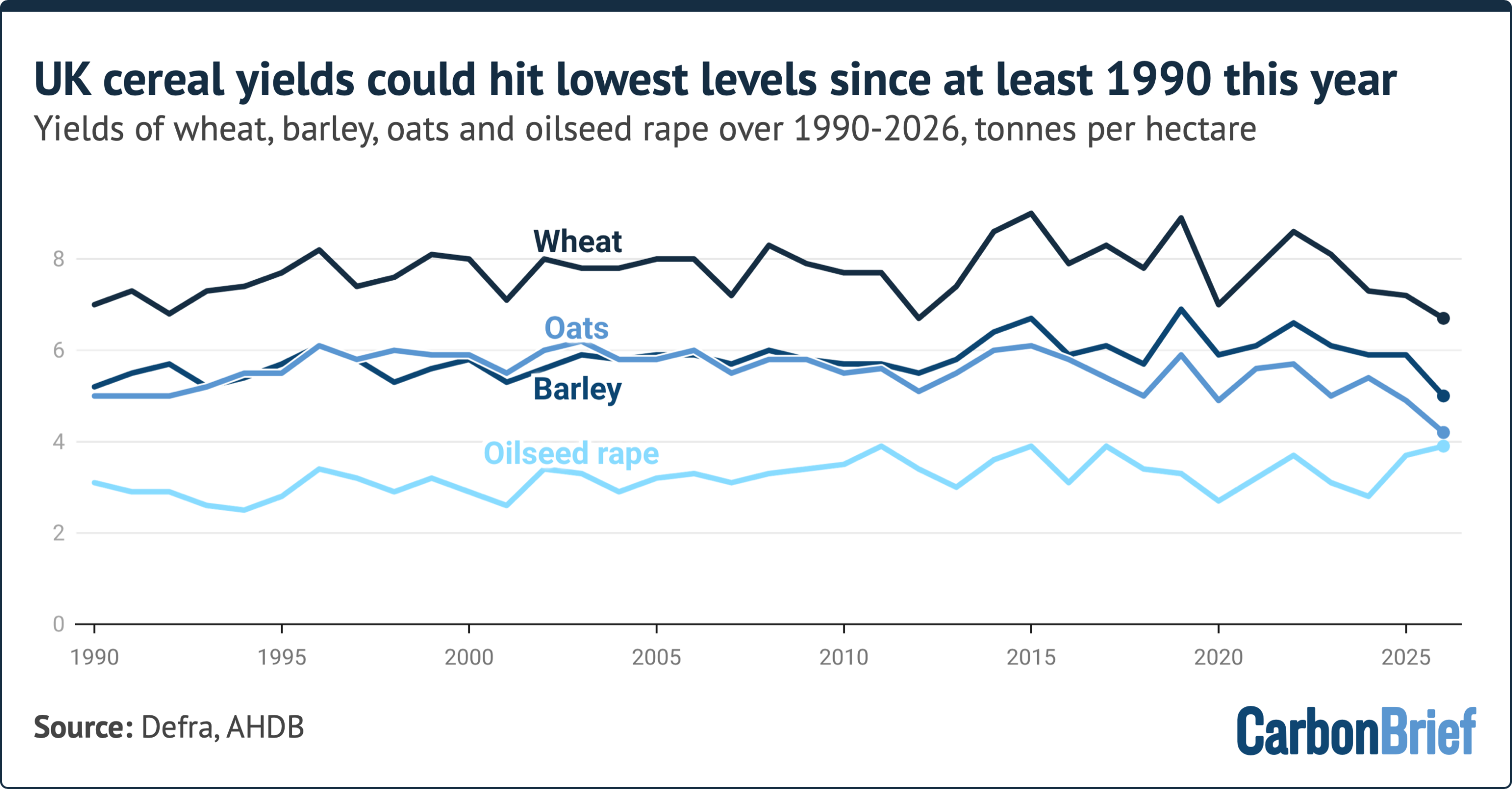
In the United Kingdom, average yields for cereals and oilseeds are on track to produce the country’s worst harvest since detailed record-keeping began in 1984, according to ECIU assessments.
Surveys from the Agriculture and Horticulture Development Board indicate that barley yields could fall by 15 percent, oats by 14 percent, and wheat yields by 6 percent year-on-year. Even under more favorable conditions for the remainder of the season, the UK is guaranteed one of its five worst harvests on record—meaning four of the five lowest harvests in modern British history have occurred within the past decade.
Industry leaders warn that consumers will likely encounter higher prices and smaller produce selections on supermarket shelves. While certain specialized crops, such as berries, thrived initially under the intense heat, experts caution that plants risk exhaustion from heavy early cropping, threatening later harvests.
French Maize Production Hits a Four-Decade Low
France has endured particularly acute impacts from the summer’s extreme weather. The nation recorded more than 7,300 excess deaths during successive heatwaves, alongside a historic number of weather stations logging temperatures exceeding 40 degrees Celsius.
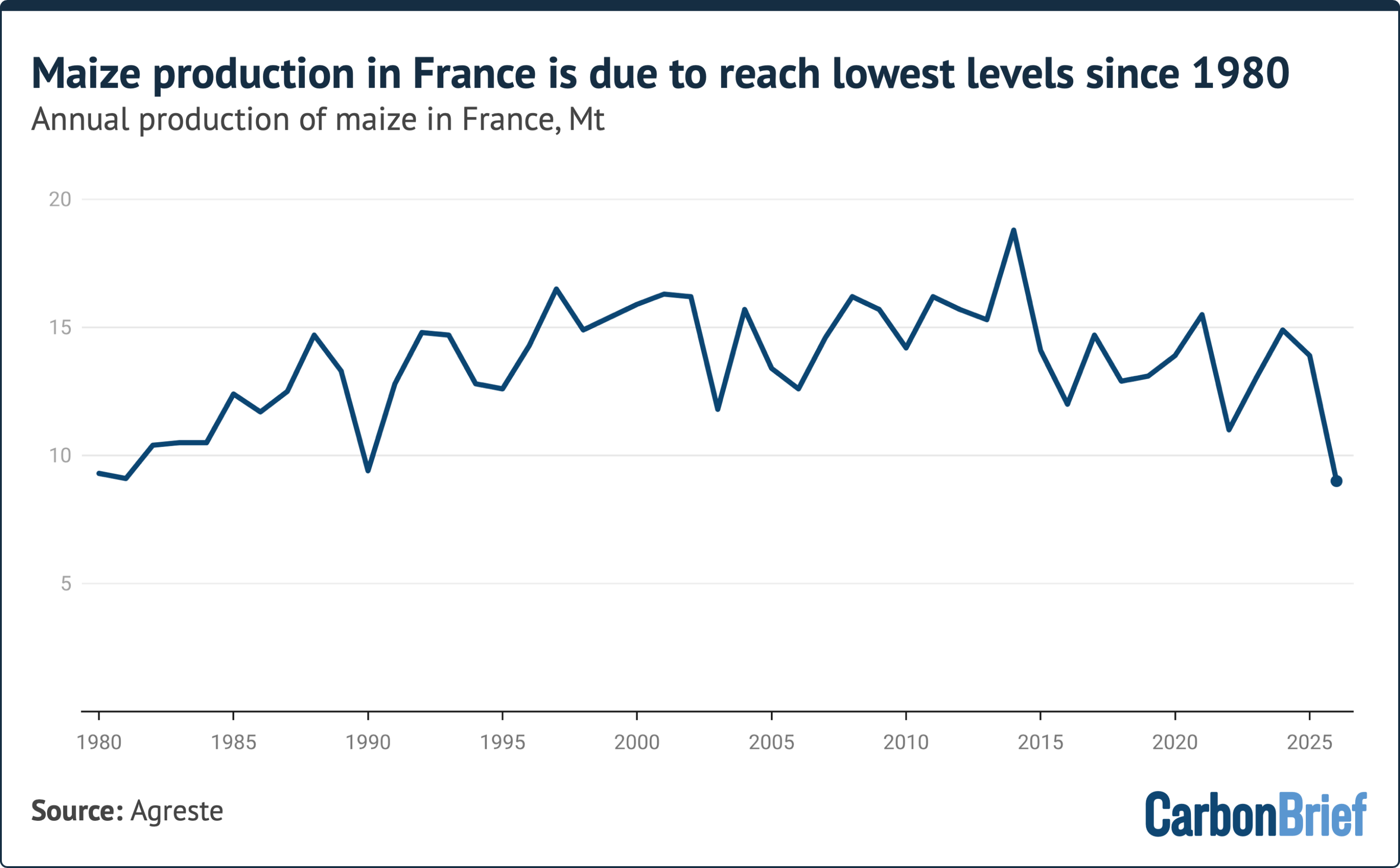
As the EU’s largest agricultural producer, France saw its foundational crops battered by drought and wildfires. Maize production is projected to drop by more than a third year-on-year, pushing output to levels not seen since 1980, according to data from Agreste, the statistical service of the French agriculture ministry.
The extreme warmth also forced record-early grape harvests across various French wine-producing regions beginning in mid-July. Winemakers reported gathering smaller, less juicy grapes that will ultimately yield significantly less wine.
Broader Declines Across the European Union

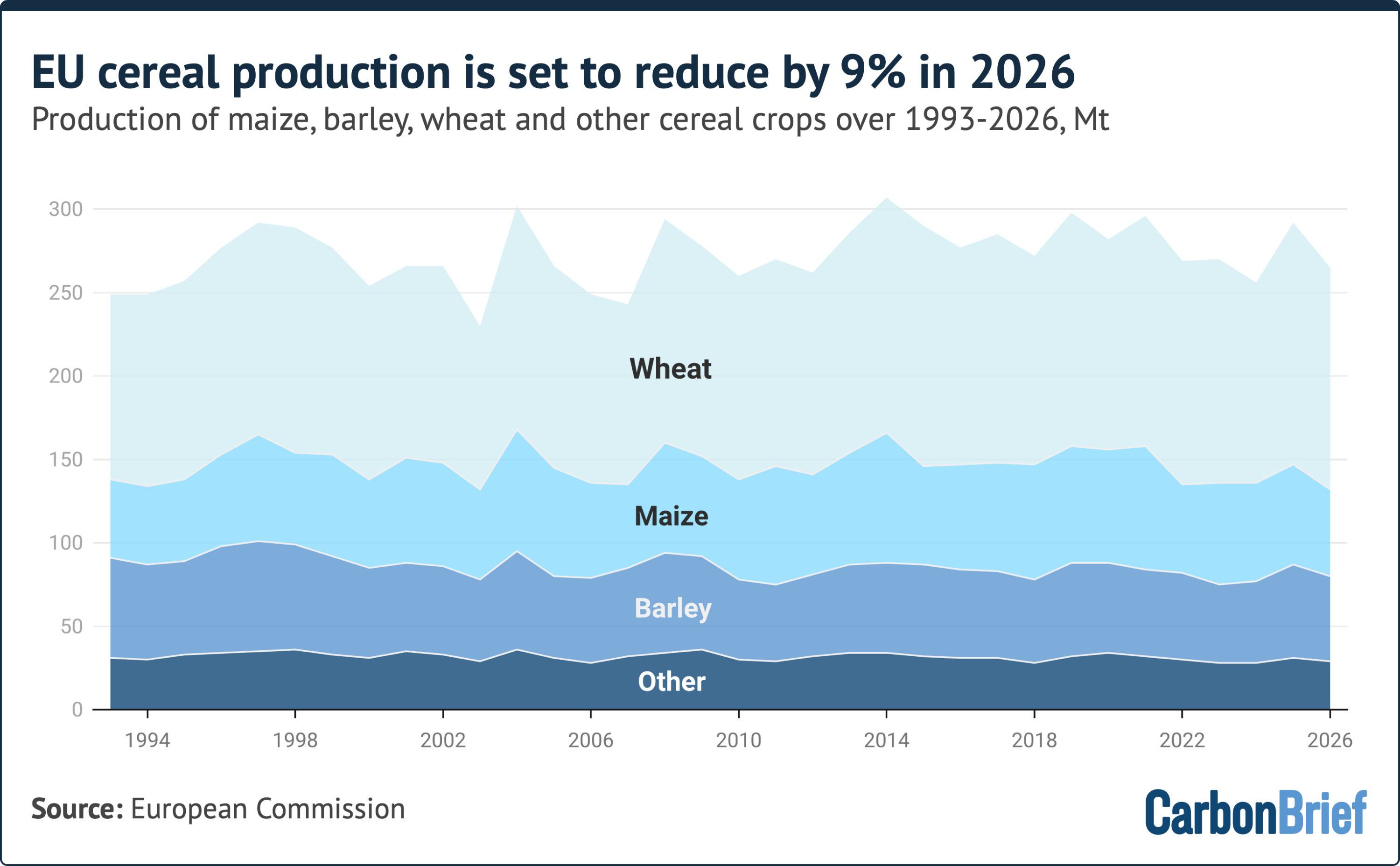
When viewed on a continental scale, EU cereal production is projected to fall by 9 percent compared to 2025 levels. Over the past decade, only 2024 recorded lower overall production figures.
Maize remains the hardest hit major crop, with projections indicating a 13 percent drop to 52 megatonnes—the lowest volume recorded across the bloc since 2007. As European agricultural authorities tally the full cost of the season, policymakers and farming cooperatives alike face mounting urgency to address the vulnerabilities exposed by a rapidly changing climate.