In under two years, a dedicated educational initiative has successfully helped more than fifteen thousand elementary school students across nineteen United States states and eight countries build foundational confidence in collecting, visualizing, and interpreting data. The program, anchored by the popular book and resource initiative Daphne Draws Data, operates on the core principle that critical thinking and clear communication are vital life skills that should not have to wait until adulthood. Helping individuals make sense of information and present it effectively is at the heart of the mission at storytelling with data (SWD), an organization that has enthusiastically shared this vision with young learners through its specialized outreach.
As the Education and Outreach Specialist for storytelling with data, bringing this work to light has been an ongoing privilege, capturing a pivotal movement in early childhood data literacy. Since its initial publication, the initiative has expanded rapidly, transforming how young minds interact with quantitative information and laying the groundwork for a more analytically confident generation.
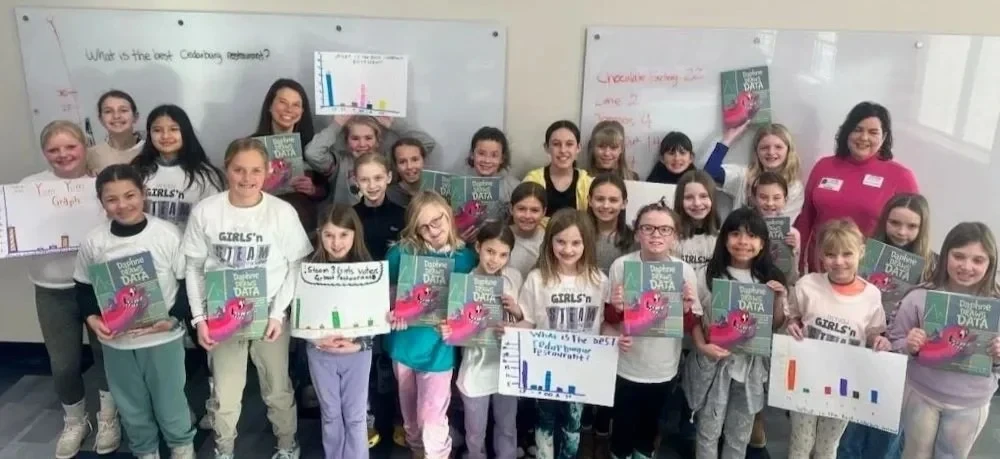
The core approach relies on strategic partnerships with nonprofits, after-school organizations, local libraries, museums, and science, technology, engineering, and math education groups. Through these collaborations, organizers have created hands-on graphing experiences designed specifically to help children collect real-world data, draw their own graphs, and interpret the patterns and answers they discover. To ensure that learning extends far beyond structured classroom workshops or community events, the initiative has actively supported continued education by donating nearly 9,000 books to underserved communities and Title I schools.
The reach and resonance of the program, however, extend far beyond the elementary school students it primarily targets. One of the most rewarding and unexpected outcomes has been observing how educators, nonprofit leaders, program coordinators, and parents absorb the exact same core data storytelling lessons traditionally taught to corporate and business professionals. Adults participating in or observing the programs learn fundamental concepts such as choosing an appropriate graph type, removing visual clutter, intentionally focusing attention, and communicating effectively through narrative. For educators and nonprofit leaders, mastering these skills proves invaluable when advocating for program funding, securing vital resources, and demonstrating the tangible impact of their community work to stakeholders.
Building on the momentum of books and community graphing workshops, this year marked a significant expansion with the launch of the interactive Daphne Draws Data exhibit. Created in collaboration with interactive design specialists, the exhibit invites children to contribute their own data points in real time. Participants can immediately compare their personal responses with those of their peers, observing firsthand how individual data inputs aggregate to become part of a larger, collective story. The exhibit made its debut at the Kansas Children’s Discovery Center, with organizers expressing strong aspirations to expand the installation to additional museums, children’s museums, and science centers across the country.
Another major driver behind the program’s expanding global and domestic footprint has been the dedication of enthusiastic "Data Detective" leaders. These community volunteers bring the graphing with Daphne programs directly to their local neighborhoods, schools, and community centers. Utilizing pre-developed program resources provided by SWD, these volunteers empower children to answer their own curious questions by engaging in the active collection and visual representation of data.
For those whose personal or professional values align with this educational mission, multiple avenues exist to get involved and support the ongoing expansion of youth data literacy. By working together, communities, educators, and organizations can continue helping children build lifelong confidence with data, fostering analytical skills that will serve them well into the future.