A career in technology can take many paths when it is shaped by curiosity, bold decisions, and a willingness to solve meaningful problems. Within the technology sector, the ongoing conversation around diversity and leadership often highlights the vital contributions of women who are not only building impactful careers but are also actively clearing the path for others to follow. As part of the Precisely Women in Technology (PWIT) series, the organization continues to celebrate these changemakers across its global operations.
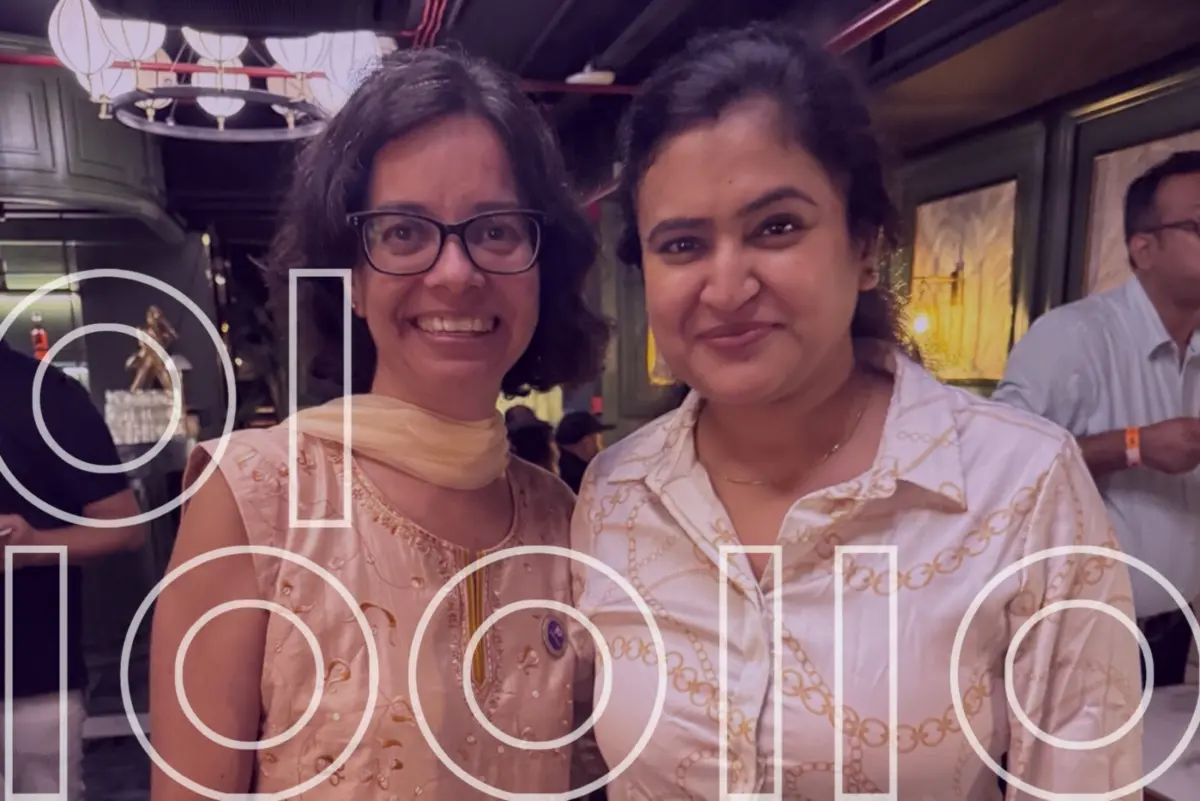
In this latest spotlight, the focus turns to Aakansha Bhalotia, a Principal Product Manager whose diverse 13-year career has spanned from building foundational Enterprise Resource Planning (ERP) systems to leading strategy and go-to-market initiatives for the Precisely Platform and cutting-edge artificial intelligence products. Her journey offers a compelling look at the evolution of modern product management, the importance of high agency, and what it takes to navigate complex technical landscapes while championing the next generation of women in the field.
Why did you choose to pursue a career in technology?
Bhalotia’s foundational connection to technology began long before she entered the corporate workforce. Having always been naturally drawn to numbers, mathematics was her favorite subject in school, making engineering feel like a natural and predictable path forward. However, the true catalyst that pulled her into the practical application of technology was rooted in family and entrepreneurship—specifically, helping her father run his business.
During those formative years, she assisted with billing, tallying, and navigating a custom order management process designed to track incoming raw materials against outgoing revenue. As the business expanded, the family faced a familiar operational bottleneck. Replicating that operational model manually month after month proved exhausting, prompting a defining question that would shape her professional life: What if there was a way to bring all of this together through automation?
That single instinct steered her toward the commencement of her career building ERP systems. In those early roles, she witnessed firsthand how fixing a messy, disjointed data pipeline could save professionals countless hours of manual work every single week. Over the span of 13 years, working across various complex domains, she arrived at a profound realization: the hardest and most valuable problem in technology is rarely the technical "how" of building a solution. Instead, the true challenge lies in the "what" and the "why"—determining precisely which problems are genuinely worth solving and which ideas should remain on the drawing board.
Today, Bhalotia leads strategy, product building, and go-to-market operations for Precisely’s B2B SaaS platform products, spanning both foundational infrastructure and the rapidly evolving AI space. While the operational scale has changed significantly since her days tracking raw materials for a family enterprise, her core instinct has remained entirely unchanged: find the friction, remove it, and solve practical, everyday customer problems with absolute clarity.
Who has been your greatest professional mentor? What is one thing you have learned from them?
Throughout her extensive career, Bhalotia has benefited from the guidance of exceptional teachers, professors, and managers. However, when reflecting on the figures who truly shaped her professional trajectory, she notes that they were not traditional mentors in the conventional sense. Rather, they were executive sponsors who modeled what high-trust, high-autonomy product leadership looks like in practice, alongside a vibrant peer community she discovered at ProductTank Pittsburgh when she first transitioned into product management in the United States.
Her peers in Pittsburgh provided a vital, safe space to pressure-test messy, unpolished ideas alongside other like-minded builders who shared her obsession with product craft. Meanwhile, her executive sponsors offered invaluable guidance on how to navigate organizational dynamics: always bring a clear recommendation backed by tangible evidence, rather than simply presenting an unresolved problem. When operating in an environment filled with ambiguity, their advice was to build something tangible, demonstrate clearly how it helps the customer, and make it effortless for executive leadership to back the initiative.
What is the biggest risk you took in your career? What was the reward?
Risk-taking has been a defining characteristic of Bhalotia’s professional journey, marked notably by two distinct instances where she willingly walked away from comfort and stability to start over as a beginner in the room.
The first major pivot occurred when she left a successful, established career in ERP consulting to transition entirely into product management. At the same time, she was building a new life in the United States, actively thrusting herself into professional product communities to hone her craft alongside peers who were deeply immersed in the discipline.
The second major risk involved relocating back to Gurugram, India, with her family after spending nearly a decade in the United States, all while continuing to lead global enterprise strategy across international time zones. While both transitions felt acutely uncomfortable and daunting at the time, Bhalotia embraces a similar mindset of reinvention today whenever she steps into fast-moving AI and platform initiatives long before a formalized playbook exists. Each career reset and cross-border challenge ultimately rewarded her with a unique ability to seamlessly connect customers, engineering teams, product developers, and go-to-market strategies across entirely different global markets.
As a woman, what challenges have you faced in the technology industry? How have you overcome them?
Navigating the technology sector as a woman in technical domains brought distinct hurdles, particularly earlier in her career. Working within deep technical specializations—such as ERP systems, data engineering, analytics, machine learning, and APIs—she frequently encountered an unspoken pressure to prove her technical depth twice over before her strategic point of view was genuinely heard and respected.
Later in her career, as a mother leading complex global initiatives spanning both US and Indian time zones, the nature of the challenge shifted. The primary obstacle became sustaining high-impact professional output without falling into the pervasive modern trap of remaining "always on." Bhalotia has successfully overcome both professional hurdles through rigorous preparation, deep technical competence, and a commitment to ruthless prioritization in both her daily schedule and strategic focus.
Careers and Culture
Organizations like Precisely help market leaders make better decisions and build new possibilities through data integrity. For professionals interested in joining the team, exploring opportunities and learning more about the company’s internal culture is accessible via the official Careers and Culture page.
What is the best advice you’ve ever been given? How do you apply it to your personal and professional life?
The most impactful piece of advice Bhalotia ever received came from an early leader who told her: "Never wait for a mandate to fix a problem you can already see." Over her 13 years in the technology industry, that single directive has matured into four foundational rules she relies on to lead product development today: possess the intuition to know what is actually worth building, maintain the clarity to frame the solution simply, retain the taste to recognize when an experience is truly great rather than merely functional, and exercise the agency to execute all of the above without waiting to be asked.
Professionally, she notes that no corporate entity hands an employee a completely finished playbook. When she identifies a strategic gap, she deliberately steps into that white space, rallies cross-functional teams around a coherent thesis, and proves the value directly with real customers to transform an early internal bet into an organizational priority.
On a personal level, maintaining that same level of agency means refusing to live life on autopilot. Whether it involved moving her family back to India after years abroad or designing daily routines that protect deep professional focus alongside the responsibilities of motherhood, Bhalotia does not wait for an abstract "someday"—she makes a decisive choice and moves forward.
What is one piece of advice you’d offer to younger women entering the industry?
In the current era of artificial intelligence, the technical barrier to building has collapsed, granting creators unprecedented leverage to build almost anything they can imagine. Consequently, Bhalotia stresses that deciding what to build and why remains the most critical question an innovator can ask. Regardless of an individual’s specific corporate title, she advises young professionals to seize every available opportunity to talk directly to actual customers and users.
Furthermore, she emphasizes that the ultimate professional differentiator is the conviction to own one’s voice without letting impostor syndrome diminish it. Pointing to broader industry statistics—where women currently hold roughly 30 percent of senior leadership roles, make up 30 percent of software engineering teams, and secure approximately 2 percent of venture capital funding—she encourages women to reframe moments of isolation. When a woman feels out of place in a corporate room, Bhalotia notes that she is not experiencing a personal competence gap, but rather a systemic representation gap. Her message is clear: own your seat anyway.
As a successful woman in technology, what is one thing you do to pay it forward and advocate for other women in the field?
For Bhalotia, the most effective way to advocate for women in technology is to actively build a culture founded on high agency and accountability. This involves bringing the right people into critical decision-making rooms, pushing authority deep into the organization, and trusting talented individuals to exercise sound judgment.
Recognizing that AI fluency is currently the single greatest lever for career advancement in the technology sector, she remains deeply passionate about ensuring that women and the next generation are positioned at the absolute forefront of that structural shift. At Precisely, she has put this philosophy into action by leading an internal AI pilot designed to upskill more than 30 product managers and UX designers across the Chief Product Officer organization.
Additionally, she actively mentors product owners and recent graduates on how to proactively manage their own career trajectories. Outside of her corporate responsibilities, Bhalotia recently initiated bi-weekly educational sessions focusing on artificial intelligence and technology for underprivileged children, with a special emphasis on young girls, at the Naya Sawera NGO in her local neighborhood, aiming to open doors of opportunity for them at an early age.
Individuals interested in learning more about the workplace culture and career pathways at Precisely can visit the company’s Careers and Culture page for further details on current openings and organizational values.