Thousands of years after unleashing one of the most violent and cataclysmic volcanic eruptions in recent geological history, one of Earth’s most formidable supervolcanoes is quietly stirring back to life. Deep beneath the ocean surface off the coast of Japan, scientists have uncovered undeniable evidence that a massive underground magma reservoir is slowly and steadily refilling with fresh molten rock.
The groundbreaking discovery, led by researchers at Kobe University, offers volcanologists an unprecedented, rare look into how giant volcanic systems manage to rebuild their immense magma supplies long after a catastrophic collapse. Beyond shedding light on Japan’s geological past and future, the findings carry profound global implications. Researchers believe the insights gained from this underwater caldera could unlock crucial behavioral patterns shared by other notorious supervolcanoes around the world—including Yellowstone in the United States and Toba in Indonesia—potentially helping scientists refine the warning signs that precede future global-scale eruptions.
How Supervolcanoes Store Enormous Amounts of Magma
To understand the sheer magnitude of the discovery, geologists often look at the staggering scale of the forces involved. Certain volcanic eruptions are so colossal that they fundamentally reshape the topography of the planet. The sheer volume of magma ejected during these rare events defies everyday imagination; to put it into perspective, the molten rock released in a single major supervolcano eruption would be enough to bury the entirety of New York City’s sprawling Central Park beneath a smoldering layer roughly 12 kilometers, or 7.5 miles, thick.
When such incomprehensible volumes of magma violently evacuate from deep within the Earth’s crust, the structural integrity of the ground above the emptied subterranean chamber fails. Deprived of its underlying support, the overlying rock collapses inward, leaving behind a broad, relatively shallow depression known as a caldera. These immense geological scars are inextricably linked to the most powerful and destructive volcanic events in the planet’s history.
Among the most famous examples of these geological monsters are Yellowstone in Wyoming, Lake Toba in Sumatra, and Japan’s Kikai caldera, the vast majority of which lies hidden beneath the waves of the Pacific Ocean. Kikai last experienced its defining super-eruption approximately 7,300 years ago. That prehistoric cataclysm stands as the largest known volcanic eruption of the Holocene epoch—the current geological period that began roughly 11,700 years ago and continues to the present day.
Although the scientific community has long understood that giant caldera volcanoes are capable of erupting more than once over vast expanses of geological time, researchers still possess an incomplete understanding of the complex plumbing systems that feed them. Specifically, the mechanisms by which these massive volcanoes accumulate the staggering quantities of magma required for such colossal events remain shrouded in mystery. This fundamental gap in knowledge makes it exceptionally difficult for modern science to anticipate when or how another major eruption might eventually occur.
"We must understand how such large quantities of magma can accumulate to understand how giant caldera eruptions occur," says Kobe University geophysicist Nobukazu Seama, highlighting the driving question behind years of meticulous research.
Scientists Discover a Massive Magma Reservoir Beneath Japan
At first glance, Kikai’s largely underwater location might appear to be a formidable obstacle for researchers attempting to peer into the planet’s interior. However, marine geologists and geophysicists have learned to turn this geographic reality into a distinct scientific advantage. The surrounding expanse of the seafloor provides an unobstructed medium that allows scientists to carry out extensive, high-resolution geophysical surveys across the entire complex volcanic structure without the interference of human infrastructure or dense vegetation.
"The underwater location allows us to implement systematic, large-scale surveys," Seama explains.
To systematically investigate what lies hidden beneath the floor of the ocean at Kikai, researchers from Kobe University formed a collaborative partnership with the Japan Agency for Marine-Earth Science and Technology (JAMSTEC). Together, the research teams deployed specialized vessels equipped with powerful airgun arrays. These devices generate controlled, high-energy seismic pulses that travel deep down through the water column and propagate far into the solid rock crust beneath the ocean floor.
As these seismic waves encounter different underground materials, they behave in distinct ways. Instruments known as ocean bottom seismometers, strategically placed across the seafloor, meticulously recorded how the acoustic and seismic waves moved through the subterranean rock layers. Because seismic waves travel at markedly different speeds through solid, dense rock compared to regions containing pockets of molten or partially molten material, scientists can analyze these variations to map underground structures that are otherwise entirely impossible to observe directly.
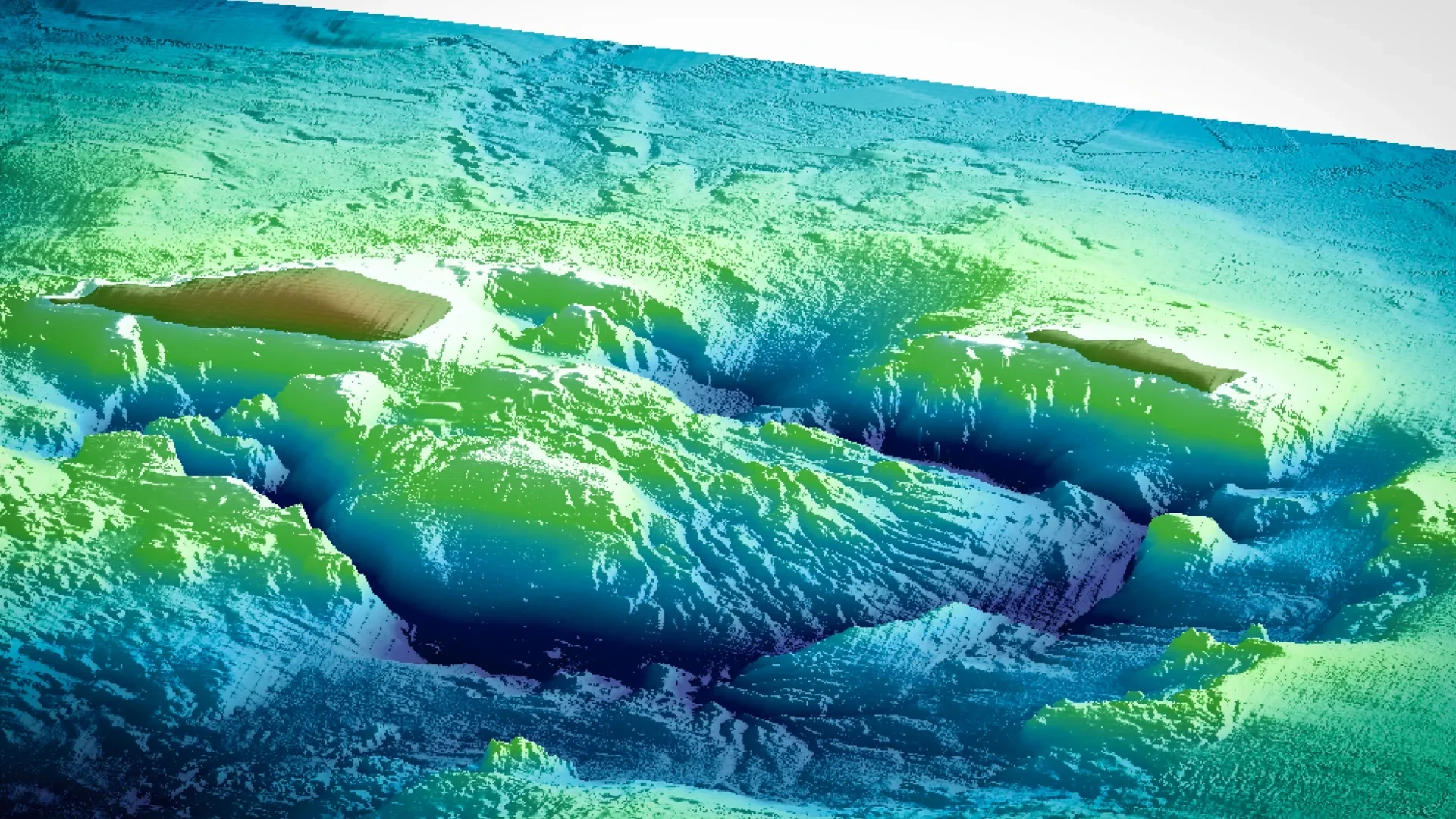
The results of this massive survey, which were published in the peer-reviewed journal Communications Earth & Environment, revealed a substantial, highly anomalous region directly beneath the site of Kikai’s ancient super-eruption. This zone contains a remarkably high proportion of magma, confirming the presence of a vast, active reservoir.
By carefully examining and cross-referencing the seismic measurements, the research team successfully mapped the approximate physical size, volume, and geometry of the underground magma chamber. The spatial position and extensive boundaries of this newly mapped reservoir strongly indicate that it occupies the exact same deep-seated magma storage system that fueled the catastrophic eruption 7,300 years ago.
"Due to its extent and location it is clear that this is in fact the same magma reservoir as in the previous eruption," Seama notes.
Fresh Magma Is Recharging the Ancient Supervolcano
Perhaps the most scientifically intriguing and unexpected revelation from the study is the origin of the molten rock currently residing within the chamber. The magma beneath Kikai is not simply stagnant, cooling leftover material left behind by the cataclysmic blast millennia ago.
Previous geological investigations of the area had already revealed the presence of a younger lava dome actively developing near the center of the caldera, estimated to have formed over roughly the past 3,900 years. A geological feature of this nature typically forms when thick, highly viscous lava extrudes slowly around a volcanic vent rather than flowing freely across the surrounding terrain.
Furthermore, detailed geochemical analyses conducted on samples from this lava dome and other more recent local volcanic activity demonstrated that the material possesses a chemical composition distinct from the debris ejected during Kikai’s giant Holocene eruption.
This chemical divergence provided the research team with a crucial diagnostic clue. It strongly suggests that the magma currently stored beneath the volcano was introduced via fresh, active injections of molten rock welling up from much deeper within the Earth’s crust or upper mantle. Rather than sitting dormant, the old plumbing system is actively being supplied with new fuel.
"This means that the magma that is now present in the magma reservoir under the lava dome is likely newly injected magma," Seama summarizes.
When taken together, the seismic observations and the chemical evidence paint a much clearer, more dynamic picture of how a giant volcanic system manages to gradually rebuild its underground supplies long after a catastrophic venting of pressure.
Crucially, researchers emphasize that this ongoing replenishment process does not imply that another apocalyptic eruption is imminent at Kikai. Instead, the discovery provides a vital window into the long-term metabolic cycle of supervolcanoes, revealing how immense reservoirs can be slowly recharged over thousands of years—a fundamental baseline process that scientists must fully comprehend before they can reliably evaluate the true long-term behavior of these geological giants.
What the Discovery Could Reveal About Yellowstone
The implications of the Kobe University study extend far beyond the coastal waters of Japan. Volcanologists believe that the magma re-injection process identified beneath Kikai may provide a universal key to understanding why other enormous caldera systems across the globe—most notably Yellowstone in the United States and Toba in Indonesia—also harbor massive, active magma reservoirs relatively close to the Earth’s surface.
"This magma re-injection model is consistent with the existence of large shallow magma reservoirs beneath other giant calderas like Yellowstone and Toba," Seama points out.
The newly supported model suggests that following a colossal, landscape-altering eruption, a supervolcano does not simply die out. Instead, over extended geological timescales, new batches of magma can steadily infiltrate, feed, and replenish the pre-existing underground reservoir network. Unraveling the mechanics of how this happens could eventually reveal predictable patterns governing the long-term cycles of magma accumulation, crustal stress, and major eruptive phases.
Building on their success at Kikai, the research team now aims to further refine the seismic imaging techniques used during the study. By sharpening the resolution of these methods, scientists hope to investigate the nuanced mechanics of magma movement and storage in even greater anatomical detail.
"We want to refine the methods that have proved to be so useful in this study to more deeply understand the re-injection processes," Seama concludes. "Our ultimate goal is to become better able to monitor the crucial indicators of future giant eruptions."
By illuminating how fresh magma accumulates beneath a volcano responsible for one of the most extraordinary episodes in Earth’s history, the research brings modern science one step closer to decoding the subterranean forces that make such colossal events possible.
This research was funded by the Ministry of Education, Culture, Sports, Science and Technology (MEXT) under the Third Earthquake and Volcano Hazards Observation and Research Program, and by the Japan Society for the Promotion of Science (grant 20H00199). The investigations were conducted in close collaboration with researchers from the Japan Agency for Marine-Earth Science and Technology (JAMSTEC).