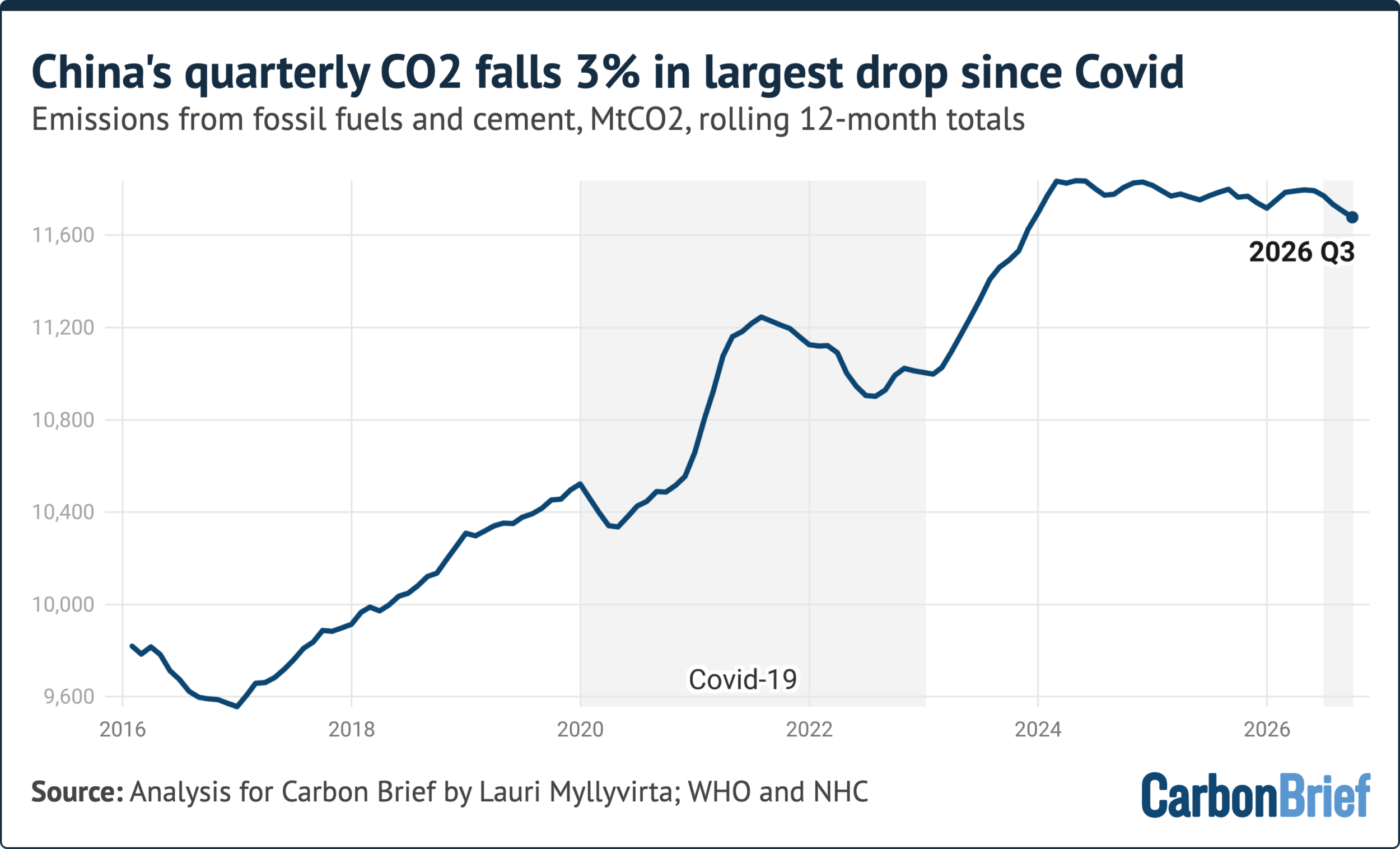
China’s carbon dioxide (CO2) emissions dropped by 3.1% in the third quarter of 2026, driven by a combination of ongoing oil market disruptions stemming from the Hormuz crisis and a measurable decline in domestic coal utilization. According to new analysis published by Lauri Myllyvirta, lead analyst at the Centre for Research on Energy and Clean Air (CREA), for Carbon Brief, this latest downturn represents the largest quarterly reduction in Chinese carbon emissions since the sweeping Covid-19 lockdowns of 2022.
The significant contraction in the third quarter pulls China’s overall emissions down by an estimated 0.5% for the year to date. Based on comprehensive official figures and commercial tracking data, the analysis reveals that coal consumption fell by 3% year-on-year across the third quarter, while oil demand registered an even steeper drop of 4%.
These downward shifts were primarily propelled by lower power-sector coal consumption, a sustained and sharp reduction in transport-sector oil usage, and decelerating growth within the energy-intensive coal-to-chemical industry. Furthermore, reductions in emissions from cement and steel manufacturing added momentum to the trend, as contractions across China’s construction sector accelerated during the period.
This latest quarterly decline extends a broader "flat or falling" trajectory in China’s national carbon emissions that first took root in March 2024. Having persisted for more than two years, this structural shift highlights a profound transformation in the world’s second-largest economy, where unprecedented clean-energy deployment is increasingly outstripping traditional fossil fuel demand. However, analysts emphasize that the ultimate outlook for China’s future emissions will heavily depend on the delicate equilibrium between rising overall energy demand, continued aggressive clean-energy expansion, and the state’s fiscal policy responses to ongoing GDP growth moderation.
Decline Drivers
The third-quarter reduction was underpinned by several structural and macroeconomic forces reshaping China’s industrial and energy landscape. Foremost among these was a 3.3% year-on-year drop in coal-fired power generation. This decline occurred as electricity demand growth moderated and the proportion of "wasted" wind and solar generation—often curtailed due to grid bottlenecks—declined.
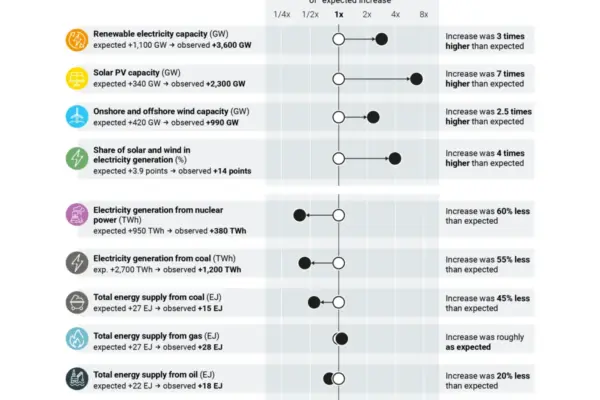
During the third quarter, power generation from solar, wind, and nuclear sources surged by a combined 110 terawatt-hours (TWh) compared to the same period in the previous year. This expansion in zero-carbon power outpaced the growth in total electricity demand by more than twofold. In absolute terms, the sheer volume of new clean power added to China’s grid in a single quarter equals Germany’s total national power output over the identical timeframe.
This contraction in coal-power output and absolute CO2 emissions materialized even as China continued to construct new coal-fired power plants at near-record rates to satisfy long-term capacity security goals. Consequently, the average running hours for the country’s existing fleet of coal plants are declining at a faster rate than total generation, progressively eroding profitability margins across the sector.
Simultaneously, transport oil consumption continued its sharp downward trajectory, registering a 9% year-on-year decline in the third quarter. The rapid ascendance of electric vehicles (EVs) fundamentally reshaped the automotive market, with EVs capturing a record 67% share of domestic passenger car sales and reaching 50% of heavy truck sales by September. Data indicates that the volume of electricity consumed by EVs jumped by 53%, a rate vastly exceeding the physical expansion of the vehicle fleet itself. This points to higher utilization rates of existing electric vehicles as drivers actively substitute away from petroleum-fueled alternatives.

Industrial shifts also played a critical role. Growth within the coal-to-chemical industry—historically a stubborn driver of national emissions growth—continued to decelerate throughout the third quarter. Persistently high global and domestic thermal coal prices squeezed profit margins across the sector, while higher industrial output prices simultaneously dampened downstream consumer demand.
At the same time, the ongoing slowdown in Chinese construction activity triggered accelerated declines in carbon emissions associated with cement and steel production, two foundational pillars of heavy industrial output.
Outlook for Emissions
The broader energy landscape in China has shifted markedly since the exceptionally high growth rates witnessed in the immediate aftermath of the pandemic. As overall energy consumption growth stabilizes, robust additions of zero-carbon power generation have created a structural ceiling for fossil fuel consumption.
Current trends indicate that clean-power generation growth will comfortably exceed total energy demand growth for the full year, cementing a structural decline in fossil fuel reliance. Nevertheless, sustaining this trajectory will require continued progress in removing infrastructural and regulatory barriers that occasionally strand renewable energy, resulting in the curtailment of wind and solar assets.
While the recent cooling of energy demand growth is partly attributable to exceptionally mild weather conditions experienced across various regions during the third quarter, macroeconomic variables remain central. Weaker gross domestic product (GDP) growth has tempered industrial output, though official figures remain aligned with established government targets. Because reported economic growth is holding within target ranges, policymakers have faced reduced pressure to implement aggressive, broad-based stimulus measures.
Instead, economic stimulus packages introduced to date have targeted the strategic "six networks," which encompass critical infrastructure such as the national power grid and expanded transportation networks. These sectors are deeply intertwined with national energy consumption and carbon trajectories, and they are already governed by strict regulatory frameworks emphasizing green and zero-carbon engineering solutions. As China navigates its economic transition, the interplay between infrastructure investment, industrial demand, and renewable deployment will dictate whether the current plateau and decline in national emissions transforms into a permanent downward slope.