All of England’s NHS ambulance services experienced some of their busiest days on record during a severe, record-breaking heatwave in June, according to data obtained through freedom-of-information requests.
During the late-June weather event, temperatures climbed past 37C in various parts of the country, prompting authorities to issue only the second-ever "red" extreme heat warning in modern meteorological records. The data, compiled and analyzed by Carbon Brief, reveals that the unprecedented surge in demand overwhelmed emergency services, frequently eclipsing historical peaks typically reserved for the depths of winter or the height of the Covid-19 pandemic.
Four out of ten NHS ambulance services in England—including the London Ambulance Service—reported responding to unprecedented numbers of life-threatening emergencies on at least one day between June 23 and June 27. Meanwhile, two additional trusts covering the south-west and east of England received their highest volumes of 999 calls in their operational histories.
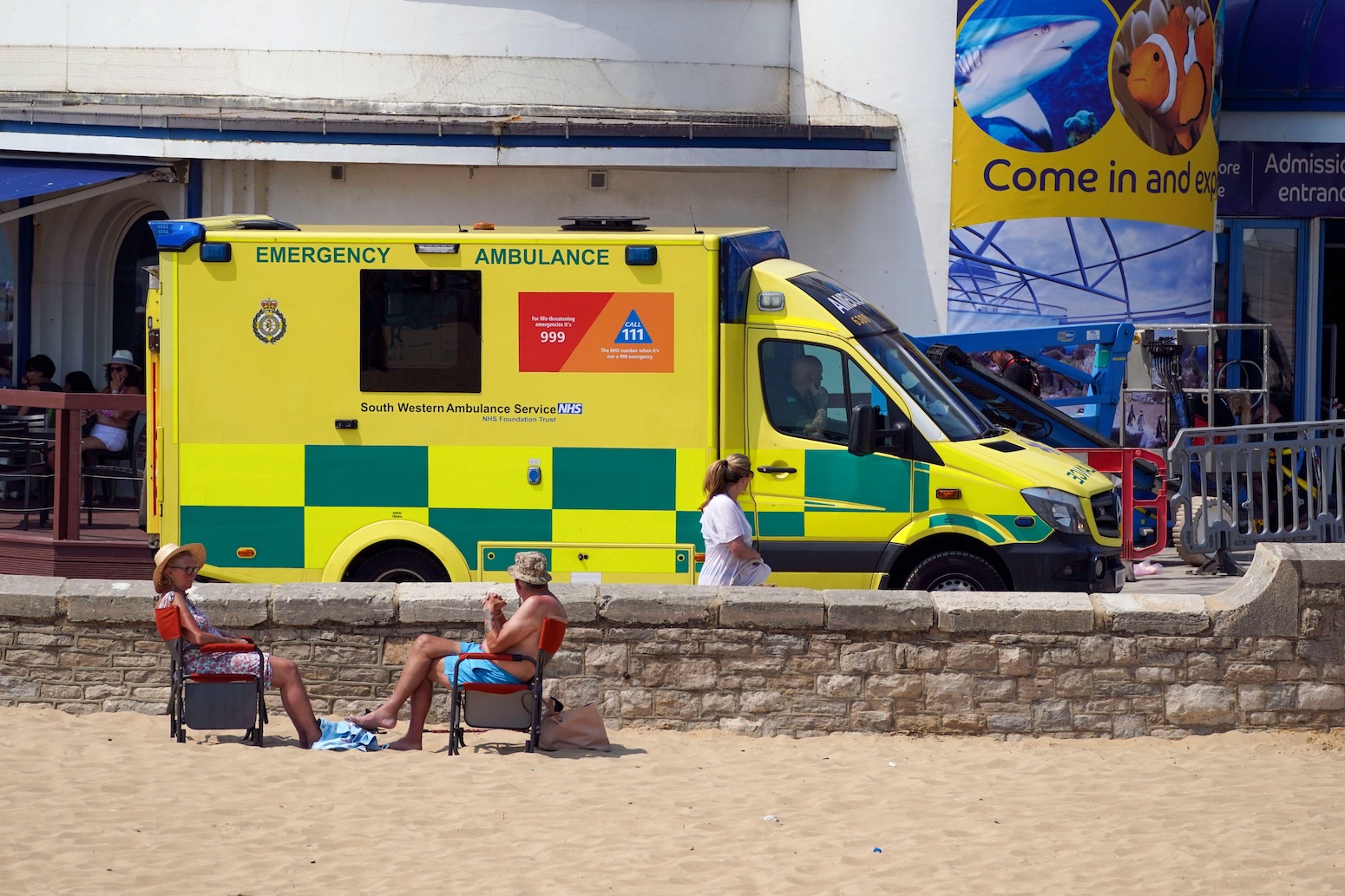
The findings underline a shifting paradigm within the UK healthcare system, where extreme summer heat is increasingly matching or even surpassing the immense operational strain traditionally associated with cold winter months and seasonal respiratory viruses.
Extreme Heat Drives Unprecedented Emergency Demand
Extreme heat profoundly amplifies the risk of numerous acute and life-threatening medical conditions, most notably cardiovascular diseases, strokes, and severe respiratory problems. As temperatures soared toward the end of June, the UK government’s Met Office blanketed large swathes of the nation in amber and red heat health alerts.
A red alert, applied specifically across the Midlands and the south of England, denotes a significant risk to life extending even to the healthy population. This heightened alert level had only been triggered once before since the implementation of the modern heat-health alert framework. Scientific researchers calculated that nearly 3,000 heat-related deaths occurred across the UK over the course of the summer, accompanied by extraordinary levels of demand at hospital A&E departments and regional ambulance hubs.
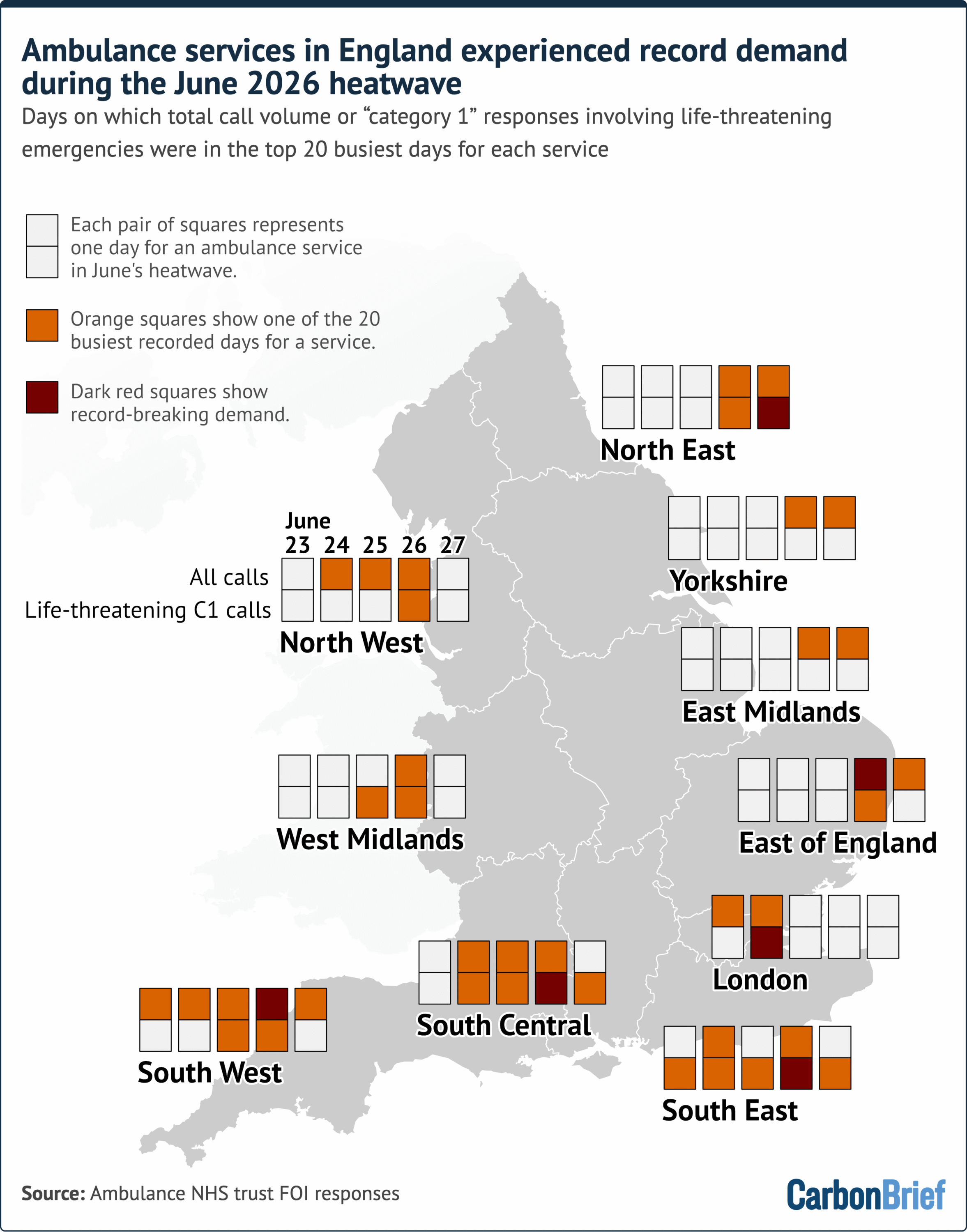
To quantify the exact scale of the crisis facing emergency responders, Carbon Brief submitted freedom-of-information (FOI) requests to all 10 NHS ambulance trusts operating in England. The inquiries sought detailed logs of each service’s busiest days on record, measuring both total 999 call volumes and "category 1" responses—the classification reserved for immediately life-threatening incidents, such as cardiac arrests.
The resulting data shows a striking concentration of historical peaks occurring during the five-day heatwave from June 23 to 27. For every single ambulance service in England, at least two days from this scorching week ranked within their top 20 busiest days since digital records began, a timeline that for most services stretches back into the early 2010s.
This trend was exceptionally acute across the south and east of England, where daytime temperatures regularly exceeded 36C and brushed against 38C in localized pockets. The London, South East Coast, South Central, and North East ambulance services all logged historic daily records for responding to life-threatening emergencies during the peak of the heat.
For the South East Coast and South Central trusts—which collectively manage emergency logistics across a vast region stretching from Oxfordshire down to Kent—June 25, 26, and 27 all witnessed unprecedented volumes of category 1 callouts in rapid succession. In the South Western and East of England regions, trusts recorded their highest-ever volumes of general 999 calls on June 26, coinciding with the day the highest June temperature ever recorded in the UK was officially registered in Norfolk.

Public health experts note that while the June heatwave acted as a massive acute catalyst, baseline demand for ambulance services—including category 1 emergencies—has steadily risen over many years. Long-term structural pressures, including an ageing population, an increase in patients living with complex multi-morbidities, and mounting mental health crises, have driven overall call volumes upward. This secular trend explains why dates predating the 2020s are exceptionally rare among the modern peak rankings provided by the trusts. Beyond the exceptional heatwave period, public health trackers indicate that the entirety of 2026 remains on track to establish new annual records for overall ambulance demand.
Stifling Heat and Frontline Strain
On June 26, the single busiest day of the heatwave, ambulance crews across England responded to 4,084 life-threatening emergencies. By comparison, the typical daily average for such critical incidents hovers around 2,500 during a standard summer month.
Stu Holliday, head of emergency preparedness, resilience, and response at the North East Ambulance Service, explained the physiological mechanisms driving the surge to Carbon Brief. During extended spells of hot weather, services routinely witness sharp spikes in calls from individuals suffering from acute dehydration, heat exhaustion, and heatstroke. Furthermore, prolonged high temperatures severely exacerbate pre-existing vulnerabilities, particularly chronic heart and respiratory conditions. Older adults, young children, and pregnant individuals are recognized as being particularly susceptible to these environmental stresses.

While winter has historically been the most demanding period for ambulance fleets due to cold weather, influenza, and winter vomiting bugs, the June data demonstrates that extreme summer weather events are beginning to rival winter peaks. This observation aligns with broader warnings from health sector leaders regarding the urgent need to adapt healthcare infrastructure to annual summer heat pressures driven by a changing climate.
Moreover, the extreme conditions imposed severe physical strains not only on vulnerable patients but also on the frontline emergency workforce. Representatives from the UNISON trade union highlighted the difficult working conditions faced by paramedics and emergency care assistants, warning that many crews were forced to operate in stifling heat within vehicles experiencing faulty or nonexistent air conditioning while managing relentless, back-to-back emergency callouts.
Methodology and Regional Variations
Under the parameters of the FOI inquiry, Carbon Brief requested data covering the top 50 busiest days on record for the 10 main NHS ambulance trusts in England: London, South East Coast, South Central, South Western, West Midlands, East Midlands, East of England, North East, Yorkshire, and North West.

The trusts provided historical logs stretching back as far as their digital record-keeping allowed. Most services were able to supply data extending back to points within the 2010s, with the exceptions of the North East and South Central trusts, which could only provide comprehensive records starting from 2021 and 2022 respectively due to legacy data migrations or system updates. Because underlying demand has climbed substantially over the past decade, the vast majority of all-time peak days for category 1 responses occurred within the 2020s. Specifically, all but four of the individual peak days reported across the country fell within the current decade.
Carbon Brief also sought comparative data regarding ambulance demand across the remaining UK nations. In Scotland and Northern Ireland, where meteorological conditions during late June remained considerably cooler, regional ambulance services did not see call volumes cross into their historical top 50 rankings during the heatwave window. Meanwhile, the Welsh Ambulance Service did not respond to the information request within the reporting period.