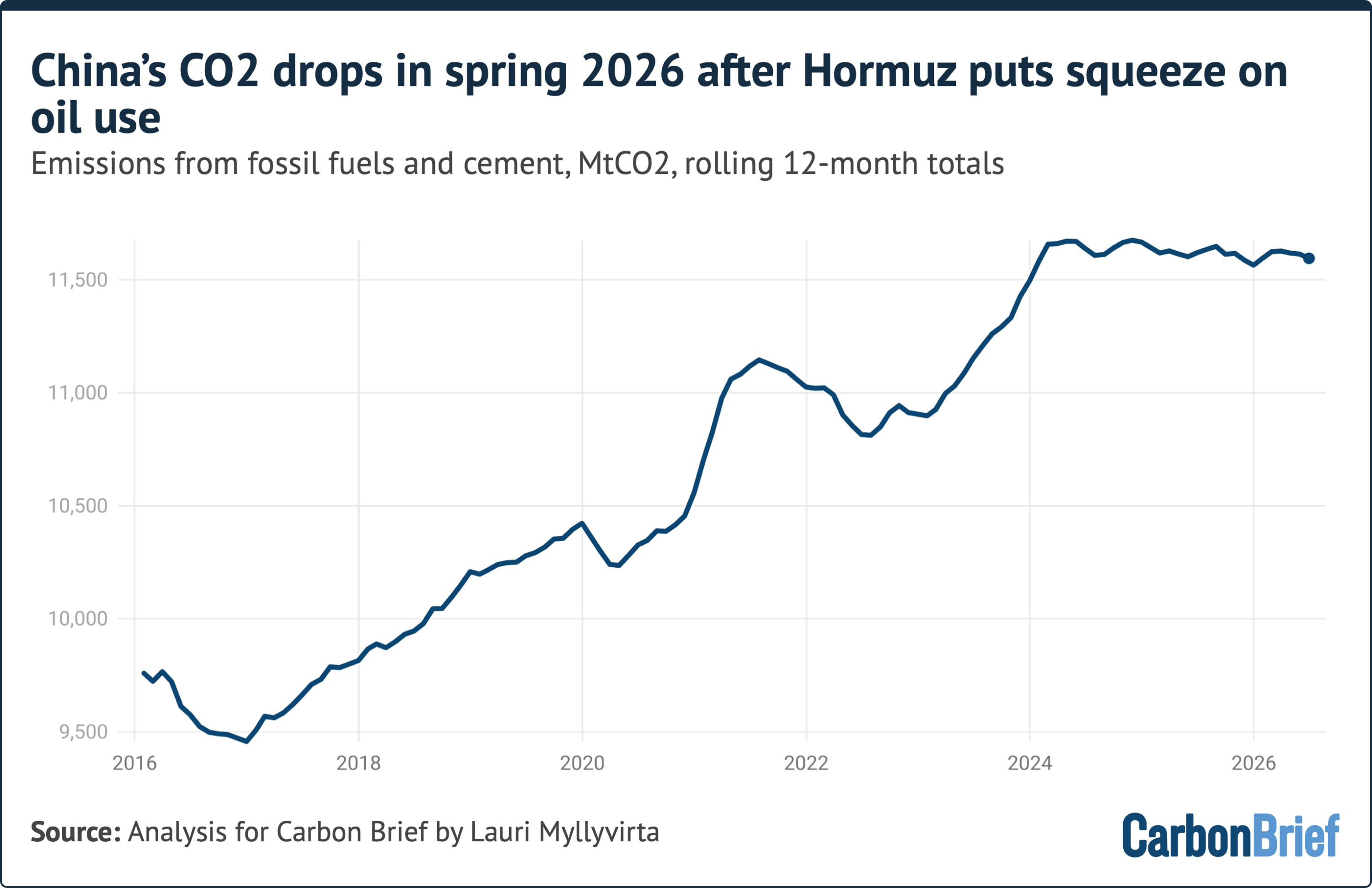
China’s carbon dioxide emissions fell by 1% in the second quarter of 2026, driven by a sharp drop in oil consumption resulting from the geopolitical crisis in the Strait of Hormuz. According to new analysis by Lauri Myllyvirta, lead analyst at the Centre for Research on Energy and Clean Air (CREA), the country’s overall use of oil dropped by 9%, with transport-specific oil consumption plunging by 16% following major supply disruptions from the Persian Gulf.
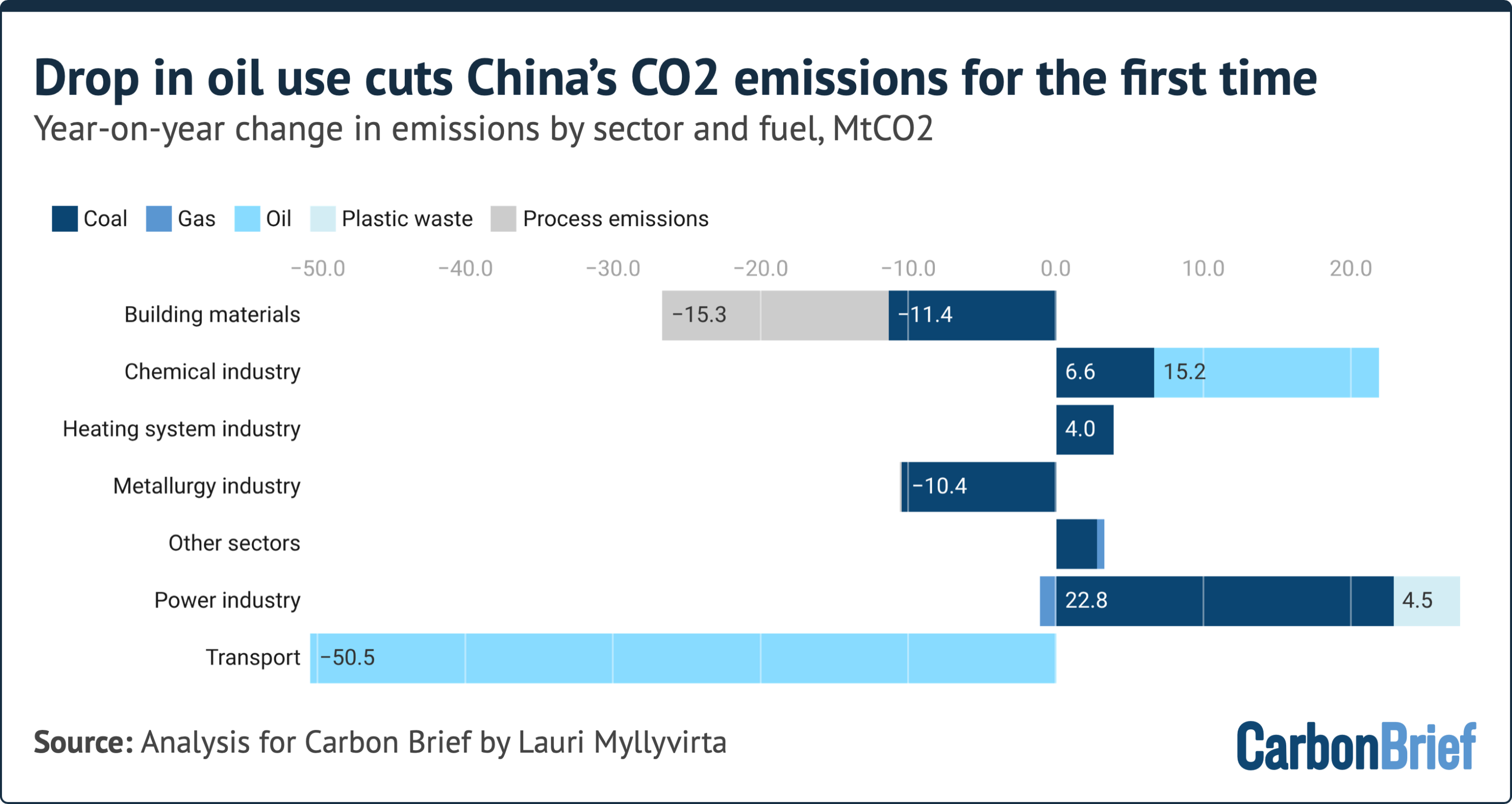
The nationwide decline in CO2 emissions occurred despite a continued rebound in coal-fired power generation. This milestone marks the first time in China’s modern economic history that reductions in oil consumption have been the primary driver of an overall drop in emissions. In all previous historical instances, contractions or slowdowns in coal consumption served as the main catalyst for reduced carbon output.
The second quarter of 2026 also represented a critical window for Chinese government planners, who released a flurry of energy-related five-year plan documents. These strategic outlines introduce new measures designed to address solar and wind power curtailment while establishing a higher bar for the regulatory approval of new coal-fired power plants. However, the newly released policy documents introduce relatively few quantitative targets for long-term reduction.
Following a 2% year-on-year increase in emissions during the first quarter of 2026 and the subsequent 1% decline in the second, China’s carbon output has risen only marginally across the first half of the year. Crucially, emissions remain below their historical peak levels recorded in 2023 and 2024. Furthermore, despite a general slowdown in the pace of new capacity additions, China remains firmly on track to bring online enough wind, solar, nuclear, and hydropower this year to completely cover the growth in electricity demand.
Given structural downward pressures on oil demand, ongoing contractions in real estate construction, and slower growth rates within the coal-chemicals sector, China’s total emissions could still decline over the course of the full year. The overarching emissions trajectory remains a high-stakes race between energy demand growth and clean-energy expansion, both of which have moderated over the course of 2026.
Emissions Still Flat
China’s CO2 emissions from fossil fuels and cement have now exhibited a prolonged plateau lasting more than two years, following a definitive peak in March 2024. Previous analyses characterized this as a flat or falling trend that extended through the end of 2025. This plateau was temporarily interrupted by a 2% year-on-year emissions spike in the first quarter of 2026, which was primarily attributed to an increase in wasted, or curtailed, wind and solar power.
The latest findings reveal that this temporary surge was counterbalanced by the second-quarter contraction. Notably, emissions fell during this period even as coal utilization increased, underscoring the unprecedented weight of the drop in oil demand.
Within the broader 1% national reduction, trends diverged significantly across different economic sectors and fuel types. The largest carbon reductions stemmed from steep drops in the consumption of petrol, diesel, and jet fuel, alongside falling oil use in heavy industry.
Crude oil processing volumes fell by 11% during the second quarter. However, a portion of this refinery drop was absorbed by drawing down existing product inventories, with major state-refiner Sinopec reporting a 9% decline in sales. Overall, China slashed its crude oil imports by 32% in the second quarter. A central question for global energy markets has been determining how much of this import reduction was driven by genuine cuts in domestic consumption versus the drawdown of the nation’s vast strategic oil stockpiles.
Official energy mix statistics reported by China’s National Bureau of Statistics indicate that oil consumption fell by 3% across the first half of the year and by approximately 9% in the second quarter. This demonstrates that reduced domestic consumption played a substantial role in mitigating the shock, while roughly 60% of the import drop was covered by transitioning from building stockpiles to depleting them.
Conversely, the power sector emerged as the primary source of emissions growth during the second quarter, where coal usage grew by 2.4% while gas-fired generation slipped by 1.2%. This increase occurred despite robust growth in wind and solar capacity over the preceding year, a significant rebound in domestic hydropower generation, modest gains in nuclear output, and an overall deceleration in electricity demand growth.
The primary driver behind this rise in power sector emissions—mirroring trends from the first quarter—was the increased volume of solar and wind generation that had to be curtailed. This waste occurred because the existing power market and grid infrastructure are not yet fully adapted to manage rapidly expanding shares of variable renewable generation.
In other sectors, cement production continued to fall due to a protracted contraction in construction volumes, with the rate of decline accelerating to 9% in the second quarter compared to 8% in the first. Crude steel output dropped by 1%, and pig iron production fell by 3%. Meanwhile, coal use for chemical production experienced slower growth compared to both the previous quarter and the previous year.
What Drove the Fall in Oil Consumption?
The dramatic collapse in China’s demand for oil imports during the Hormuz crisis has been widely recognized as a decisive stabilizing factor for global crude prices. Unpacking the domestic drivers behind this reduction reveals that ongoing, structural shifts in transport oil demand—primarily driven by aggressive vehicle electrification—played a monumental role.
Sinopec had already forecasted 6% and 5% drops in diesel and petrol consumption respectively for 2026 before the outbreak of the conflict involving Iran. Actual sales figures ultimately fell by 9% during the first half of the year. Meanwhile, broader transportation activity indicators showed a slowdown in growth rather than an outright contraction. Cross-regional passenger trips rose by 0.1% year-on-year in the second quarter, urban passenger trips increased by 2.9%, and commercial freight tonnage grew by 2.4%.
The notable exception was air travel, where passenger numbers fell by 7% across May and June following a 7% expansion in the first quarter. However, aviation accounts for a relatively minor share of China’s overall transport oil consumption. The stability across other transport sectors demonstrates that the rapid pivot to electric vehicles, rail, and public transit—rather than a reduction in overall mobility—was the decisive factor in curbing oil demand. The fuel price spikes accompanying the Hormuz crisis simply accelerated structural shifts that were already well underway.
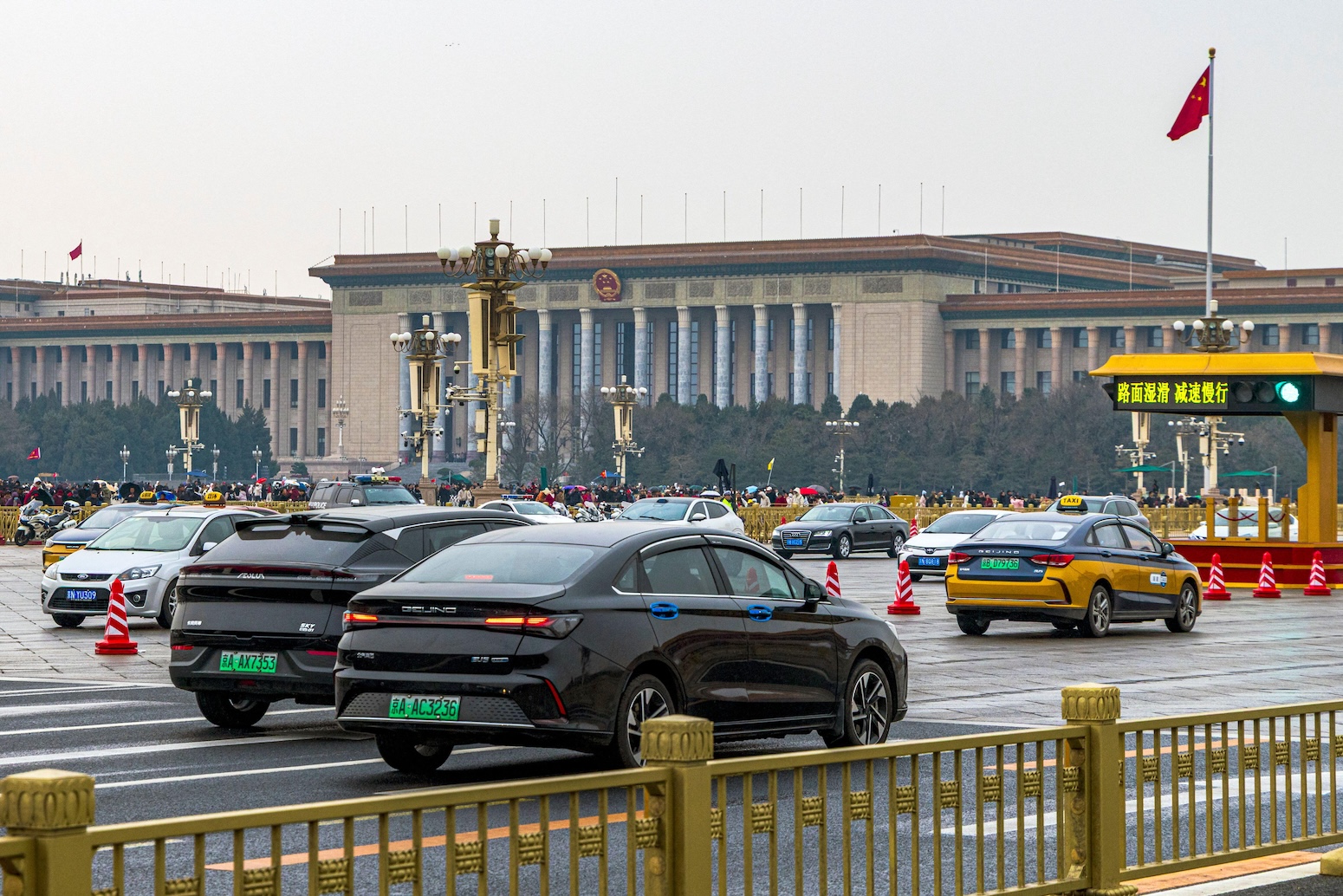
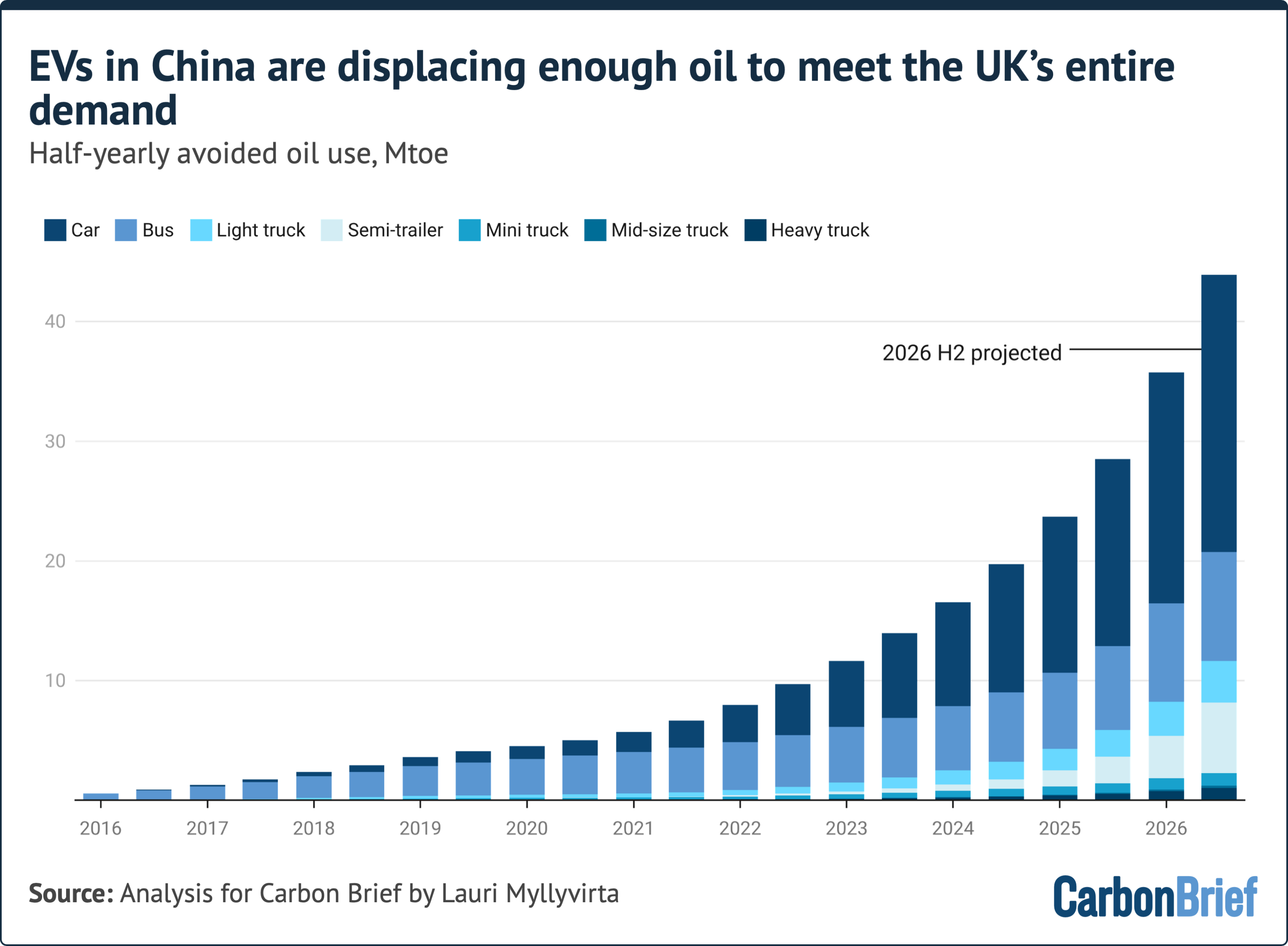
Sales of electric heavy-duty trucks jumped by approximately 77% year-on-year in the second quarter, with June sales more than doubling and the market share of electric trucks surpassing 45% of all new sales. The total number of new energy vehicles (NEVs) on the road at the end of the quarter grew by 33% year-on-year, reaching 12.1 million units, of which 8.1 million were pure battery-electric vehicles (BEVs).
Utilization rates for existing electric vehicles also surged. Public charging volumes increased by 60% in the second quarter, indicating that vehicles already on the road were driven more intensively at the expense of internal combustion engine vehicles, with plug-in hybrid drivers increasingly favoring electricity over liquid fuels. This shift was further reinforced by the expanded deployment of electric taxis amid intense market competition that lowered ride prices while private petrol vehicle operation grew increasingly costly.
Stronger subway and rail usage also contributed to the trend, with rail passenger traffic increasing by 5% in the first half of the year. The reduction in diesel demand was particularly pronounced in the construction and mining sectors, where heavy machinery is well-suited for electrification against a backdrop of declining construction activity.
Based on reported charging volume data, electric vehicles helped avoid an estimated 19 million tonnes of oil equivalent (Mtoe) in consumption during the second quarter, marking a 50% year-on-year increase. This brought total oil displaced by EVs to 36 Mtoe for the first half of the year—an amount exceeding the entire six-month oil consumption of the United Kingdom. Trucks emerged as the fastest-growing source of oil displacement, with avoided fuel use up 90% year-on-year.
Coal Power Continued to Rise Despite Clean Capacity Growth
China achieved record increases in solar and wind power capacity over the past year. Additionally, hydropower generation expanded by 9% in the second quarter compared to the same period in 2025, alongside a 2% increase in nuclear output. Simultaneously, power demand growth slowed from 5.9% in the second quarter of 2025 to 5.2% in the second quarter of 2026.
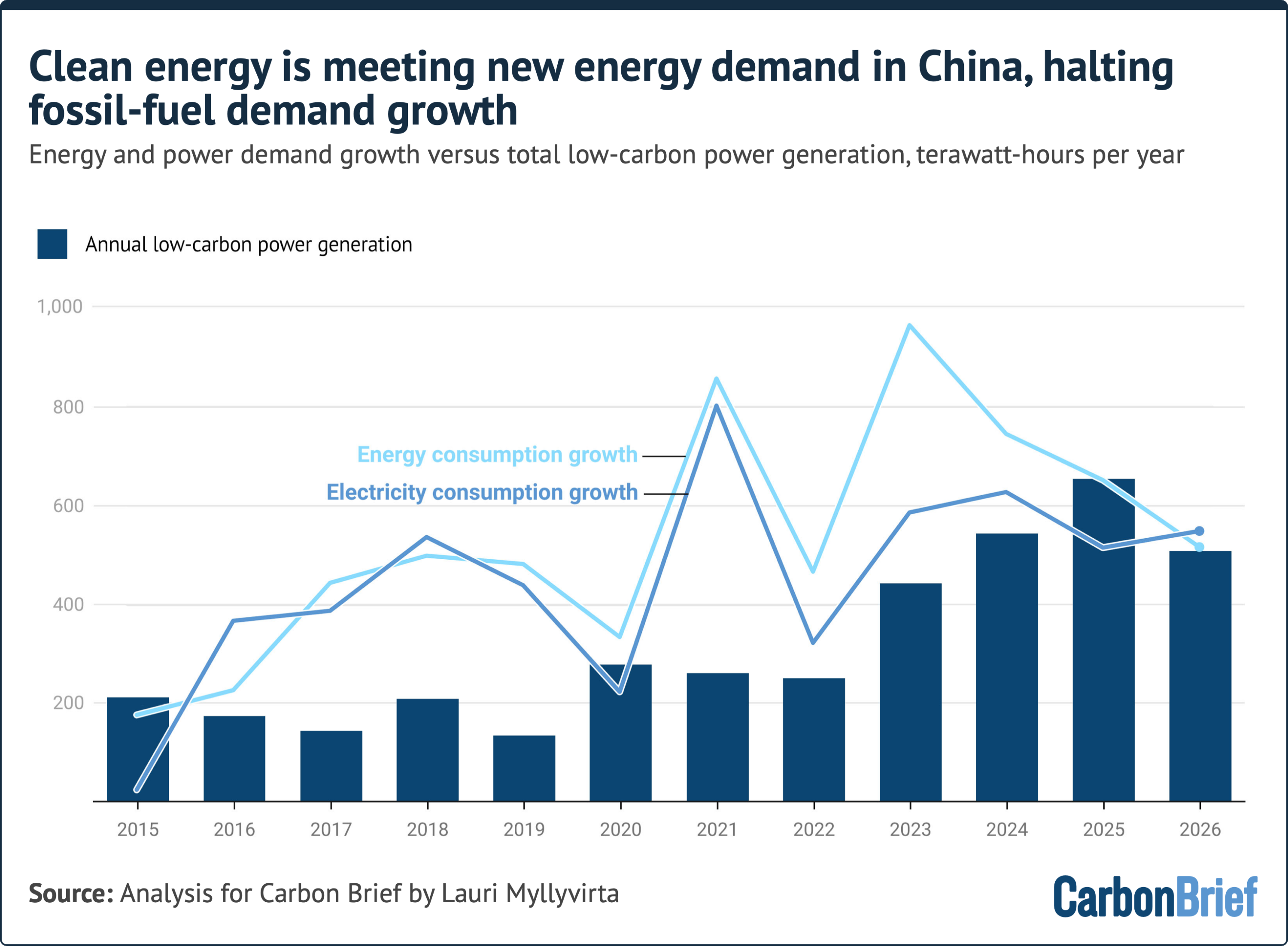
Yet, power sector emissions increased by 3.0% in the first half of 2026. Fossil-fueled power generation rose because of increased curtailment of potential wind and solar output, combined with exceptionally poor wind resource conditions. Had these operational and meteorological constraints not occurred, coal-fired generation and power sector emissions would have fallen over the period.
Wind power capacity additions in both the first and second quarters comfortably exceeded levels seen in any prior year except the record-setting pace of 2025. While solar additions slowed sharply from their 2025 peaks—temporarily falling behind 2024 figures—they remained aligned with the robust deployment seen in 2023, when over 200 gigawatts were added annually.
Nuclear energy development also proceeded rapidly, with eight new reactors approved in July and five reactors representing 4.5 gigawatts of total capacity slated to enter commercial operation this year, including China’s second commercial small modular reactor, Linglong One. Reactor commissioning is expected to accelerate further next year, building on a baseline of 10 newly approved reactor projects annually since 2022. Concurrently, 3 gigawatts of conventional hydropower were added, with a total of 6 gigawatts targeted for operation throughout 2026.
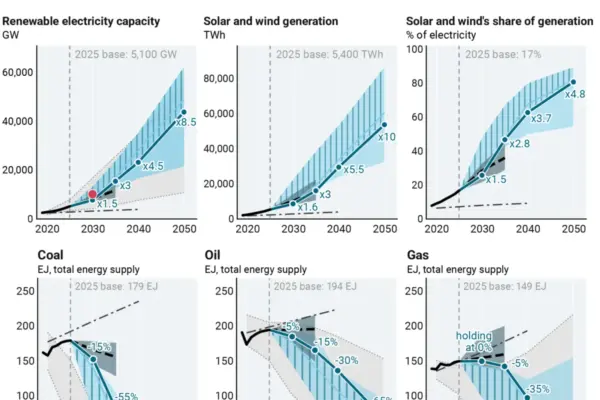
Taken together, this clean energy expansion places China on track to add sufficient non-fossil capacity this year to cover electricity demand growth of up to 5%, even amid the slowdown in solar installations. Because total energy demand growth has decelerated much more sharply than electricity demand, clean power generation is increasingly well-positioned to exceed incremental energy consumption and drive down fossil fuel use.
The primary driver of wind and solar curtailment remains structural: neither the prevailing power grid operating model nor the electricity market structure requires or encourages the flexible operation of coal-fired plants, hydropower facilities, or inter-provincial transmission lines. This challenge has been exacerbated by a wave of new coal plants entering commercial service, with newly added capacity reaching 30 gigawatts in the first half of 2026—the highest level since 2016—while less than 3 gigawatts were retired.
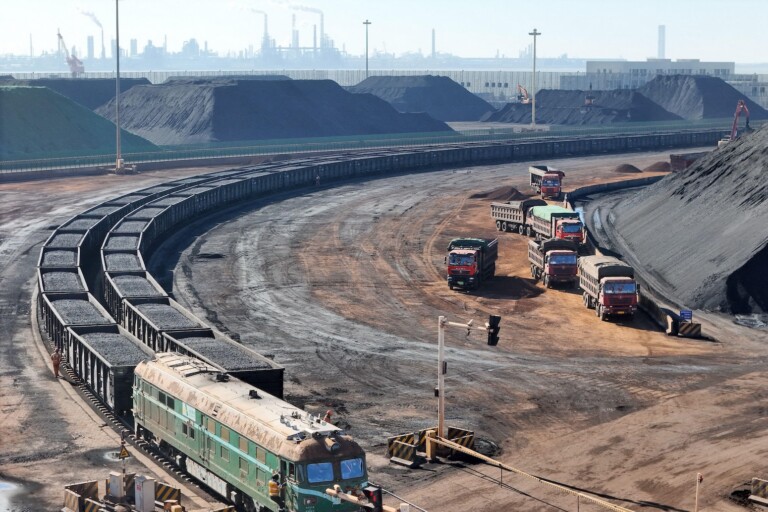
Electricity prices paid to coal generators are fixed months in advance, as are the transmission volumes allocated to long-distance power lines. This framework removes financial incentives for plants to modulate their output in response to real-time variables such as renewable supply fluctuations or shifting demand. Furthermore, coal plants are entitled to capacity payments that guarantee revenue based on availability rather than operational flexibility.
To address these integration hurdles, battery storage capacity continued to expand with the addition of 17 gigawatts in the first half of 2026, bringing cumulative installed capacity to 153 gigawatts, albeit reflecting a slowdown from the 23 gigawatts added in the first half of 2025.
Outlook for China’s CO2 Emissions
The outlook for China’s emissions is being shaped by the fallout from the Hormuz energy crisis, the rollout of numerous sectoral five-year plans, and a broad deceleration in overall energy consumption growth. The spike in global oil prices has catalyzed an accelerated transition within the transport sector that is unlikely to be reversed, reinforcing the strategic value of electrification to national energy security.
The Chinese government has established a target for electricity to account for 35% of total final energy consumption by 2030, up from 30% in 2025. The transport sector is central to this ambition, with policy targets aiming for NEVs to comprise 30% of the national vehicle fleet by the end of the decade, up from 12% in 2025, alongside 25% penetration for commercial vehicles.
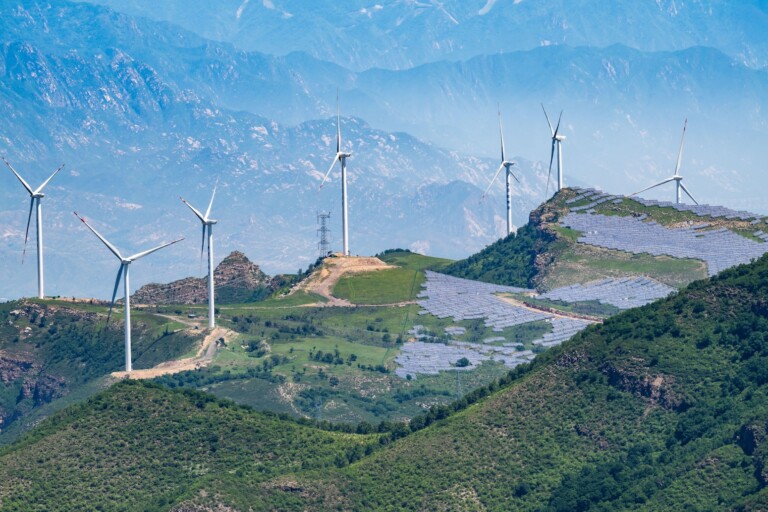
While transport emissions declined, power sector emissions rebounded due to persistent renewable curtailment. However, newly released five-year plans outline explicit measures to improve solar and wind utilization by expanding long-distance ultra-high-voltage transmission lines, promoting local clean power consumption, developing smart microgrids, and fostering zero-carbon industrial parks.
At the same time, the strategic framework for grid reliability is evolving. Rather than relying exclusively on coal-fired generation for system stability, the latest renewable energy five-year plan incorporates energy storage, demand response, electric vehicles, virtual power plants, and advanced grid operations into its portfolio of balancing services.
Supported by these structural shifts and a sustained moderation in energy demand growth, China remains positioned to drive down total carbon dioxide emissions as clean energy deployment continues to outpace incremental demand.