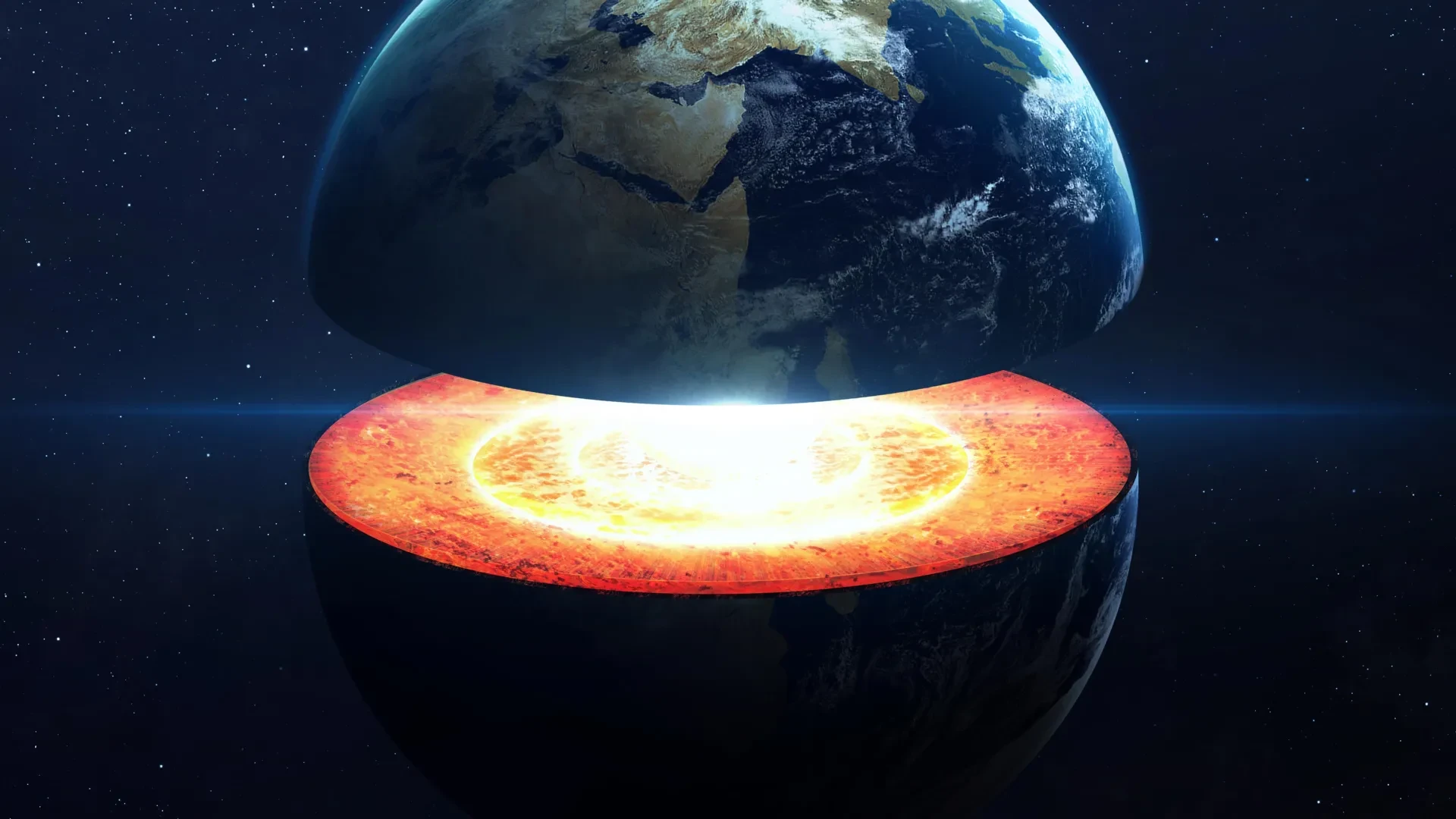
A remarkable rock discovered in the remote jungles of Papua New Guinea has revealed an unexpected and puzzling temperature pattern deep beneath the Earth’s surface, fundamentally challenging scientists’ existing understanding of how tectonic plates move into the planet’s interior.
An international research team led by the prestigious University of Göttingen discovered that the unassuming geological specimen traveled more than 90 kilometers, or roughly 56 miles, underground approximately four million years ago. Along its arduous and violent journey into the deep Earth, the rock experienced unusually high temperatures at relatively shallow depths before eventually entering conditions associated with a much cooler type of subduction.
This startling discovery raises profound new questions about how heat is distributed deep inside the Earth and how massive tectonic plates behave as they descend into the mantle. The groundbreaking findings were formally published in the scientific journal Nature Geoscience, drawing attention from geologists and seismologists worldwide who rely on thermal models to understand the mechanics of our dynamic planet.
A Strange Discovery Deep Beneath Earth’s Surface
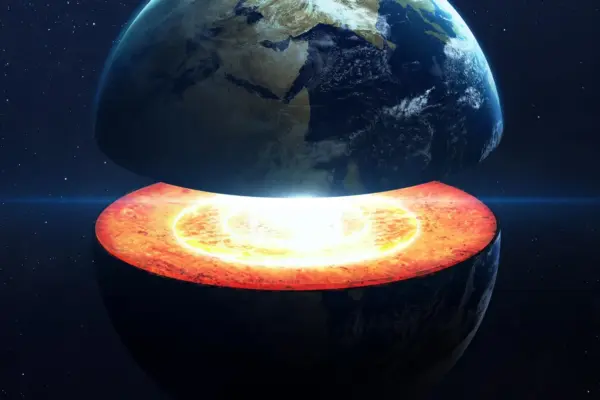
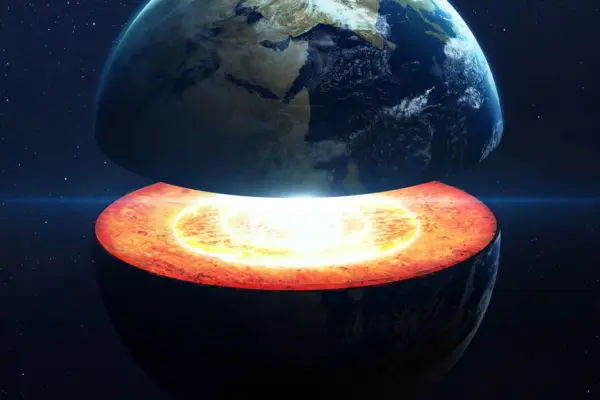
To understand the significance of the find, scientists look to the outermost shell of the Earth, which is fragmented into enormous, shifting puzzle pieces known as tectonic plates. These colossal slabs of rock slowly glide across the globe over millions of years. When two plates inevitably converge, one is frequently forced beneath the other, plunging downward and sinking deep into the Earth’s interior in a monumental geological process known as subduction.
These subduction zones play an overwhelmingly major role in shaping the physical surface of our planet. They are universally associated with the world’s most powerful earthquakes and the fiery arcs of global volcanic activity. Beyond these immediate and often catastrophic hazards, subduction zones also act as planetary regulators, helping to control the Earth’s climate over geological timescales by recycling vital materials—such as carbon dioxide—between the surface and the deep interior.
When a tectonic plate is driven downward, the immense, crushing pressure found within these subduction zones forces profound chemical and physical transformations upon the rocks caught in the descent. Under these extreme conditions, ordinary rocks can be transformed into a distinctive, dense red and green material known to geologists as "eclogite." An international team of researchers closely examined one such piece of eclogite, which had originally been unearthed in Papua New Guinea, utilizing a suite of advanced analytical and microscopic techniques to read its hidden history.
Deep within the matrix of the rock, the scientists made a critical discovery: tiny crystals of coesite, a rare and specialized mineral that can form exclusively under conditions of extraordinarily high pressure. As the rock underwent its metamorphic evolution deep underground, these microscopic coesite crystals became trapped within another host mineral, effectively sealing them off from further alteration. In doing so, they preserved invaluable, pristine evidence of the precise physical conditions the rock had experienced during its subterranean voyage.
By carefully studying these microscopic clues and mapping out the chemical signatures left behind, the research team determined that the rock had descended at least 90 kilometers beneath the Earth’s surface. At this profound depth, ambient temperatures reached approximately 800 degrees Celsius, which translates to a scorching 1,472 degrees Fahrenheit. Yet, even more surprising than the destination was what the researchers uncovered about the rock’s earlier, intermediate journey.
An Unexpected Shift From Hot to Cold Subduction
As the scientists reconstructed the comprehensive temperature history of the rock, they uncovered a chronological sequence that defied textbook geology. They found that even at a relatively modest depth of approximately 45 kilometers, or 28 miles, the rock had already reached blistering temperatures of around 700 degrees Celsius, or 1,292 degrees Fahrenheit.
The implications of this measurement were striking. It meant that the rock was only about 100 degrees Celsius cooler at half of its maximum recorded depth, even though it still had another grueling 45 kilometers left to descend into the planetary interior.
This thermal profile was entirely unexpected because existing, long-accepted geological models predict a distinctly different distribution of heat within active subduction zones. Standard theory dictates that as a plate sinks, it remains relatively cool compared to the surrounding mantle, warming up gradually and predictably with depth. Instead, this specific rock appeared to have experienced unusually hot conditions at shallower depths before transitioning into an environment with a relatively cooler temperature pattern farther down.
Although the rock’s absolute temperature did continue to increase as it traveled deeper, the rate of warming was dramatically smaller than scientists would normally anticipate based on conventional regional models.
Dr. Jan Schönig, a researcher at the Geoscience Center at the University of Göttingen, explained the significance of the anomaly: "Finding this change from hot to cold subduction was unexpected as this contradicts our current thermal models of subduction zones."
While scientists have occasionally discovered rocks containing evidence of unexpectedly high temperatures in the past, this marks the very first time that researchers have been able to reconstruct such a clear, unambiguous transition between two distinct thermal regimes as a rock descended step-by-step from shallower locations to much greater depths.
What Could Explain Earth’s Hidden Heat Mystery?
Faced with data that defies current geological consensus, the research team has begun investigating several plausible explanations for the unusual temperature pattern recorded within the Papua New Guinea rock.
One primary hypothesis is that tectonic plates may generate substantially more frictional heat at relatively shallow depths than scientists previously believed possible. As these massive slabs of continental and oceanic crust grind past one another, the sheer magnitude of the intense shearing forces could produce significant localized heating along their active boundaries, artificially spiking temperatures in the upper crust and lithosphere before the subducting slab can be cooled by the surrounding mantle.
An alternative, though equally compelling, explanation is that the subduction zone itself was young and geologically immature at the time the rock was pulled down. If the system had not yet existed long enough to establish the steady-state, cooler temperature profiles predicted by conventional models, the surrounding environment would naturally retain higher ambient heat.
The researchers note that both of these complex geological processes may have worked in tandem, contributing simultaneously to the rock’s unique and anomalous thermal history.
Unraveling these deep-seated temperature differences is far from an academic exercise. Subduction zones directly drive and influence some of the most powerful and potentially destructive geological processes on Earth. By developing more accurate thermal models, scientists can hope to better evaluate the complex physical conditions that trigger massive earthquakes and fuel volcanic eruptions around the Pacific Rim and beyond.
Furthermore, refining our knowledge of deep Earth temperatures could drastically improve our understanding of major geochemical cycles. In particular, the long-term global carbon cycle relies heavily on subduction to pull carbon down into the mantle and eventually vent it back out through volcanic activity, thereby regulating the Earth’s climate over millions of years.
By revealing precisely how physical conditions change as tectonic plates descend into the abyss, this rare discovery provides scientists with a novel, high-resolution tool to investigate how subduction systems have operated over millions to billions of years, and how these hidden subterranean engines continue to shape the living surface of the Earth today.
The underlying research received financial support and backing from the German Research Foundation, known commonly as the DFG.