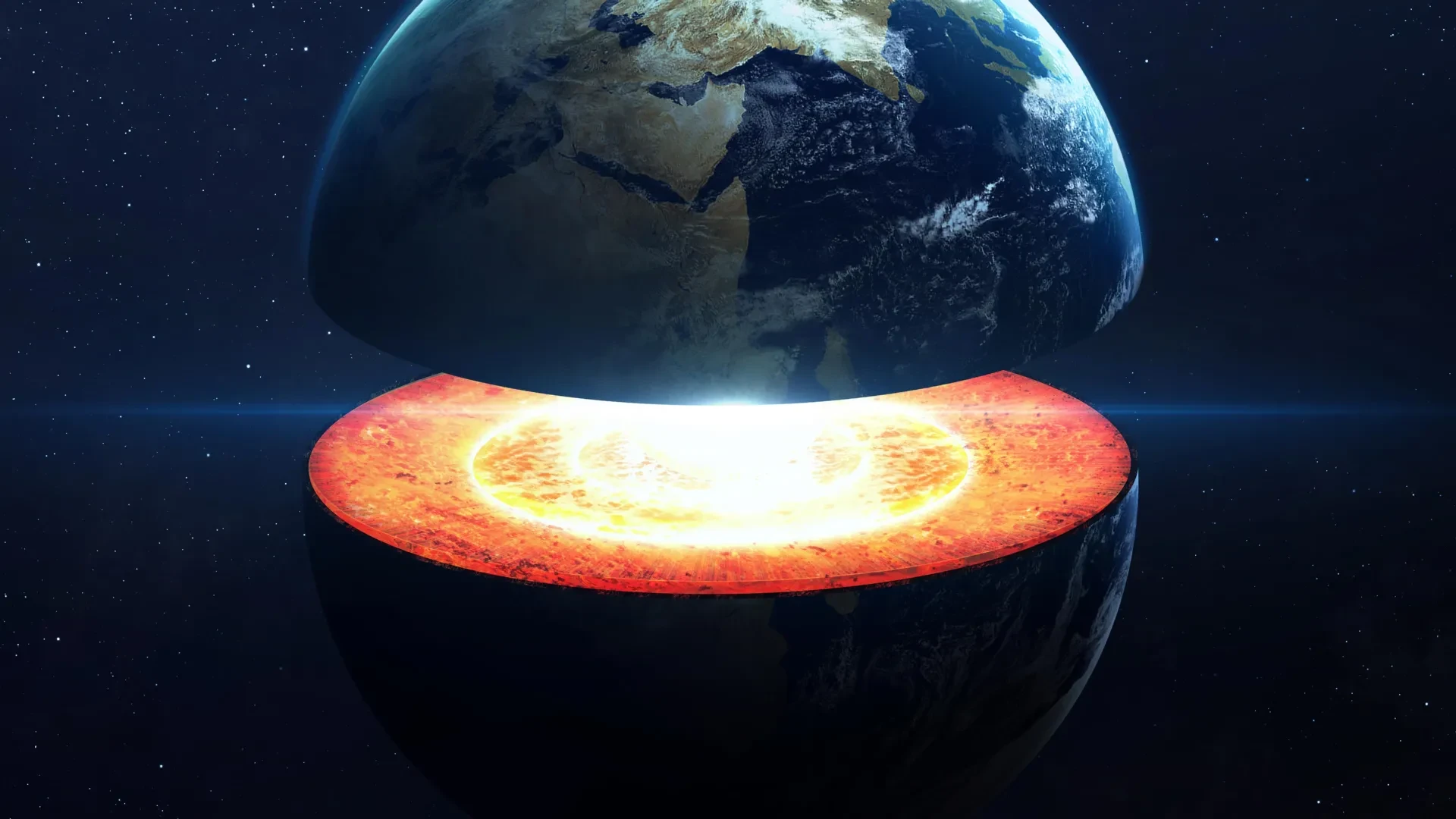
A remarkable and rare rock discovered in the remote terrain of Papua New Guinea has revealed an unexpected temperature pattern deep beneath the Earth’s surface, challenging long-held scientific understandings of how tectonic plates move into the planet’s interior.
An international research team led by the Geoscience Center at Göttingen University found that the rock traveled more than 90 kilometers, or 56 miles, underground approximately four million years ago. Along its arduous and destructive journey into the Earth’s mantle, the geological specimen experienced unusually high temperatures at relatively shallower depths before finally entering conditions associated with a much cooler type of subduction.
The discovery raises profound new questions about how heat is distributed deep inside the Earth and how massive tectonic plates actually behave as they descend into the abyss. The groundbreaking findings were formally published in the peer-reviewed scientific journal Nature Geoscience, drawing significant attention from the global geological community.
A Strange Discovery Deep Beneath Earth’s Surface
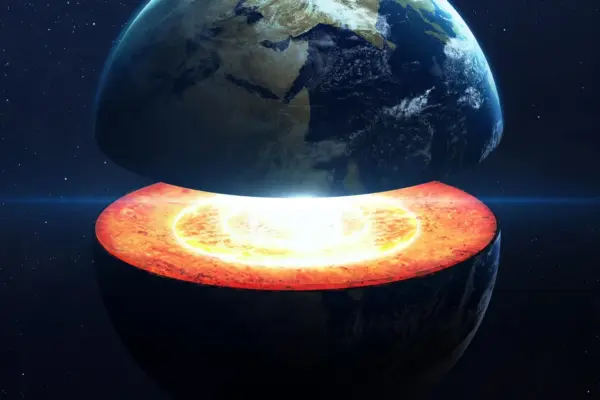
To understand the magnitude of the discovery, scientists look to the dynamic and restless nature of the Earth’s outer shell, which is fractured into enormous tectonic plates that slowly glide across the fluid asthenosphere. When two of these colossal plates converge over geological timescales, one is frequently forced downward beneath the other, plunging inexorably into the Earth’s interior. This fundamental planetary process is known as "subduction."
Subduction zones play a major role in shaping the physical face of our planet. They are intimately associated with some of the world’s most powerful earthquakes and the most violent volcanic arcs known to humanity. Beyond these surface hazards, however, they also act as massive planetary regulators. Over millions of years, subduction zones help stabilize and regulate Earth’s climate by recycling essential materials—such as carbon dioxide—deep into the planet’s interior through deep-seated geochemical cycles.
The immense, crushing pressures found within these active subduction zones can radically transform ordinary rocks into a distinctive, highly dense red and green metamorphic material known to geologists as "eclogite." Recognizing the value of such specimens, researchers carefully examined one of these specialized eclogite rocks originating from Papua New Guinea, employing a battery of advanced analytical and microscopic techniques to unlock its hidden history.
Deep inside the microscopic architecture of the rock, the team discovered tiny, perfectly preserved crystals of coesite. Coesite is an ultra-high-pressure polymorph of silica, a mineral variant that can form only under the most extreme, crushing pressures found far beneath the Earth’s crust. These fragile crystals had become securely trapped within another host mineral as the rock formed, acting as a natural time capsule that preserved invaluable geochemical evidence of the severe conditions the rock experienced deep underground.
By studying these microscopic clues and mapping out the mineral phase equilibria, the scientists were able to determine with remarkable precision that the rock had descended at least 90 kilometers beneath the Earth’s surface. At this maximum depth, temperatures reached an intense and staggering approximately 800 degrees Celsius, translating to roughly 1,472 degrees Fahrenheit.
Yet, even as the researchers mapped this impressive descent, they uncovered something far more surprising about the earlier stages of the rock’s subterranean journey.
An Unexpected Shift From Hot to Cold Subduction
As the research team meticulously reconstructed the complete temperature history of the rock, they discovered that even at a relatively modest depth of approximately 45 kilometers, or 28 miles, the specimen had already reached scorching temperatures of around 700 degrees Celsius, or 1,292 degrees Fahrenheit.
This critical finding meant that the rock was only about 100 degrees Celsius cooler at half of its maximum downward depth, even though it still had another grueling 45 kilometers of descent ahead of it before reaching its ultimate destination.
This unexpected thermal profile shocked the researchers because existing, well-established geological models predict a fundamentally different distribution of heat within active subduction zones. According to standard theoretical frameworks, rocks should experience a much more gradual and steady accumulation of heat as they sink deeper into the mantle. Instead, this specific rock appeared to have experienced unusually hot conditions at shallower depths before transitioning into an environment characterized by a relatively cooler temperature pattern farther down.
While the rock’s actual temperature did continue to increase with depth, the rate of warming was dramatically smaller than scientists would normally anticipate based on decades of geophysical observation and thermodynamic modeling.
Dr. Jan Schönig, a researcher at the Geoscience Center at Göttingen University, explained the significance of the anomaly: "Finding this change from hot to cold subduction was unexpected as this contradicts our current thermal models of subduction zones."
While geologists have previously discovered individual rocks containing evidence of unexpectedly high temperatures in various parts of the world, this marks a major milestone. For the very first time, researchers have been able to reconstruct such a clear, unambiguous transition between two distinct thermal regimes as a rock descended from relatively shallow crustal environments to much greater mantle depths.
What Could Explain Earth’s Hidden Heat Mystery?
Faced with data that defies standard textbooks, the research team has begun exploring several viable hypotheses to explain the unusual temperature pattern recorded within the Papua New Guinea rock.
One primary possibility is that tectonic plates generate substantially more frictional and deformational heat at relatively shallow depths than scientists previously believed. As immense tectonic slabs grind past each other within the upper levels of a subduction zone, powerful shearing forces and internal mechanical work could produce significant additional heating along their boundaries, warming the surrounding rock before it has a chance to be cooled by the surrounding mantle.
Another compelling explanation is temporal: the specific subduction zone in Papua New Guinea may simply have been too young at the time, meaning it had not yet existed long enough to develop the stable, cooler thermal structures predicted by conventional steady-state models. In a young subduction system, the surrounding mantle has not had sufficient time to cool down the incoming slab, leading to elevated temperatures at shallower depths.
The researchers note that both of these complex geological processes may have played a role, working in tandem to produce the rock’s unique and puzzling thermal history.
Unraveling these temperature discrepancies is far more than an academic exercise. Subduction zones drive some of the most powerful and consequential geological processes on Earth. By developing more accurate thermal models, scientists can hope to better evaluate the complex physical conditions associated with catastrophic earthquakes and destructive volcanic activity around the Pacific Rim and beyond.
Furthermore, refining these models could significantly improve our understanding of major global geochemical cycles, most notably the long-term carbon cycle. This planetary system plays an indispensable role in regulating Earth’s long-term climate by transferring carbon back and forth between the surface environment and the deep interior.
By revealing exactly how thermal conditions change as tectonic plates descend into the dark expanses of the mantle, this remarkable discovery offers the scientific community a powerful new analytical tool. It opens up fresh avenues to investigate how subduction systems have operated over millions and even billions of years, and how these hidden subterranean mechanisms continue to shape the living Earth today.
The comprehensive research effort and analytical work were made possible through financial backing and support provided by the German Research Foundation, known by its German acronym DFG.