The financial resources directed toward protecting global biodiversity fall drastically short of what is required to meet the United Nations’ ambitious goals, according to a sweeping new global stocktaking report released ahead of the upcoming COP17 biodiversity summit.
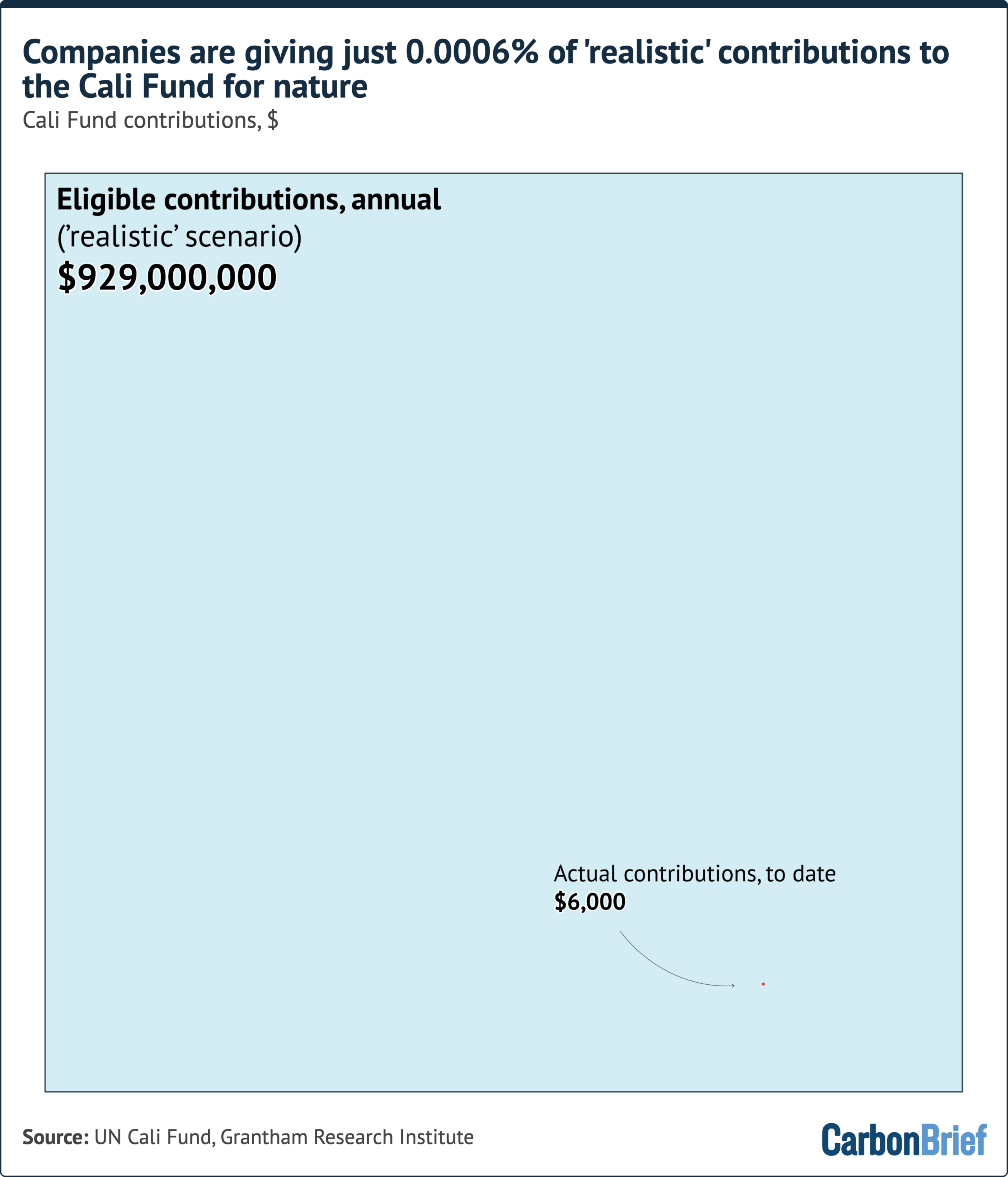
The report, prepared by the UN Convention on Biological Diversity (UN CBD) ahead of the summit in Yerevan, Armenia, reveals that developed nations are struggling significantly to close the persistent $200bn "biodiversity finance gap." Furthermore, specialized financial initiatives designed to support these global targets are severely underfunded. A dedicated framework fund for biodiversity has received less than $140m from developed countries over the past two years, while the landmark Cali Fund, intended to capture contributions from private companies profiting from genetic data, has secured a mere $6,000 from the private sector to date.

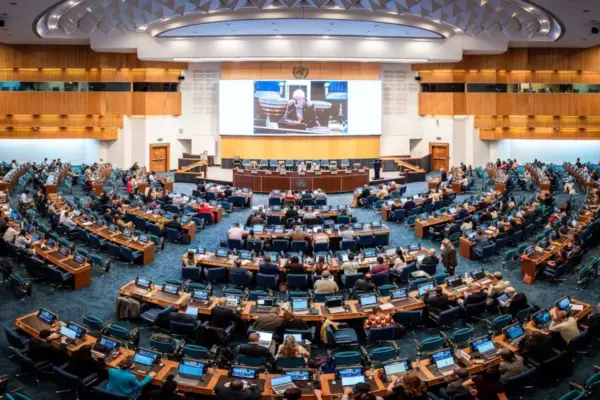
The severe lack of available finance is expected to trigger intense debates and become a central point of contention during negotiations at COP17, which is scheduled to begin on October 19. Developing nations, which host the vast majority of the planet’s remaining biodiversity, argue that the absence of predictable and adequate financial support threatens the integrity of the entire global conservation framework.
Target for 2025 "Not Achieved"
At COP15 in December 2022, delegates from 196 countries gathered in Montreal to finalize and adopt a landmark international agreement aimed at halting and reversing the alarming trajectory of nature loss by 2030. Known as the Kunming-Montreal Global Biodiversity Framework (GBF), the package set out comprehensive goals and targets to reshape humanity’s relationship with the natural world.
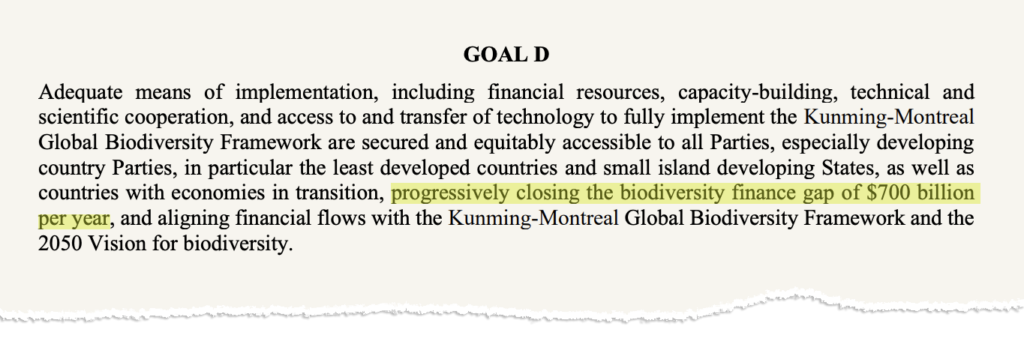
Among its core structural pillars is Goal D of the agreement, which mandates that countries must collectively close a $700bn annual biodiversity finance gap by the end of the decade. This overarching $700bn target is divided into two distinct components: reforming harmful economic incentives and actively mobilizing new financial resources.
Target 18 of the GBF explicitly calls on nations to identify by 2025, and subsequently eliminate, phase out, or reform incentives and subsidies that prove harmful to biodiversity, aiming to progressively reduce them by at least $500bn per year by 2030. The remaining $200bn is designed to be met through resource mobilization. Target 19 states that countries must substantially and progressively increase financial resources from all sources to reach at least $200bn annually by 2030.
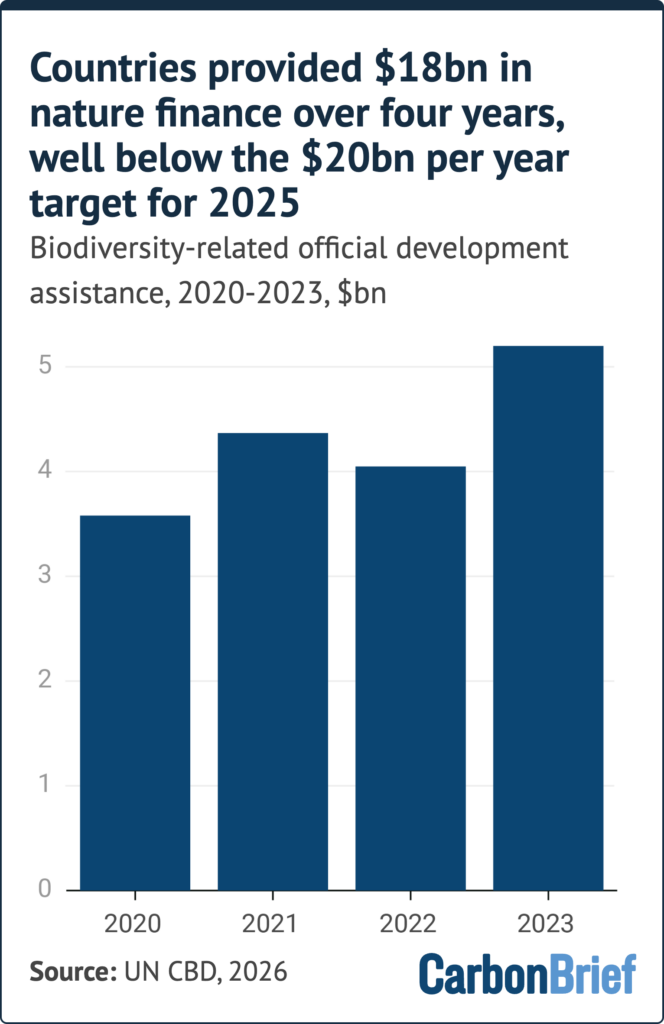
This $200bn pool can draw from domestic national budgets, multilateral development banks, and capital mobilized from private sector actors. Crucially, the target also establishes a clear obligation for developed countries—or those voluntarily assuming their responsibilities—to provide public biodiversity funding to developing nations, specifically targeting at least $20bn per year by 2025, scaling up to at least $30bn per year by 2030.
However, the new global stocktaking report indicates that reality has fallen a long way behind political ambitions. Between 2020 and 2023, reporting countries mobilized a cumulative total of just $186.4bn, translating to an average of under $50bn per year. While the report, published on September 10, cautions that it remains early to draw definitive long-term conclusions, it emphasizes that this overall mobilization falls drastically short of the trajectory required to close the annual $200bn gap.
Crucially, the milestone target of raising at least $20bn per year in public international finance by 2025 was also categorized as likely not achieved. The report details that reporting countries raised a cumulative total of just $17.7bn in international public funding for biodiversity across the four-year span from 2020 to 2023, averaging a meager $4.4bn annually.
These sobering findings find strong corroboration in a separate report published by the Organisation for Economic Co-operation and Development (OECD). The OECD analysis estimates that global biodiversity finance reached between $74.9bn and $92.4bn per year from 2023 to 2025. Within that total, international public finance contributed approximately $16.1bn annually on average, leaving it nearly $4bn below the specific 2025 goal.
Furthermore, the OECD report highlights that of those totals, only $7.9bn in 2023 and $8.5bn in 2024 constituted "biodiversity-specific" funding. The remaining billions arrived as broader development assistance where support for nature served merely as a secondary objective.
Thinktanks such as the Third World Network have repeatedly emphasized that while the GBF framework outlines specific milestones for 2025 and 2030, developed economies ought to maintain steady, ambitious contributions annually to prevent shortfalls from accumulating.
Faltering Initiatives
International public finance relies primarily on two core channels established to help developed nations meet their commitments under the GBF: official development finance and the Global Biodiversity Framework Fund. Data tracking these individual streams reveals widespread underperformance relative to established subtargets.
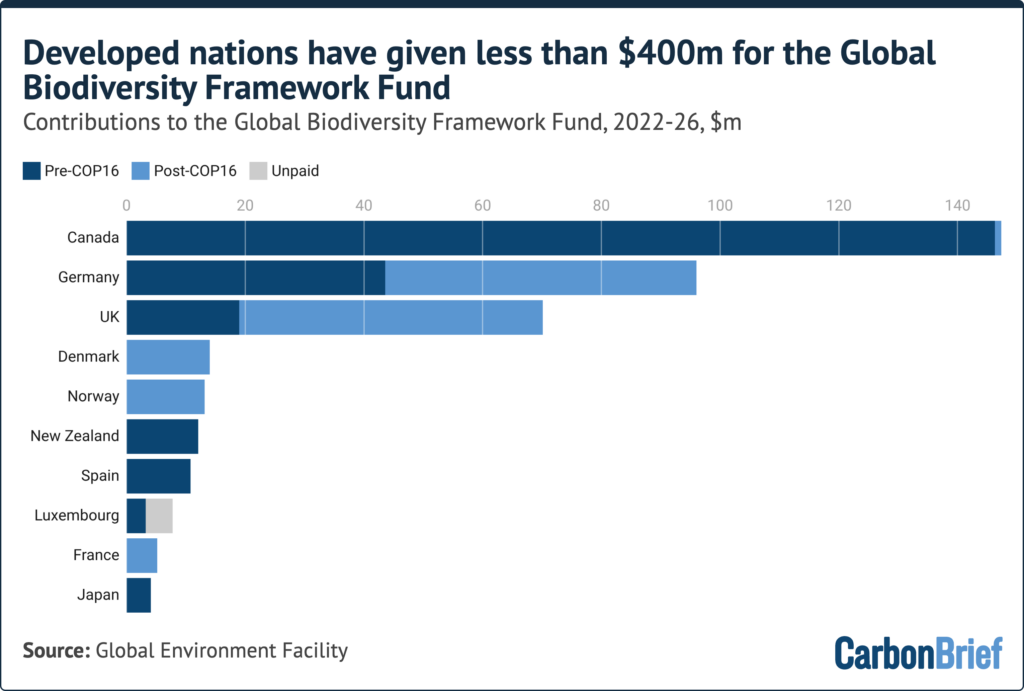
The Global Biodiversity Framework Fund (GBFF) was established during the COP15 summit in late 2022 and is housed under the Global Environment Facility, reporting directly to the biodiversity COP. Despite an initial wave of optimistic political pledges following its creation, contributions have plateaued. Data shared by the GEF indicates that as of mid-2026, developed nations have contributed less than $400m in total. Between August 2023 and June 2026, the fund secured only $387.2m in signed commitments spanning just 11 national governments and a single subnational administration, the Canadian province of Quebec. Following initial announcements ahead of COP16 in 2024, subsequent contributions have trickled in slowly.
Meanwhile, the Cali Fund, established at the COP16 nature negotiations in Colombia in 2024, represents an entirely novel approach to conservation finance. Designed as the world’s first global fund encouraging corporations that profit from digital sequence information on genetic resources to contribute voluntarily to conservation, it holds massive theoretical potential. A working paper from the Grantham Research Institute at the London School of Economics calculated that if all 21,690 eligible firms shared their profits strictly according to the fund’s design rules, it could generate up to $3.6bn for nature annually. Under a more conservative, realistic estimate of corporate uptake, the fund could still capture approximately $929m each year.
To date, however, the reality stands in stark contrast to these projections. The fund has received a total of only two contributions, amounting to a combined $6,000.
Finance Gap Fight
As delegates prepare to convene in Yerevan for COP17, policy experts point out that the financial stocktake will dominate the political agenda. Developing nations, which safeguard the majority of global ecosystems while carrying the heaviest implementation burdens, face acute pressures on the ground.
Lim Li Ching of the Third World Network told reporters that current financial flows fall unacceptably short of Target 19 obligations. She cautioned that the failure of developed nations to meet legal financing obligations should not serve as an opportunistic excuse to pivot blindly toward market-based mechanisms or private sector offsets, which often struggle to scale effectively and risk exacerbating social and ecological harm.
While innovative financing avenues—such as debt-for-nature swaps, biodiversity offsets, and carbon credits—offer alternative capital streams, they remain notoriously difficult to monitor and have faced substantial criticism from civil society organizations and local communities.
The Cali Fund remains a primary structured avenue for corporations to contribute transparently to conservation and support Indigenous populations. However, Dr. Siva Thambisetty, an associate professor of law at the London School of Economics, noted that because the fund currently relies on voluntary measures, tangible progress depends heavily on whether governments step in to create enforceable ethical and legal obligations for businesses. She argued that the private sector naturally focuses on minimizing liabilities and maximizing operational freedom, meaning necessary systemic shifts will not occur without external regulatory pressure from states.
Recent findings from the non-profit initiative Cali Watch indicate that not a single government has passed legislation mandating corporate contributions to the fund. Independent estimates suggest that just eight major corporations should collectively owe more than $2bn under what researchers term their cumulative "Cali debt."
Dr. June Rubis, the Indigenous peoples and local communities lead on the Cali Fund’s steering committee, voiced deep concern regarding the sluggish pace of global biodiversity financing. She emphasized that all components of the financial architecture must send credible signals simultaneously: developed nations must meet their $20bn public finance commitments, donors must provide predictable flows to the GBFF, corporations must step up contributions to the Cali Fund, and the fund itself must streamline transparent allocation pathways. Without synchronized movement, confidence in the broader global biodiversity agreement grows increasingly difficult to sustain.
For Indigenous peoples and local communities on the frontline of conservation, Rubis stressed that ultimate success hinges not only on headline political commitments, but crucially on whether resources can be accessed efficiently to support local priorities on the ground.