Countries from around the globe are preparing to meet in Armenia this month to carry out the first comprehensive global review of progress towards meeting a series of critical nature targets set for the year 2030. These ambitious goals, along with the broader international commitment to halt and reverse biodiversity loss worldwide, were formally agreed upon in the landmark Kunming-Montreal Global Biodiversity Framework during the United Nations biodiversity conference held in Montreal in 2022.
However, a newly released United Nations report cautions that these vital ambitions will not be achieved in time for the fast-approaching 2030 deadline unless international action accelerates rapidly. The comprehensive evaluation found that nations are currently falling short on an alarming 22 out of 23 distinct nature targets. These overarching objectives focus heavily on restoring damaged ecosystems, increasing dedicated nature finance, and reducing harmful economic subsidies that inadvertently drive environmental degradation.
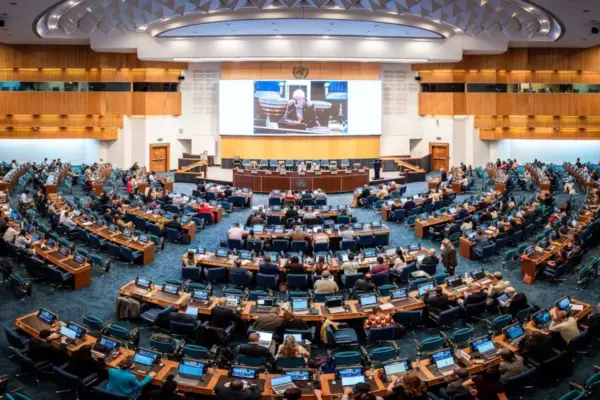
The findings of this report, alongside a wealth of other scientific data and national assessments, will serve as the primary foundation for the global progress review taking place at the upcoming COP17 biodiversity summit. Hosted in Armenia from October 19 to October 30, the summit represents a critical juncture for international environmental policy, offering governments an opportunity to reassess their strategies and address the glaring gaps in their national implementation plans.
The comprehensive evaluation provides a detailed breakdown of where progress has been achieved, and where it has notably lagged, across each of the 23 specific targets established under the global framework. It also ranks the extent to which countries have addressed various elements of each target on a national basis, utilizing self-reported data and standardized indicators to assign overall scores ranging from zero to one.
Under Target 1, which received an overall score of 0.25, countries committed to ensuring that all areas are under participatory, integrated, and biodiversity-inclusive spatial planning or effective management processes. The goal is to bring the loss of areas of high biodiversity importance close to zero by 2030, all while fully respecting the rights of Indigenous peoples and local communities. The report indicates that significant gaps remain in establishing these comprehensive management frameworks globally.
Target 2 focuses on ecosystem restoration, aiming to ensure that by 2030 at least 30% of areas of degraded terrestrial, inland water, and marine and coastal ecosystems are under effective restoration. Achieving an overall score of 0.5, this area demonstrates moderate advancement in planning, though practical, large-scale implementation still requires substantial acceleration to meet the decade’s end goals.
Meanwhile, Target 3 addresses the effective conservation and management of land and sea areas. Earning an overall score of 0.38, the target seeks to ensure that at least 30% of terrestrial, inland water, marine, and coastal areas are effectively conserved, managed, and integrated into wider landscapes and seascapes. This must be done while ensuring that any sustainable use remains fully consistent with conservation outcomes and recognizes the traditional territories and rights of Indigenous populations.
Target 4 tackles the critical issue of species preservation, receiving an overall score of 0.25. The goal mandates urgent management actions to halt the human-induced extinction of known threatened species, foster the recovery and conservation of vulnerable populations, and effectively manage human-wildlife interactions to minimize ongoing conflicts. The report highlights a severe lack of sufficient progress in preventing further species declines worldwide.
In contrast, Target 5 achieved a relatively higher overall score of 0.67. This target is designed to ensure that the use, harvesting, and trade of wild species are conducted in a sustainable, safe, and legal manner, while simultaneously respecting and protecting the customary sustainable use practices traditionally relied upon by Indigenous peoples and local communities.
Target 7 addresses the pervasive issue of pollution, securing an overall score of 0.38. The objective calls for reducing pollution risks and the negative impacts from all sources by 2030 to levels that are no longer harmful to biodiversity and ecosystem functions. Specific metrics include cutting excess nutrients lost to the environment by at least half, reducing the overall risk from pesticides and highly hazardous chemicals by a similar margin, and preventing, reducing, and ultimately working toward the elimination of plastic pollution.
Demonstrating notable advancement, Target 8 received an overall score of 0.75, making it one of the more successfully addressed areas. This target focuses on minimizing the impact of climate change and ocean acidification on biodiversity while increasing ecological resilience through targeted mitigation, adaptation, and disaster risk reduction actions, all while ensuring that climate initiatives foster positive outcomes for nature.
Target 9 focuses on the sustainable management and use of wild species to provide social, economic, and environmental benefits, scoring 0.42. Target 10, which scored 0.5, emphasizes that areas under agriculture, aquaculture, fisheries, and forestry must be managed sustainably through a substantial increase in biodiversity-friendly practices that support food security and long-term ecosystem productivity.
Target 11, also scoring 0.5, centers on restoring, maintaining, and enhancing nature’s contributions to people, including the regulation of air, water, and climate, soil health, pollination, disease risk reduction, and protection from natural hazards. Target 12, which earned a score of 0.25, calls for significantly increasing the area, quality, connectivity, and accessibility of green and blue spaces in urban and densely populated areas through biodiversity-inclusive urban planning.
Target 13 addresses access and benefit-sharing frameworks regarding genetic resources and digital sequence information, securing an overall score of 0.38. Target 14, with a score of 0.25, demands the full integration of biodiversity and its multiple values into policies, regulations, planning, development processes, and poverty eradication strategies across all levels of government.
Corporate accountability is the focus of Target 15, which received an overall score of 0.25. It urges legal and administrative measures to encourage and enable businesses—particularly large transnational companies and financial institutions—to regularly monitor, assess, and transparently disclose their risks, dependencies, and impacts on biodiversity. Target 16, scoring 0.38, aims to encourage sustainable consumption choices and equitably reduce the global footprint of consumption by 2030.
Target 17 focuses on biosafety measures and the handling of biotechnology, scoring 0.25. Meanwhile, financial mechanisms and economic incentives face some of the steepest deficits in global implementation. Target 18, which scored a mere 0.17, calls for the identification, elimination, phase-out, or reform of harmful subsidies and economic incentives by 2025, alongside a progressive reduction of at least $500 billion per year by 2030, coupled with the scaling up of positive incentives for conservation.
Similarly, Target 19 recorded one of the lowest overall scores at 0.13. It mandates a substantial increase in financial resources from all sources to implement national biodiversity strategies, requiring the mobilization of at least $200 billion per year by 2030. This includes raising total biodiversity-related international financial resources from developed countries to developing nations to at least $20 billion per year by 2025, and scaling that figure to at least $30 billion per year by the end of the decade.
Target 20 addresses capacity-building, technology transfer, and technical cooperation, scoring 0.38. Target 21 achieved a stronger score of 0.63, focusing on ensuring that the best available data, information, and traditional knowledge are accessible to decision-makers and the public to guide effective and equitable governance.
Finally, human rights and inclusivity are central to the remaining targets. Target 22, which scored 0.25, seeks to ensure full, equitable, and gender-responsive representation and participation in biodiversity decision-making for Indigenous peoples, local communities, women, youth, and persons with disabilities, alongside the protection of environmental human rights defenders. Target 23, scoring 0.13, emphasizes ensuring broad gender equality in the implementation of the entire framework.
To support these global efforts, the international community relies on established definitions and standardized metrics. Access and benefit-sharing frameworks dictate how financial and other benefits derived from genetic information are shared equitably. Digital sequence information refers to online genetic data derived from biodiversity, while harmful subsidies encompass government incentives and tax exemptions that ultimately damage ecosystems. Standardised indicators track ongoing progress, and invasive alien species represent introduced organisms that threaten native ecosystems.
The Kunming-Montreal Global Biodiversity Framework itself remains the foundational agreement adopted by 196 countries to halt and reverse nature loss. National targets, submitted so far by 174 countries, apply these global goals domestically. Nature-based solutions utilize natural ecosystems to address environmental challenges, while ocean acidification reflects declining oceanic pH levels driven by carbon emissions. Overall scores synthesize self-reported data and key indicators, and positive incentives actively reward actions that benefit biodiversity. Protected areas safeguard natural habitats, and wild species encompass self-sustaining populations of plants, animals, and fungi that exist without direct human intervention.