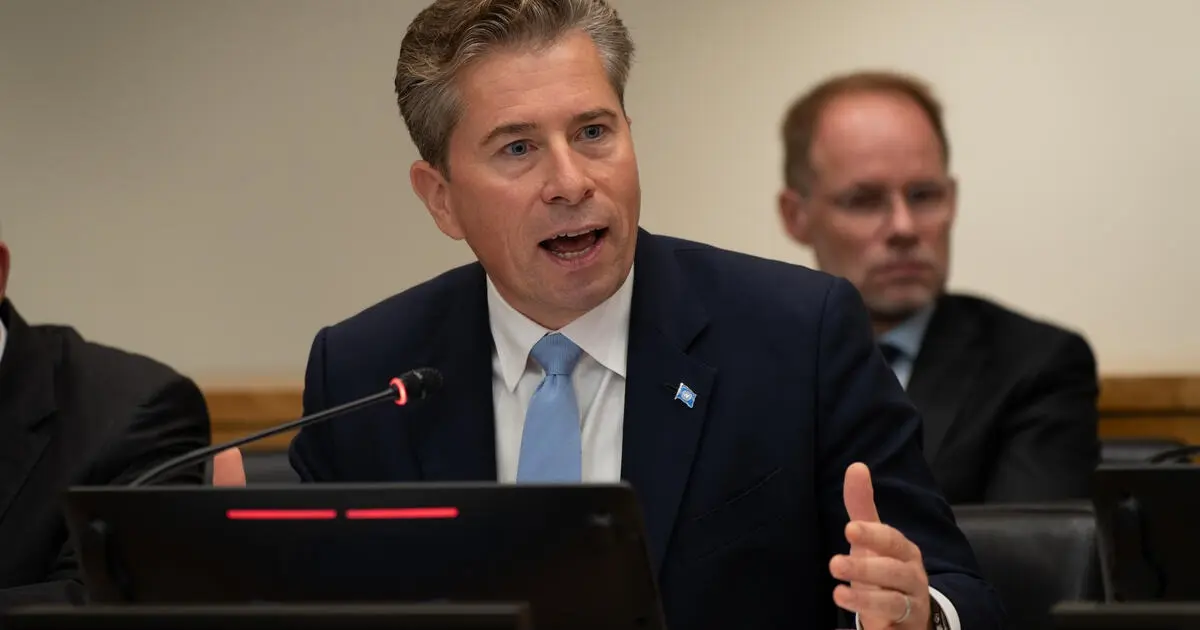
NEW YORK — United Nations Under-Secretary-General for Humanitarian Affairs and Emergency Relief Coordinator Tom Fletcher has issued an urgent call for world leaders to move past abstract declarations and implement targeted diplomatic interventions to unlock access for millions of vulnerable people worldwide. Speaking at a high-level event on humanitarian diplomacy in New York, Fletcher stressed that bureaucratic obstacles, border restrictions, and logistical blockades in global crisis zones are ultimately the result of deliberate choices made by authorities, and that international actors possess the corresponding power to reverse them.
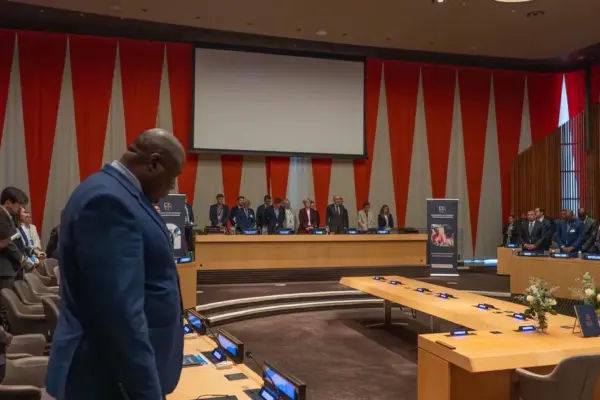
Addressing an audience of international diplomats, institutional leaders, and frontline humanitarian workers on September 23, 2026, Fletcher emphasized that the international community must transition from philosophical agreements about international humanitarian law to concrete, actionable negotiations. He was joined at the event by co-hosts Dr. Abdullah bin Abdulaziz Al Rabeeah, Supervisor General of the King Salman Humanitarian Aid and Relief Centre, and Hadja Lahbib, Commissioner for Equality, Preparedness and Crisis Management for the European Commission.
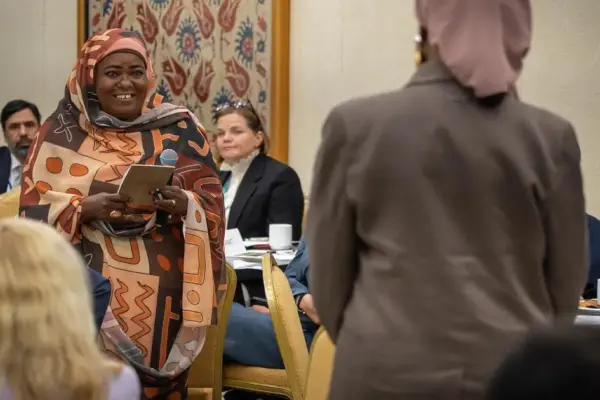
Fletcher opened his remarks by acknowledging several prominent local humanitarian leaders in attendance, including Christian Tanyi Eselekwe, founder and CEO of LUKMEF-Cameroon; Moussa Abba Diallo, founder of the Malian NGO AMSODE; Sami Khader, Director General and co-founder of the MA’AN Development Center in the Occupied Palestinian Territory; and Mama Noor, humanitarian leader, activist, and founder of the Shamaa “Candle” Organization in Sudan. Fletcher directly challenged these local leaders to hold the international humanitarian system accountable, urging them to prevent global bodies from issuing platitudinous statements without subsequent follow-through.
Aligning his message with the prior remarks of his co-hosts, Fletcher noted that the operational challenges facing aid organizations—such as closed border crossings, delayed bureaucratic clearances, and withheld travel visas—represent intentional political and administrative choices. He highlighted acute absurdities currently encountered on the ground, pointing out instances where vital resources like engine oil are classified as restricted materials in crisis zones unless humanitarian workers personally film themselves filling up vehicle fuel tanks to prove the supplies are being used as intended.
Fletcher argued that the Member States and international partners gathered at the meeting face a parallel choice. He cautioned against the danger of universal consensus in a room where every participant already agrees on the theoretical necessity of humanitarian access and the defense of international humanitarian law. Instead, Fletcher urged foreign ministers and national representatives to commit to a specific, practical framework designed to overcome immediate operational hurdles.
To illustrate this imperative, Fletcher presented a targeted list of ten distinct access objectives. According to the Emergency Relief Coordinator, successfully negotiating these ten specific agreements would enable humanitarian agencies to reach an estimated 11 million people who are currently slipping off the operational map and lacking critical life-saving assistance.
Detailing the ten access asks across various global conflict and crisis zones, Fletcher outlined the specific political and logistical barriers that require immediate diplomatic intervention.
In Afghanistan, Fletcher called for an end to systemic interference in humanitarian operations and demanded the immediate restoration of rights for female humanitarian workers. He noted that allowing female colleagues to work freely would immediately enable agencies to reach an additional 90,000 people in urgent need.
Turning to Latin America, Fletcher highlighted the pressing need to secure humanitarian access to the regions of Putumayo, Cauca, Bolivar, and Caqueta in Colombia. In the Democratic Republic of the Congo, he stressed the requirement for safe movement to facilitate ongoing responses to health emergencies, including secure access into the Hauts Plateaux region, following discussions with the country’s Foreign Minister, Thérèse Kayikwamba Wagner.
Addressing the situation in Haiti, Fletcher underscored the necessity of separating security concerns from aid delivery, asserting that humanitarian organizations must be permitted to engage all local groups without administrative hindrance or arbitrary questioning. In Myanmar, he emphasized that agencies must secure clearance to operate within territories controlled by non-State armed groups, pushing back against de facto authorities who attempt to restrict aid strictly to areas under their direct administrative control.
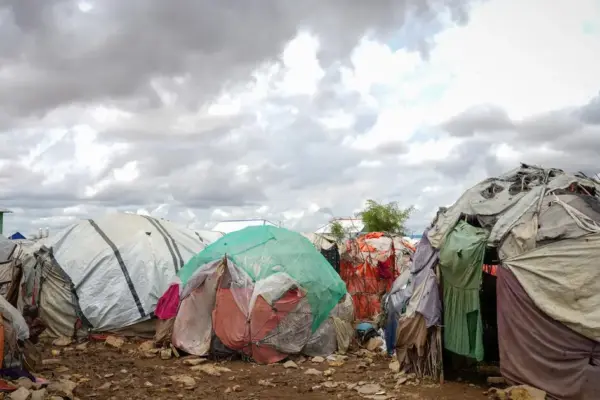
The humanitarian crisis in Gaza formed a major focus of Fletcher’s address. He called for the formal approval of a comprehensive winter support plan designed to assist 2.1 million people through the colder months. Highlighting the presence of Shelter Cluster Chair Amy Pope, Director General of the International Organization for Migration, Fletcher noted the urgent requirement to deliver 90,000 family tents into Gaza over the upcoming two weeks. He reiterated the need to allow essential supplies such as engine oil, winter heaters, fuel, and food into the enclave. Fletcher specifically referenced the operational constraints described by Carl Skau, Acting Executive Director of the World Food Programme, who has been forced to halve food distributions into Gaza due to severe funding reductions. Fletcher noted that he had recently engaged with the Board of Peace to address these financial and logistical bottlenecks.
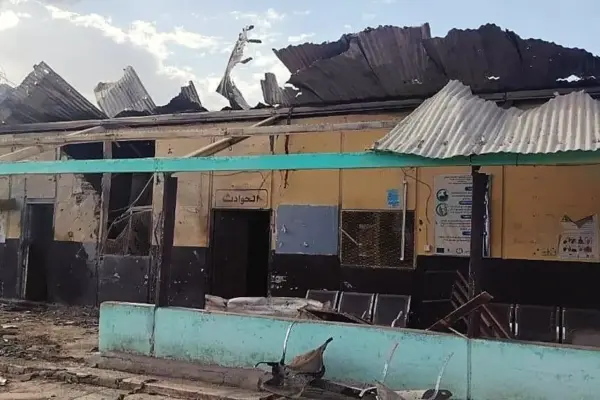
In South Sudan, Fletcher called for restored humanitarian access to Jonglei and Upper Nile. He recounted visiting hospitals in the region that have since come under attack, cutting off access and forcing courageous teams from Médecins Sans Frontières to evacuate after remaining behind while others departed.
Regarding Sudan, Fletcher demanded an end to precarious, short-term administrative extensions for critical supply routes, specifically pointing to the Adré border crossing. He insisted that humanitarian operations require stable, indefinite openings of the crossing and guaranteed safe access across the Darfur region, rather than recurring one-month or three-month extensions that disrupt long-term planning.
Expanding to Eastern Europe and the Middle East, Fletcher outlined the final two critical access priorities. In Ukraine, he called for safe passage for incoming humanitarian aid into Russian-controlled areas, as well as safe corridors for vulnerable civilians trapped within those zones. In Yemen, he demanded the immediate release of 73 detained humanitarian colleagues and called for safe, impartial aid access across all territories, regardless of local control.
Fletcher urged Member States to leverage their diplomatic influence by making direct phone calls to decision-makers and briefing national ministers to raise these specific access issues with foreign counterparts. He reiterated that supporting humanitarian diplomacy must go beyond abstract political backing and translate into tangible diplomatic outcomes that hold blocking authorities accountable and alleviate acute human suffering on the ground.