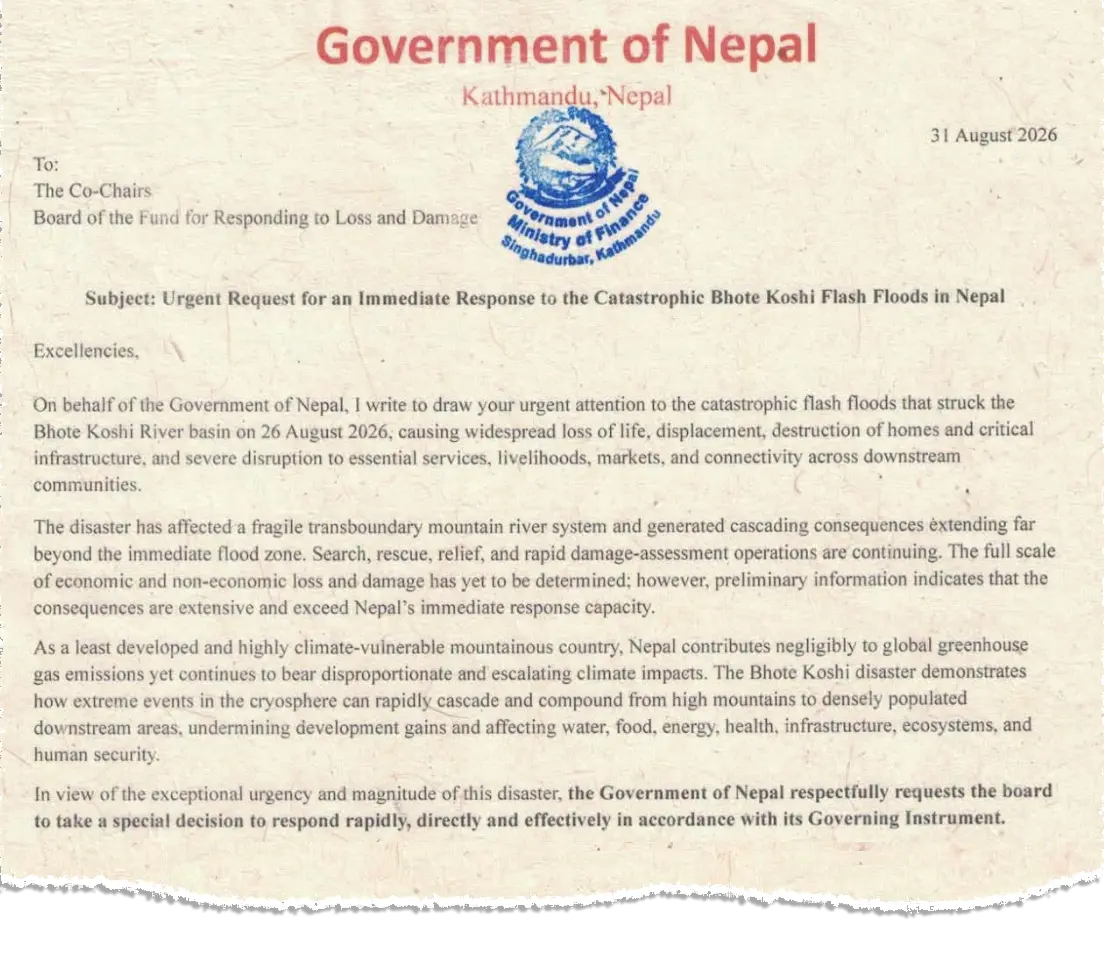
The Nepali government has officially requested $20 million from the United Nations fund for loss and damage, following the catastrophic flash floods that struck the Himalayan nation in late August. While the figure represents a critical lifeline for a country grappling with widespread destruction, it amounts to a mere fraction of the devastation left in the wake of the disaster.
According to analysis conducted by Carbon Brief, the $20 million request covers just 0.7% of the $2.7 billion that national authorities have estimated in physical damage to infrastructure and broader economic losses. When factoring in an additional $4.8 billion required for long-term recovery and reconstruction costs—part of how loss and damage is internationally defined by frameworks such as the Sendai Framework for Disaster Reduction—Nepal’s claim shrinks to roughly 0.3% of its total assessed needs.
Nevertheless, this request places Nepal as the fourth-largest claimant to the UN loss-and-damage fund since it was established in 2023. The fund was designed to help vulnerable developing countries cope with the severe, irreversible impacts of climate change, ranging from sudden-onset disasters like floods and storms to slow-onset crises like droughts.
However, the unfolding situation in Nepal has ignited an intense debate over global climate justice, exposing a stark mismatch between the escalating financial needs of developing nations and the resources currently made available by wealthy, developed countries.
Nepal’s Mounting Needs and the Reality of Sudden Disasters
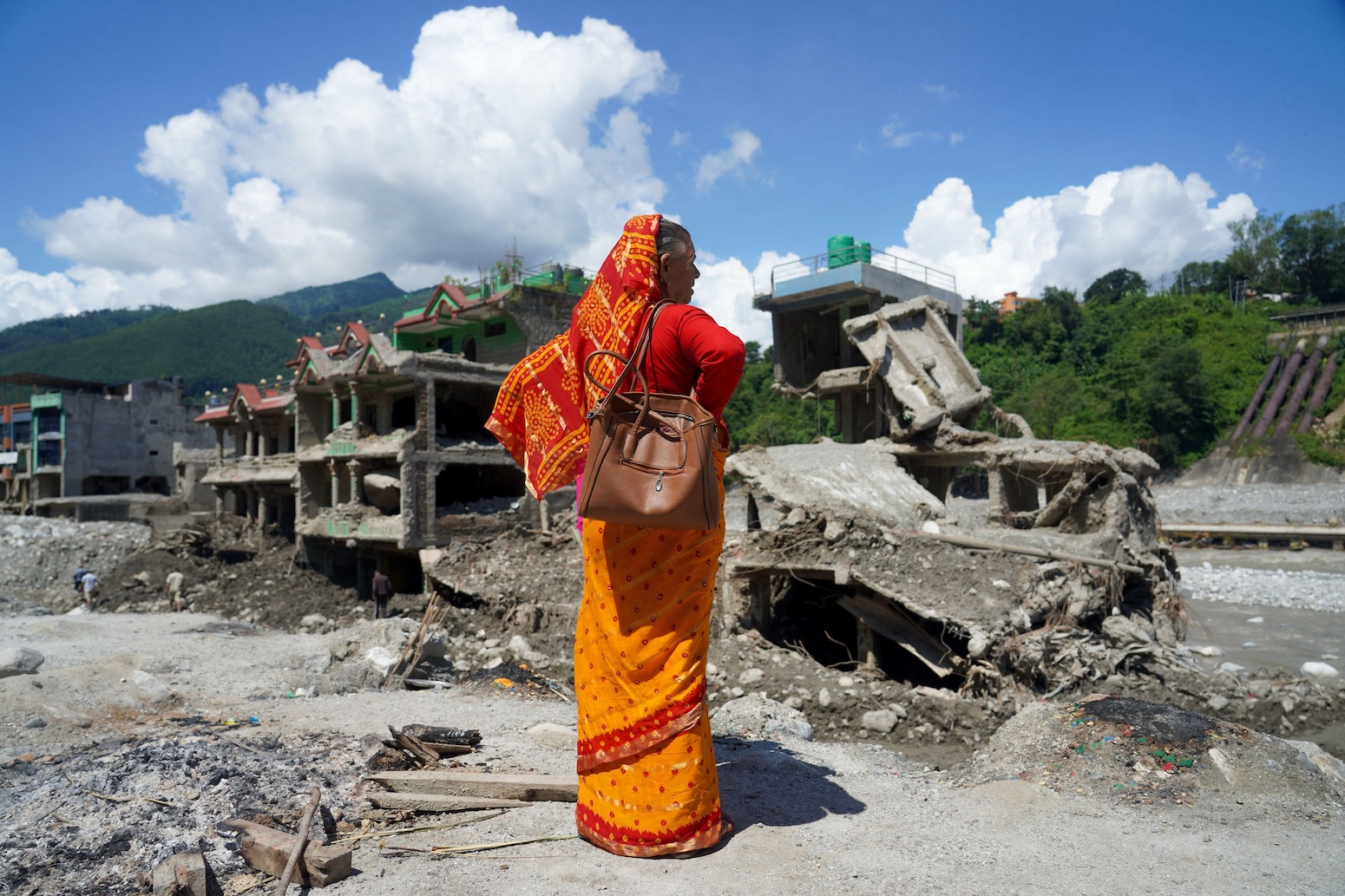
On August 26, Nepal was struck by devastating flash floods triggered by a catastrophic rock-ice avalanche in the Himalayan border region. The disaster has claimed more than 1,400 lives, while thousands of people remain missing weeks after the initial impact, leaving families struggling amid severe humanitarian conditions.
Days after the disaster, the Nepali government sought an urgent response from the board of the UN fund for climate-driven loss and damage. It subsequently submitted an official request for $20 million in financial compensation, which represents the maximum amount that can currently be requested for a single project under the fund’s operational guidelines.
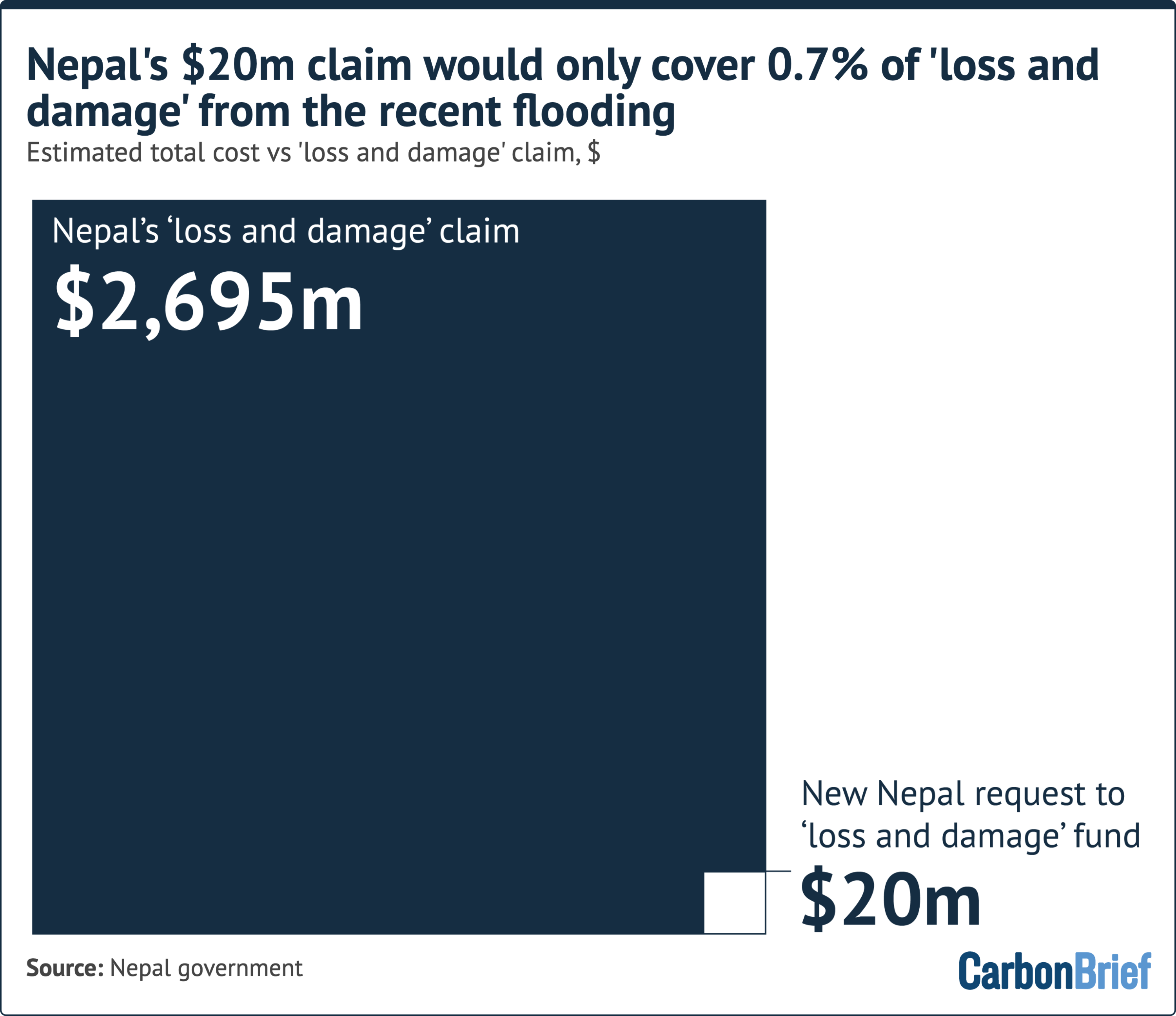
Nepal’s national disaster management authority has since released an extensive rapid preliminary assessment detailing the staggering scale of the crisis. Speaking to Carbon Brief, Raju Pandit Chhetri, a prominent climate negotiator for Nepal, explained that the country’s $20 million request was strictly intended for rapid response initiatives.
"That money is going to be a peanut if it was to be invested into reconstruction," Chhetri said, emphasizing that immediate relief operations require flexible capital long before rebuilding efforts can even begin.
The disaster has also prompted the Nepali government to leverage scientific analysis to reinforce its position. According to a rapid attribution study conducted by World Weather Attribution and independent climate experts, key drivers of the disaster—such as rapid glacial retreat and permafrost thaw in the Himalayas—are directly linked to human-induced global warming. A full, comprehensive attribution study remains pending, but the initial findings have added significant scientific weight to the country’s diplomatic appeals.
Prime Minister Balendra Shah is expected to address the United Nations General Assembly, where he will likely highlight the acute vulnerabilities of mountain nations, the urgent need for robust loss-and-damage finance, and broader issues surrounding global climate justice.
Requests Outpace Pledges as the Fund Faces Its First Major Test
The unfolding crisis in Nepal highlights a systemic challenge facing the global climate finance architecture: demand is vastly outstripping supply.
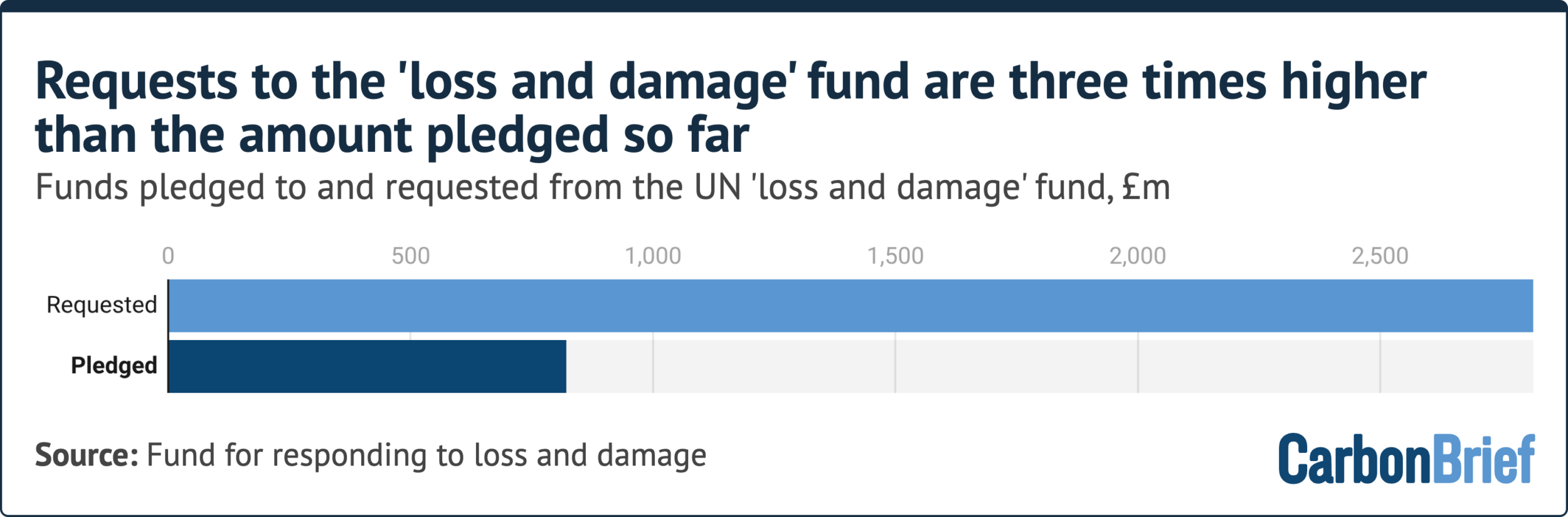
Data shows that developing countries have submitted 176 applications to the UN loss-and-damage fund, requesting a total of more than $2.8 billion to recover from a wide array of climate-related events, including severe droughts, floods, and destructive storms. More than 60% of these funding requests have come from least developed countries, such as Nepal, and small island developing states. Individual funding caps currently stand at $20 million per request.
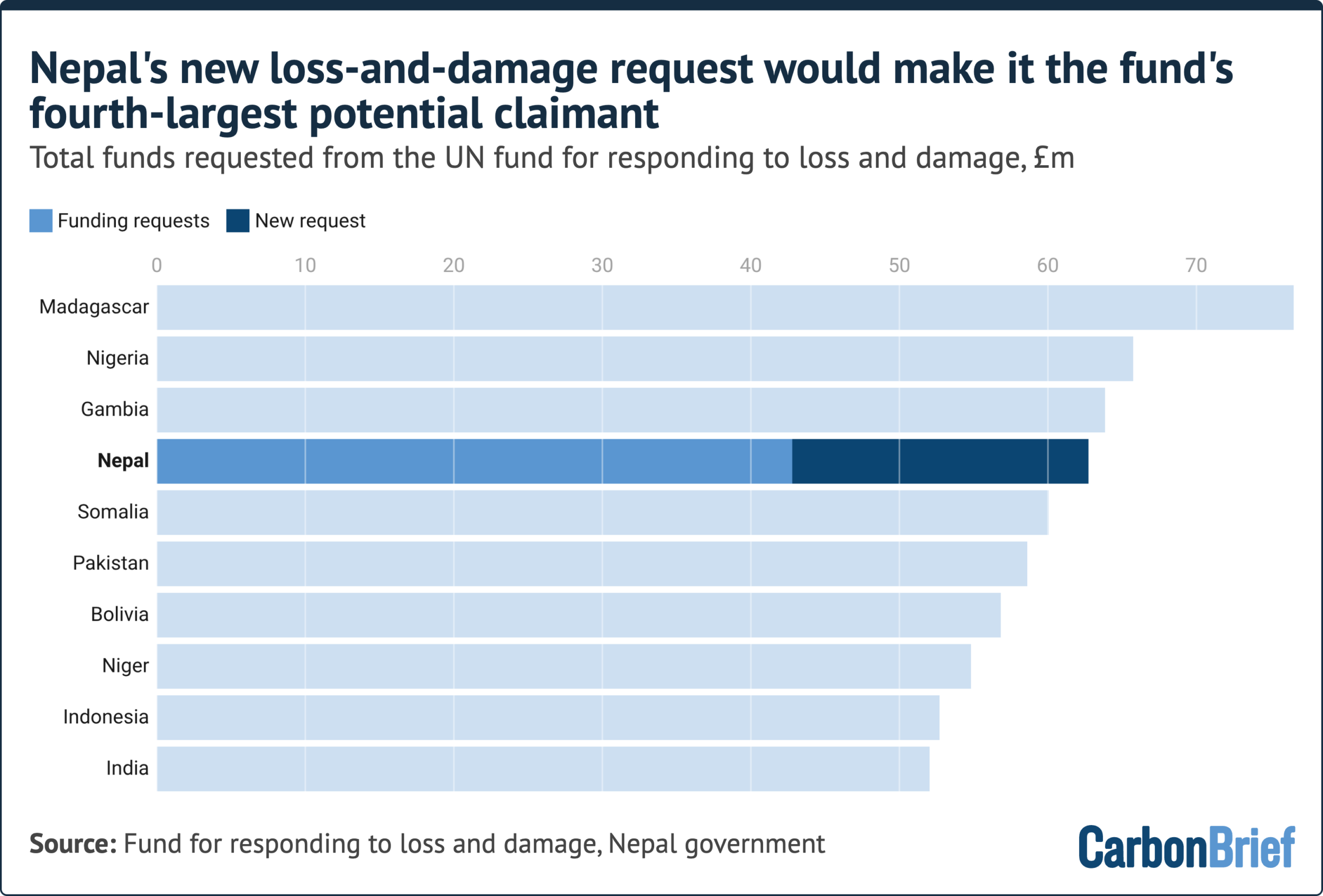
Despite the heavy volume of applications, predominantly developed nations have collectively pledged only $822 million to the fund. While a few non-traditional donor countries outside the formal UN developed-nation category, such as the United Arab Emirates and South Korea, have also made financial commitments, total requests from vulnerable nations are already more than three times larger than total pledges.
Furthermore, the gap between promises and delivered cash remains a significant hurdle. Only around half of the pledged money has actually been paid into the fund by donor nations, with substantial contributions from countries like France, Italy, and the UAE still outstanding.
Although the fund made $342 million available during its initial funding round in July, no money has been distributed to any developing country grappling with intensifying climate disasters since the fund’s inception in 2023.
Nepal is not alone in seeking multiple rounds of assistance. Nine other countries have submitted multiple applications to the fund. Madagascar, which has suffered from a prolonged drought followed immediately by back-to-back cyclones, has made six requests in total. Meanwhile, drought-ravaged nations such as Suriname, Ecuador, Brazil, and Barbados have framed their submissions as urgent emergency responses.
The Search for a Viable Rapid-Response Mechanism
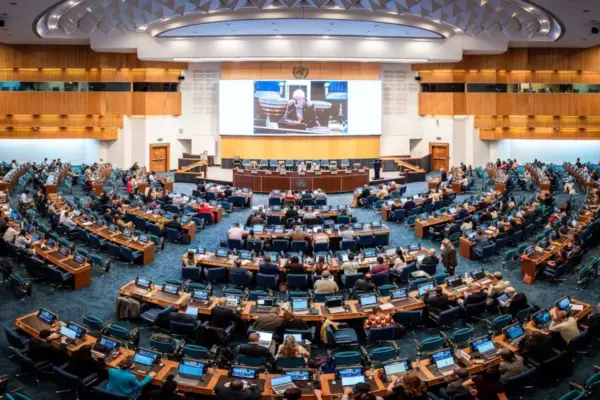
Nepal’s appeal has forced the board of the loss-and-damage fund to confront its operational limitations. Historically, the board has processed funding requests through standard project review pipelines rather than treating them as immediate humanitarian emergencies.
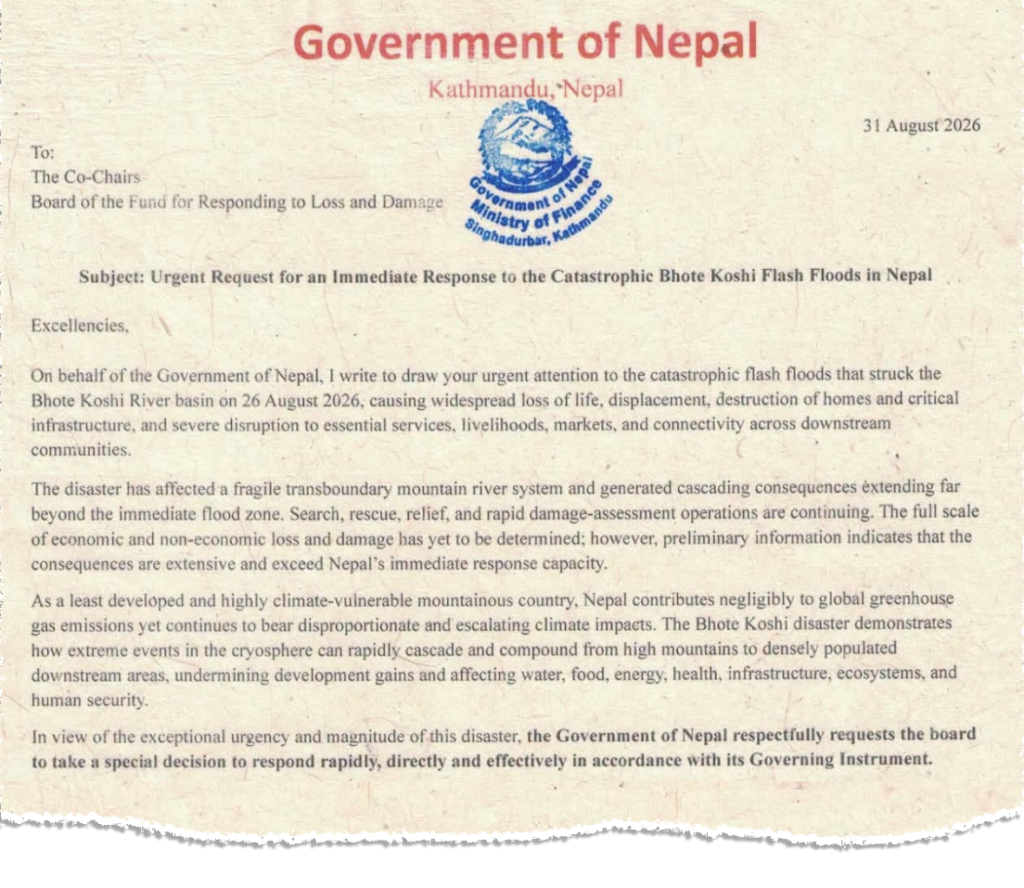
In the wake of the disaster, Nepal’s Finance Minister, Dr. Swarnim Wagle, wrote a letter to the fund’s board appealing for an urgent response. He argued that a swift payout would signal that the fund is genuinely capable of responding with humanity, speed, flexibility, and solidarity when vulnerable nations face catastrophes beyond their capacity to manage alone.
Board members representing Asia-Pacific and African nations rallied behind Nepal, writing a joint letter urging the board to convene and establish a provisional set-aside allocation of resources specifically for rapid-response funding. They argued that handling Nepal’s crisis could provide vital procedural lessons for strengthening the fund’s ability to deal with sudden-onset extreme weather events—support that is explicitly outlined in the fund’s official mandate.
However, responses from developed-country board members have been cautious. While they expressed support for holding consultations regarding Nepal’s situation, they made no immediate commitments to disburse actual emergency funds.
Harjeet Singh, a loss-and-damage expert and global convenor of the Fill the Fund campaign, criticized the cautious approach of wealthy donor nations. He noted that developed countries have given a cold response because they fear setting a precedent that would subject them to continuous financial pressure for climate disasters.

"They have not addressed it because they know that if this happens once, they are going to be under pressure all the time. This is unacceptable," Singh told Carbon Brief.
As the international community awaits the next formal board meeting of the loss and damage fund, scheduled for December—just two weeks after the conclusion of the COP31 climate talks in Turkey—frustrations among developing nations continue to mount.
Reflecting on the delays, Raju Pandit Chhetri expressed deep concern over the lack of concrete action nearly three weeks after the disaster struck.

"It’s a shame that, until now, the fund has not been able to even give a penny to developing countries. And, starkly, the event in Nepal only demonstrates why this kind of fund is so important for highly vulnerable, poor, developing countries," Chhetri said.
He added that if the fund cannot respond effectively during a major crisis for a country facing such massive devastation, questions will inevitably be raised about its practical utility, leaving vulnerable nations to navigate worsening climate extremes with little international support.