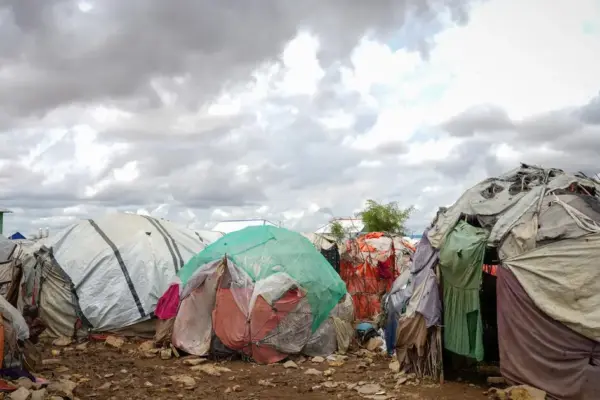
Three years ago, Zara and her family made a harrowing journey, fleeing the escalating violence in Sudan to find a safe haven in Adré, a bustling border town in Chad that opened its doors and its heart to thousands of arriving refugees. Today, Zara and her family have finally moved to a more permanent, formal shelter, marking a new chapter in a long journey toward stability. Yet, their story is just one of millions unfolding across a world currently grappling with unprecedented levels of displacement, resource constraints, and complex humanitarian emergencies.
Chad currently plays host to an extraordinary population of about 1.5 million refugees, with more than 900,000 of them having fled the ongoing turmoil in Sudan. When measured relative to the overall size of Chad’s national economy, no country anywhere in the world shoulders a heavier refugee hosting burden. Despite facing its own domestic economic hurdles and severe resource limitations, the nation continues to demonstrate remarkable hospitality, offering safety and sanctuary to those fleeing persecution and armed conflict in neighboring regions.
The situation in Chad reflects a broader, global reality regarding how displacement crises are managed. The vast majority of refugees, much like Zara and her family, seek protection in countries located immediately adjacent to their homelands. Consequently, the immense weight of the global refugee crisis falls disproportionately upon low- and middle-income nations. Countries such as Jordan, Burundi, Uganda, Lebanon, Mauritania, and the Central African Republic have consistently expressed their deep empathy and solidarity in their own practical ways. They continue to support extraordinarily large numbers of displaced people while simultaneously managing the significant, compounding strains placed on their own public infrastructure, financial systems, and natural resources.
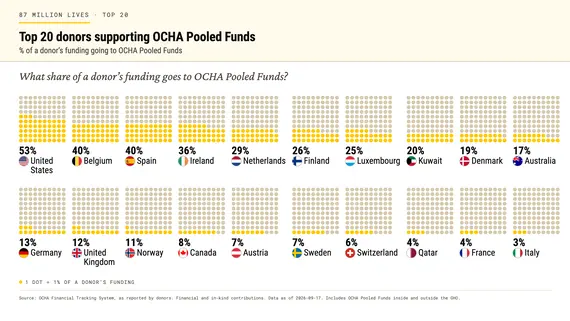
This profound solidarity, however, manifests in more than just one form, extending from the localized hospitality of host communities to the expansive financial contributions of international donors. Within the broader humanitarian architecture, financial backing is critical to sustaining operations on the ground, and donor contributions vary widely in both absolute scale and proportionate generosity.
Some international donors provide funding at a scale that fundamentally shapes and sustains the entire global humanitarian response. According to recent funding tracking, the United States and the European Commission lead by a wide margin once again this year, providing the financial backbone for numerous operations worldwide. They are followed closely by other major state donors, including the United Kingdom, Germany, and Sweden, whose substantial contributions enable humanitarian organizations to maintain large-scale relief operations across multiple continents.
At the same time, other nations contribute amounts that are profoundly significant when measured proportionately relative to the size of their domestic economies. When evaluated through this lens of economic capacity, countries like Denmark, Sweden, and the United Arab Emirates step forward to contribute the largest shares. This data highlights a diverse spectrum of global engagement, where both absolute financial muscle and relative economic sacrifice play indispensable roles in keeping life-saving operations afloat.
Despite the persistent financial and logistical challenges that characterize modern humanitarian work, coordinated international efforts continue to register tangible progress on the ground. Aid organizations report that they have already reached nearly 40 million people out of the targeted 83 million individuals they hoped to assist with vital aid over the course of this year. While this milestone represents a significant achievement and reflects the dedication of humanitarian workers and donors alike, organizations emphasize that they still have a very long way to go to meet the totality of global needs.
The impact of these financial contributions and operational efforts can be seen in communities worldwide, transforming millions of lives through timely, targeted assistance. Thanks directly to the consistent contributions of concerned countries and international partners, vulnerable populations continue to receive essential services that would otherwise be out of reach.
In Haiti, people living amidst persistent instability continue to access critical health care services, ensuring that basic medical needs are met even in highly volatile environments. In Uganda, individuals like Zawadi Furaha, a refugee who fled from the Democratic Republic of the Congo, are being empowered to rebuild their independence by earning a sustainable living through targeted livelihood programs. Meanwhile, displaced families residing in Nigeria are able to purchase food and secure essential supplies through innovative e-voucher systems, a method that simultaneously helps keep local markets open and functioning during times of crisis. Furthermore, in Syria, individuals such as Abdullah Abed Abdullah have been supported in protecting and sustaining their livestock, preserving their primary source of livelihood and economic resilience against the backdrop of prolonged conflict.
These diverse interventions represent only a small fraction of the millions of individual lives that have been fundamentally transformed by timely aid delivered over the course of the year. Behind every statistic and funding figure lies a human story of survival, adaptation, and renewed dignity, made possible through international cooperation and sustained generosity.
As humanitarian agencies continue their work to bridge the gap between mounting global needs and available resources, the ongoing support of international partners remains vital. The sheer scale of generosity demonstrated by these diverse partners—ranging from frontline host governments absorbing massive refugee populations to major institutional donors and economically proportionate contributors—illustrates a shared global commitment to addressing human suffering wherever it occurs across the globe.