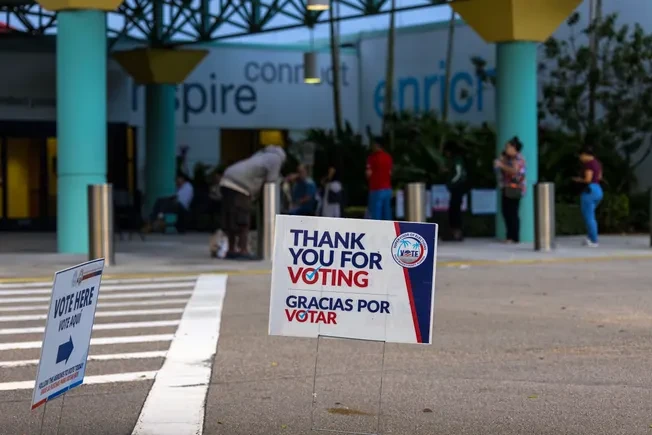
The November referendums, while diverse in geography and specific subject matter, largely centered around two competing yet interconnected priorities: reining in tax hikes on everyday expenses ranging from housing to groceries, and approving targeted revenue increases to fund narrowly defined public priorities such as healthcare, education, and mass transit. According to the S&P Global Ratings report, this dual approach highlights a complex voter sentiment regarding public finance. While these two categories might initially appear to be in conflict with one another, industry experts suggest they point to a deeper underlying theme dominating the American electorate.
Jane Ridley, a managing director and sector lead for U.S. public finance and local governments at S&P Global, noted in an interview that despite the apparent contradictions, the votes reflect a central theme of affordability and public accountability. Voters are increasingly demanding relief from rising costs while simultaneously seeking tangible improvements in services they directly utilize. However, the structural mechanisms chosen by voters to achieve these goals carry distinct long-term implications for government autonomy.
The S&P report emphasizes that revenue-restriction and tax-limiting referendums fundamentally alter the landscape for public administrators by restricting future government autonomy and self-direction. By generating less revenue or legally capping revenue growth for future expenditures, these measures tie the hands of local leaders when unexpected economic pressures arise. Conversely, revenue-expansion and dedicated-funding referendums are not designed to provide governments with broad autonomy for budget allocation. Instead, they are specifically crafted to earmark funds for narrow, predetermined purposes, leaving little room for discretionary spending or flexible crisis management by elected officials.
Aside from notable exceptions such as an amendment restructuring Florida’s tax base and a measure establishing a graduated income tax in Colorado, voters across the country largely rejected sweeping, broad-based tax changes, data from the Tax Foundation shows. For instance, while voters in California decisively rejected a proposed wealth tax that had drawn national attention, residents in Washington state headed to the polls to defend a newly enacted income tax targeting households earning over $1 million annually.
Within the category of limiting tax hikes, the S&P report drew specific attention to Florida’s Amendment 3, which successfully passed with 62% of the vote. The measure places stringent constraints on taxable property values, thereby reducing anticipated revenues for local city and county governments across the state. The report cautions that while the full fiscal impact of Amendment 3 will take several years to fully manifest within municipal balance sheets, local issuers with weaker credit quality—particularly those already struggling to maintain structural budgetary balance—might feel the resulting fiscal pressure much sooner than others.
On the other side of the ledger, the report highlighted measures falling into the revenue-increase category, such as California’s Proposition RTM. This voter-approved measure boosts retail sales and use taxes by 0.5% for a duration of 14 years across Alameda, Contra Costa, San Mateo, and Santa Clara counties, while applying a 1% increase in the city and county of San Francisco. The primary objective of this dedicated tax hike is to fund crucial Bay Area mass transit systems.
Proposition RTM passed with 61.5% of the vote, a margin that demonstrates voters are often willing to dig into their pockets when they can visualize a tangible, direct benefit—particularly when it comes to transportation infrastructure. Kurt Forsgren, a managing director and sector lead for U.S. public finance and transportation at S&P Global, emphasized that this willingness to pay higher taxes for specific, visible improvements underscores a pragmatic streak in the electorate, provided the return on investment is clear.
Whether these midterm referendums will serve as a lasting bellwether for municipal governments across the United States remains an open question, according to Ridley. State and local governments have historically proven themselves adept at navigating fiscal challenges and finding ways to balance their budgets under adverse conditions. Credit rating agencies and municipal analysts are currently in a holding pattern, carefully watching and waiting to see how these localized decisions are absorbed into broader economic strategies.
As local leaders begin adapting to these new fiscal boundaries, analysts are keeping a close watch on how municipalities plan to offset lost revenues. Ridley pointed out that if governments begin experiencing restricted revenues through various ballot measures without securing a reliable backfill or alternative funding source, rating agencies will inevitably ask probing questions regarding how those entities plan to maintain long-term budgetary balance. For now, the intersection of voter-mandated tax limits and dedicated spending measures has set the stage for a more constrained, highly scrutinized fiscal environment for local governments nationwide.