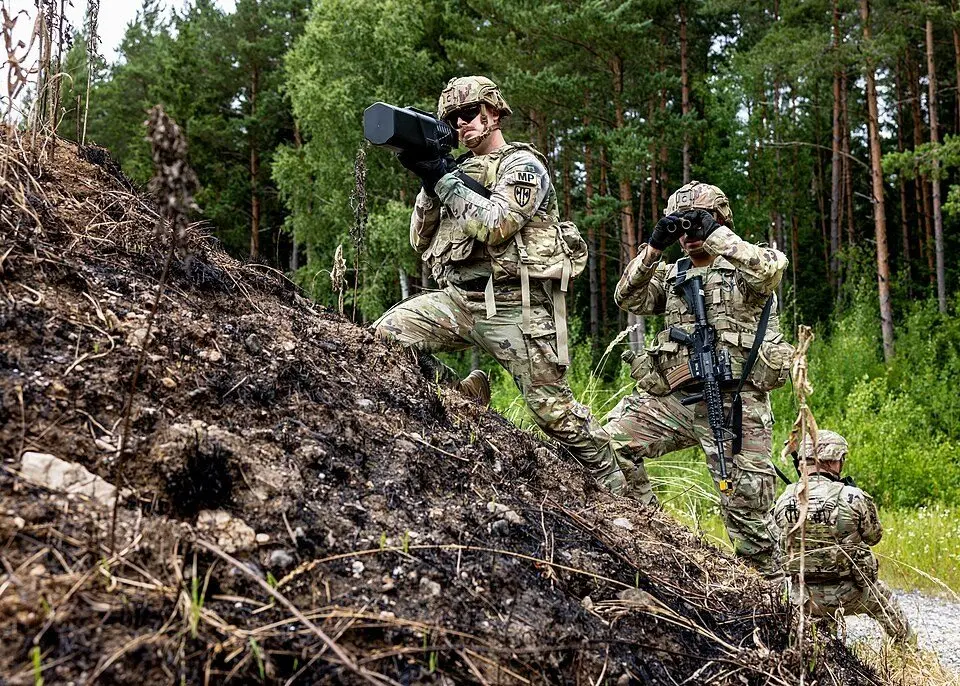
In a first-of-its-kind national collaboration, the University of North Dakota (UND), working alongside the Northern Plains Unmanned Aircraft Systems Test Site (NPUASTS), has forged a landmark agreement to assist the U.S. government in evaluating and vetting counter-drone systems for the nation’s armed forces.
The partnership marks a significant step forward in how the military identifies, tests, and procures critical defense technologies to counter the rapidly evolving threat of unmanned aerial systems.
The agreement was formally established last month when representatives from the university and the test site signed a memorandum of understanding (MOU) with the Pentagon’s Joint Interagency Task Force 401 (JIATF-401). The signing took place during the 20th UAS Summit & Expo held at the Alerus Center in Grand Forks, North Dakota.
According to an official university statement, the MOU establishes UND as the first and only university in the nation to act as a primary clearinghouse for the task force’s counter-drone technology initiatives. Alongside the Northern Plains UAS Test Site, UND will help identify promising counter-drone technologies, sorting through the vast landscape of emerging defense solutions to determine which systems warrant further evaluation, development, and potential military acquisition.
A Strategic Role in Military Procurement
JIATF-401 plays a critical role within the U.S. defense apparatus, overseeing the coordination of counter-drone defenses across all branches of the U.S. Armed Services and facilitating the procurement of specialized equipment. Through this new alliance, UND will contribute its deep research capabilities and specialized technical expertise to help the task force navigate the complex and crowded marketplace of emerging counter-UAS technologies.
Mark Askelson, UND associate vice president for research for national security, noted that the university was selected for the partnership because of its long-standing history and recognized expertise in drone and counter-drone research and development.
"We’re very good with air autonomy, drones, and we’ve been enabling things and developing technologies and capability for a long time in that space," Askelson said. Over the past several years, the university has actively collaborated with various federal and state agencies in the development, testing, and evaluation of diverse counter-UAS systems.
While the MOU does not spell out the precise day-to-day working relationship between JIATF-401, the university, and NPUASTS, it serves as a foundational roadmap to guide their future collaboration and project development.
Earlier this year, JIATF-401 launched the C-UAS Marketplace, a centralized procurement platform designed to streamline the acquisition of counter-unmanned aircraft systems and related defense technologies. Functioning similarly to an online commercial marketplace, the platform connects vetted and approved vendors with authorized buyers across the U.S. Armed Forces and allied nations.
Askelson explained that under the framework of the new MOU, UND and NPUASTS could be called upon by JIATF to evaluate specific counter-UAS systems to determine their suitability for inclusion in the marketplace.

"If they’re in the marketplace, presumably that means that they have a certain capability set," Askelson said. "One of the things we’re trying to do with them is see if we can help them sift through the different technologies that companies bring to the table to help them understand which ones are ready and which ones aren’t."
Aligning Academic Expertise with National Security
During initial meetings between university representatives and JIATF officials, discussions focused heavily on aligning the school’s academic and technical capabilities with the broader national security mission of the task force.
While the initial talks have not yet narrowed down the specific categories of counter-UAS systems—such as whether the evaluation will focus strictly on detect-and-identify systems or active drone-mitigation technologies—Askelson indicated that the university has demonstrated the full breadth of its evaluation capabilities to the military task force.
"We have certainly helped JIATF-401 understand the breadth of systems that we can look at, but we haven’t said, ‘Oh, just this subset,’" Askelson noted. He added that while formal financial terms have not yet been finalized, he anticipates that a subsequent contract will establish a structured funding mechanism. This support would allow the university to hire additional personnel and dedicate necessary resources to sustain the ongoing research effort.
Victor Meza, marketing manager for the Northern Plains UAS Test Site, emphasized that NPUASTS will act as a key consultant on the research project, bringing years of practical experience in testing and evaluating emerging drone and counter-UAS technologies.
"They need to figure out how the military’s going to handle counter-UAS, how to assess all the different technologies that are out there," Meza said. "We’re going to be brought in to deliver our knowledge about the counter-UAS world, and help provide some clarity of how to test these things and what to look for in the kind of technologies that are going to be valuable for the military."
North Dakota’s Growing Prominence in Defense Innovation
The formation of this partnership highlights the increasing reliance of the Pentagon on North Dakota’s established infrastructure and expertise in uncrewed aerial systems. Earlier this year, military officials, defense leaders, and technology developers converged in the state to evaluate emerging counter-UAS systems during the Technology Readiness Experimentation (T-REX) event held at Camp Grafton near Devils Lake.
T-REX is an ongoing campaign organized and managed by the Office of the Undersecretary of Defense for Research and Engineering (OUSD R&E). The initiative is specifically designed to test emerging warfighting capabilities in realistic, operationally relevant environments, bridging the gap between theoretical defense technology and practical battlefield application.
For UND and its partners, the collaboration with JIATF-401 is viewed as a natural extension of their ongoing commitment to national defense and technological advancement. Askelson emphasized that the partnership reflects the overall strength and reliability of UAV research conducted across the state.
"We’re here to serve the nation and help in any way we can," Askelson said. "We think we can help JIATF-401 in their overall mission set. So, we’re super excited for the partnership opportunity and to be of service."