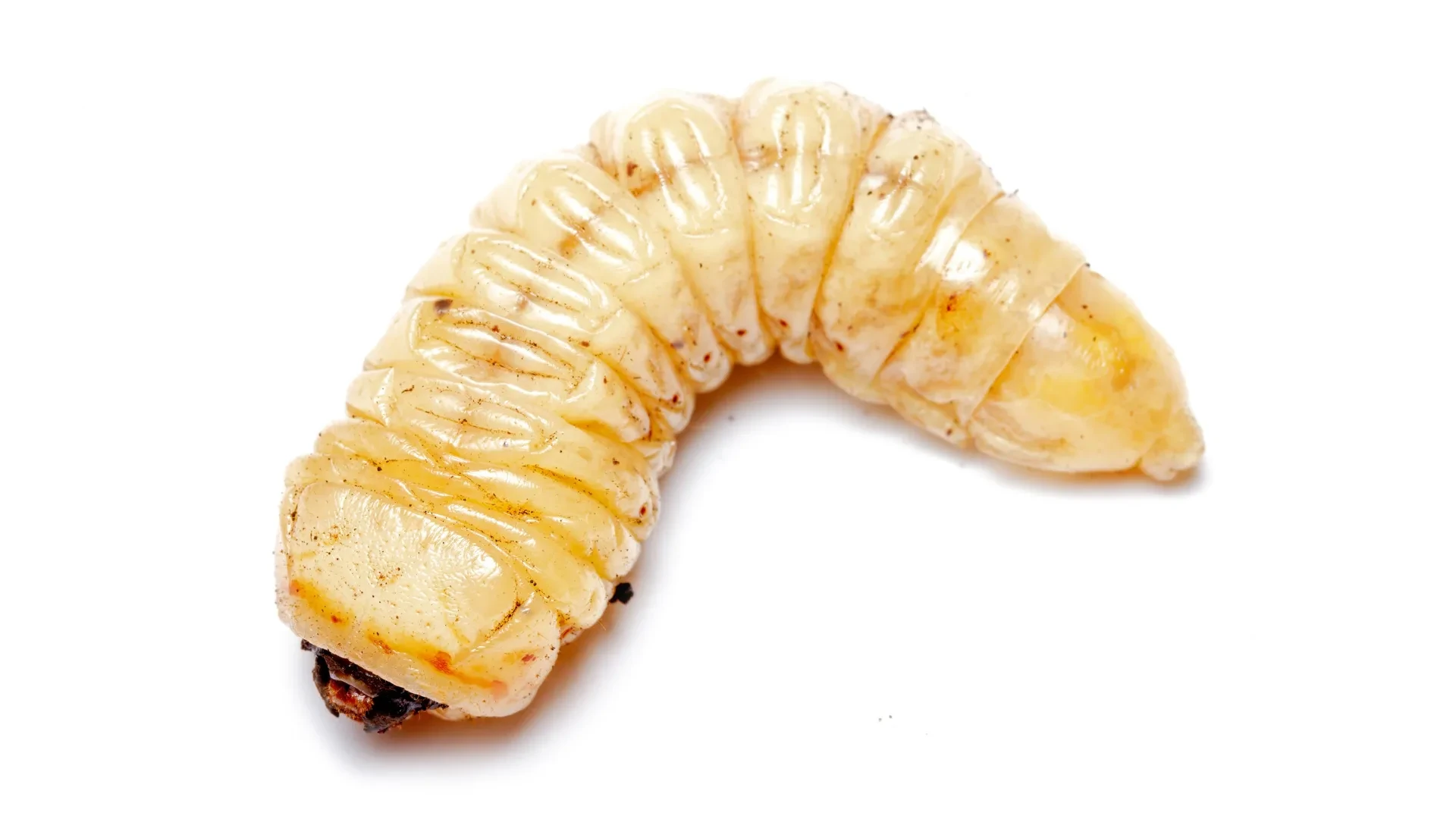
North Carolina’s vital agricultural sector is facing an emerging and previously undocumented threat from a subterranean beetle whose oversized larvae feed aggressively beneath the soil, damaging plant roots and posing a fatal risk to blueberry bushes across the region. After more than a decade of uncertainty, entomologists and researchers have officially identified the insect responsible for the crop damage, marking a crucial first step toward developing targeted defenses for local growers.
A specialized research team working within North Carolina State University has confirmed that the culprit behind the underground destruction is Prionus imbricornus, a distinct species of longhorn beetle readily recognized by its exceptionally long, segmented antennae. These wood-boring insects, while long familiar to foresters and agricultural experts in other contexts, are rapidly becoming a source of acute anxiety for commercial blueberry producers operating within the state.
The life cycle of these beetles begins when adult females deposit their eggs directly into the soil environment, typically selecting sites immediately adjacent to the root systems of hardwood trees. Once the eggs hatch, the emerging larvae make their way to subterranean food sources, feeding voraciously on plant roots. In severe infestations, the larvae can destroy enough vascular and structural tissue to kill mature plants entirely. Adding to their destructive capacity, these subterranean larvae can grow to an impressive and imposing five inches in length. Paradoxically, the adult beetles do not feed at all during their short aerial phase, leaving the entirety of the ecological damage to their long-lived, subterranean offspring.
A Decade-Old Mystery Beneath Blueberry Fields
North Carolina stands as the first state in the nation to formally document P. imbricornus expanding its host range to feed directly upon cultivated blueberry bushes. However, the physical signs of this subterranean phenomenon are far from new. Field reports detailing unidentified Prionus larvae wreaking havoc on blueberry root systems date back as far as 2010. For more than ten years, however, local researchers and agricultural extension agents struggled persistently to pinpoint the exact species responsible for the agricultural losses.
A significant portion of this diagnostic challenge stemmed directly from the insects’ hidden, underground habitat. Because the larvae spend their entire developmental cycle residing deep beneath the soil surface near vulnerable plant roots, they are exceptionally difficult to locate, extract, and study in a laboratory setting. Compounding this ecological hurdle is a morphological similarity common among longhorn beetles: larvae from completely different species often look remarkably alike to the naked eye, rendering traditional visual identification methods entirely unreliable for field workers and agronomists.
According to Kenneth Geisert, a graduate student within NC State’s College of Agriculture and Life Sciences and the lead author of the newly published study, this persistent uncertainty created a major roadblock for the agricultural community, making it exceedingly difficult to design and deploy appropriate, effective pest management strategies.
"Before now, researchers often just assumed the species of Prionus on their commodities based on adult identification," Geisert explained, highlighting the historical reliance on guesswork in orchard and field management. "If that guess was incorrect, it could mean using a treatment strategy that did not line up with the problem and incorrectly associating species and their hosts. For instance, while P. imbricornus attacks roots, another type of longhorn beetle might attack the trunk of a tree, or dead branches. Without knowing which species of beetle you’re dealing with and their ecology, incorrect management can cause adverse effects on non-target insects."
DNA Analysis Reveals the Mystery Beetle
To finally unmask the subterranean pests, the NC State research team mounted an intensive field investigation across six commercial blueberry farming operations situated within North Carolina’s primary agricultural southeastern counties, specifically targeting Pender, Sampson, Bladen, and New Hanover counties.
To capture and identify the adult populations inhabiting these areas, the scientists strategically installed specialized black panel traps equipped with sex pheromones—potent chemical signals specifically evolved to attract adult beetles of the target species. Following successful field collections, the research team employed an advanced molecular identification technique known as genetic barcoding to conclusively determine the exact genetic profile of the larvae recovered directly from the blueberry farm soils.
This sophisticated scientific method operates by examining short, highly standardized sections of an organism’s DNA and cross-referencing those genetic sequences against comprehensive, verified reference databases containing known species profiles. By directly matching the genetic material extracted from the previously unidentified subterranean larvae with the known DNA sequences of adult Prionus beetles caught in the field traps, the researchers were able to establish an undeniable lineage.
The rigorous molecular analysis ultimately yielded a 98 to 99 percent genetic match with P. imbricornus, definitively confirming the precise identity of the longhorn beetle species responsible for the persistent root damage plaguing North Carolina’s agricultural producers.
A Growing Threat With No Approved Insecticides
While successfully identifying the root cause of the damage represents a major scientific breakthrough for the university and the agricultural community, the discovery simultaneously underscores a severe, immediate challenge facing commercial blueberry growers who must now confront an enemy they previously could not name.
Lorena Lopez, an assistant extension professor in NC State’s Department of Entomology and Plant Pathology and a co-author of the research study, noted that the breakthrough brings a complex mix of encouraging clarity and deeply troubling news for the industry.
"On one hand, it’s very important that we know which species we’re dealing with," Lopez said, emphasizing the foundational value of diagnostic accuracy. "On the other, North Carolina was the first state to ever report Prionus infestation in blueberries, and there are no insecticides currently labeled against this pest in blueberries."
The lack of pre-existing, legally approved chemical treatments means that growers currently have very few defensive options available when larvae are discovered attacking their crop. In response to this regulatory and practical vacuum, Lopez has already initiated targeted field trials and laboratory testing of various insecticides to determine which chemical formulations or application methods might effectively control the beetle populations without harming the surrounding environment or the crop itself.
A major focus of these ongoing trials involves identifying the optimal window for treatment applications. By carefully studying the life cycles and reproductive habits of P. imbricornus,
researchers hope to synchronize future insecticide applications with specific phases of larval development, effectively disrupting the insects before they can inflict extensive, irreversible damage on the vital root systems of the blueberry bushes.
If these current research initiatives prove successful, the findings could provide local farmers with an essential, long-awaited management tool to safeguard their livelihoods against an emerging agricultural pest that has managed to evade positive identification and effective control for well over a decade.
The complete findings detailing the discovery and its implications have been published in the Journal of Integrated Pest Management in a paper titled "Prionus imbricornis (Coleoptera: Cerambycidae), an emerging pest in North Carolina blueberries." Gareth Powell, an assistant professor at NC State and the director of the NCSU Insect Museum, also provided vital contributions to the collaborative research effort.