
UK aircraft developer targets private ownership under new FAA light-sport rules, while expanding into unmanned defense applications.
UK-based aircraft developer Skyfly Technologies has successfully secured $10 million in a new seed funding round to propel its flagship two-seat electric aircraft, the Axe, into full commercial production. While much of the burgeoning electric vertical takeoff and landing (eVTOL) industry has fixated heavily on commercial air taxi operations and urban ridesharing networks, Skyfly is carving out a distinct niche by targeting private owners. The freshly acquired capital is expected to accelerate the company’s path toward final Federal Aviation Administration (FAA) light-sport certification while aggressively scaling up manufacturing capacity across both the United Kingdom and the United States.
The seed investment round was led by HICO Investment Group, with additional strategic participation coming from Archangel, a notable defense technology investor. This financial boost arrives on the heels of significant operational milestones for the company, including more than 100 successful prototype test flights and the acquisition of experimental flight permits in both the UK and the US. Furthermore, Skyfly reports a robust and expanding global order book consisting of 61 private customers worldwide, underscoring a steady consumer appetite for personal vertical flight solutions. With manufacturing efforts centered around its 10,000-square-foot facility in the UK, the company is systematically laying the groundwork to meet its target of delivering the first customer aircraft by 2027.
New FAA Rules Open a Path for Personal eVTOL Aircraft
A primary catalyst for Skyfly’s strategic focus on private ownership is a major shift in regulatory frameworks. The landscape for light-sport aviation evolved significantly when the FAA implemented its Modernization of Special Airworthiness Certification (MOSAIC) framework. Designed to streamline and modernize the certification of light aircraft, the updated rules officially took effect in July 2026, dramatically expanding eligibility parameters for light-sport categories.
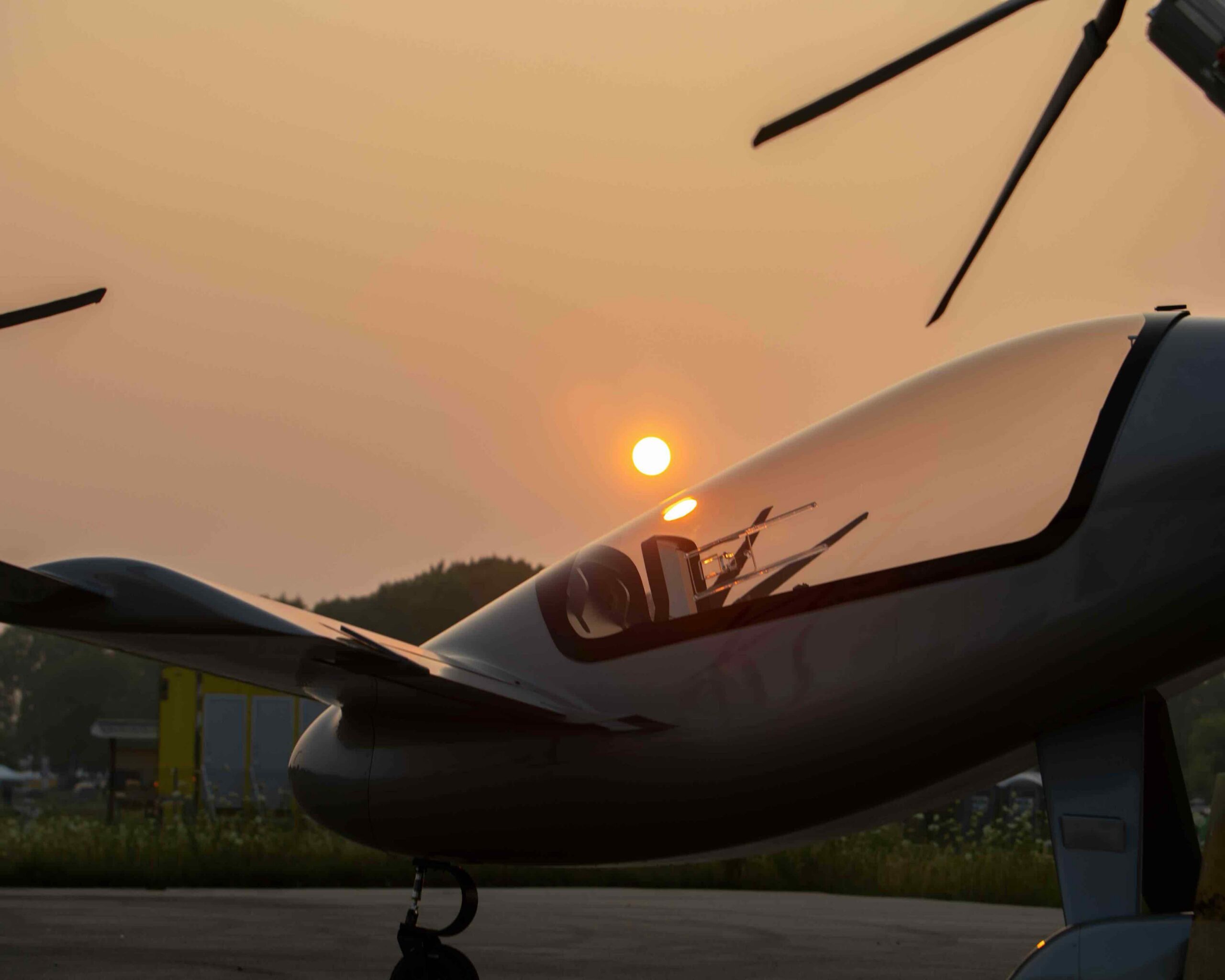
Crucially, the updated regulatory language explicitly accommodates modern innovations such as electric propulsion systems, configurations utilizing multiple motors, and aircraft capable of vertical takeoff and landing. By modernizing these standards, the framework creates a viable and legally defined certification path specifically tailored for aircraft designed for private ownership and recreation, rather than solely focusing on commercial passenger transport services.
Skyfly deliberately engineered the Axe from its inception to fit squarely within this newly minted regulatory niche. Michael Thompson, CEO of Skyfly Technologies, emphasized the importance of this regulatory evolution, noting that the FAA’s MOSAIC rules have effectively unlocked a route to market that simply did not exist for electric aircraft prior to their implementation, and that the Axe was purpose-built to thrive within this exact category. Even with these favorable regulatory adjustments, the company still faces the rigorous task of demonstrating full compliance with all applicable safety and performance requirements before any certified production aircraft can officially be handed over to buyers.
Combining Vertical Takeoff With Fixed-Wing Efficiency
At the core of Skyfly’s product offering is the Axe, an aircraft designed to blend the operational versatility of a helicopter with the aerodynamic efficiency of a traditional airplane. The design utilizes eight fixed-angle electric motors dedicated entirely to vertical takeoff and landing maneuvers. Once the aircraft successfully transitions into the air, its fixed wings take over to provide lift during forward flight, substantially reducing the continuous energy consumption required during the cruise phase.
Unlike many competing eVTOL designs that rely on complex moving transition mechanisms—such as tilting motors or rotating wings—the Axe intentionally avoids movable transition hardware. According to Skyfly, this minimalist, fixed-motor approach significantly simplifies the overall architecture of the aircraft, resulting in fewer mechanical failure points and a substantial reduction in ongoing maintenance requirements.
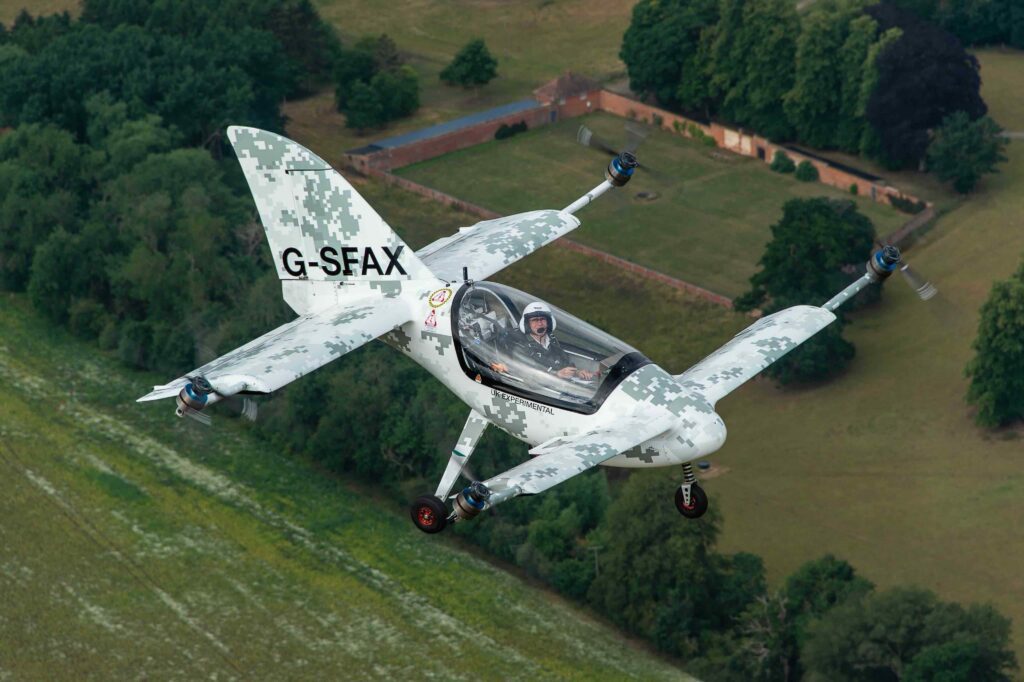
Performance specifications released by the company indicate that the Axe is capable of achieving a range exceeding 100 miles on a single charge, with a flight endurance window lasting between 60 and 90 minutes. The aircraft boasts a target cruise speed of approximately 100 miles per hour and features a stated payload capacity of 200 kilograms. Additionally, Skyfly estimates that the direct operating costs for the Axe will hover around $90 per flight hour, a figure that sits considerably lower than the operating expenses associated with many conventional light aircraft. However, industry observers note that these performance and cost figures remain company projections rather than independently verified operating results.
Versatility remains a key selling point for the design. The Axe possesses the ability to execute vertical takeoffs and landings without the need for a traditional runway, making it suitable for private properties or decentralized landing sites. Simultaneously, it retains the capability to utilize conventional runways whenever they are available to the pilot. Skyfly has actively showcased these capabilities on the global stage, demonstrating the prototype at the prestigious EAA AirVenture Oshkosh fly-ins in both 2025 and 2026, alongside completing a notable airfield-to-airfield eVTOL flight in Europe.
Technology Also Targets Unmanned Defense Missions
Beyond the consumer aviation market, Skyfly is actively leveraging its core electric and hybrid-electric aircraft architecture to penetrate the defense and government sectors. The company is currently developing the Longbow, an uncrewed aerial system (UAS) designed to serve military and official agency clients with heavy-lift logistical needs.
The Longbow concept aims to achieve a range exceeding 400 miles while matching the Axe’s 200-kilogram payload capacity. Proposed operational applications for the uncrewed platform include critical defense missions such as tactical cargo resupply, intelligence, surveillance, and reconnaissance (ISR), medical evacuation operations, and complex ship-to-shore logistics. In pursuit of these defense applications, Skyfly confirmed that it has joined the UK Ministry of Defence’s competitive heavy-lift challenge.
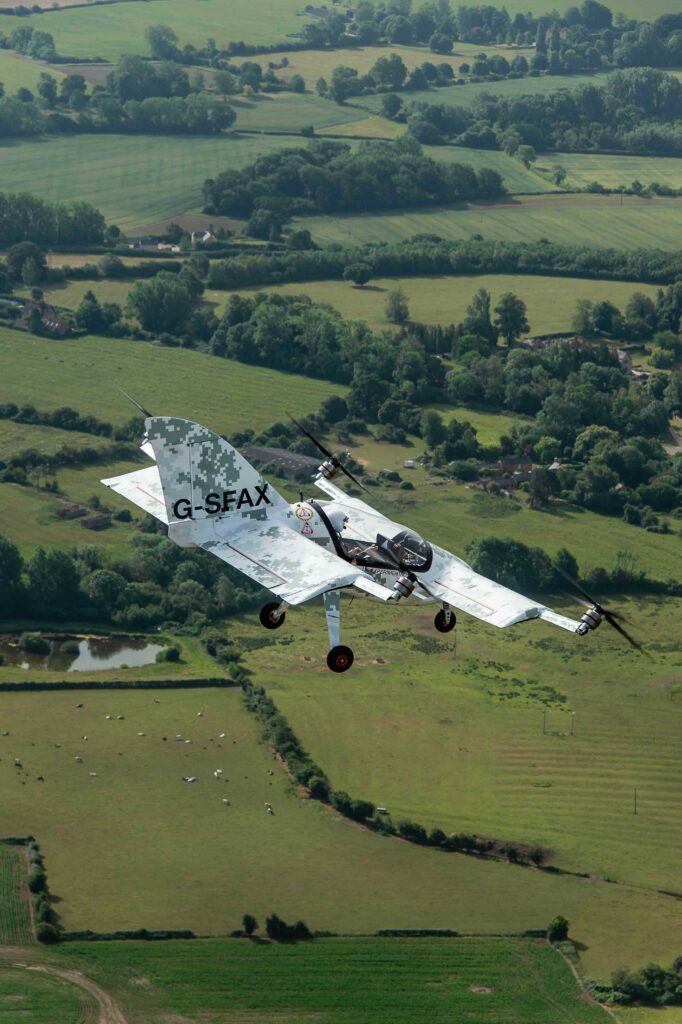
Nicholas Nelson, General Partner at Archangel Ventures, highlighted the strategic value of this defense pivot, noting that the Longbow addresses a distinct and growing requirement for unmanned systems capable of moving meaningful payloads over significant distances without depending on vulnerable or congested runways. Despite this active development, the Longbow remains in the research and development phase, with the company having announced no definitive delivery schedule for military customers.
From Prototype to Customer Deliveries
Operating out of its dedicated 10,000-square-foot manufacturing and assembly facility in the United Kingdom, Skyfly is utilizing its latest capital injection to ramp up production capabilities and continue the refinement of its hybrid-electric propulsion technologies. The Axe represents a clear divergence from the prevailing industry consensus that prioritizes commercial air taxi fleets, choosing instead to champion the revival of personal vertical flight for individual aviators.
Ultimately, the commercial viability and widespread adoption of the Axe will depend on a multitude of evolving factors, including successful regulatory certification, actualized operating costs, pilot training requirements, and sustained market demand. For the time being, however, the successful $10 million seed funding round equips Skyfly with the necessary financial runway to transition out of the prototype testing phase and move decisively toward its scheduled customer deliveries in 2027.