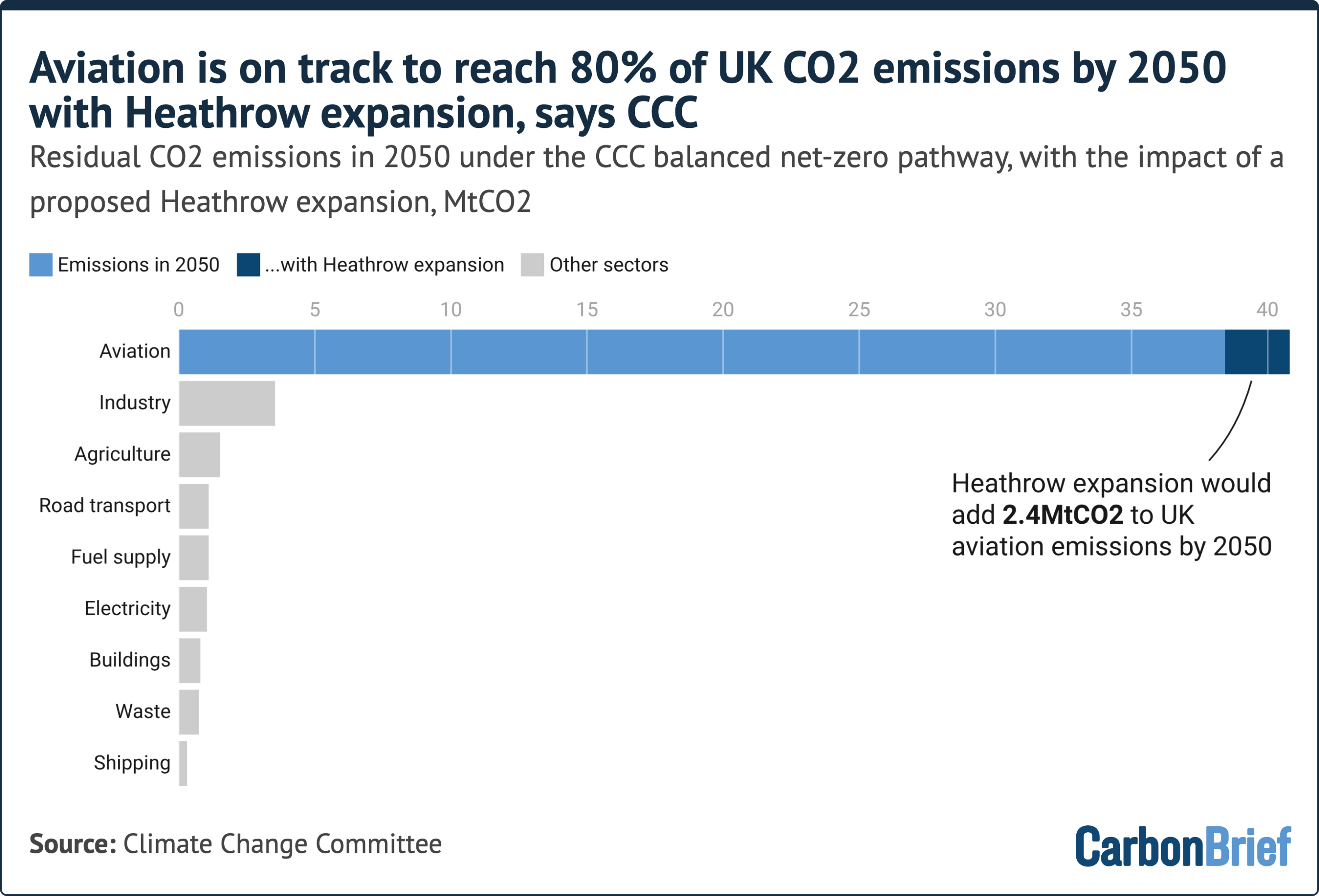
Aviation is on track to be responsible for a staggering 80% of the United Kingdom’s carbon dioxide emissions by the middle of the century, according to sharp new warnings from the Climate Change Committee (CCC).
While nearly every other sector of the UK economy has successfully curtailed its carbon footprint over recent decades, greenhouse gas emissions stemming from commercial flights have more than doubled since 1990. This dramatic surge has been fueled primarily by rising passenger numbers and an expanding appetite for global travel. Despite this worrying trajectory, the UK currently lacks credible, robust policy mechanisms to reverse the course, putting the nation’s legally binding climate commitments in severe jeopardy.
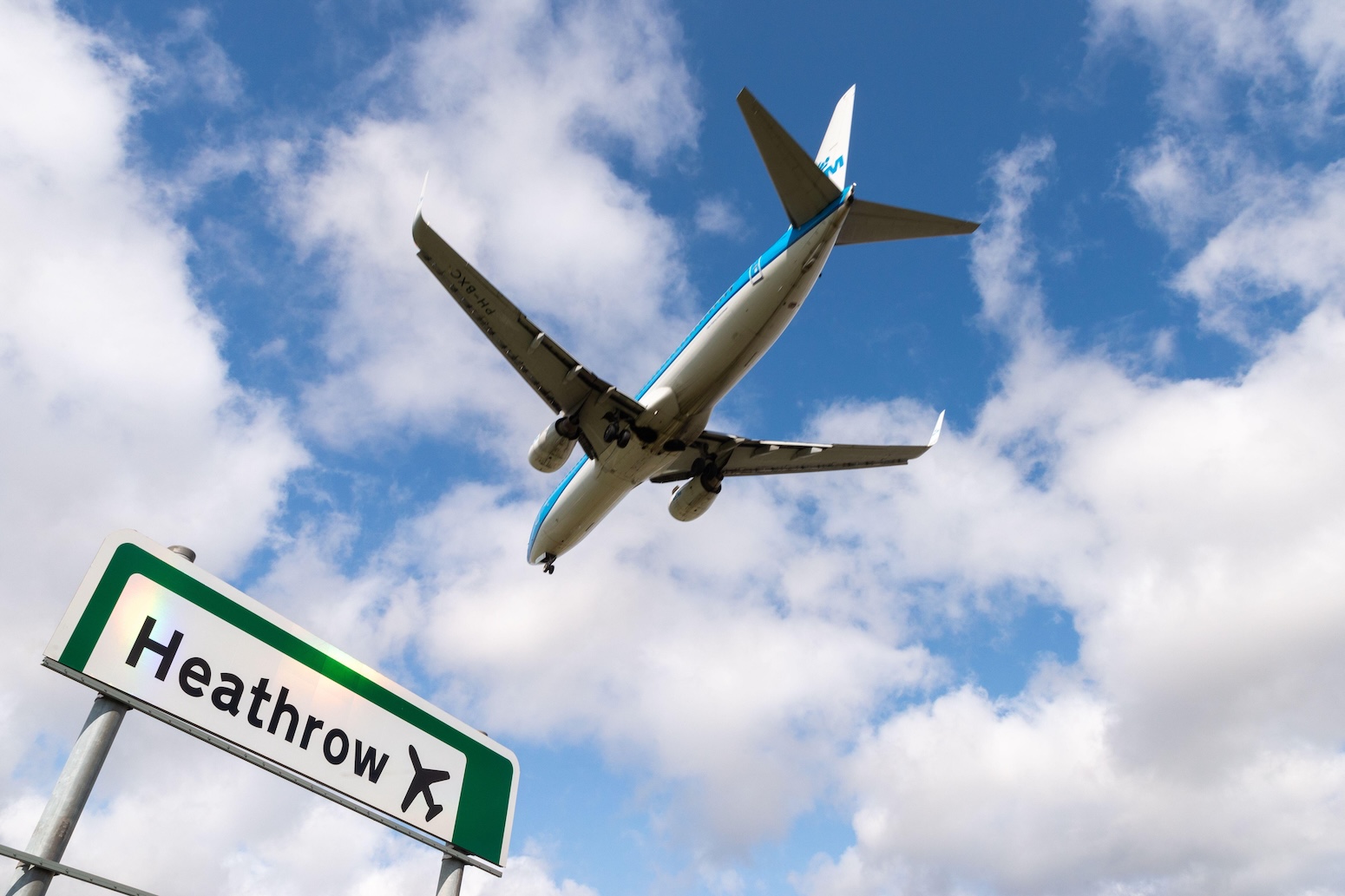
The findings form the core of a new advisory report delivered by the CCC to the government regarding future aviation policy, arriving as ministers weigh a final decision on the proposed expansion of Heathrow Airport—the nation’s largest aviation hub.
A Stark Contrast With the Wider Economy
The divergence between aviation and the rest of the UK economy highlights a profound policy blind spot. While sectors such as power generation, manufacturing, and domestic heating have achieved significant emissions reductions—bolstered by a transition away from coal and a growing reliance on renewable energy sources—flying has continued in the opposite direction.
According to the CCC, historical emissions from the sector have climbed steadily since baseline measurements began in 1990. Driven by the democratization of air travel, budget carriers, and an increasingly interconnected global economy, passenger volumes have broken historic records even amid intermittent geopolitical disruptions in regions like the Middle East.
This relentless upward trend has put the industry on a collision course with the UK’s climate laws. Under current projections, and even before factoring in any major airport expansion, the aviation sector is expected to pump out roughly 38 million tonnes of CO2 (MtCO2) annually by 2050.
To put that figure into perspective, under the CCC’s balanced net-zero pathway, 38 million tonnes would account for the vast majority of all remaining, residual CO2 left across the entire UK economy. Under legal mandates, any residual carbon emissions produced across the country must be completely removed from the atmosphere to achieve net-zero balance. Aviation alone threatens to consume almost the entire national carbon budget.
The Heathrow Expansion Dilemma
The challenge facing policymakers is sharply underscored by the ongoing debate surrounding Heathrow Airport. The government has previously signaled strong political support for expanding London’s primary aviation hub, aiming to boost international trade and connectivity.
However, the CCC’s analysis indicates that expanding Heathrow would only compound an already critical structural problem. The committee estimates that the expansion project would directly add another 2.4MtCO2 to the nation’s ledger by 2050, a figure that would rise to 4.5MtCO2 once the construction and full operational capacity are completed by 2054. That single infrastructure project would account for approximately 5% of the UK’s entire permissible carbon output at mid-century.
With a final, formal government decision on the Heathrow expansion expected by 2029, ministers turned to the independent advisory body to evaluate whether the project is fundamentally compatible with the UK’s statutory climate targets.
The CCC’s conclusion is unequivocal: the UK lacks sufficient policies to reduce aviation emissions, and pushing forward with Heathrow under the current framework is a direct threat to national climate goals.
During a recent press briefing with journalists, CCC chair Nigel Topping delivered a blunt assessment of the situation. "The UK does not currently have a credible plan to reduce aviation emissions in line with net-zero, so that creates a serious challenge for meeting our climate commitments," Topping said.
The Myth of Easy Techno-Fixes
For years, successive administrations have leaned heavily on unproven technological solutions—often referred to by critics as "techno-fixes"—to justify continuous growth in aviation without enforcing strict caps on demand.
The previous Conservative government launched the "jet-zero strategy" in 2022, which laid out an ambitious roadmap for cutting aviation emissions primarily through anticipated leaps in fuel efficiency, the rapid adoption of electric or hydrogen-powered aircraft, and the large-scale deployment of sustainable aviation fuels (SAFs).
However, the current Labour government has since acknowledged that the original assumptions underpinning the jet-zero strategy were overly optimistic. Expectations that SAFs and radical aircraft engineering would decarbonize the skies quickly enough have proven unrealistic. Analysis indicates that the carbon-reduction benefits expected from sustainable aviation fuels risk being completely wiped out by the sheer, unbridled growth in passenger demand.
Consequently, the CCC is urging the government to overhaul its approach. The committee argues that a genuinely credible and robust net-zero policy framework must be established through a thoroughly revised aviation strategy, which is currently scheduled for 2027. Only once such a framework is legally codified and proven to work could any major infrastructure project, such as the Heathrow expansion, potentially be aligned with national climate goals.
The ‘Polluter Pays’ Principle and Engineered Removals
Central to the CCC’s recommendations is the insistence that the aviation sector must finally take direct financial responsibility for its environmental impact. The committee advocates for policies rooted firmly in the "polluter pays" principle, requiring airlines and aviation corporations to directly finance their own mitigation measures, including sustainable fuels and permanent carbon dioxide removal.
Specifically, the advisory body emphasizes that commercial flying will require funding for "engineered removal" technologies, such as direct air carbon capture and storage (DACCS). These industrial facilities pull CO2 directly out of the ambient air and lock it away permanently in geological formations underground.
While natural solutions—such as extensive tree planting and ecosystem restoration—are critical components of the UK’s overall climate strategy, the CCC notes that natural removals are largely earmarked to offset unavoidable, residual methane emissions originating from domestic livestock agriculture. Therefore, highly expensive, engineered carbon capture methods will be mandatory to mop up the literal trail of carbon left behind by commercial jetliners.
At present, direct air capture and similar engineered removal technologies are not yet commercially available at the vast scale that will be required by 2050. Relying on them as an uncosted safety net for the aviation industry represents a massive gamble.
Economic Realities and Ticket Prices
The CCC openly acknowledges that forcing airlines to pay the true environmental cost of decarbonization will inevitably cause financial ripples across the consumer market, most notably through significantly higher ticket prices.
To fund the necessary sustainable fuels and engineered carbon removals required to neutralize a flight’s carbon footprint, the committee estimates substantial price hikes by 2050. Measured in 2024 economic values, a standard return trip from the UK to Alicante, Spain, could see an increase of roughly £150. For long-haul routes, such as a return trip to New York, ticket prices could jump by around £400.
While such projections are likely to draw fierce pushback from travel associations and budget-conscious consumers, the CCC argues that shifting the financial burden onto passengers and airlines is vastly preferable to a public spending approach. Without industry-internal pricing, taxpayers—roughly 50% of the UK population who do not fly in any given year—would end up indirectly subsidizing the carbon removal costs generated by those who do.
Furthermore, the committee suggests that higher, more realistic ticket prices could serve a dual purpose. By accurately reflecting the environmental cost of flying, increased fares would naturally help manage and temper runaway consumer demand for air travel, which would otherwise continue to surge unchecked over the coming decades.
As the government moves closer to a final decision on airport expansion and drafts its upcoming aviation strategy, the debate over how to balance economic connectivity with planetary boundaries remains one of the most contentious tests of the UK’s net-zero commitment.