Amprius Technologies has secured a landmark federal grant of up to $75 million to significantly scale up its domestic production of advanced high-energy-density batteries tailored specifically for unmanned aerial systems (UAS). The funding, awarded by the U.S. Department of War through its Industrial Base Analysis and Sustainment program, represents a major milestone in strengthening national defense manufacturing capabilities and securing critical supply chains for domestic defense technologies.
The substantial federal investment will be directed toward converting an existing U.S. electric vehicle (EV) battery production line into a high-volume manufacturing hub. Specifically, Amprius plans to reconfigure a production line currently operated by a major South Korean battery manufacturer on U.S. soil. This strategic collaboration aims to leverage the advanced manufacturing prowess of its international partner alongside Amprius’s proprietary battery technology to meet rapidly growing defense demands.
The overall project is projected to cost approximately $100 million in total. This figure accounts for the federal grant as well as significant in-kind investments contributed by both Amprius and its manufacturing partner, demonstrating a robust public-private commitment to establishing a secure, resilient domestic industrial base for uncrewed aviation.
Building U.S. Capacity for Drone Batteries
Under the current timeline, Amprius expects the newly converted production line to achieve an impressive manufacturing capacity of 12 million high-performance cells per year. The company anticipates completing the facility conversion and bringing the line online by early 2028.
The primary objective of these high-energy-density cells is to directly meet stringent domestic sourcing requirements mandated under the National Defense Authorization Act (NDAA). By establishing a reliable, large-scale domestic source of batteries, the project aims to free defense drone manufacturers from heavy reliance on foreign supply chains, ensuring that critical unmanned systems deployed by the military are built with secure, domestically sourced components.
"This DoW grant is intended to establish a primary source of domestic, NDAA-compliant battery production," said Amprius CEO Tom Stepien, highlighting the strategic significance of the award. "Our technology, combined with the U.S. manufacturing prowess of our South Korean manufacturing partner, positions us to accelerate adoption of standardized, high-performance pouch cells in a fast-growing market."
Once fully operational, this new domestic manufacturing capacity will seamlessly integrate into and expand Amprius’s broader global manufacturing network, which currently spans operations in the United States, South Korea, and China.
The Technological Edge in High-Endurance Aviation
Amprius specializes in the development and manufacturing of silicon-anode lithium-ion batteries designed for high-demand applications across aviation, defense, and advanced mobility sectors. Compared to conventional graphite-based cells that dominate standard commercial electronics and older EV architectures, Amprius’s proprietary silicon-anode technology delivers a much higher energy density, allowing batteries to store significantly more power without a proportional increase in weight or volume.
This technological advantage is particularly crucial for the defense sector, where flight duration, payload capacity, and operational reliability are paramount. The federal grant specifically targets the production of cells optimized for Group 1, 2, and 3 drones—categories that encompass small, portable reconnaissance units up to larger, tactical tactical-grade unmanned aircraft used extensively for surveillance, intelligence gathering, and specialized missions.
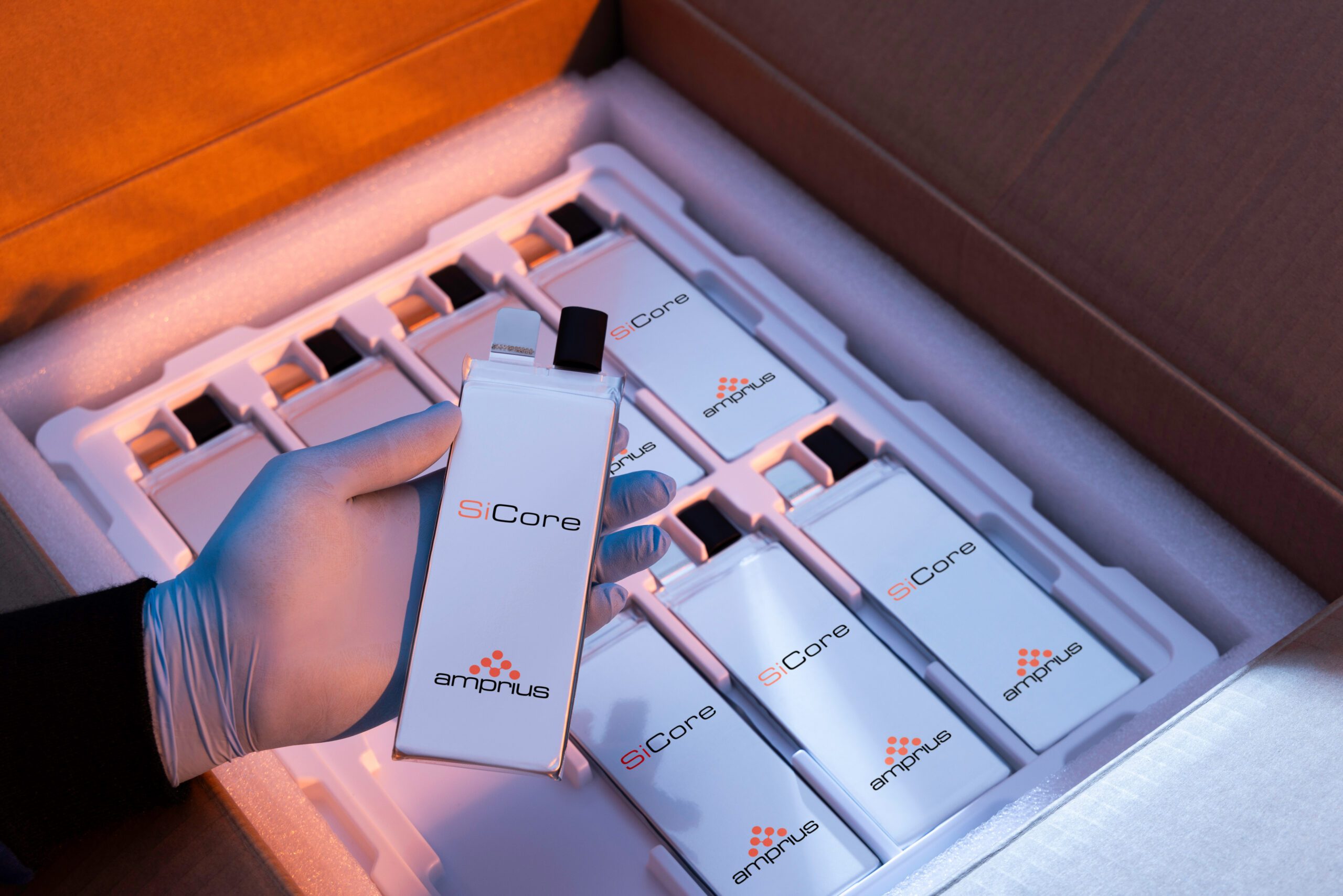
The federal award follows closely on the heels of other major technological advancements for the company. Earlier this month, Amprius introduced its second-generation SiCore cell, engineered specifically to support long-endurance aviation missions. According to the company, this advanced cell achieves an exceptional energy density of 500 Wh/kg while utilizing conventional lithium-ion manufacturing equipment, proving that high-performance cells can be produced at scale using existing industrial footprints.
As geopolitical and regulatory pressures mount, the latest federal award underscores a broader shift in defense procurement priorities. Beyond raw battery performance and raw energy capacity, the physical location, security, and scale of component production have become critical metrics for defense contractors. The strict compliance mandates enforced by the NDAA have placed a premium on domestic sourcing, making secure manufacturing infrastructure just as important as the chemistry inside the cells.
If the project proceeds according to schedule and is completed by 2028, the converted production line will provide Amprius with a massive influx of domestic manufacturing power. By supplying high-energy-density pouch cells directly to small and medium-sized unmanned aircraft manufacturers within the United States, the initiative will play a vital role in fortifying the technological readiness and operational independence of the nation’s defense drone fleet.