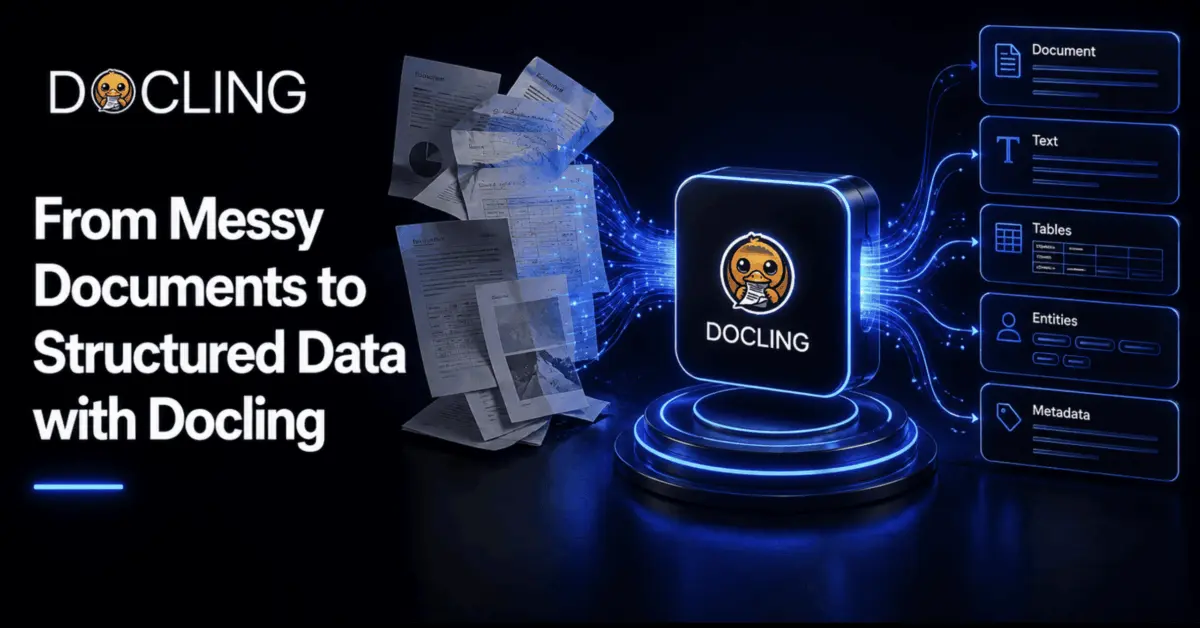
Somewhere on a shared drive right now, a professional is staring down a hundred-page PDF report, searching desperately for three specific figures. They open the document, locate the necessary table, and attempt to copy and paste it into a spreadsheet. Instantly, every row collapses into a single, unreadable cell. Faced with hours of manual re-entry, they abandon the automated approach and begin transcribing row by row, because writing a custom parser for a single document simply costs more time than it is worth.
This precise, recurring administrative friction is what the open-source toolkit Docling was designed to eliminate. Rather than relying on documents to become cleaner on their own, the software offers a dependable method for converting chaotic files—ranging from scanned invoices and multi-column research papers to PowerPoint presentations—into structured, program-ready data. Developed initially within the AI for Knowledge team at IBM Research Zurich, Docling has evolved into one of the most actively maintained document-processing projects in the open-source ecosystem, now hosted under the LF AI & Data Foundation and released under an MIT license.
What Docling Actually Is and How It Works
At its core, Docling is an open-source toolkit designed to bridge the gap between unstructured human-readable documents and machine-readable data structures. The project has gained substantial traction in the developer community, boasting tens of thousands of stars and thousands of forks on GitHub, backed by formal technical documentation rather than mere marketing materials.
In practice, Docling ingests documents across an extensive array of inconsistent formats and translates them into a unified, structured representation. This allows both human operators and downstream artificial intelligence systems to work with the content reliably, bypassing the traditional guesswork associated with parsing walls of unstructured text.
The fundamental challenge of document processing goes far beyond simple annoyance. Standard PDF files, for instance, possess no inherent concept of paragraphs, headings, or tables. Instead, they consist merely of text strings positioned at specific coordinate points on a page. When a basic text extractor reads these coordinates from left to right and top to bottom, a standard two-column academic paper is instantly scrambled, merging a sentence from the first column with an unrelated line from the second. Tables suffer a similar fate, losing their cell boundaries and turning into continuous blocks of numbers that strip away contextual row and column relationships.
Scanned documents introduce an entirely separate layer of complexity, requiring optical character recognition engines to interpret pixels and infer characters before any text extraction can even begin. Meanwhile, repeating headers and footers pollute the actual body content, while formulas, code blocks, and figure captions demand specialized handling to prevent them from being silently dropped or degraded into background noise. Docling addresses these challenges directly through dedicated layout analysis, reading-order reconstruction, and table structure detection pipelines.
Expanding Document Capabilities and Pipeline Integration
The scope of Docling extends significantly beyond basic text extraction, covering a comprehensive matrix of import, export, and extraction capabilities. Supported input formats include standard document types such as PDFs, Word documents, PowerPoint presentations, Markdown files, HTML, AsciiDoc, WebVTT, spreadsheets, comma-separated values, and various image formats including PNG, JPEG, TIFF, BMP, and WebP, alongside audio files like MP3 and WAV. Output options span JSON, Doctags, Markdown, HTML, and plain text.
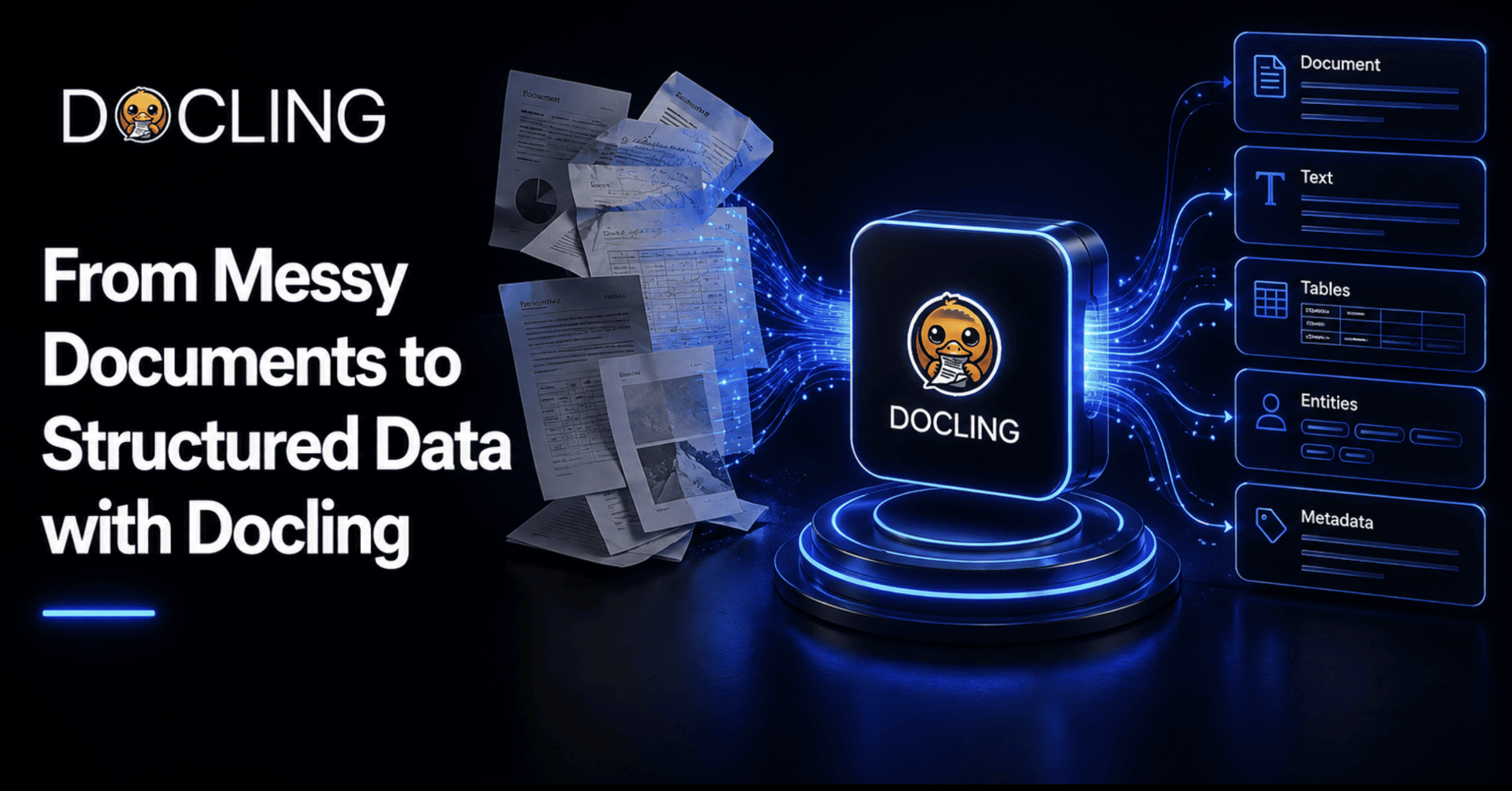
What separates advanced toolkits from simple text extractors is the ability to identify semantic components—such as captions, list items, and table cells—and preserve their interrelationships. By running its core models locally by default, Docling allows users to process sensitive materials like contracts, medical records, and internal financial reports without transmitting data to external servers or requiring internet connectivity.
Once a document is processed into its unified internal structure, exporting it into the format required by a downstream system becomes straightforward. Markdown serves as a natural choice when output is destined for large language models or retrieval-augmented generation pipelines due to its compact nature and widespread model training. JSON provides a lossless, structured alternative when programmatic systems need to query specific document fields, while HTML preserves visual formatting for human review.
For more complex documents, such as scanned pages lacking an embedded text layer, the platform integrates optical character recognition directly into its processing pipeline. Simultaneously, table structure detection algorithms reconstruct multi-level headers, rows, and columns, accurately interpreting complex cell contents rather than flattening them into unformatted text blobs.
Applications in Retrieval-Augmented Generation and Structured Extraction
In the context of artificial intelligence pipelines and retrieval-augmented generation systems, document chunking presents a notorious hurdle. Naive character-count splitters frequently divide sentences in half or separate table headers from their underlying data, severely degrading retrieval quality. Docling utilizes a hybrid chunker that relies on the document’s actual structural tree rather than arbitrary character counts, applying tokenizer-aware refinements to split oversized sections or merge adjacent fragments that share common headings.
Beyond general text retrieval, the toolkit facilitates schema-based structured extraction. By defining a schema through dictionaries or Pydantic models, developers can retrieve validated, typed data rather than raw text strings requiring manual parsing. This capability extends to nested data models, allowing systems to extract complex relationships—such as sender and receiver details within corporate invoices—and convert them directly into robust, type-checked Python objects equipped with native IDE autocomplete and validation support.
In production environments, Docling integrates smoothly with established orchestration frameworks including LangChain, LlamaIndex, and Haystack, allowing it to function as a drop-in document loader. For agent-based workflows, a Model Context Protocol server enables artificial intelligence agents to invoke conversion and extraction capabilities directly as operational tools. Organizations preferring managed infrastructure can utilize self-hosted REST API deployments through Docling Serve or leverage enterprise software-as-a-service offerings through platforms like IBM watsonx.
As the project continues to evolve under active development, ongoing roadmap items point toward automated metadata extraction and complex chemical structure understanding. Meanwhile, processing resource requirements scale naturally with document complexity, making hardware acceleration a practical consideration for high-volume enterprise deployments. Ultimately, the transition from unreadable document formats to dependable, structured data represents a foundational shift for organizations seeking to automate document workflows and integrate unstructured information directly into reliable software applications.