In January 2025, job listings on Indeed for a "forward deployed engineer" barely registered. By April 2026, however, postings for the title had skyrocketed to roughly 5,230% above that early baseline, marking an astonishing 729% increase over the course of a single year. At the same time, major industry players poured billions of dollars into specialized ventures built entirely around the concept, signaling a profound shift in how artificial intelligence is being implemented across the corporate landscape.
This explosive growth follows a trajectory that had already begun flashing warning signs of high demand months prior. According to data analysis from Indeed and the Financial Times, monthly job listings for forward deployed engineers surged by more than 800% between January and September 2025. This surge stands in sharp contrast to the broader software development sector, where overall job postings on Indeed continue to hover well below pre-pandemic levels, sitting at roughly 74.4 on an index where February 2020 serves as the 100 baseline.
Such meteoric growth naturally invites a broader industry question: is the forward deployed engineer a lasting career pillar, or is the title merely the latest iteration of a temporary hype cycle? Current market dynamics suggest the answer lies somewhere in the middle. The primary bottleneck in artificial intelligence has decisively shifted away from merely building foundational models and toward actually deploying them. The forward deployed engineer is the role that has evolved directly within that execution gap. While the specific job title may eventually splinter or fade, the core skill set it represents is here to stay.
What a Forward Deployed Engineer Actually Is
To understand the phenomenon, it helps to examine what a forward deployed engineer—commonly referred to as an FDE—actually does on a day-to-day basis. Unlike traditional software engineers who operate from a central corporate office or remote desks, an FDE embeds directly with a customer. They work from inside the customer’s proprietary systems and data environments to build production-ready solutions on-site. An FDE owns a tangible operational outcome, not just a slide deck, a prototype, or a preliminary statement of work.
The roots of the role trace back to Palantir, a company known for sending engineers "forward" to client sites rather than developing software in a vacuum at headquarters. For many years, critics dismissed this delivery model as little more than a consulting shop dressed up in software clothing. However, executives like Ted Mabrey, Palantir’s head of global commercial, have argued that this methodology gave the firm a critical two-decade head start in building software natively aligned with actual customer needs.
The financial results help explain why other technology giants are now eager to replicate the model. Palantir reported an impressive 85% gross margin for the second quarter of 2026, up from 81% during the same period a year earlier.
A defining characteristic of a true forward deployed engineer is whether the insights gathered on-site directly influence what the parent company builds next. Without that crucial feedback loop, the role collapses back into conventional IT consulting. Nor is it a sales position; analysis of roughly 1,000 FDE job postings by research platforms indicates that none of these roles carry sales quotas. Their primary objective is achieving a functional outcome in production, relying heavily on writing actual code rather than building sales demos, while systematically feeding lessons learned back into the core product roadmap.
The Last-Mile Problem: Why Demand Exploded Now
As frontier artificial intelligence models continue to improve, they are also rapidly converging in capability. When multiple competing labs can offer comparable baseline performance, market differentiation shifts elsewhere—specifically to whoever can successfully integrate a model so that it functions seamlessly within the messy reality of a legacy enterprise. The rest of the AI industry has effectively hit the exact same wall that Palantir encountered two decades ago: while the underlying technology is remarkably capable, bridging the final mile into corporate infrastructure remains exceptionally difficult.
This last-mile hurdle rarely stems from limitations within the AI models themselves. Instead, integration failures typically happen within the complex plumbing surrounding them. A pilot project that looked exceptionally promising inside a controlled data notebook frequently stalls when engineers discover that the required data sits locked inside a legacy warehouse, protected by strict permissions that nobody on the project team has the authority to grant. Alternatively, a project can stall simply because stakeholders failed to agree on what constitutes a successful output for their specific business tasks, leaving every department head to judge a live demo by whatever arbitrary answer happened to appear last.
Integration bottlenecks kill countless AI pilots. A retrieval pipeline that cannot read a company’s internal ticketing system, or an autonomous agent whose toolset fails to match how human teams actually work, might be technically impressive on paper, but it remains practically unused in the office. Compounding these technical hurdles are traditional organizational obstacles, such as ambiguous project ownership, skeptical department heads, or compliance reviews stuck indefinitely in an administrative queue.
Because commercial pressure demands time-to-value the moment a contract is signed rather than when data eventually gets cleaned, these are urgent operational problems. They cannot be solved by theoretical research; they require hands-on engineering that must take place on-site, executed by practitioners possessing enough system context to spot the flaws and enough technical depth to fix them on the spot. The forward deployed engineer is that precise specialist—an engineer in the room capable of prototyping, debugging, and shipping code immediately, while relaying those hard-earned lessons back to the core product team.
The Capital Behind the Bets From Frontier Labs
While recruiter enthusiasm can fluctuate, the definitive proof of a lasting industry shift is found in where strategic capital has flowed throughout 2026. Major frontier labs have backed their belief in the deployment model with billions of dollars in funding and newly formed corporate structures.
OpenAI launched the OpenAI Deployment Company, backed by more than $4 billion from 19 institutional investors, organizing its operations entirely around forward deployed engineers embedded directly with corporate clients. Its acquisition of the specialized consultancy Tomoro brought roughly 150 FDEs and deployment specialists onto its roster on day one. OpenAI continues to hire FDEs directly, offering competitive compensation packages featuring strong base salaries alongside equity.
Competitor Anthropic made a similar strategic move by establishing a standalone enterprise AI services firm in partnership with major financial institutions including Blackstone, Hellman & Friedman, and Goldman Sachs. Industry reports valued that venture at $1.5 billion, targeting mid-sized organizations such as regional health systems and community banks by pairing applied AI engineers directly with clients. Meanwhile, Anthropic’s corporate careers portal continues to list forward deployed engineering tracks alongside applied AI architecture positions.
Other major enterprise software providers are following suit on a massive scale. Salesforce has committed to building a team of 1,000 forward deployed engineers dedicated to its Agentforce platform. Industry reports indicate that Amazon Web Services has established its own FDE organization, while Microsoft launched a dedicated commercial venture backed by billions in capital. Major players like Google Cloud, Databricks, and Adobe are actively recruiting under the FDE title or closely related designations, joined by a wave of specialized startups including Harvey, Sierra, Decagon, and Hebbia. Even traditional consulting firms like Deloitte have begun posting targeted listings for platform-specific forward deployed engineers, signaling that the demand has saturated both product companies and service providers alike.
Compensation and the Hiring Landscape
Salary figures for forward deployed engineers vary widely depending on the source, seniority, and specific compensation structure, but market data consistently points to lucrative packages. Industry job boards estimate average base salaries ranging from roughly $170,000 to over $190,000, with comprehensive analyses revealing that a significant majority of listings explicitly include equity components.
At the senior and principal levels, total compensation packages at frontier AI labs frequently range from $300,000 to upwards of $550,000, while staff-level positions at major AI organizations can command well over $1 million when stock options and bonuses are factored in. Even founding engineering roles at prominent startups offer substantial base pay paired with significant equity ownership.
Geographically, these roles heavily cluster within major technology hubs, though the distributed nature of modern enterprise clients means postings regularly span international business centers across North America and Europe. However, job seekers navigating the market face a fragmented naming convention. Analysts note that candidates who restrict their searches exclusively to the exact phrase "forward deployed engineer" routinely miss a substantial portion of the active market due to companies using variant titles like "applied AI engineer," "solutions architect," or "deployment engineer."
The Evolving Skills Profile
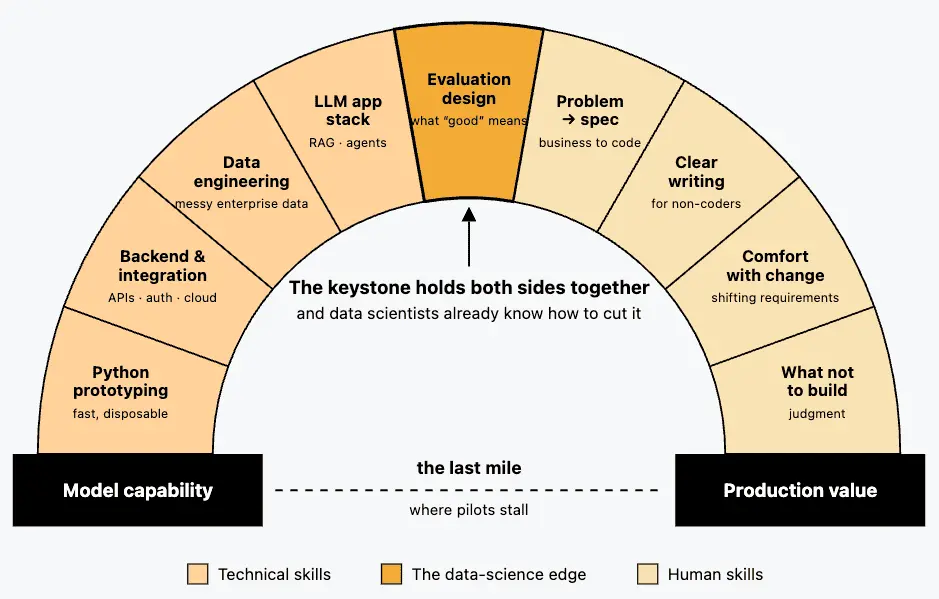
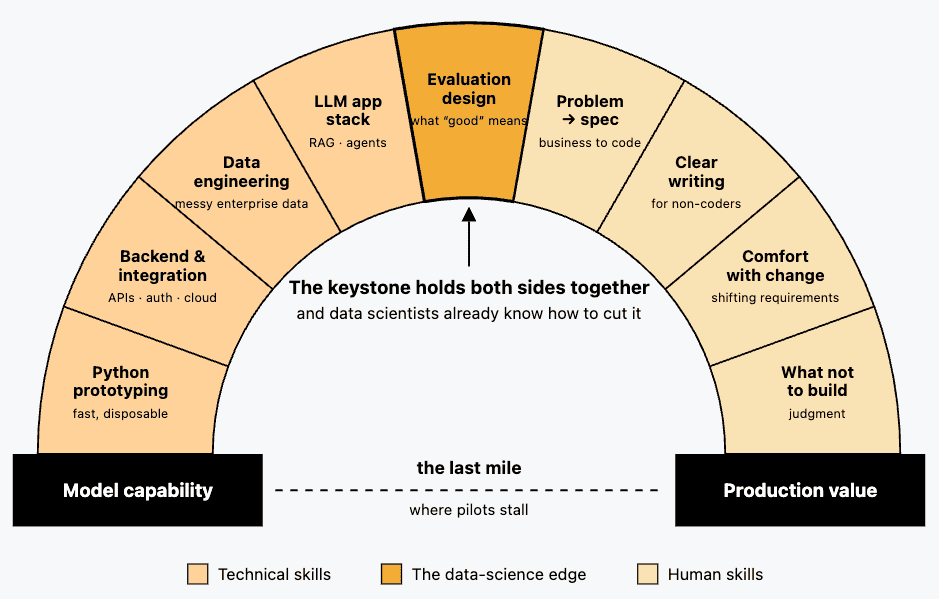
The technical profile required for a successful forward deployed engineer is broad rather than narrowly specialized. It centers around the modern large language model application stack, including retrieval-augmented generation, autonomous agents, tool integration, and advanced prompt engineering. Surrounding this core stack is a strong foundation in enterprise data engineering, backend development, API integration, authentication protocols, cloud deployment, observability tools, and rapid prototyping in Python.
However, non-technical competencies frequently determine who ultimately secures these high-paying positions. An effective FDE must possess high tolerance for shifting business requirements, the ability to translate ambiguous operational problems into precise technical specifications, and clear communication skills to brief stakeholders who may never inspect the underlying code. Interview processes at leading labs reflect these demands, often favoring candidates who can continuously articulate their reasoning out loud during complex problem-solving exercises rather than simply presenting a polished final algorithm in silence.
This multidisciplinary profile naturally attracts data scientists who already possess experience working alongside business stakeholders, machine learning engineers who prefer shipping products over conducting theoretical research, and backend systems engineers with strong interpersonal skills. Professionals looking to break into the field can build credibility through demonstrable proof of deployment—such as shipping an end-to-end language model application built on messy, real-world data and thoroughly documenting the evaluation methodology used to measure its success.
Skepticism and the Reality Check
Despite the undeniable surge in hiring and capital allocation, industry observers maintain a healthy degree of skepticism regarding the longevity and misuse of the title. Growth metrics, while impressive, vary significantly depending on the measurement baseline and the specific job board analyzing the data. While some platforms report explosive year-over-year gains in the thousands of percentage points, critics point out that these massive jumps are often calculated from very small initial baselines, representing a specialized market rather than an economy-wide transformation.
Another prominent concern is the risk of superficial re-labeling. Industry veterans have cautioned that traditional technology companies frequently rename existing solutions architects or IT consultants as forward deployed engineers without actually establishing the critical feedback loop that feeds customer insights back into the core product roadmap. When companies fail to implement this loop, the role deteriorates into standard billable-hour consulting, trading long-term gross margins for short-term services revenue.
Furthermore, the physical and professional toll on the engineers themselves can be severe. Positions at frontier labs frequently demand heavy travel schedules, constant context-switching between disparate client environments, and personal accountability for adoption metrics that an engineer cannot entirely control. These structural pressures introduce high risks of professional burnout, and spending years managing bespoke integration challenges can occasionally erode an engineer’s deep systems-level technical depth, complicating potential transitions back into core product development.
Conclusion
Whether the specific job title of the forward deployed engineer endures as a distinct industry category or eventually merges into broader designations like applied AI engineer, the underlying market need remains firmly entrenched. The fundamental challenge of transforming theoretical model capabilities into practical, revenue-generating production value inside complex, messy organizations will persist as long as AI capabilities outpace enterprise adoption rates. Every multi-billion-dollar deployment venture launched recently represents a calculated bet that this execution gap will take years to close.
For technology professionals, the forward deployed engineer represents a compelling career path that cultivates highly transferable skills, including deep technical versatility, sharp customer judgment, and an unvarnished view of how enterprise software projects succeed or fail in the real world. By carefully vetting prospective employers to ensure that insights gathered on the front lines genuinely influence product development rather than merely generating billable hours, engineers can secure one of the most strategic positions in the modern technology ecosystem.