As an unusually severe wildfire season continues to batter the western United States, wildland fire management agencies are sounding the alarm over a sharp and dangerous surge in unauthorized drone flights. These illicit uncrewed aircraft systems (UAS) are actively disrupting critical aerial firefighting missions, forcing emergency aircraft to ground repeatedly and threatening the safety of both flight crews and ground personnel.
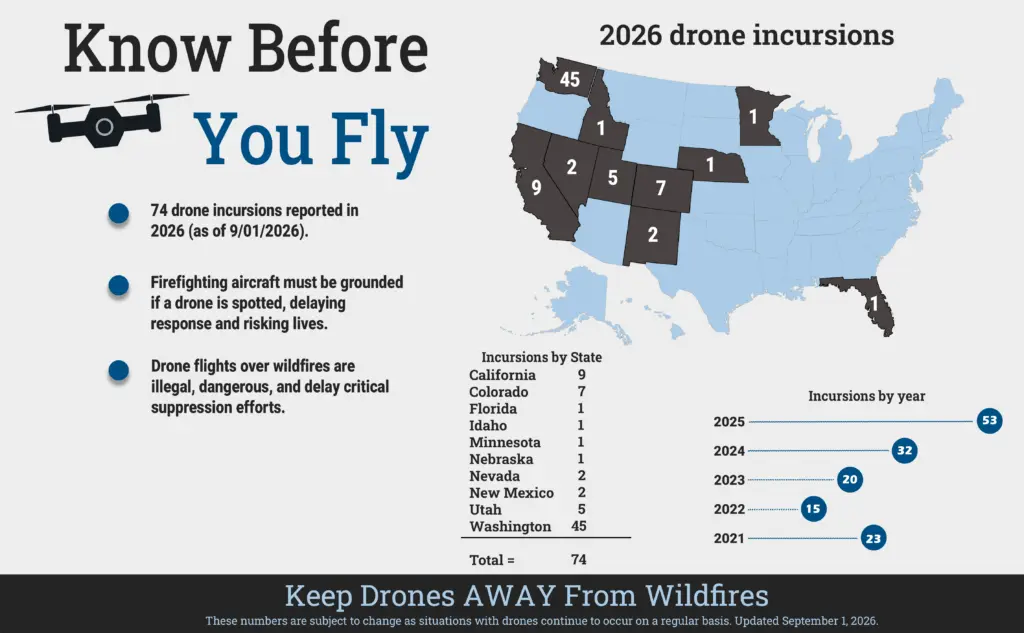
According to official data released by the U.S. Wildland Fire Service (WFS)—an agency operating under the U.S. Department of the Interior—a total of 74 drone incursions had been officially reported across the country as of September 1. This alarming figure represents a steep upward trajectory in unauthorized drone activity compared to previous years. During the same timeframe in 2025, authorities logged 53 incursions, while only 32 such incidents were documented in 2024.
The WFS formally defines an incursion as any non-participating UAS operating over or near an active fire incident that intrudes into a designated Temporary Flight Restriction (TFR) zone or otherwise interferes with ongoing emergency operations and mission execution.
The operational consequences of these breaches are immediate and severe. Interagency data compiled by the Aviation Safety Communiqué—which aggregates incursion statistics across the Department of the Interior, the U.S. Department of Agriculture (USDA) Forest Service, and various state-level jurisdictions—indicates that these unauthorized flights resulted in firefighting aircraft being forced to divert or ground their operations a staggering 78% of the time.
Geographically, the crisis has hit certain regions harder than others. The vast majority of the 2026 incursions—totalling 45 incidents—occurred in Washington state. Washington has experienced a particularly punishing fire season characterized by blazes aggressively encroaching upon highly urbanized areas, including the densely populated Spokane region. California recorded the second-highest number of reported incursions, with seven incidents.
Brad Koeckeritz, division chief for the WFS Uncrewed Aircraft Systems Division, emphasized that every instance of unauthorized drone activity carries far-reaching consequences for the broader firefighting strategy. When hobbyists or curious onlookers fly drones near active fire zones, emergency managers have no choice but to order heavy air tankers, scooper planes, and firefighting helicopters to land or divert to avoid catastrophic mid-air collisions.
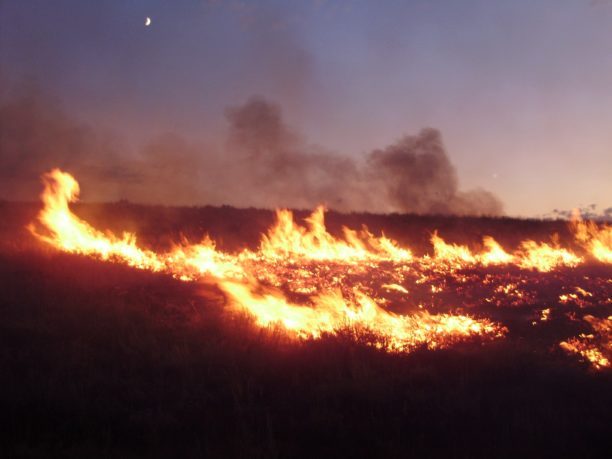
"When we don’t have air support, we’re less effective fighting the fire on the ground as well, because that air support is there directly to support the firefighters on the ground trying to stop the fire," Koeckeritz explained. "And if the aircraft can’t drop retardant or water or deliver logistical support, it’s going to make our overall firefighting effort less effective."
Koeckeritz pointed to two primary drivers behind the escalating trend: the surging popularity and affordability of small commercial and consumer drones, and the unfortunate convergence of large wildfires breaking out near densely populated urban interfaces.
Over the past several years, fire management officials have observed a clear pattern. When massive fires erupt near populated communities, a predictable cluster of unauthorized UAS activity inevitably follows as curious residents attempt to capture footage or inspect the damage.
"What we’ve seen over the past several years is when we get large fires that happen in the urban interface, we typically then see a cluster of UAS activity around those fires," Koeckeritz said. He noted that the heavy concentration of incursions in the Spokane area coincided with devastating blazes that ultimately destroyed approximately 650 homes and damaged more than 2,500 additional buildings.
"When you have more people, the probability of somebody having a drone increases because there’re just more people around. It’s fairly intuitive that we would have more people with drones on hand that could take off and go take a look at something they’re interested in looking at," Koeckeritz continued. "But, it’s an ongoing problem. Some years are better than others, but as more and more people have drones available to them it can drive the problem for sure."
In response to the growing threat, federal, state, and local firefighting organizations are forging a united front to combat illegal drone interference. Koeckeritz noted that wildland agencies have maintained an ongoing public education campaign for several years and are actively coordinating with partners at the Forest Service to develop enhanced messaging. Furthermore, agencies are stepping up coordination with federal law enforcement partners, including the Federal Bureau of Investigation (FBI) and the Federal Aviation Administration (FAA), to pursue aggressive enforcement actions against rule-breaking operators.
A critical component of this enforcement strategy involves equipping state and local law enforcement agencies with advanced technological tools. Some local jurisdictions have acquired specialized drone-detection capabilities, allowing authorities to pinpoint, track, and ultimately identify the operators responsible for unauthorized flights.
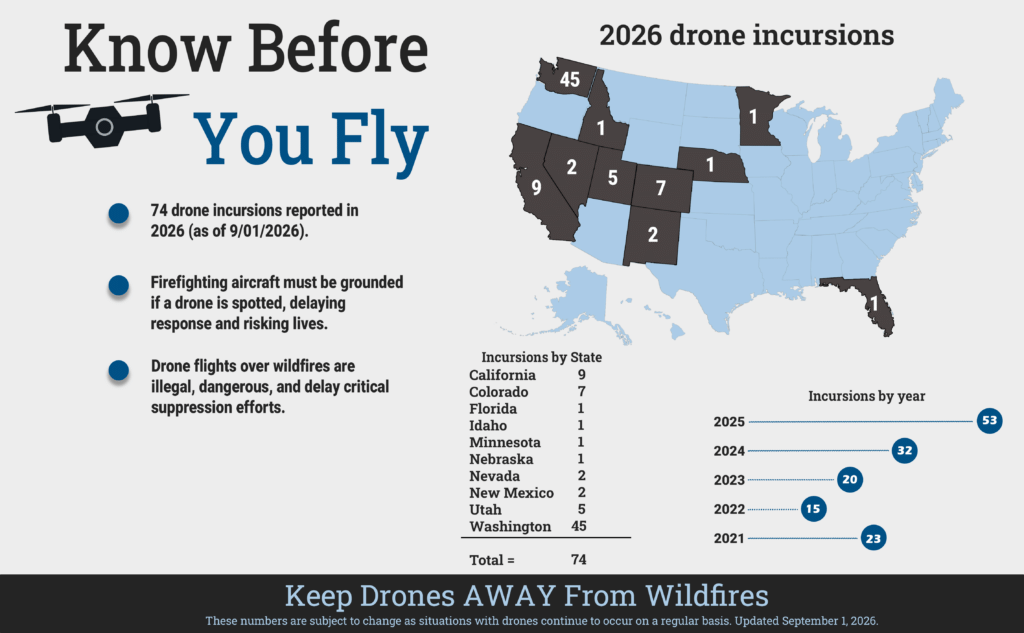
The real-world dangers of these unauthorized flights were underscored by an incident on June 29 near Beaver, Utah. During active firefighting operations at Face Canyon, a DJI Phantom 4 drone was detected flying illegally within a Temporary Flight Restriction zone. The intrusion forced aerial firefighting operations to come to a complete halt for approximately one hour.
Local authorities successfully traced the drone to its owner. Upon being contacted by law enforcement, the owner explained that his juvenile son had been operating the aircraft and was entirely unaware of the active fire-related TFR or the legal requirement to possess a commercial Remote Pilot Certificate under FAA Part 107 regulations. After explaining the severe risks that flying a UAS near a wildfire poses to firefighting personnel and mission aircraft, county officials seized the drone.
If You Fly, We Can’t
To combat public ignorance and mitigate the risk of aerial collisions, federal, state, and local wildland fire management agencies have partnered with the FAA for several years on the national "If you fly, we can’t" public awareness campaign. The campaign’s core message is simple: whenever a drone occupies restricted airspace near a wildland fire, firefighting agencies are forced to ground their aviation assets.
In an official statement, the FAA reiterated the strict legal boundaries governing emergency airspace. The agency explained that it routinely establishes Temporary Flight Restrictions during active emergencies precisely to protect the manned aircraft deployed in rescue and suppression operations. Unless specifically authorized by incident command, all other aircraft—including consumer and commercial drones—are strictly prohibited from operating within a TFR.
Interfering with firefighting efforts on public lands is classified as a serious federal crime, carrying harsh statutory penalties that include up to two years of imprisonment.
The FAA reviews all documented reports of unauthorized drone operations and launches formal investigations whenever warranted. Drone operators who engage in reckless or negligent operations that endanger aircraft or people on the ground face substantial civil penalties, including administrative fines of up to $75,000. Additionally, the FAA holds the authority to suspend or entirely revoke the pilot certificates of offending drone operators.