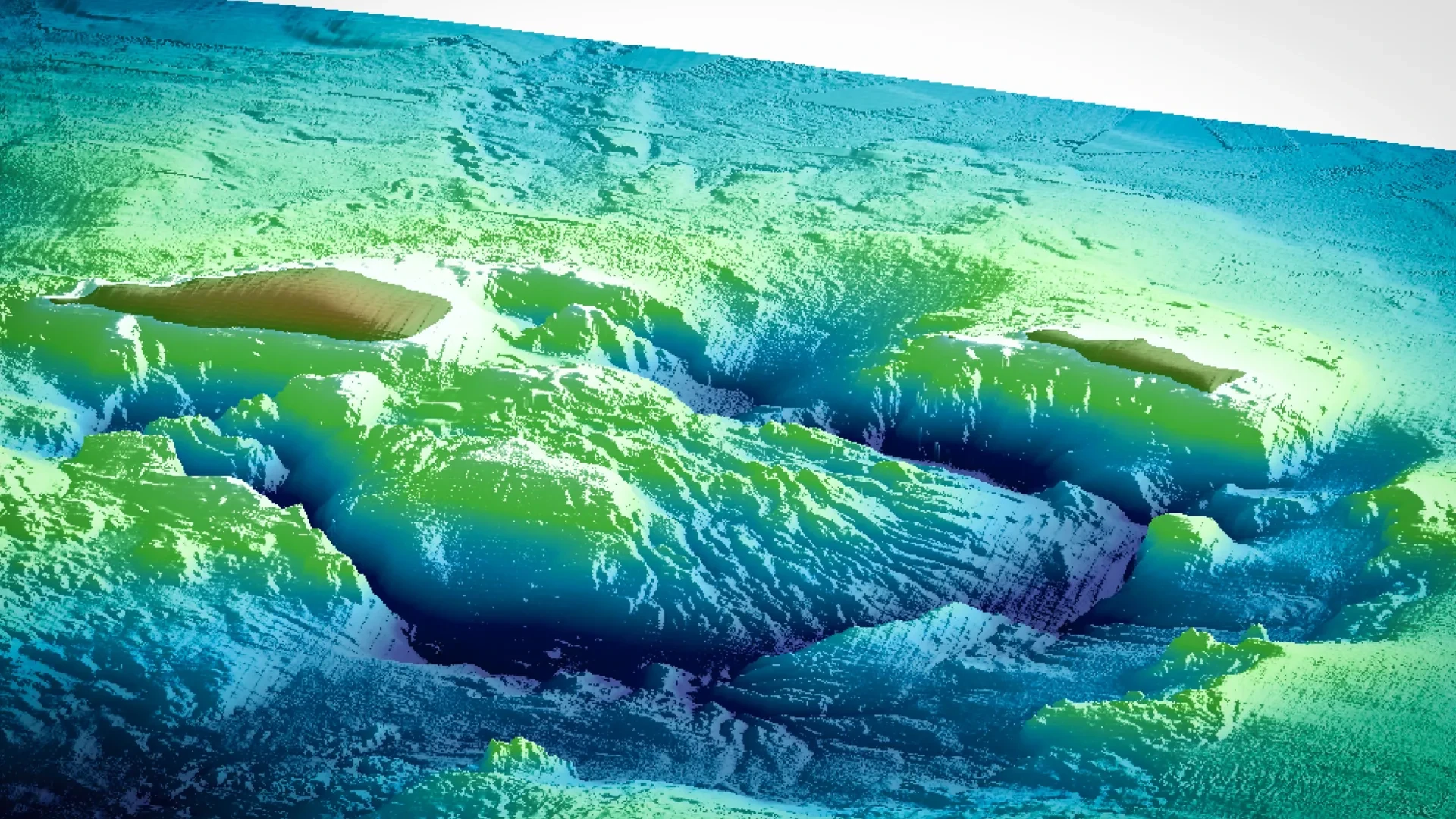
Thousands of years after unleashing one of the most cataclysmic volcanic events in recent geological history, one of Earth’s most formidable supervolcanoes is quietly stirring back to life beneath the ocean waves. Groundbreaking research conducted by scientists at Kobe University has uncovered definitive evidence that fresh, molten magma is slowly accumulating within a massive underground reservoir beneath Japan’s Kikai caldera.
The discovery, detailed in a study published in Communications Earth & Environment, offers volcanologists a rare and invaluable look at how giant volcanic systems manage to rebuild their colossal magma supplies long after a catastrophic emptying. By shedding light on the mechanics of sub-oceanic volcanism, the findings provide critical context for understanding the behavior of other notorious supervolcanoes around the globe—including Yellowstone in the United States and Toba in Indonesia—potentially helping researchers refine the warning signs that precede future eruptions.
How Supervolcanoes Store Enormous Amounts of Magma
To truly grasp the magnitude of the discovery at Kikai, scientists emphasize the sheer scale of supervolcanoes and the catastrophic nature of the events they produce. Certain volcanic eruptions are so immense that they fundamentally alter regional geographies, releasing staggering volumes of molten rock into the atmosphere and across the surrounding terrain. To put the scale into perspective, the amount of magma discharged during a single supervolcano eruption could easily bury New York City’s entire Central Park beneath a smoldering layer roughly 12 kilometers, or 7.5 miles, thick.
When such incomprehensible volumes of subterranean magma suddenly escape to the surface, the structural integrity of the Earth’s crust above the emptied chamber is compromised. Deprived of the upward pressure that once supported the overlying land, the bedrock collapses inward, leaving behind a massive, broad, and relatively shallow depression known as a caldera. These geological scars are intrinsically linked to the most powerful and destructive eruptions in our planet’s history.
Among the most famous examples of these giant caldera systems are Yellowstone in Wyoming, Lake Toba in Sumatra, and Japan’s Kikai caldera, a vast portion of which remains hidden beneath the Pacific Ocean south of Kyushu. Kikai last erupted catastrophically approximately 7,300 years ago, marking the largest known volcanic explosion of the Holocene epoch—the current geological period that began roughly 11,700 years ago and continues to the present day.
Despite knowing that giant caldera volcanoes are capable of experiencing recurrent major eruptions over vast stretches of geological time, researchers have long grappled with an incomplete understanding of how these systems manage to accumulate the colossal quantities of magma required to fuel such events. This knowledge gap has historically made it exceptionally difficult for seismologists and geophysicists to anticipate when or how another major eruption might eventually occur.
"We must understand how such large quantities of magma can accumulate to understand how giant caldera eruptions occur," emphasizes Kobe University geophysicist Nobukazu Seama, highlighting the fundamental challenge that has driven decades of volcanic research.
Scientists Discover a Massive Magma Reservoir Beneath Japan
Investigating a supervolcano that is largely submerged underwater presents unique logistical and technical hurdles, but Kikai’s marine environment ultimately turned out to be a distinct advantage for the research team. The surrounding open seafloor provides an uninterrupted expanse from which scientists can conduct extensive, systematic geological and geophysical surveys directly across the complex structure of the volcanic system.
"The underwater location allows us to implement systematic, large-scale surveys," notes Seama, explaining how marine methodologies bypass the obstructions commonly encountered when studying terrestrial volcanoes covered by dense vegetation or infrastructure.
To peer deep beneath the ocean floor at Kikai, researchers from Kobe University joined forces with colleagues at the Japan Agency for Marine-Earth Science and Technology (JAMSTEC). Together, the scientific collaboration deployed powerful marine airgun arrays capable of generating controlled seismic pulses. These energetic waves traveled downward, penetrating the layers of sediment and solid rock beneath the ocean floor.
To capture the echoes and transmissions of these subterranean waves, the team deployed a network of specialized instruments known as ocean bottom seismometers. Because seismic waves travel at markedly different speeds and encounter distinct resistances when moving through solid rock versus regions filled with molten or partially molten material, scientists can analyze the behavior of the recorded waves to map out geological structures that are otherwise entirely hidden from direct observation.
The resulting data analysis revealed a substantial, well-defined region containing a high proportion of molten rock situated directly beneath the focal point of Kikai’s ancient, catastrophic eruption 7,300 years ago. By rigorously examining the seismic measurements, the research team successfully mapped the approximate size, volume, and geometric configuration of the underground reservoir. The precise alignment, position, and sheer extent of the chamber strongly indicate that it occupies the exact same magma storage network that fueled the prehistoric disaster millennia ago.
"Due to its extent and location it is clear that this is in fact the same magma reservoir as in the previous eruption," Seama explains.
Fresh Magma Is Recharging the Ancient Supervolcano
Perhaps the most scientifically intriguing and unexpected aspect of the discovery is that the molten rock currently residing beneath Kikai does not consist merely of stagnant, cooling leftovers from the ancient cataclysm.
Earlier geological investigations had already established that a new lava dome has been actively developing near the center of the caldera over approximately the past 3,900 years. In volcanology, a lava dome forms when thick, highly viscous lava extrudes slowly from a volcanic vent and piles up around it, rather than flowing out across the landscape in fluid, expansive sheets.
Furthermore, detailed chemical analyses of volcanic materials harvested from this growing dome and associated recent activities revealed a distinct compositional signature. The chemical makeup of these newer materials differs noticeably from the remnants of the magma expelled during Kikai’s massive Holocene eruption.
This compositional discrepancy provides a vital forensic clue for researchers. It strongly implies that the magma currently harbored within the subterranean reservoir was not simply left behind to cool; rather, it has been continually supplied and refreshed by new injections of molten rock surging upward from deeper regions within the Earth’s crust or mantle.
"This means that the magma that is now present in the magma reservoir under the lava dome is likely newly injected magma," Seama summarizes.
Taken together, the high-resolution seismic observations and the telling chemical evidence allow researchers to piece together a much clearer, dynamic picture of how a giant volcanic system can systematically rebuild its underground reserves long after a devastating eruption has cleared the chambers.
Crucially, researchers stress that this ongoing replenishment process does not imply that another catastrophic super-eruption is imminent. Instead, the findings offer a rare window into the multi-thousand-year cycles of recharge that govern supervolcanoes—a fundamental biological and geological rhythm that scientists must fully comprehend before they can accurately assess the long-term behavior and hazards of these sleeping giants.
What the Discovery Could Reveal About Yellowstone
The implications of the Kobe University study extend far beyond the shores of Japan, offering a potential key to understanding similarly massive volcanic systems located across the globe. Researchers believe that the magma re-injection model identified beneath Kikai may help demystify why other enormous calderas—most notably Yellowstone in the United States and Toba in Indonesia—also maintain massive, shallow magma reservoirs relatively close to the Earth’s crustal surface.
"This magma re-injection model is consistent with the existence of large shallow magma reservoirs beneath other giant calderas like Yellowstone and Toba," Seama points out.
The proposed geological model suggests that following a major eruptive cycle, fresh batches of magma can steadily infiltrate and replenish existing plumbing systems deep underground. Unlocking the mechanics of how this replenishment operates could reveal critical, recurring patterns in the long-term lifecycles of magma accumulation, intermittent volcanic activity, and eventual catastrophic eruptions.
Armed with these insights, the research team now aims to refine the seismic techniques deployed at Kikai to monitor and investigate the movement, storage, and chemistry of magma in even greater detail.
"We want to refine the methods that have proved to be so useful in this study to more deeply understand the re-injection processes," Seama concludes. "Our ultimate goal is to become better able to monitor the crucial indicators of future giant eruptions."
By illuminating the hidden processes that allow fresh magma to gather beneath the site of one of Earth’s most extraordinary prehistoric eruptions, the research brings the scientific community one step closer to decoding the complex life cycle of the planet’s most powerful volcanic systems.
This research was funded by the Ministry of Education, Culture, Sports, Science and Technology (MEXT) under the Third Earthquake and Volcano Hazards Observation and Research Program (Earthquake and Volcano Hazard Reduction Research), alongside the Japan Society for the Promotion of Science under grant 20H00199. The study was conducted in close collaboration with researchers from the Japan Agency for Marine-Earth Science and Technology (JAMSTEC).