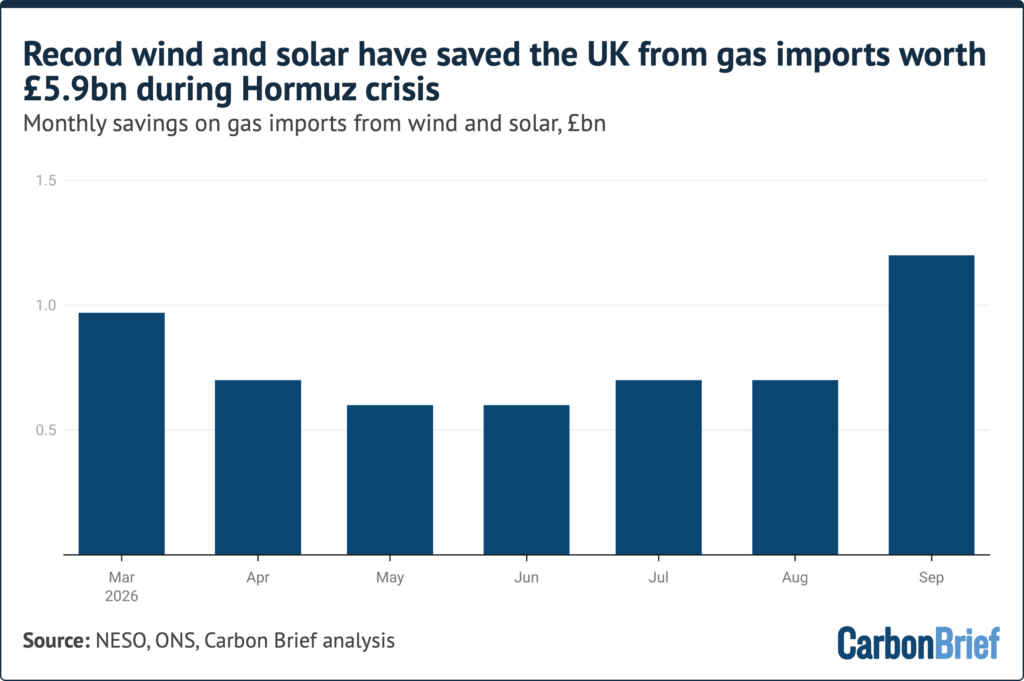
The United Kingdom has successfully avoided the need for natural gas imports worth an estimated £5.9bn since the outbreak of the Hormuz crisis, shielded by a historic surge in domestic generation from wind and solar power. New analysis published by Carbon Brief highlights how unprecedented levels of renewable energy generation have insulated the nation from volatile international markets, even as global energy prices climb to heights not witnessed since the 2022 European energy crisis.
While soaring geopolitical tensions have driven gas prices up significantly—triggering renewed financial strain across Europe and threatening household bills ahead of the winter months—the UK power sector has drastically reduced its reliance on fossil-fuel generation. Driven by favorable weather conditions and continued infrastructure deployment, wind and solar sources have experienced a 14% year-on-year increase in output so far in 2026.
This monumental growth in clean energy has directly displaced the demand for gas-fired electricity, which has dropped by nearly 10% year-on-year across 2026 to date. Overall, wind and solar have accounted for a record 41% share of the UK’s total electricity requirements this year, outpacing gas, which has contributed 25% over the same period.
According to Carbon Brief’s detailed energy metrics, the £5.9bn in avoided gas imports has accumulated continuously since the outbreak of military conflict between the US and Iran in February 2026. Had domestic renewables not stepped in to fill the supply gap, keeping the lights on would have required the UK to secure the energy equivalent of more than 100 additional liquefied natural gas (LNG) tanker deliveries from overseas markets.
The scale of these savings is underscored by recent monthly figures. In September 2026 alone, a combination of record wind and solar output—reaching nearly 10 terawatt-hours (TWh)—and spiking global commodity prices resulted in a single-month import saving of approximately £1.3bn. These findings update previous analyses published by Carbon Brief earlier in the year, which documented substantial milestones in March, April, and May as the geopolitical crisis unfolded.
Surging Global Gas Prices and Winter Pressures
The resilience demonstrated by the UK’s renewable infrastructure arrives against a backdrop of prolonged and escalating volatility in international fossil-fuel markets. Wholesale gas prices across Europe have remained structurally elevated ever since Russia severely curtailed pipeline supplies to the continent following its invasion of Ukraine in 2022.
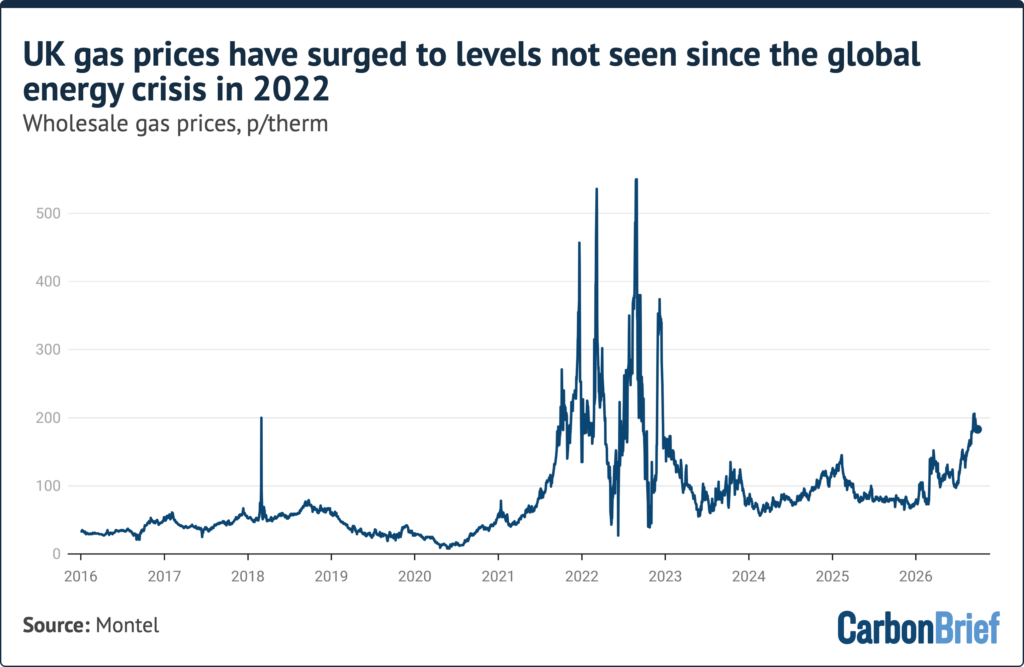
From 2023 through the beginning of 2026, UK gas prices averaged roughly 90p per therm—about three times higher than the baseline prices seen in 2019 before the combined disruptions of the Covid-19 pandemic and the Ukraine conflict. However, the onset of war in the Middle East in early 2026 propelled prices even higher, pushing the annual average to 134p per therm, nearly four times pre-crisis levels.
During September 2026, wholesale gas prices surged further to average 189p per therm, marking the highest monthly average since the peak of the global energy crisis four years prior. Analysts note that this latest spike is driven by the seasonal approach of winter, which naturally elevates space heating demand, combined with the persistent disruption of maritime trade and energy transit through the Strait of Hormuz.
Compounding the problem are historically low natural gas storage inventories across continental Europe. As European nations scramble to replenish reserves ahead of the colder months, they face fierce international competition from Asian buyers to secure available LNG cargoes on the global spot market.
Diverging Household Energy Bills
The ongoing turmoil in wholesale gas markets is translating directly into disparate outcomes for UK consumers, exposing a widening divergence between household gas and electricity bills. Under the energy price cap regulated by Ofgem, high wholesale costs are heavily concentrated in household gas tariffs, whereas electricity bills have remained remarkably stable.
Data from the independent think tank Nesta indicates that typical household gas bills will rise by 33%—adding roughly £200 per year—compared to rates seen in April. Conversely, household electricity bills are projected to have risen by a modest 4% over the same timeframe, a stabilization directly attributable to the expanding share of domestic clean-energy generation shielding consumers from gas-linked price volatility.
Andrew Sissons, director for a sustainable future at Nesta, highlighted the shifting market dynamics on social media, pointing out that the historical economic link between electricity and gas prices has officially begun to break.

The economic fallout, however, extends well beyond natural gas. Importers across the UK and the wider European Union continue to grapple with inflated costs for crude oil, diesel, and other refined petroleum products. Reports indicate that the EU has been forced to absorb an estimated €100bn in additional fossil-fuel import costs since the onset of the crisis. Separate international analyses show that these heightened financial burdens are falling with particular severity on low- and middle-income nations worldwide.
Domestically, UK road fuel prices have experienced severe upward pressure, with diesel reaching record highs of approximately £2 per litre. In stark contrast, concurrent analysis from Carbon Brief demonstrates that driving an electric vehicle remains significantly more economical, with running costs up to nine times cheaper than petrol or diesel equivalents.
Political Response and the Path Forward
The structural vulnerability of the nation’s energy system took center stage at the recent Labour party conference, where senior government officials addressed the ongoing crisis.
In her address to delegates, Energy Secretary Miatta Fahnbulleh emphasized that consumers continue to suffer from elevated energy expenses precisely because the UK remains exposed to volatile global fossil-fuel markets.
Echoing these remarks during his conference speech, Prime Minister Andy Burnham pointed to the rapid expansion of renewable infrastructure as the primary mechanism safeguarding the public from the worst of the gas price shocks.
"We are already taking more control of our electricity prices with a massive expansion of home-grown renewables and nuclear," Burnham told the conference. He added that he has instructed the Energy Secretary to accelerate efforts to decouple domestic electricity pricing from international gas markets to secure permanent relief for consumers.