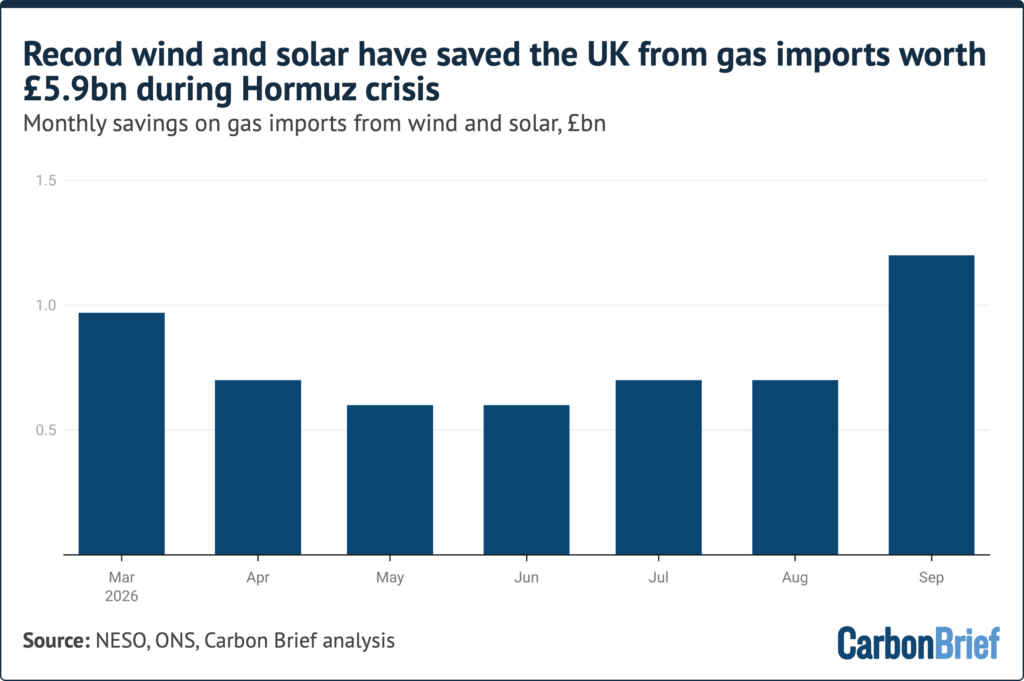
The United Kingdom has successfully avoided the need for gas imports valued at £5.9bn since the onset of the Hormuz crisis, shielded by a historic surge in domestic generation from wind and solar power. New analysis published by Carbon Brief highlights how record-breaking renewable output has cushioned the British energy grid against severe international market shocks, even as geopolitical instability in the Middle East drives wholesale gas prices to heights not witnessed since the height of the 2022 global energy crisis.
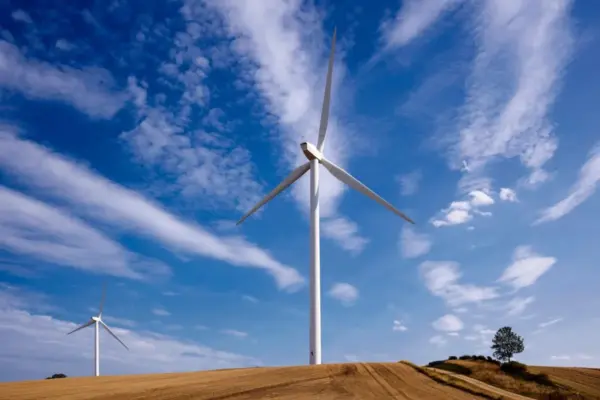
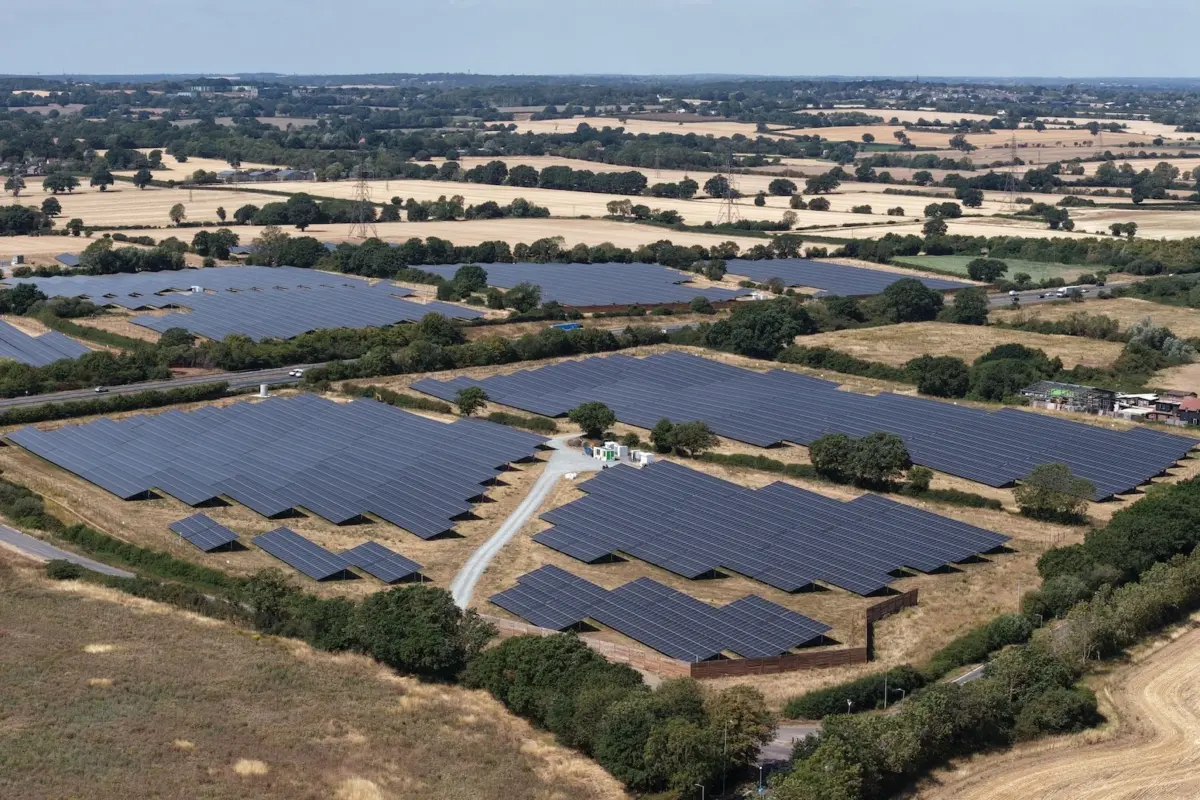
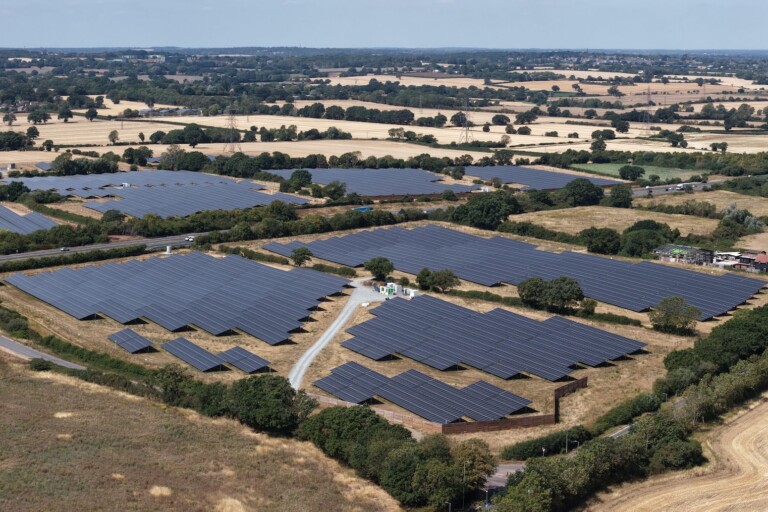
While soaring fossil-fuel costs continue to plague importing nations across Europe and the wider world, the UK’s expanding renewable infrastructure has fundamentally altered its short-term energy security landscape. Wind and solar installations across the country have delivered a 14% year-on-year increase in power generation for 2026 to date. This unprecedented output has directly suppressed the demand for gas-fired electricity, which has fallen by nearly 10% compared to the same period in 2025.
According to Carbon Brief’s comprehensive breakdown, clean energy sources have accounted for a record-shattering 41% share of the UK’s total electricity needs so far in 2026. By contrast, gas has accounted for just 25% of the nation’s power generation. This dramatic displacement of fossil-fuel generation means the UK has sidestepped gas imports worth £5.9bn since the outbreak of war between the United States and Iran in February 2026.
To put this monumental saving into perspective, the avoided gas imports represent the equivalent of more than 100 additional tanker deliveries of liquefied natural gas (LNG) that the nation would have otherwise needed to secure on fiercely competitive global markets. In September 2026 alone, monthly import savings reached an estimated £1.3bn, driven by exceptional wind and solar output exceeding nearly 10 terawatt-hours, compounded by rapidly escalating commodity prices.
These figures build upon earlier findings released by Carbon Brief earlier in the spring, illustrating a sustained structural shift in how the nation generates its electricity during times of international turmoil.
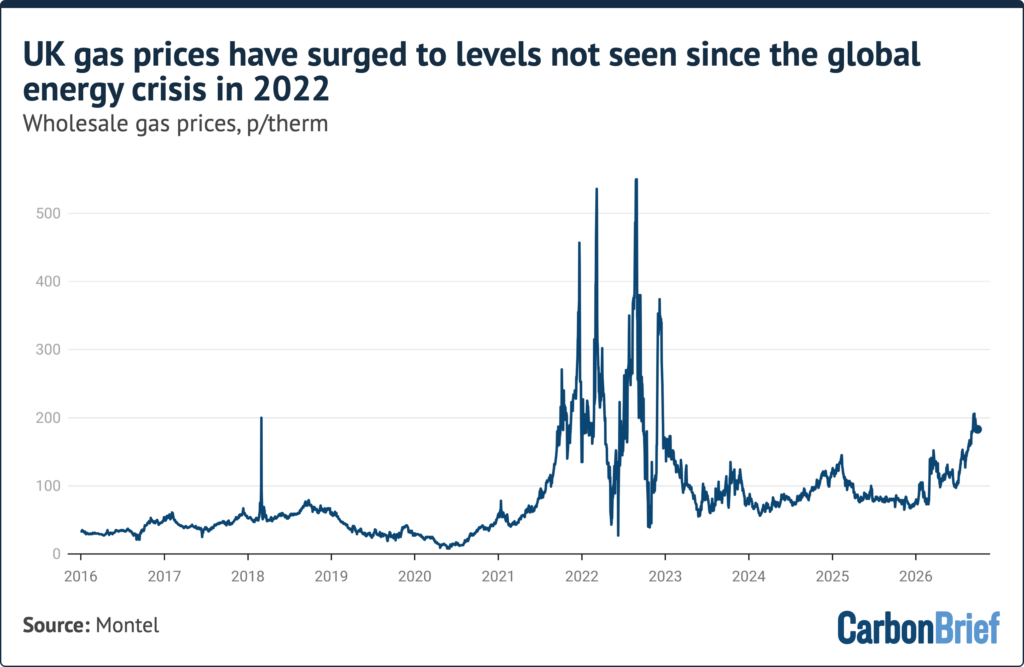
The underlying vulnerability of the UK energy sector traces back to the aftermath of Russia’s invasion of Ukraine in 2022, when Moscow abruptly severed pipeline supplies to Europe. Wholesale gas prices, which had historically hovered at lower baselines, averaged around 90p per therm between 2023 and the beginning of 2026—roughly three times the pre-crisis levels seen in 2019 prior to the disruptions of the Covid-19 pandemic and the conflict in Eastern Europe.
However, the outbreak of war in the Middle East in March pushed financial pressures to new extremes. Since the start of the conflict, gas prices have climbed further, averaging 134p per therm—nearly four times the 2019 average. The situation intensified further in September 2026, with wholesale gas prices averaging 189p per therm, matching the acute pricing pressures of the 2022 global energy crisis.
Market analysts attribute these renewed price spikes to a convergence of seasonal pressures and geopolitical friction. With winter rapidly approaching, domestic demand for heating is set to climb sharply, while the crisis in the Strait of Hormuz shows no immediate sign of resolution. Simultaneously, European natural gas storage inventories remain critically low heading into the colder months. This deficit forces European nations into an intense international tug-of-war with Asian buyers to secure the scarce LNG cargoes necessary to maintain regional heating and industrial operations.
For domestic consumers in the UK, these wholesale market realities are translating directly into stark disparities on household utility bills. Under the price cap established by energy regulator Ofgem, high wholesale gas costs are heavily penalizing household gas accounts, while electricity bills have remained remarkably stable.
According to projections from the independent think tank Nesta, typical household gas bills are slated to rise by 33% from the start of October, translating to an additional £200 per year compared to April levels. In stark contrast, household electricity bills will have experienced a modest increase of just 4% over the same timeframe. Analysts emphasize that this divergence is a direct consequence of rising generation from clean-energy sources, which insulates electricity consumers from the volatile swings of international gas markets.
Andrew Sissons, director for sustainable future at Nesta, highlighted the changing dynamics in a recent social media commentary, noting that "the link between electricity and gas prices has already begun to break."
The financial fallout from the ongoing global supply crunch extends far beyond the UK power sector. Fossil-fuel importing nations across the globe are grappling with severe cost inflations across oil, diesel, and other refined fuels. Reports indicate that the European Union has been forced to absorb an estimated extra €100bn in fossil-fuel import expenses since the crisis began. Independent research from the Centre for Research on Energy and Clean Air underscores that these inflated import bills have fallen with particular severity on low- and middle-income economies.
Domestically, UK motorists have seen diesel prices scale record heights of around £2 per litre. This harsh reality for internal combustion engine drivers contrasts sharply with findings from recent Carbon Brief analysis, which demonstrates that operating electric vehicles remains up to nine times cheaper than running petrol or diesel cars.
Addressing these economic pressures during her speech at the Labour Party conference, Energy Secretary Miatta Fahnbulleh emphasized that household bills remain painfully high because the UK continues to be "exposed to global fossil-fuel markets."
Echoing this sentiment during his own conference address, Prime Minister Andy Burnham pointed to the rapid expansion of renewable energy as the primary mechanism for buffering consumers against international market volatility.
"We are already taking more control of our electricity prices with a massive expansion of home-grown renewables and nuclear," Burnham told party delegates. "I have asked Miatta to speed up the breaking of the link between what we pay for power at home and the international gas market, to get bills down."