
NEW DELHI — In an era defined by rapid technological disruption and shifting geopolitical landscapes, higher education institutions must look far beyond traditional curricula to prepare students for a world that is constantly being reinvented. This overarching message took center stage during the recent Symbiosis International Annual Dinner hosted in the national capital, where academic leaders, diplomats, and industry stakeholders gathered to discuss the evolving mission of global universities.
Addressing an international audience of dignitaries, scholars, and professionals, Dr. Ramakrishnan Raman, Vice Chancellor of Symbiosis International (Deemed University), delivered a compelling address focusing on the indispensable role that modern universities play. He emphasized that institutions of higher learning are no longer tasked merely with shaping graduates for existing career tracks, but must instead equip young minds to navigate and lead in a professional ecosystem where many vital roles and industries have yet to emerge.
The gathering provided a distinguished platform to reflect on the intersections of higher education, technological innovation, and international diplomacy. As artificial intelligence continues to accelerate its footprint across global economies, transforming workplaces and fundamentally altering how knowledge is generated, curated, and shared, universities face a profound institutional challenge. Dr. Raman underscored that the traditional paradigms of teaching and learning are being fundamentally tested by the speed of innovation, requiring a fundamental shift in how academic institutions design their programs and engage with the global community.
Welcoming the international gathering to the annual event, Dr. Raman drew attention to the enduring importance of diplomacy, mutual understanding, and cross-border cooperation. He noted that even as technology reshapes economic structures and daily human interactions, the foundational pillars of international collaboration and cultural exchange remain critical. In a world experiencing such rapid transitions, universities possess a unique and timely opportunity to strengthen international connections, champion innovative thinking, and prepare the younger generation for an increasingly interconnected and interdependent future.
At the heart of Dr. Raman’s address was a philosophical reflection on the purpose of modern education. Observing the fast pace of change, he remarked that education today is not merely about preparing students for jobs that currently exist, but rather about preparing them for careers that may not yet exist. This reality, he suggested, places a premium on cultivating highly adaptable skills, fostering resilience, and instilling a lifelong commitment to learning. When the half-life of technical skills is shrinking faster than ever before, the ability to learn, unlearn, and relearn becomes the most valuable asset a graduate can possess.
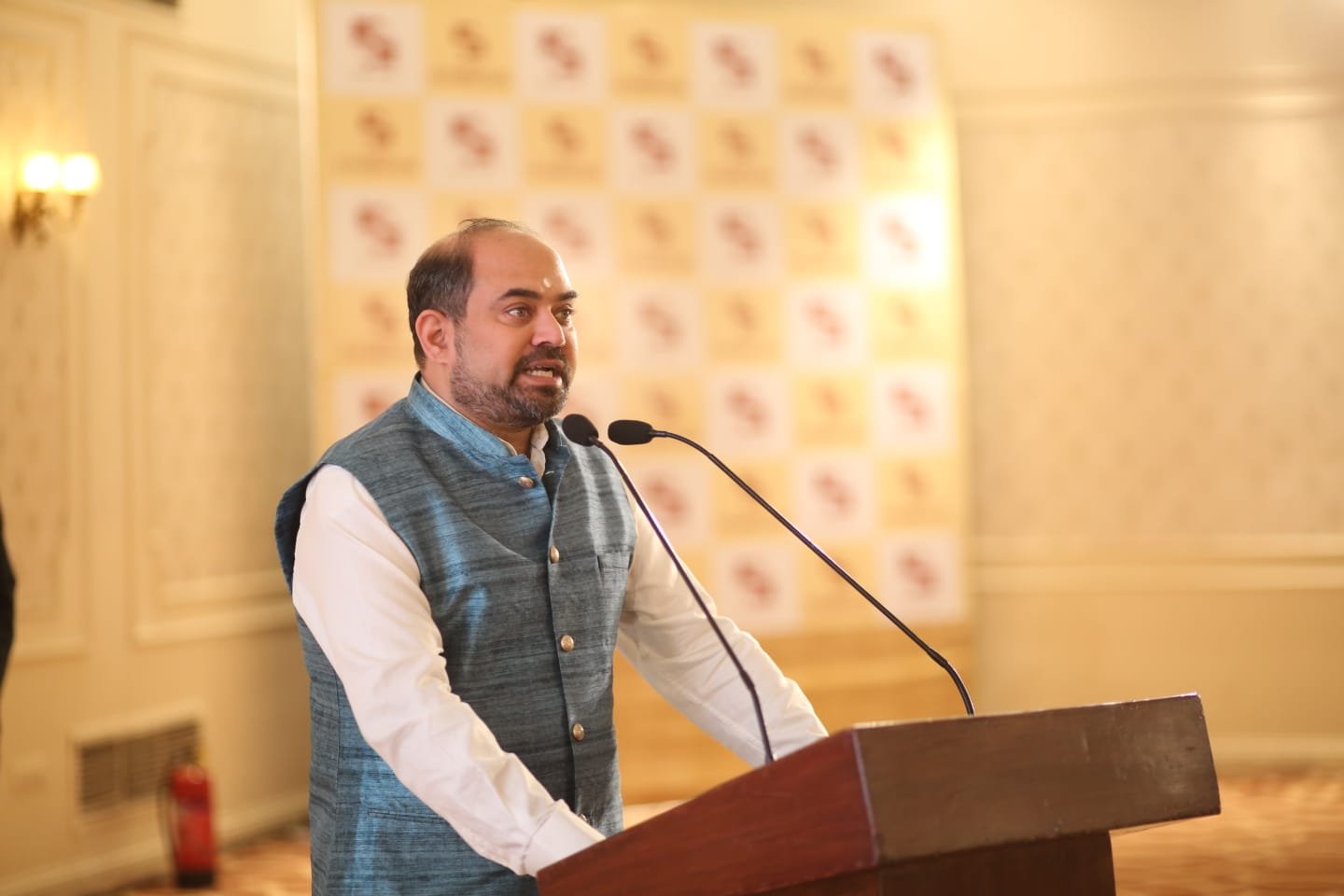
To translate this vision into institutional practice, Symbiosis International has actively worked to integrate artificial intelligence and other emerging technologies into its core academic framework. This integration spans across classroom teaching, advanced research initiatives, and deep industry engagement. However, Dr. Raman was careful to stress that true technological adoption at a university level must extend far beyond the superficial introduction of new digital tools or software into lecture halls. Technology should not merely be used for the sake of modernization; rather, it must be accompanied by a profound pedagogical shift.
Under this approach, students must be guided to look past the mechanics of software and learn how to think critically, solve complex problems, interpret vast arrays of data, and understand the profound ethical implications of the technologies they utilize. As automation and machine learning permeate professional practices across every conceivable sector, the modern graduate must be equipped to interrogate the societal impacts of these tools. This involves understanding issues related to data privacy, algorithmic bias, equity, and human agency in an automated world.
Furthermore, Dr. Raman highlighted the necessity of ensuring that digital capabilities are not siloed within specialized technical departments or engineering programs. Instead, technological literacy must be developed across a diverse spectrum of disciplines, including management, law, healthcare, and the humanities. Because artificial intelligence and data-driven systems are rapidly influencing professional practice in courtrooms, boardrooms, hospitals, and creative industries alike, understanding technology has transitioned from being the exclusive preserve of technical specialists to a shared educational priority for all students, regardless of their major.
Addressing the broader landscape of higher education, Dr. Raman underscored the vital importance of international collaboration in achieving these institutional goals. He pointed out that no single university, and indeed no single country, holds all the answers to the complex socioeconomic and technological challenges of the twenty-first century. By fostering partnerships that span national boundaries, academic institutions, governments, and private industries can pool their resources and insights. Mechanisms such as joint research projects, faculty exchange programs, student mobility initiatives, and collaborative skills development frameworks allow stakeholders to draw meaningfully on each country’s distinct strengths and specialized expertise.
Such global partnerships do more than just enhance academic prestige; they cultivate global citizenship among students. By exposing young scholars to diverse perspectives, international academic environments, and cross-cultural problem-solving, universities help bridge cultural divides and build a foundation for enduring international cooperation. In an era where geopolitical tensions can sometimes threaten global dialogue, academic institutions serve as crucial bridges for cultural and intellectual exchange.
Concluding his address, Dr. Raman issued a forward-looking call to action for the academic community and its partners. He urged stakeholders to champion a future in which ongoing technological progress is harnessed not just to drive corporate productivity and economic growth, but to actively contribute to the creation of more inclusive, resilient, and prosperous societies. The ultimate measure of a university’s success in the age of artificial intelligence, he suggested, will lie in its ability to produce graduates who combine technical competence with deep ethical responsibility, ensuring that innovation ultimately serves the broader advancement of humanity.