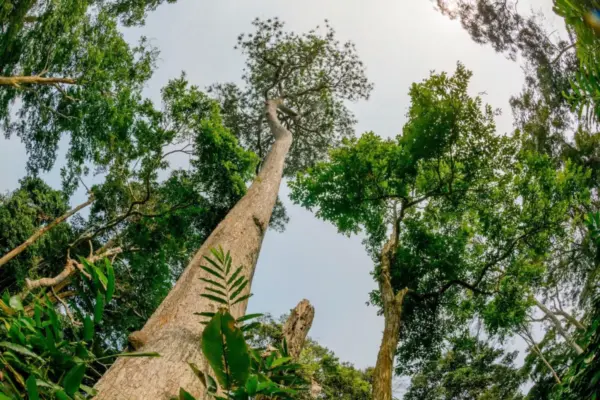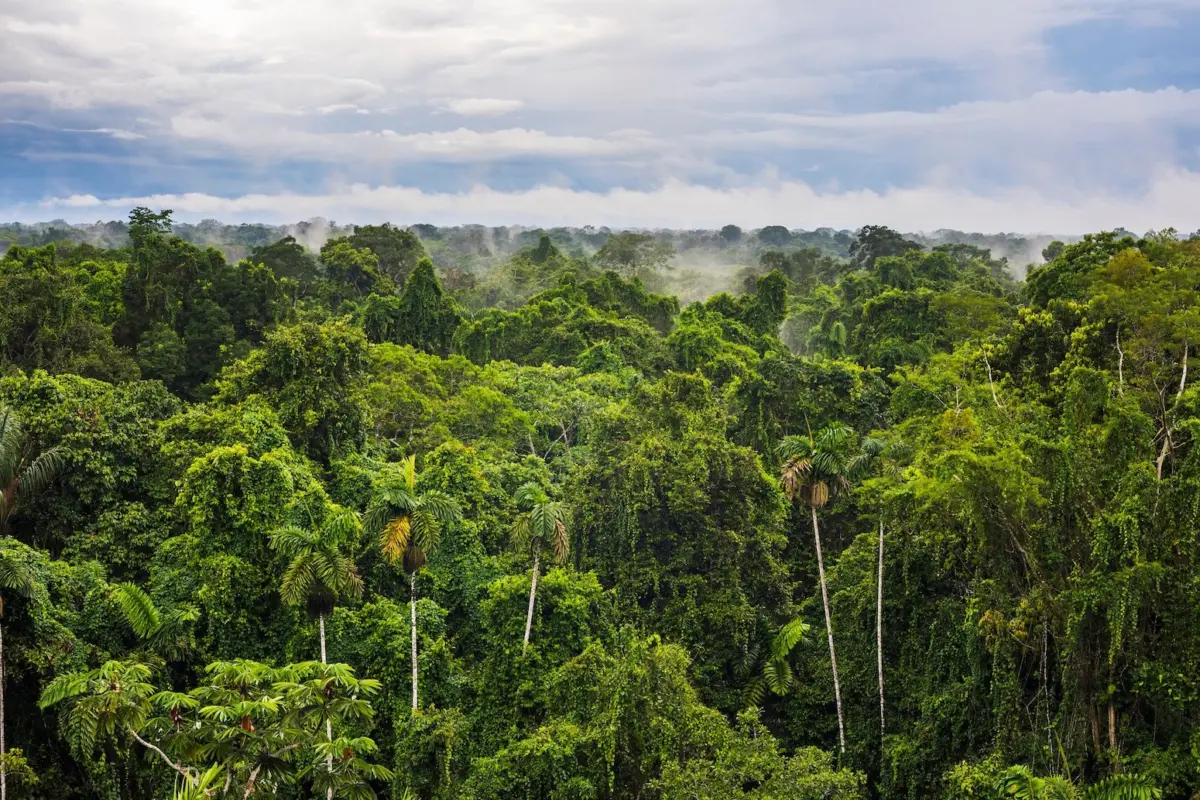
An area of the Amazon rainforest roughly the size of the US state of New Jersey has remained standing due to Luiz Inácio Lula da Silva’s leadership of Brazil, according to an extensive new analysis by Carbon Brief.
Lula defeated Jair Bolsonaro in the fiercely contested 2022 presidential election, taking charge of a nation that encompasses nearly 60% of the world’s largest tropical rainforest. The transition in power marked a dramatic shift in environmental trajectories. While forest loss surged to alarming heights during Bolsonaro’s far-right presidency, it dropped sharply under the left-wing administration of Lula. Current trajectories indicate that Amazon deforestation is likely to hit its lowest level on record this year.
Now, as another critical presidential election approaches, Lula finds himself facing off against Bolsonaro’s son, Senator Flávio Bolsonaro. The younger Bolsonaro champions anti-environmental policies strikingly similar to those of his father, setting the stage for an electoral showdown that could determine the fate of fragile conservation gains in the world’s fourth-largest greenhouse gas emitter, where national emissions are predominantly driven by deforestation.
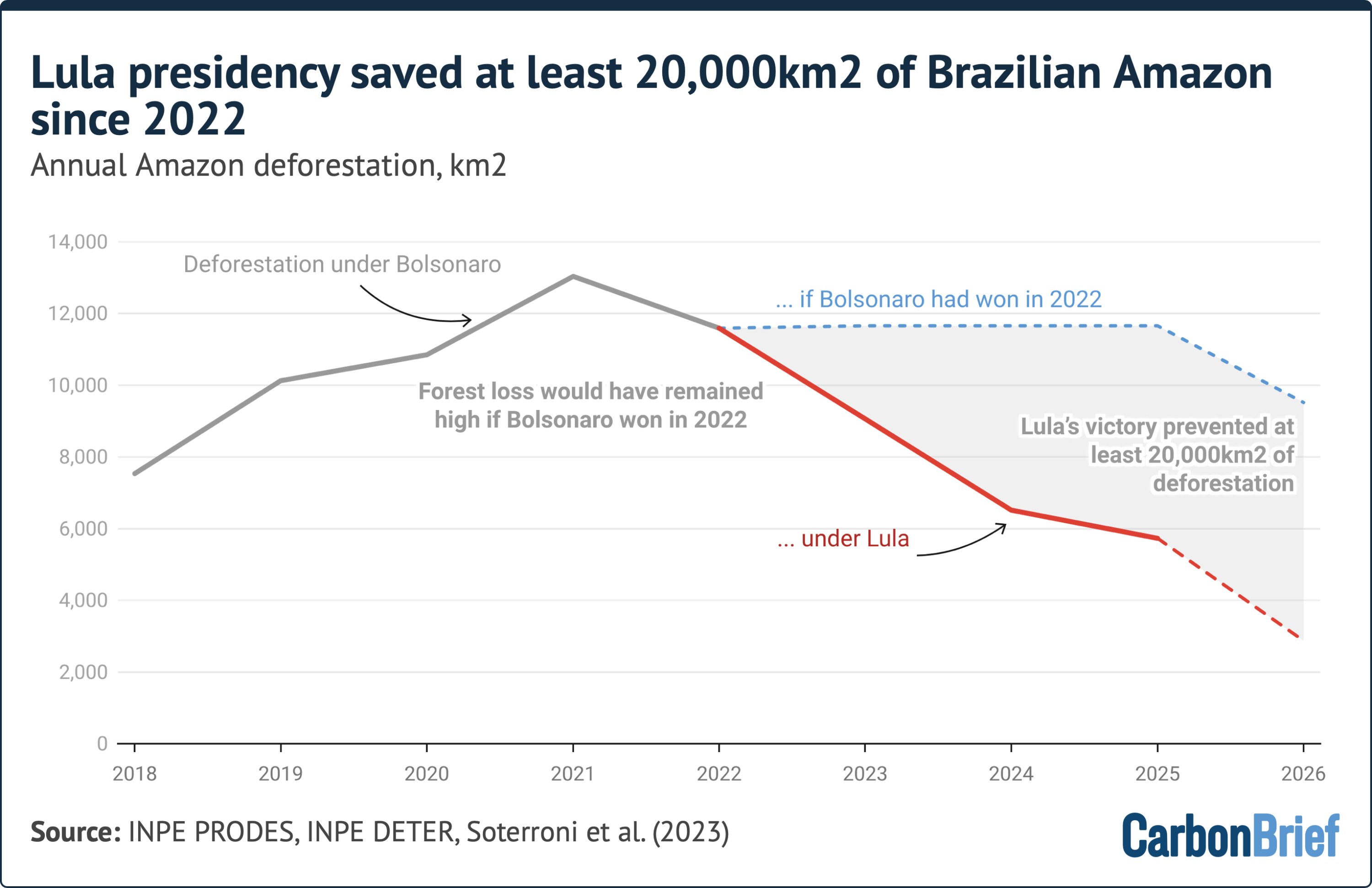
Carbon Brief’s analytical models suggest that at least 20,000 square kilometers of deforestation have been avoided since Lula took office and restored Amazon protection as a top national priority. This assessment is built upon peer-reviewed modeling from an international research team that simulated an alternative baseline scenario in which Brazil’s flagship Forest Code legislation was left unenforced—a direct proxy for the environmental governance style of the Jair Bolsonaro administration. Climate experts emphasize that this projection is likely conservative, noting that actual deforestation rates under Bolsonaro could have easily spiralled much higher. With Lula and Flávio Bolsonaro currently locked in a dead heat in national polls, the upcoming election is expected to profoundly shape environmental action across the region.
"Brazil is Back"
During his tenure from 2019 to 2022, Jair Bolsonaro aggressively championed Brazil’s powerful agribusiness sector, overseeing an unprecedented acceleration of destruction within the Amazon basin. His administration systematically weakened environmental regulations, slashed federal agency budgets, and empowered wildcat mining and illegal logging syndicates while publicly attacking Indigenous populations and environmental NGOs.
This political atmosphere meant that the Forest Code—Brazil’s cornerstone conservation legislation that legally requires private landowners to preserve and restore native forests on their properties—was left largely unenforced.
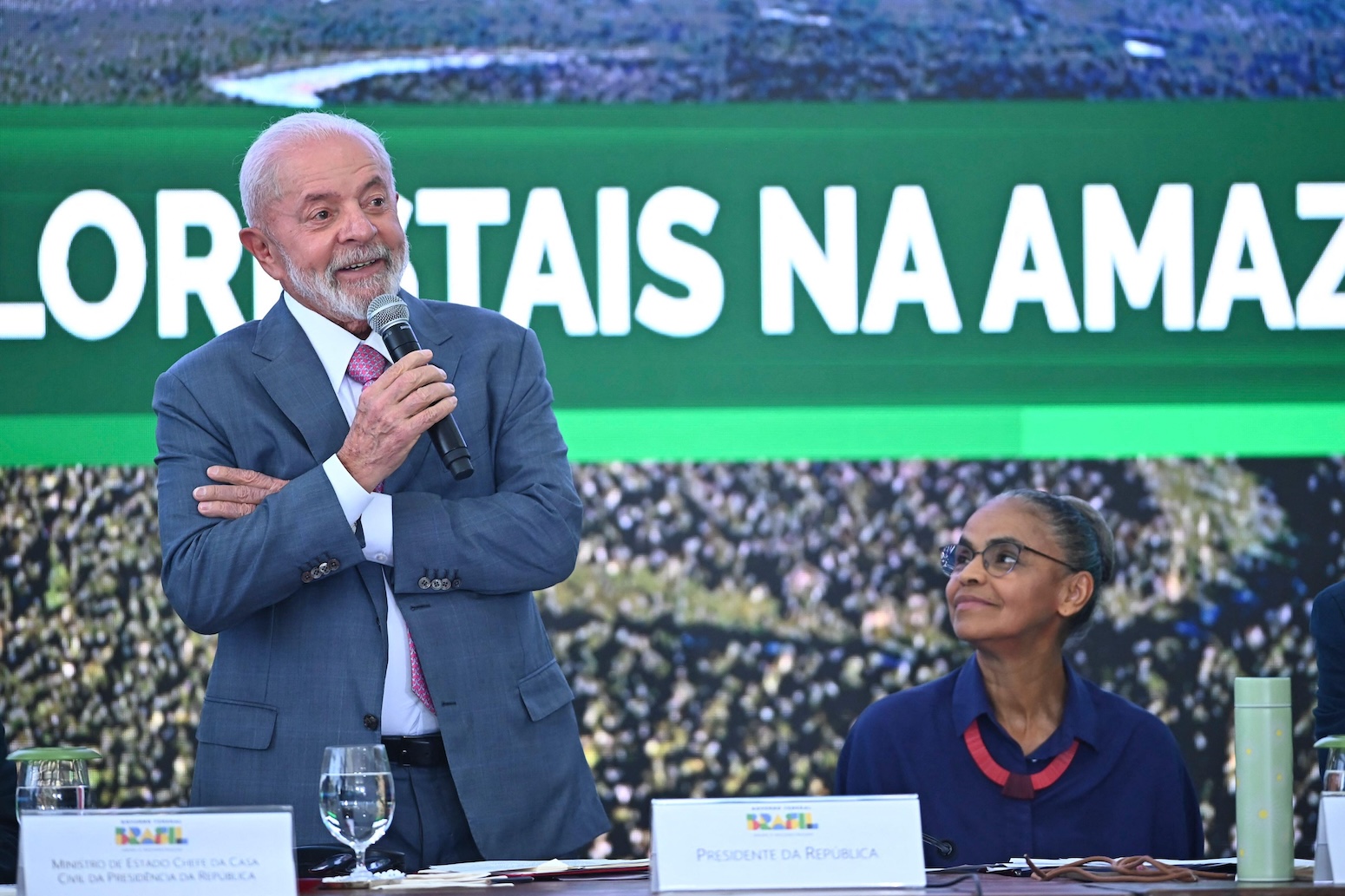
Following his narrow victory in late 2022, Lula pledged to steer the country toward a target of zero deforestation by 2030, famously declaring to delegates at the COP27 UN climate summit that "Brazil is back." Lula rapidly rolled back the wave of deregulation that characterized the previous four years and reinstated a comprehensive deforestation prevention and control action plan. Spearheaded by renowned environmentalist and Environment Minister Marina Silva, the ministry scaled up federal enforcement, policing, and monitoring activities across the vast Amazonian territory.
As a direct consequence of these renewed enforcement measures, annual deforestation in the Brazilian Amazon has more than halved, plunging from 11,594 square kilometers per year in 2022 down to 5,731 square kilometers by 2025. While final official figures for the government’s tracking period running from August to July are pending, preliminary real-time satellite alerts indicate a preliminary deforestation figure of 2,874 square kilometers. Although final calculations typically trend slightly higher than early alerts, experts remain confident that 2026 will register the lowest annual Amazon deforestation rate since official satellite records began in 1988.
A New Jersey-Sized Forest Saved
When measured against the counterfactual scenario of a Bolsonaro victory in 2022, the Carbon Brief analysis demonstrates that at least 20,000 square kilometers of the Amazon basin remain intact today entirely due to Lula’s governance. This preserved expanse is roughly equivalent to the total landmass of Wales, Belize, Slovenia, or the state of New Jersey.
The methodology behind this finding stems from a 2023 study investigating nature-based solutions within Brazil’s pathway toward net-zero carbon emissions. This research served as a refined update to earlier modeling utilizing the GLOBIOM-Brazil framework, developed collaboratively by researchers at the University of Oxford, the International Institute for Applied Systems Analysis, and Brazil’s National Institute for Space Research. By contrasting rigorous Forest Code implementation against a baseline scenario of weak governance and zero enforcement—reflecting the political reality of the Bolsonaro era—researchers were able to isolate the tangible impacts of political will on forest preservation.
Dr. Aline Soterroni, a University of Oxford researcher who led the 2023 analysis, noted that the sharp turnaround observed under Lula proves how rapidly deforestation rates can respond to decisive political leadership. However, she stresses that the "no forest code" model remains relatively conservative because it assumes deforestation would remain high rather than violently escalate. Furthermore, that baseline model assumes slower global demand growth for Brazilian beef and soy, while omitting the potential for chaotic, lawless land grabbing driven by institutional collapse.
Other regional experts share the view that a continuation of Bolsonaro-style governance would have yielded catastrophic outcomes. Claudio Angelo, international policy coordinator at Brazil’s Climate Observatory, argues that had Bolsonaro secured re-election in 2022, the political signals would have catalyzed an unprecedented explosion of wildcat mining and illegal land clearing. Angelo points to previous legislative efforts led by figures like Flávio Bolsonaro during his father’s term to formally dismantle the Forest Code from within the Brazilian congress.

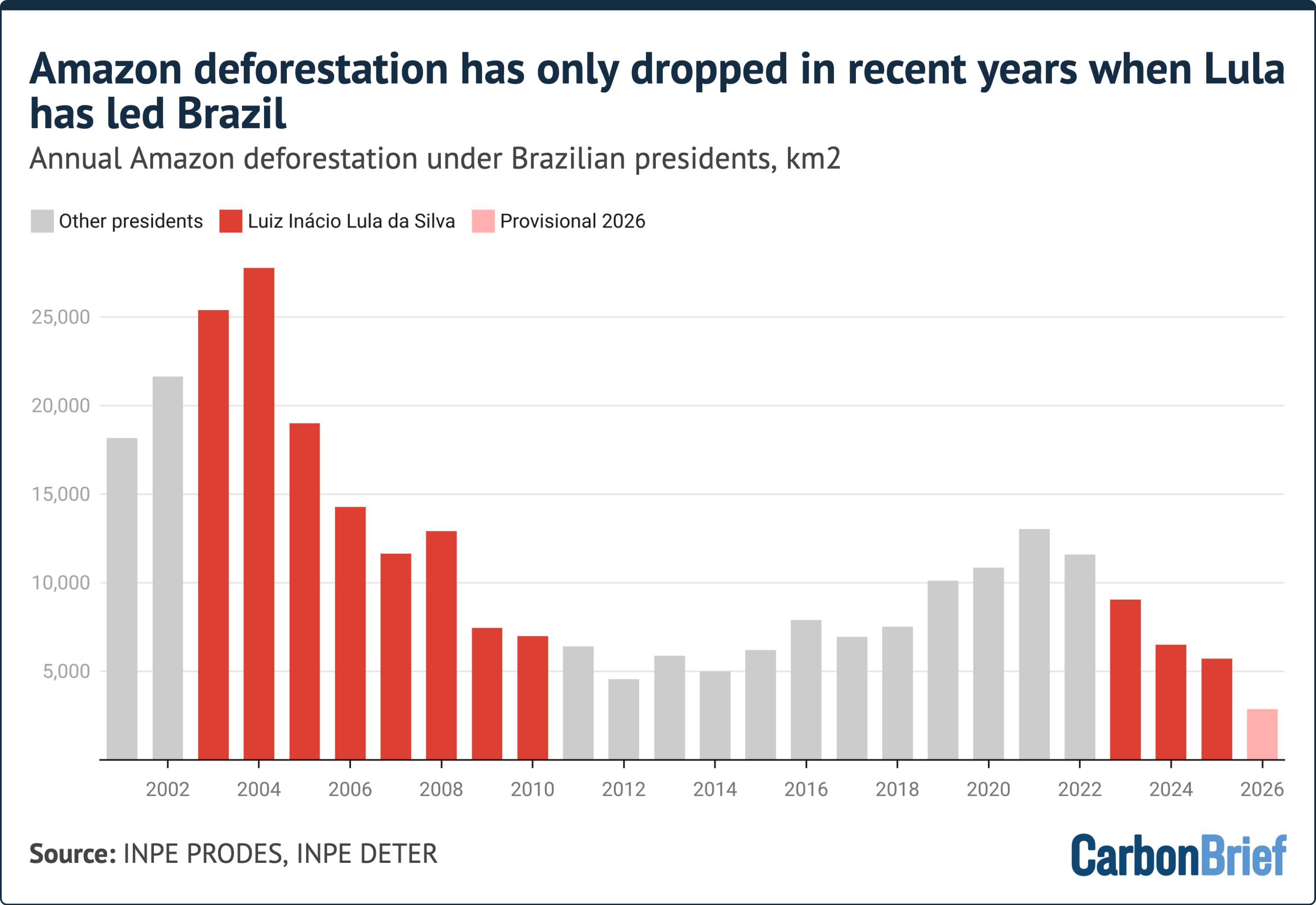
While deforestation did not drop on day one of Lula’s presidency—reflecting the gradual, imperfect nature of rebuilding gutted state institutions and re-establishing the rule of law in remote frontier regions—the broader trajectory remains stark. The fundamental takeaway from the data is the immense divergence between proactive environmental governance and a policy of institutional neglect.
The High-Stakes Election
With Jair Bolsonaro currently imprisoned following his conviction for plotting a coup d’état after his 2022 defeat, his son Flávio Bolsonaro, a senator representing Rio de Janeiro, has stepped forward to carry the family’s political banner against Lula. Although 13 candidates are officially registered on the ballot, Lula and Flávio Bolsonaro stand as the clear frontrunners, running neck-and-neck in opinion polling.
Should Lula secure victory, analysts widely anticipate the continuation of his "zero deforestation by 2030" agenda, which has already proven its efficacy in curbing forest loss. Historical tracking confirms that modern declines in Amazon deforestation have exclusively occurred during Lula’s three presidential terms.
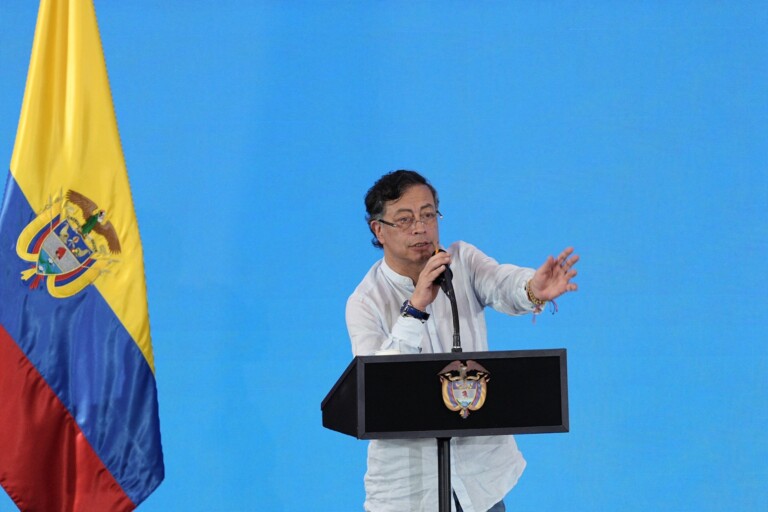
Conversely, experts warn that Flávio Bolsonaro—an avowed climate skeptic committed to sustaining his father’s populist and pro-agribusiness platform—would likely ignite a devastating resurgence in forest destruction. Angelo cautions that Lula’s re-election represents the singular institutional barrier preventing the widespread dismantling of the Amazon.
Dr. Patricia Pinho, deputy science director at the Amazon Environmental Research Institute, characterizes a potential Bolsonaro victory as an unmitigated disaster for the country. She emphasizes that Brazil cannot absorb another four years characterized by accelerating deforestation and escalating violence directed at Indigenous communities. Dr. David Lapola, an ecologist at the University of Campinas, concurs, stating that a return to right-wing populist rule would effectively trash Brazil’s international climate commitments. He warns that the rapid dismantling of environmental protections under the previous administration demonstrated how quickly decades of rigorous policy and conservation activism can be undone within a matter of months.
Divergent Environmental Policies
An evaluation of the leading candidates’ manifestos by the Climate Observatory reveals that Lula offers the greenest policy proposals among the top six contenders. His platform features 16 detailed and positive environmental commitments, most notably the reaffirmation of the 2030 zero-deforestation deadline and national emissions targets aimed at cutting greenhouse gases by up to 67% by 2035 compared to 2005 levels.

In stark contrast, Flávio Bolsonaro’s platform includes only a single positive commitment set against seven explicitly anti-environmental proposals. While the younger Bolsonaro has pledged to achieve zero illegal deforestation by 2029, environmental analysts view this promise with deep skepticism. Given his history of attempting to rewrite the Forest Code to legalize vast swaths of industrial clearance, critics argue that the only logical pathway to meeting such a target would be to legalize the very activities currently classified as infractions.
Beyond the executive office, broader institutional shifts threaten conservation efforts. The effective collapse of the voluntary Amazon Soy Moratorium—a landmark industry pact that historically prevented major grain traders from purchasing soy grown on lands deforested after 2008—poses an independent threat. Major agricultural commodity traders withdrew from the agreement earlier this year, a development conservationists describe as a severe blow to supply-chain accountability. Recent scientific estimates suggest the end of the moratorium could unlock up to 14,000 square kilometers of additional deforestation by 2036.
Simultaneously, the composition of the Brazilian congress remains a critical battleground. Right-wing parties, including the Liberal Party associated with the Bolsonaro family, maintain substantial strength across both legislative chambers. This balance of power has repeatedly triggered intense friction, exemplified by Congress overriding presidential vetoes in 2025 to pass controversial legislation dubbed the "devastation bill."
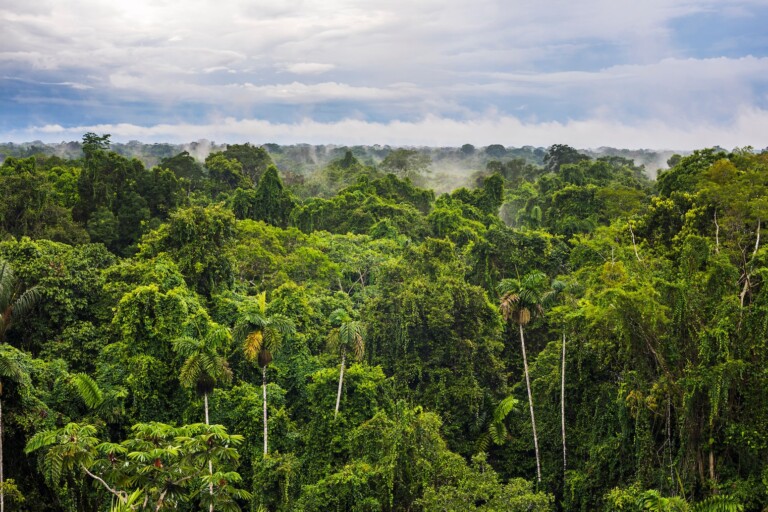
Furthermore, geopolitical shifts across South America compound these domestic vulnerabilities. Experts note that if a right-wing coalition captures the presidency in Brazil, nearly 95% of the entire Amazon basin would fall under the administrative control of conservative national governments in countries like Bolivia, Colombia, Ecuador, and Peru—nations where ruling administrations similarly prioritize mining and large-scale agribusiness over conservation.
As Brazil heads toward the polls with a first round scheduled for October 4, followed by a likely runoff on October 25, the electorate faces a profound choice. Experts emphasize that the election will decide far more than standard partisan politics; it will determine whether environmental stewardship is recognized as an urgent, foundational necessity for human survival or relegated to the shifting whims of political preference.