A major Atlantic Ocean circulation system that plays a central role in regulating the Earth’s climate has been steadily weakening across a vast region for nearly two decades, according to new research published this spring. This persistent downward trend could carry profound and far-reaching consequences for global weather patterns, regional rainfall, storm intensity, and sea-level rise in areas bordering the Atlantic basin and far beyond.
The comprehensive study, led by researchers at the University of Miami Rosenstiel School of Marine, Atmospheric and Earth Science, provides some of the clearest and most direct observational evidence gathered to date indicating that the Atlantic Meridional Overturning Circulation, widely known as the AMOC, is actively losing strength.
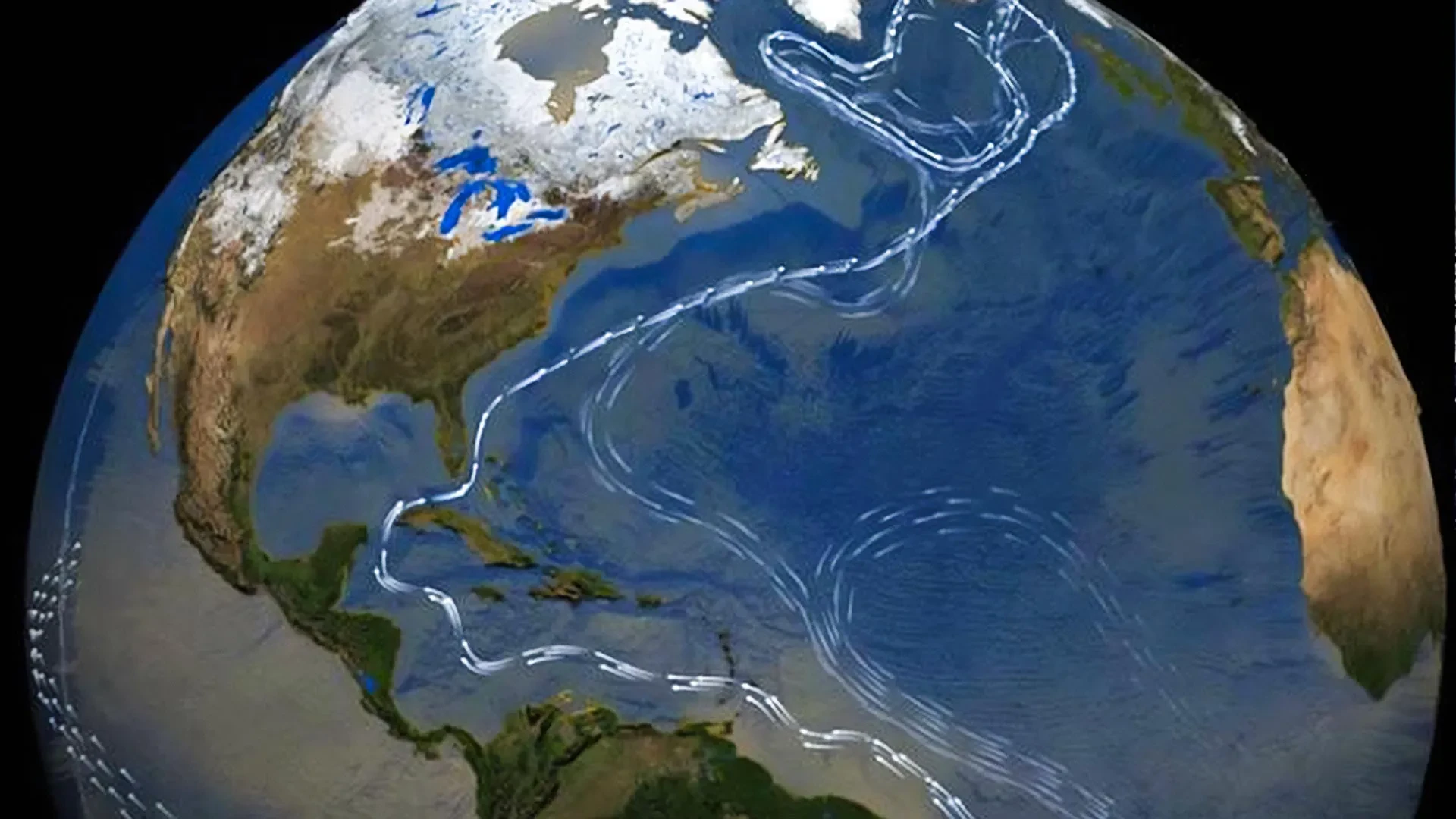
The AMOC functions as a vast, interconnected system of ocean currents that acts essentially as a planetary conveyor belt. It moves warm, buoyant water northward near the ocean surface while simultaneously transporting colder, denser water southward at much greater depths. By constantly redistributing enormous amounts of heat throughout the entire length of the Atlantic Ocean, this massive circulation engine helps shape regional temperatures, rainfall distributions, sea levels, and everyday weather systems across multiple continents.
"A weaker AMOC can shift weather patterns, potentially leading to more extreme storms, changes in rainfall, or colder winters in some regions," said Shane Elipot, a senior author of the study and a physical oceanographer at the Rosenstiel School. "It can also influence sea-level rise along coastlines, affecting communities and infrastructure."
Tracking Changes Deep Beneath the Surface of the Atlantic
To investigate how this critical marine circulation has shifted over time, the research team examined extensive, long-term observational data gathered from four distinct ocean monitoring arrays. These strategic arrays are positioned along the rugged western edge of the North Atlantic Ocean, stretching from warm tropical waters all the way up into much higher latitudes. This wide spatial distribution gives scientists a comprehensive, basin-wide view of how deep ocean dynamics have been changing over the years.
The advanced monitoring systems rely heavily on sophisticated instruments securely anchored directly to the ocean floor. These seabed devices continuously and meticulously measure fundamental physical properties of the water column, including hydrostatic pressure, temperature, salinity-driven density, and the speed and direction of ocean currents.
To maintain consistency across the entire investigation, the researchers applied the exact same rigorous analytical method to the data collected at all four monitoring locations. Specifically, they closely examined fluctuations and trends in pressure recorded at the very bottom of the ocean. By analyzing these bottom pressure readings, the team could accurately estimate the continuous movement of deep water flowing far below the surface, specifically at depths greater than about 1,000 meters.
By systematically comparing these precise measurements across both extended timeframes and multiple geographic locations, the research team was able to look for persistent, long-term changes in the actual strength of the overturning circulation. This rigorous approach ensured that the findings reflected fundamental shifts rather than relying on isolated observations from a single part of the Atlantic, which might otherwise capture only short-term noise.
A Consistent Decline Across a Huge Geographic Region
The resulting data revealed a strikingly similar and concerning pattern unfolding across several different latitudes. A critical component of the AMOC running along the western boundary of the North Atlantic has been steadily declining from the subtropics all the way up into the mid-latitudes, covering a broad geographic span from approximately 16.5 degrees North to 42.5 degrees North latitude.
Because this documented weakening appears consistently across such an enormous geographic area, the researchers emphasize that the trend is far more consistent with a broad, systemic shift in Atlantic circulation than with a short-lived regional fluctuation or temporary weather anomaly.
That distinction carries immense scientific importance because the AMOC stands as one of the primary physical systems responsible for moving vital heat energy around our planet. Consequently, measurable changes in its overall strength can profoundly influence climate conditions, seasonal temperatures, and ecological balances far away from the specific locations where the currents themselves are directly measured.
Why the AMOC Matters for Global and Regional Climate
The AMOC is especially crucial for governing the climate around the North Atlantic basin. Its relentless transport of massive thermal energy helps dictate surface temperatures in both Europe and North America, while simultaneously exerting a powerful influence over regional rainfall distribution, intense storm formation, and coastal sea levels.
If this vital ocean circulation continues on its current weakening trajectory, the projected environmental effects could be sweeping. Potential consequences include notable disruptions to European winters, abrupt shifts in global rainfall belts, altered hurricane activity and tropical storm dynamics, and accelerated coastal sea-level rise that threatens low-lying infrastructure worldwide.
Given these high stakes, climate scientists and oceanographers are watching the system with intense scrutiny, eagerly searching for reliable indicators of long-term change before potential tipping points are reached.
The new findings suggest that ongoing measurements gathered specifically along the western side of the Atlantic could provide a particularly useful and sensitive early warning signal. Scientists frequently compare this monitoring approach to the classic metaphor of a canary in a coal mine, noting that detecting shifts along this critical western boundary may offer an exceptionally efficient way to spot broader, more systemic changes in the planet’s primary climate-regulating circulation systems long before their full impacts are felt globally.
A Potential Early Warning Signal for the Future
"This research helps scientists better predict how the climate may change in the coming decades—information that governments, businesses, and communities use to prepare for future environmental conditions," Elipot noted, highlighting the practical societal value of fundamental oceanographic research.
Securing and maintaining long-term ocean observations is recognized as uniquely valuable within the scientific community because natural variations in ocean currents can naturally occur over spans of years or even decades. Sustaining continuous measurements over extended periods is the only reliable way for researchers to successfully distinguish temporary natural variability from persistent, human-driven or systemic changes in the underlying circulation of the seas.
The study, titled "Meridionally consistent decline in the observed western boundary contribution to the Atlantic Meridional Overturning Circulation," was published in the April 8 issue of the scientific journal Science Advances.
Funding and support for the research were provided by grants from the U.S. National Science Foundation, specifically under award numbers OCE-2148723 and OCE-2334091, as well as grants from the UK Natural Environment Research Council under reference numbers NE/Y003551/1 and NE/Y005589/1.