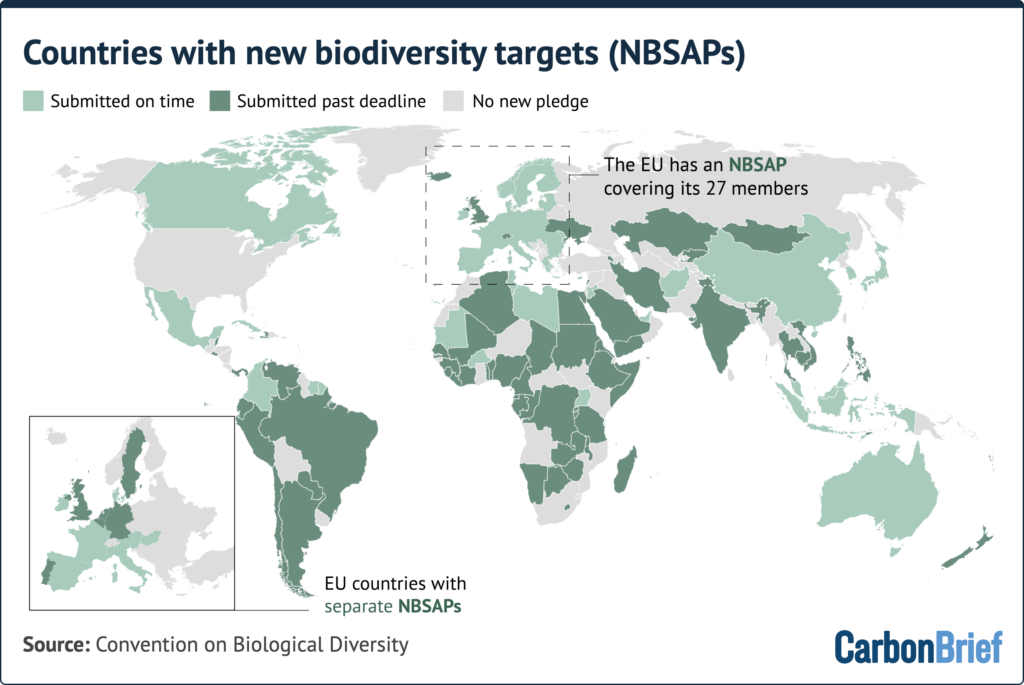
Nearly three years after a landmark global agreement was struck to halt and reverse the destruction of the natural world, a growing majority of nations have stepped forward with official plans to meet the challenge. New analysis reveals that 58% of countries have now met a United Nations call to submit updated national strategies for addressing biodiversity loss, marking a significant, albeit delayed, improvement in global environmental compliance.
The findings, published by Carbon Brief, show that 113 countries have now formally released national biodiversity strategies and action plans, known as NBSAPs. This represents a substantial leap from just a year ago, when only 55 nations had complied, and marks a major turnaround from the initial deadline for the COP16 biodiversity summit held in October 2024, when a mere 15% of countries managed to submit their plans on time.

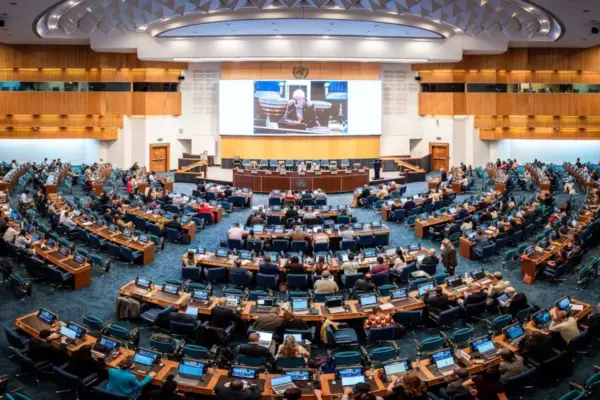
The slow initial response prompted delegates at the COP16 summit in Cali, Colombia, to adopt a new text that explicitly urged governments to release their missing strategies "as soon as possible." Now, as delegates prepare to travel to Yerevan, Armenia, for the upcoming COP17 biodiversity summit next week, the landscape of global environmental commitments looks considerably more robust, even as critical gaps remain.
COP17 represents a vital milestone for the international community, serving as the halfway point of the Kunming-Montreal Global Biodiversity Framework (GBF). Agreed upon in late 2022 during COP15 in Montreal, Canada, the GBF established a historic overarching mission to halt and reverse biodiversity decline by 2030, underpinned by an expansive list of 23 specific targets covering everything from ecosystem restoration and climate change integration to securing financial support for developing nations.
The upcoming summit in Yerevan will serve as the stage for the first comprehensive global review of how well countries are progressing toward these 2030 targets. This evaluation will be informed by a major global progress report coordinated by the United Nations, which draws directly from countries’ newly submitted NBSAPs, individual national targets, and their seventh national reports.
Global Review and Regional Progress
The path to compliance has varied significantly across different regions of the world. According to the Carbon Brief analysis, African nations have made considerable strides over the past year, with a large cohort of countries publishing their updated NBSAPs. This wave of recent submissions includes Algeria, Benin, Botswana, Cameroon, Comoros, Congo, Côte d’Ivoire, the Democratic Republic of Congo, Egypt, Equatorial Guinea, Eritrea, Ethiopia, Gabon, Gambia, Guinea, Lesotho, Liberia, Madagascar, Malawi, Mali, Namibia, Rwanda, Senegal, Sierra Leone, Somalia, Sudan, Zambia, and Zimbabwe.
Similarly, several key South American nations have stepped up to release their strategies. This group includes Brazil, the world’s most biodiverse nation, as well as Belize and Chile. Meanwhile, Armenia, which is hosting the upcoming COP17 summit, published its own updated strategy earlier this year in April.
Despite this momentum, the framework’s monitoring mechanisms allow for flexibility. Under the rules of the GBF, countries that found themselves unable to meet the stringent requirements of a full NBSAP ahead of COP16 were permitted to submit standalone national targets instead. Unlike comprehensive action plans, these targets outline specific biodiversity goals without detailing the precise mechanisms for how they will be achieved.
Data shows that while full NBSAP adoption has reached 58%, the broader commitment to setting formal national targets has seen even higher participation. By the end of COP16, roughly 119 parties had produced at least one national target. Over the subsequent two years, that figure has climbed to 175, representing about 89% of countries worldwide. Furthermore, while only about half of all nations met the original deadline to submit their seventh national reports by February of this year, compliance for that reporting requirement has since risen to 73%.
Missing Major Economies and Challenges
Despite the overall rise in participation, notable gaps persist among some of the world’s most ecologically significant nations. Four of the globe’s designated "megadiverse" countries—nations that harbor the vast majority of Earth’s plant and animal species—have yet to publish new NBSAPs. These holdouts are Papua New Guinea, Peru, South Africa, and the United States.
The absence of the United States is distinct, as it remains the only UN member country that is not a formal signatory to the UN Convention on Biological Diversity. Additionally, Russia, which encompasses the largest land area on Earth, has also failed to produce a new NBSAP.

Throughout the two-year period following the COP16 summit, numerous developing countries voiced deep concerns that financial constraints were the primary barrier preventing them from finalizing and publishing their national plans. Designing comprehensive biodiversity strategies requires significant institutional capacity, scientific assessment, and administrative resources that many lower-income nations struggle to fund independently.
To address this hurdle, international financial mechanisms have worked to disburse assistance. The Global Environment Facility, a multilateral fund tasked with supporting environmental projects, reported that out of 139 countries that requested financial support for NBSAP preparation following COP16, 120 had successfully accessed the necessary funds. Representatives from the Global Environment Facility and the UN Environment Programme noted that efforts have continued to resolve administrative and logistical bottlenecks to ensure the remaining handful of countries can secure their financial assistance.
As delegates converge on Yerevan for COP17, the focus will inevitably shift from the bureaucratic hurdles of strategy formulation to the stark realities of implementation and financing. With the 2030 deadline for the Kunming-Montreal Global Biodiversity Framework drawing closer, the global review at COP17 will test whether these newly submitted plans can deliver the transformative action required to reverse the decline of the natural world.