When Israelis head to the polls on October 27, the eyes of the international community will be fixed on the outcome, with many around the world openly rooting for the defeat of the country’s longtime leader, Prime Minister Benjamin Netanyahu. Over nearly two decades of continuous and fractured rule under Netanyahu, Israel has charted an increasingly aggressive national course. The government has systematically abandoned any pretense of supporting a two-state solution to the Israeli-Palestinian conflict, pushed forward with the aggressive construction of hundreds of new Jewish settlements across the occupied West Bank, and, in the wake of Hamas’s devastating cross-border attack on October 7, 2023, laid waste to the Gaza Strip. Furthermore, the nation has occupied targeted parts of neighboring Lebanon and Syria while launching direct military engagements against Iran, its principal regional archnemesis.
Simultaneously, Israel’s foundational democratic institutions have faced relentless internal pressure from Netanyahu and his political allies. The ruling coalition has repeatedly introduced and advanced legislative packages explicitly designed to curtail the power, independence, and oversight of Israel’s courts. Should Netanyahu manage to secure an unprecedented seventh term in office, a broad spectrum of analysts and citizens fret that the country could permanently transition into a rogue theocratic actor, fundamentally altering its internal character and its standing among global democracies.
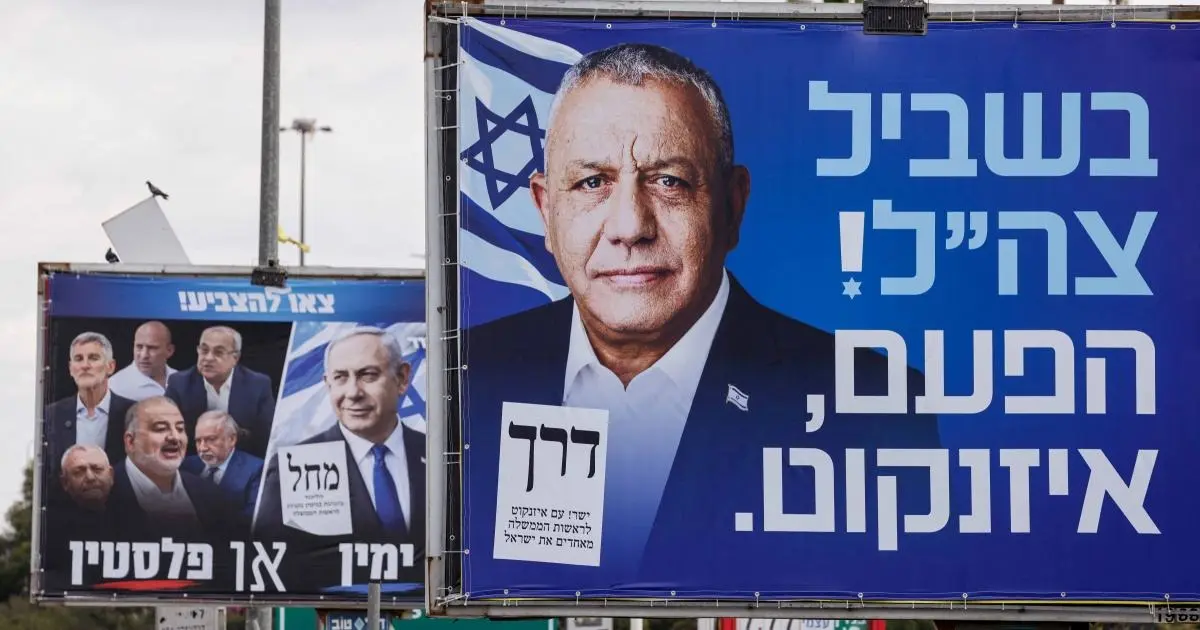
For millions of domestic voters, the upcoming election represents an essential turning point for Israeli domestic policy. The prime minister’s principal political challenger is former Israel Defense Forces Chief Gadi Eisenkot, a figure who projects a notably more liberal worldview than his incumbent competitor. Eisenkot has consistently voiced support for an independent judiciary, a protected and free press, and a professional, non-partisan civil service. Should he emerge victorious on October 27, he is widely expected to attempt to reverse the systematic efforts undertaken by Netanyahu and his nationalist allies to weaken the operational independence of these vital democratic pillars.
Yet, a potential victory by Eisenkot is widely projected to leave Israel’s overarching foreign policy and its fundamental approach toward the Palestinians largely unchanged. Virtually the entire spectrum of Jewish political parties within Israel—Eisenkot’s faction included—remains firmly opposed to the realization of Palestinian statehood, distinguishing themselves little from Netanyahu’s Likud party on this core tenet. Mainstream political leaders across the board maintain that Israel’s brutal military campaign in Gaza was both morally justified and practically indispensable for national survival. Furthermore, a broad consensus holds that the country was entirely correct in launching military strikes against Iran and in establishing what the government and military apparatus formally term "security zones"—effectively occupied territories—within southern Lebanon and southwestern Syria.
In fact, the primary disagreements between Eisenkot and Netanyahu on matters of national security center primarily on tactical execution rather than strategic goals. Critics like Eisenkot have questioned whether Netanyahu made optimal tactical decisions during these various regional conflicts, pointing specifically to instances where the prime minister rejected potential ceasefire agreements in Gaza that might have secured the earlier release of Israeli hostages.
This divergence, however, does not signal a radically different humanitarian approach. Eisenkot and Netanyahu do differ meaningfully regarding the severe surge of West Bank settler violence directed at vulnerable Palestinians, a phenomenon explicitly aimed at driving communities off their ancestral lands. While Netanyahu, bound to his far-right coalition partners, routinely dismisses the issue, Eisenkot has broken ranks to label such behavior as "Jewish terror." Even if Eisenkot displays little sympathy for the Palestinian victims themselves, he clearly recognizes that the West Bank sits dangerously on the edge of a catastrophic uprising and that Israel risks inviting severe international opprobrium and economic isolation due to its reckless policies in the territory. Overall, however, no matter the electoral outcome, the Israeli state is widely expected to continue its systemic repression of Palestinians and its military posture against regional adversaries, ensuring that the nation will continue to face steep diplomatic and economic penalties as frustrated international partners weigh the reduction of aid and the implementation of formal sanctions.
Style Over Substance
A myriad of complex issues hang in the balance during this election cycle. Politicians have fiercely debated exemptions from mandatory military service for the ultra-Orthodox community, the ongoing corruption charges leveled against Netanyahu, and what, if any, concrete measures the state should take to curb extremist settler violence. Nevertheless, the overarching national conversation has remained locked on apportioning blame for the unprecedented security failures surrounding the Hamas attack on October 7, which resulted in the deaths of approximately 1,200 Israelis, alongside the abduction of 251 hostages in a single day.
The political opposition has persistently argued that Netanyahu bears ultimate responsibility for the worst security catastrophe in the nation’s history. Critics point out that the prime minister actively sustained Hamas over the years by permitting the influx of Qatari funds, chose to ignore mounting intelligence warnings regarding imminent Hamas invasion plots, and subsequently blocked independent judicial or parliamentary investigations into the operational failures of that day. Eisenkot, who personally lost a son and two nephews to the ongoing combat in Gaza, has emerged as an unsparing critic, hammering Netanyahu for his repeated refusal to accept personal or political accountability for the national calamity.
Netanyahu and his supporters have routinely deflected these accusations, shifting the blame directly onto the military and the nation’s security and intelligence services. In some instances, pro-government figures have even promoted fringe conspiracy theories alleging "treason from within"—suggesting that internal saboteurs within Israel facilitated the brief Hamas invasion.
Despite this intense blame game, both major political camps fundamentally agree on the core lessons of the tragedy: that Israel remains surrounded by implacable, merciless enemies and that the Palestinian population can never be trusted. This worldview reflects a stark surge in anti-Arab sentiment that has become increasingly visible across Israeli Jewish society in the post-October 7 era. Politically, it also serves as a calculated electoral strategy. If current public opinion polling proves accurate, Eisenkot will require the tacit support of Israel’s Arab political parties to assemble a viable governing coalition. Consequently, Netanyahu is aggressively targeting voters who, despite harboring deep personal animosity toward the prime minister, find the concept of a government propped up by Arab lawmakers entirely unacceptable.
This polarizing strategy has limited traction among liberal Israelis, who view the election as a final, desperate chance to save their homeland from descending into authoritarianism. Many expatriate Israelis, including former citizens who emigrated specifically due to Netanyahu’s prolonged tenure, plan to return home to cast ballots for his replacement. Yet, even among anti-Netanyahu voters, partnering with Arab political factions to form a government remains deeply controversial. Few within the mainstream electorate entertain the notion of a two-state solution, largely viewing the concept as an outdated relic of the overly optimistic 1990s. Eisenkot himself has explicitly declared his personal opposition to a Palestinian state, echoing the platform of nearly every other centrist and conservative opposition figure. Only Yair Golan, leader of Israel’s lone remaining left-wing Jewish party, openly advocates for what he terms "separation from the Palestinians" and a return to diplomatic engagement—though even he lacks a coherent roadmap for implementation.
The broader Israeli rejection of Palestinian statehood is hardly a sudden development. The last substantive negotiations concerning Palestinian sovereignty collapsed in early 2001, and the vast majority of Jewish Israelis decisively turned against the peace process following the second intifada and Hamas’s violent takeover of the Gaza Strip in 2007. Netanyahu has railed against Palestinian statehood throughout his entire political career, with his brief, heavily conditioned endorsement in 2009 widely dismissed as insincere. Following the trauma of October 7, this institutional opposition has solidified into an unyielding wall. While major political parties once paid lip service to the peace process, they now dismiss the possibility entirely.
At the same time, Israeli state policy has grown markedly more aggressive. While the country rejected Palestinian independence years ago, it largely maintained a low-cost status quo and avoided full-scale regional wars for the better part of two decades. That relative restraint endeared Netanyahu to mainstream Israeli voters, who could comfortably pretend the core conflict was manageable. The October 7 assault shattered that illusion, prompting the adoption of an unyielding policy of total destruction and occupation. Netanyahu’s campaign has openly boasted of these aggressive tactics, recognizing that military strikes against Iran and ground invasions in Gaza, Lebanon, and Syria enjoy broad domestic popularity. Mainstream opponents have largely endorsed these military methods, criticizing the incumbent primarily for falling short of his grand promise of "total victory."
Netanyahu has countered by accusing Eisenkot of harboring a soft approach toward Hamas during his time on the wartime cabinet. Eisenkot, in turn, has asserted that he actually advocated for a far more aggressive military invasion than the one Netanyahu ultimately authorized. On the campaign trail, Eisenkot has pledged to dismantle Hamas rule in Gaza within an 18-month window if elected—a posture that, while hawkish, leaves room for potential diplomatic frameworks to ease the group from power. Eisenkot has also strongly criticized Netanyahu’s stated goal of forcibly overthrowing the Iranian regime through military means alone, dismissing it as a dangerous delusion. Instead, he favors targeted measures to extract enriched uranium from Iran and subject its nuclear facilities to rigorous international verification regimes. Nonetheless, Eisenkot backed the initial military strikes aimed at degrading Iran’s nuclear and military infrastructure, even if he diverges from Netanyahu on the ultimate strategic endgame.
Anger Management
Globally, the international community views these developments through a dramatically different lens. In the aftermath of the devastation inflicted upon Gaza, international approval ratings for Israel have plummeted to historic lows. Lawmakers and human rights organizations across multiple continents have accused Israel of committing severe violations of international law, with numerous critics alleging genocide. Even traditional allies have issued sharp rebukes. In July 2025, U.S. Senate Minority Leader Chuck Schumer publicly declared that while Israel maintains an inherent right to self-defense and the elimination of Hamas, the devastating reports and images of widespread starvation, suffering, and death emerging from Gaza are wholly unacceptable.
Foreign governments have expressed equal fury over the accelerating expansion of West Bank settlements, a policy that cannot be framed as a direct defensive reaction to October 7. Consequently, tangible economic and diplomatic sanctions have begun to materialize. British Foreign Secretary Ed Miliband announced a formal sanctions regime targeting West Bank settlements and the financial entities supporting their expansion, declaring the occupation unlawful. Given London’s status as a major global financial hub, Israeli banking institutions heavily invested in financing these settlement projects now face severe regulatory and financial jeopardy.
Across the Atlantic, Israel retains the vocal backing of U.S. President Donald Trump, who has endorsed Netanyahu’s reelection bid. However, a growing faction within the U.S. Democratic Party—and a notable number of Republicans—are actively seeking to restrict or halt U.S. military aid and advanced technology transfers to the Israel Defense Forces, citing the widespread destruction caused by American-supplied munitions in Gaza. Should the Democratic Party secure control of either house of Congress in upcoming legislative midterms, the era of unconditional U.S. financial support could face unprecedented legislative hurdles.
Mainstream Israelis frequently attribute this mounting international backlash to persistent antisemitism rather than genuine global concern for Palestinian rights or regional stability. Yet, the leadership is acutely aware of its growing diplomatic isolation, harboring deep anxieties over what former Prime Minister Ehud Barak termed an impending "diplomatic tsunami." Netanyahu has long positioned himself as the only statesman uniquely equipped—largely due to his fluent English and media savvy—to stave off international consequences, pointing to his success in managing friction with past U.S. administrations. The Israeli right has long relied on sophisticated public diplomacy and lobbying, known as hasbara, to maintain the occupation while blunting international criticism. In contrast, Eisenkot has signaled an intent to engage international partners with greater transparency and directness.
Eisenkot’s more candid diplomatic style would likely earn Israel a temporary grace period from Western allies, much like previous military-turned-political leaders such as Yitzhak Rabin and Ehud Barak achieved when unseating Likud governments. Eisenkot might also implement cosmetic or substantive changes designed to appease foreign partners, such as slowing settlement construction, opposing the contentious E1 development project that threatens to bisect a future Palestinian territory, and cracking down on violent extremist settlers.
Ultimately, however, Eisenkot would likely disappoint international supporters expecting a fundamental reversal of Israel’s core foreign and territorial policies. Even if his personal views evolved, his political maneuverability would be tightly constrained by his prospective governing coalition. Eisenkot’s potential power bloc relies heavily on right-wing factions whose leaders fiercely oppose Palestinian statehood and harbor deep distrust of Palestinian leadership. Prominent figures within this prospective alliance, such as Avigdor Lieberman, advocate for dismantling the Palestinian Authority entirely and transferring administrative control of West Bank Palestinians to Jordan—a proposal Amman rejected decades ago. Any overt move by Eisenkot toward Palestinian statehood would almost certainly trigger the immediate collapse of his government.
The More Things Change
Public opinion polls indicate that the October 27 election will be exceptionally close, with neither Netanyahu nor Eisenkot projected to secure an outright parliamentary majority. The country appears headed for intense political horse-trading as both leaders vie to peel away each other’s prospective coalition partners. Netanyahu may even attempt to entice Eisenkot into a rotation-based unity government, offering to temporarily freeze his controversial judicial overhaul or other polarizing culture-war initiatives in exchange for stability. While Eisenkot has publicly rejected the prospect of serving under Netanyahu, sudden political reversals have long been a hallmark of Israeli coalition politics. Alternatively, if coalition negotiations collapse completely, the country could find itself forced back into rapid succession elections, echoing the political deadlock that saw Israel hold five general elections between 2019 and 2022 without establishing a stable, long-lasting government.
Regardless of the final configuration—whether a Netanyahu caretaker administration, a right-wing majority, a unity government, or an Eisenkot cabinet reliant on Arab party support—Israel’s next prime minister is set to maintain the military occupation of neighboring territories and continue its dominant posture over the Palestinians. The incoming government will inevitably be forced to grapple with deepening international isolation. To offset potential arms embargoes or restrictions on Western military supplies, the state may be forced to dramatically expand domestic defense manufacturing, working aggressively to bypass export controls on dual-use technology much like sanctioned nations have done historically. Ultimately, Israel faces its most profound geopolitical fear: the potential loss of the U.S. veto at the United Nations Security Council, which has historically shielded the occupation from formal international censure since 1967.
While this trajectory may not align with the deepest desires of the Israeli public, the nation appears careening directly toward it in the absence of a profound ideological shift. Should Netanyahu and his hardline allies retain power, those divisions will only sharpen, leaving liberal Israelis with few domestic options other than seeking refuge and a quieter life abroad.